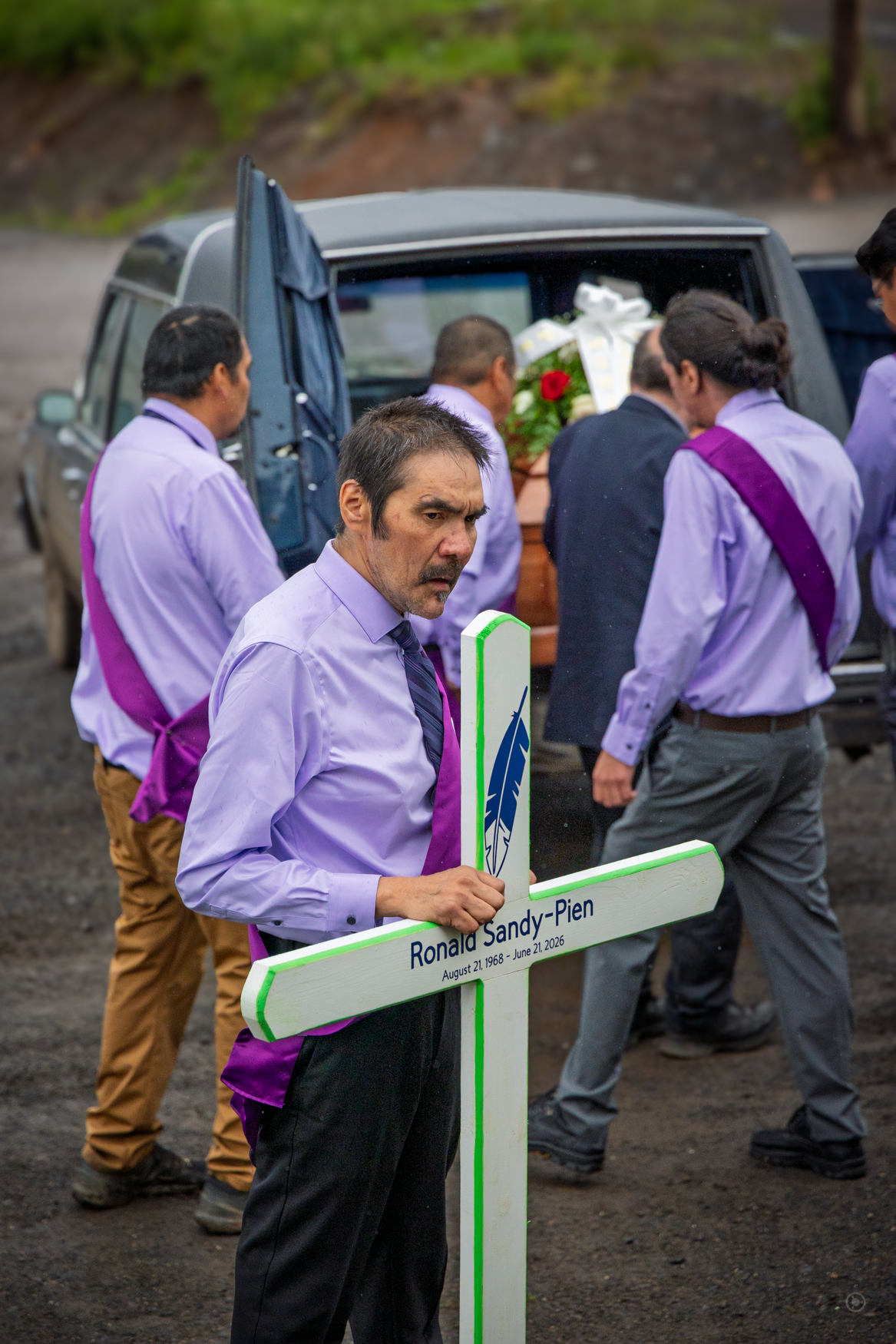
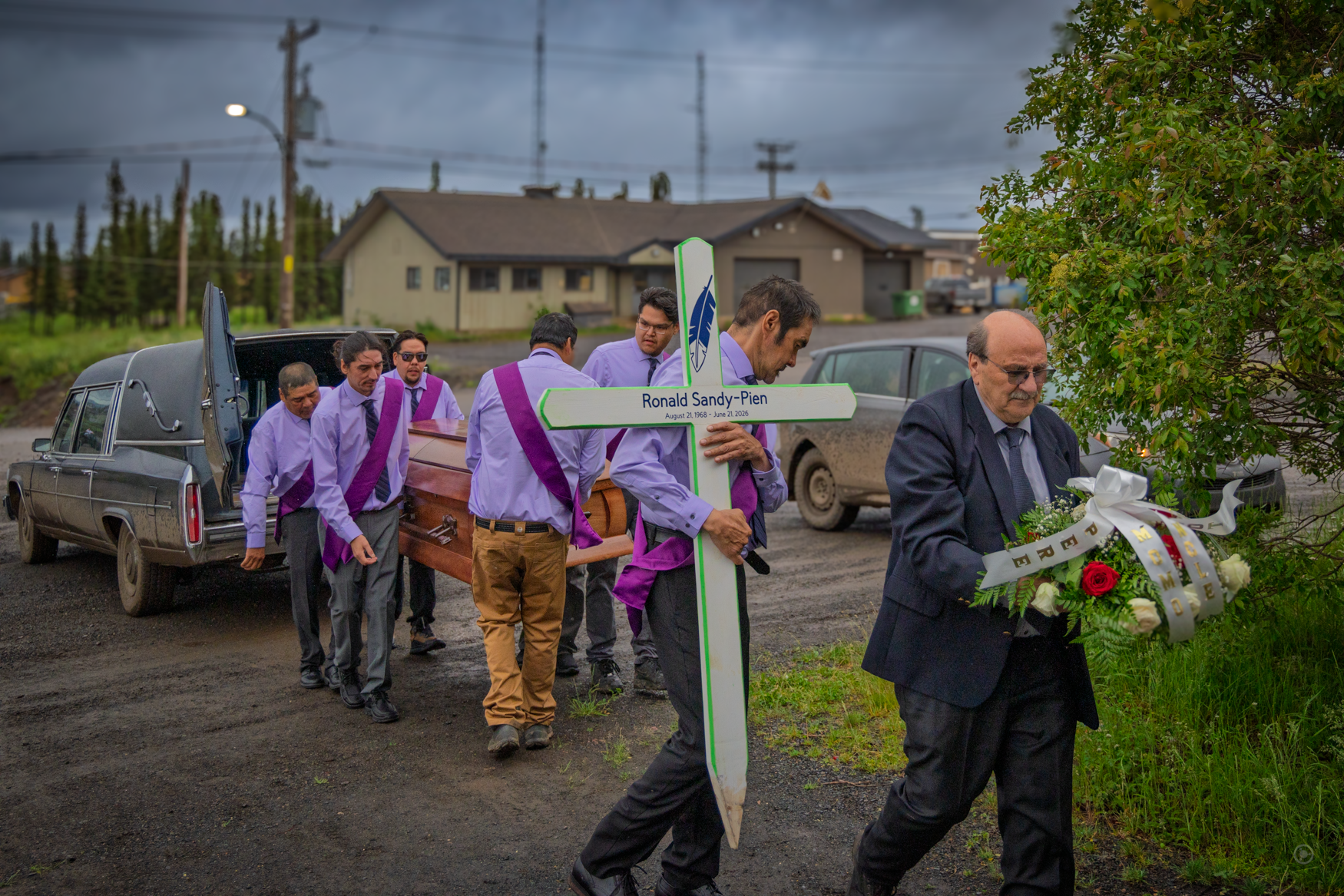
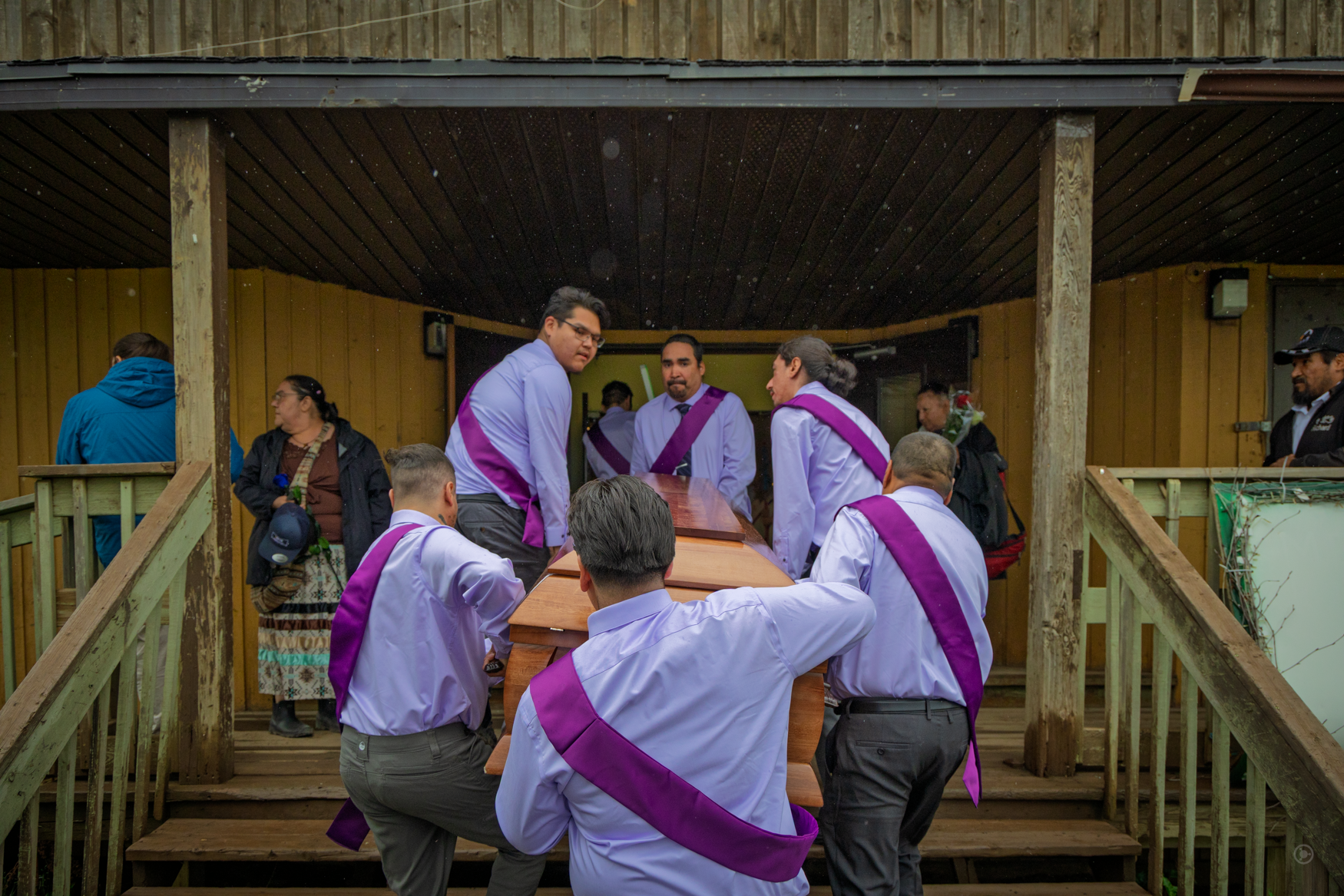
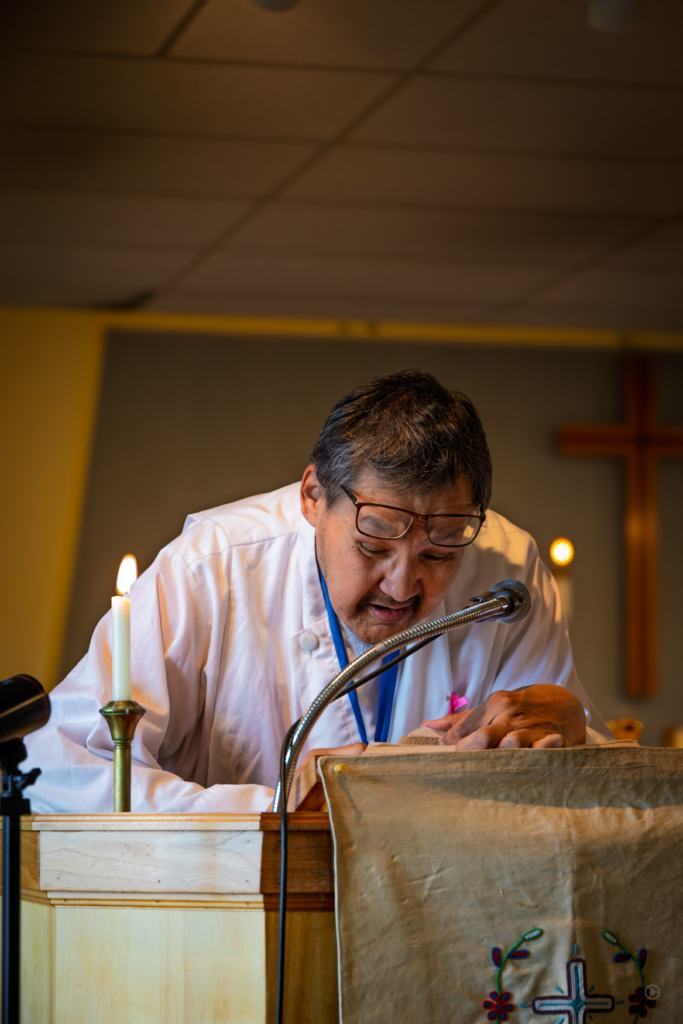
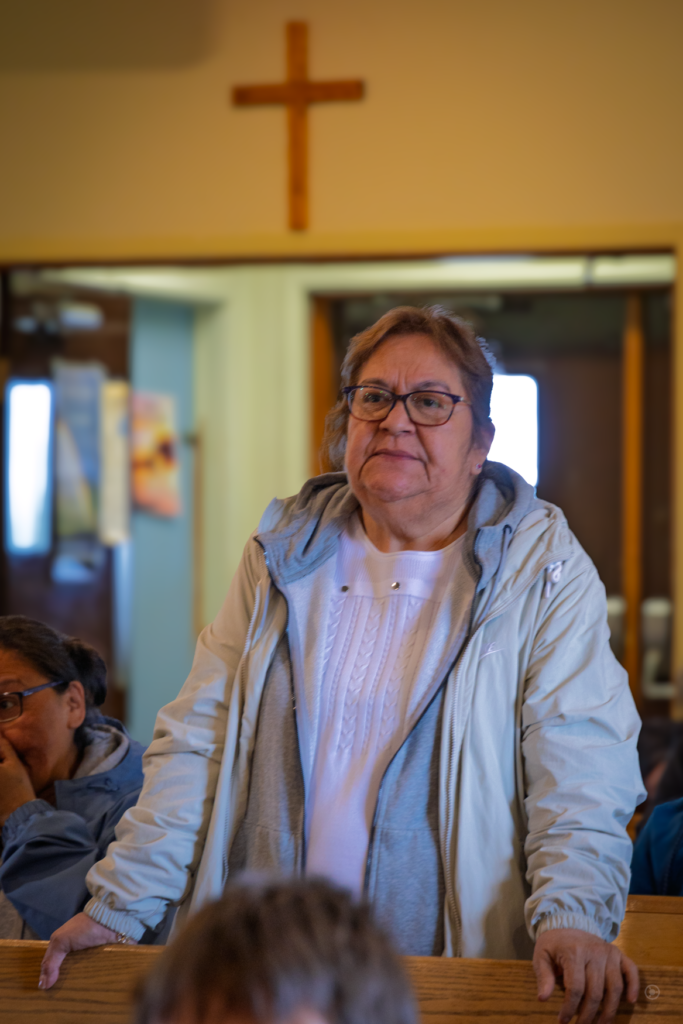
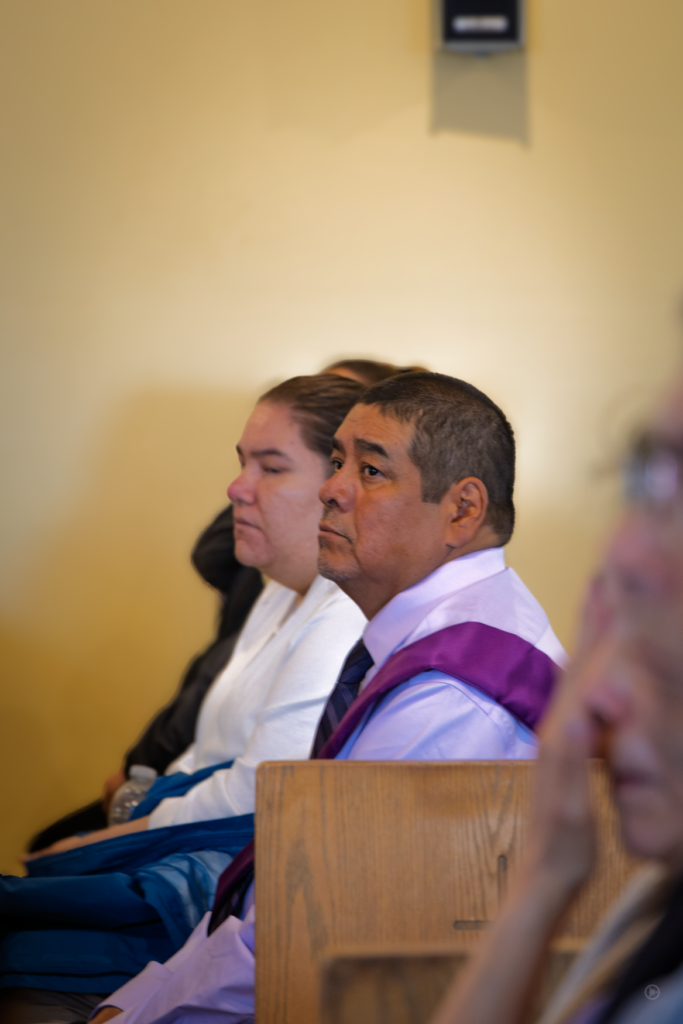
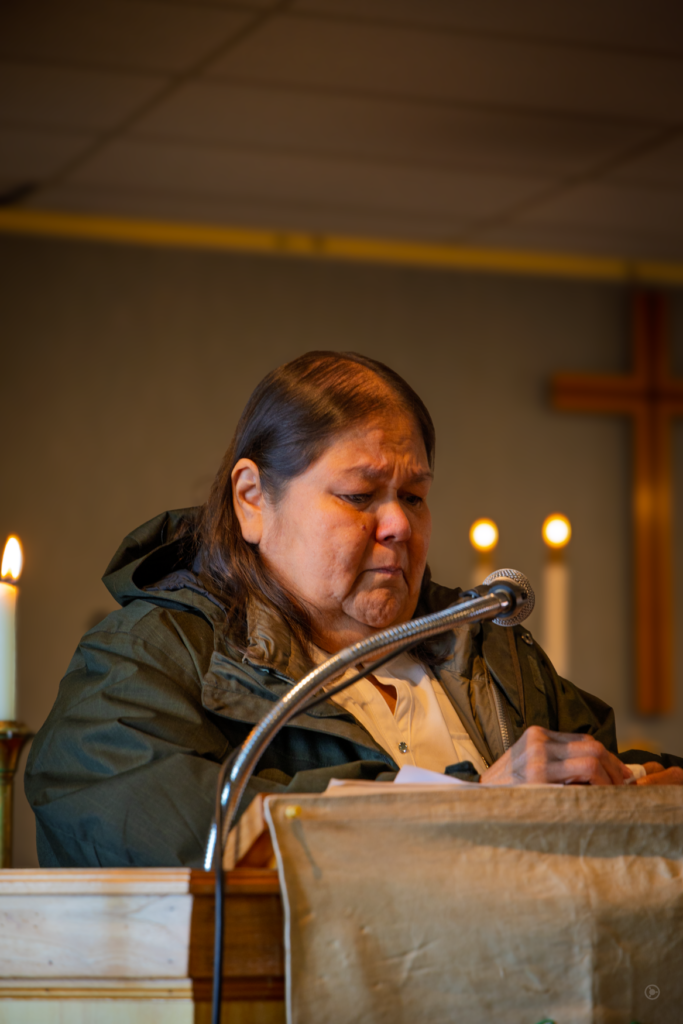
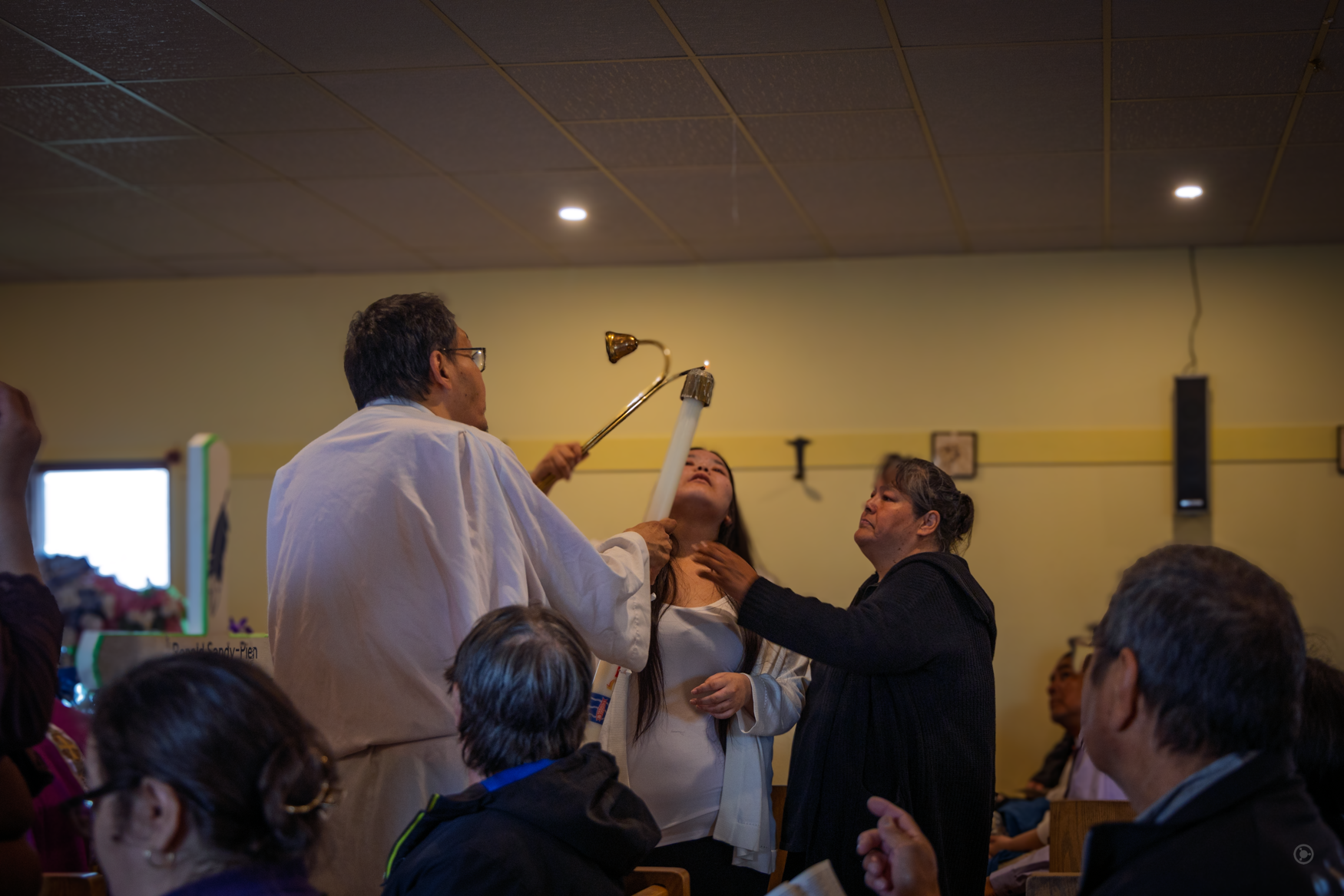
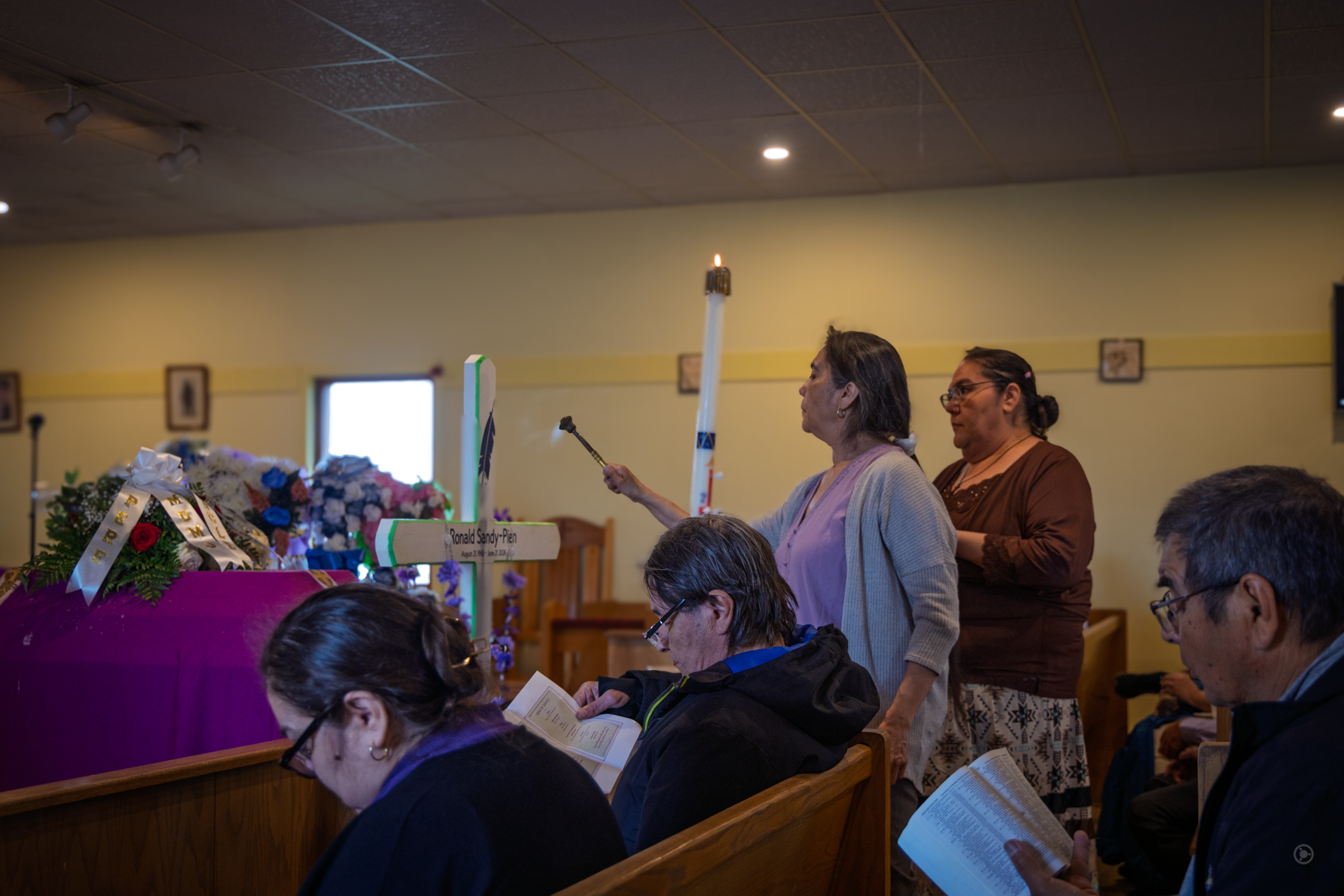
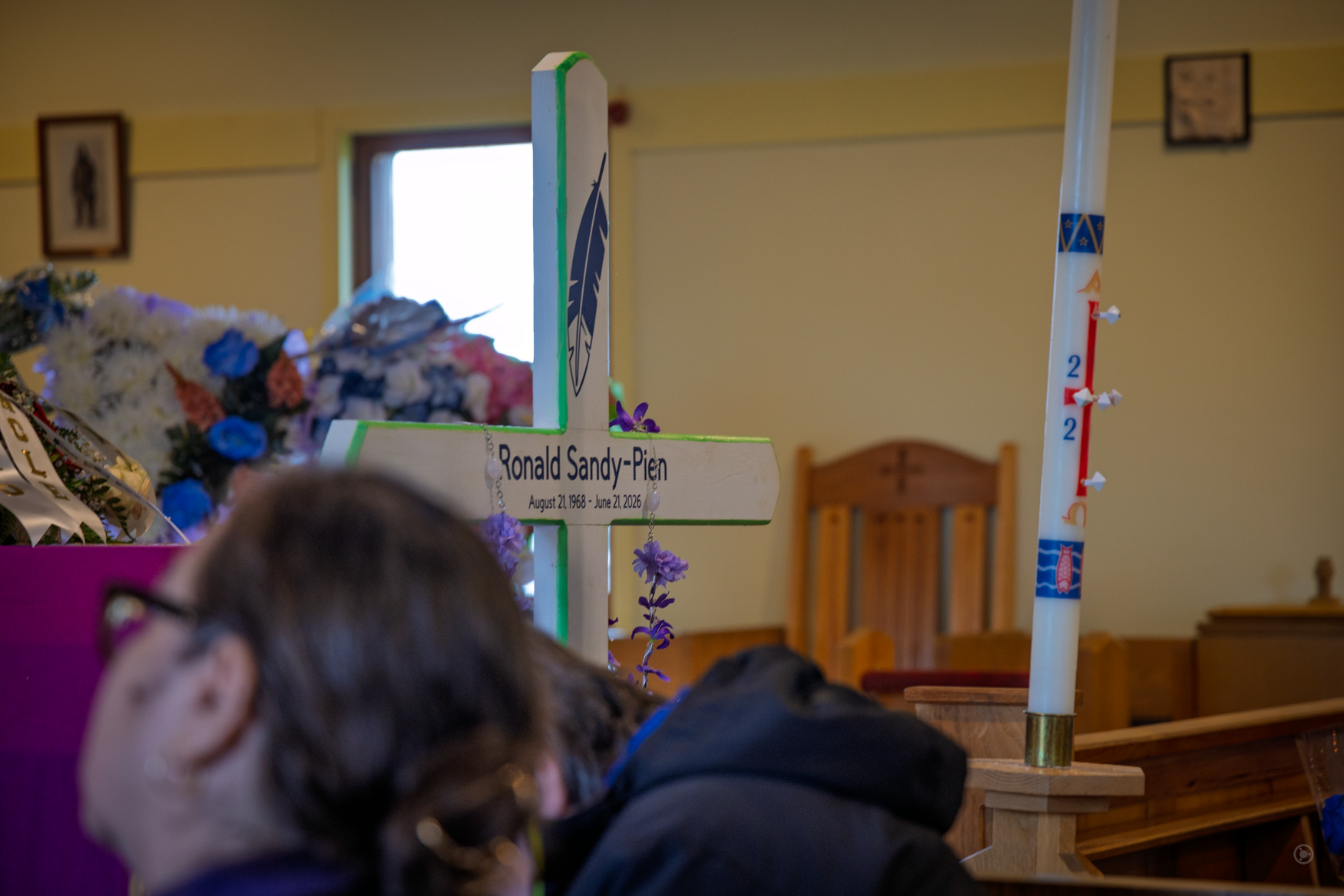
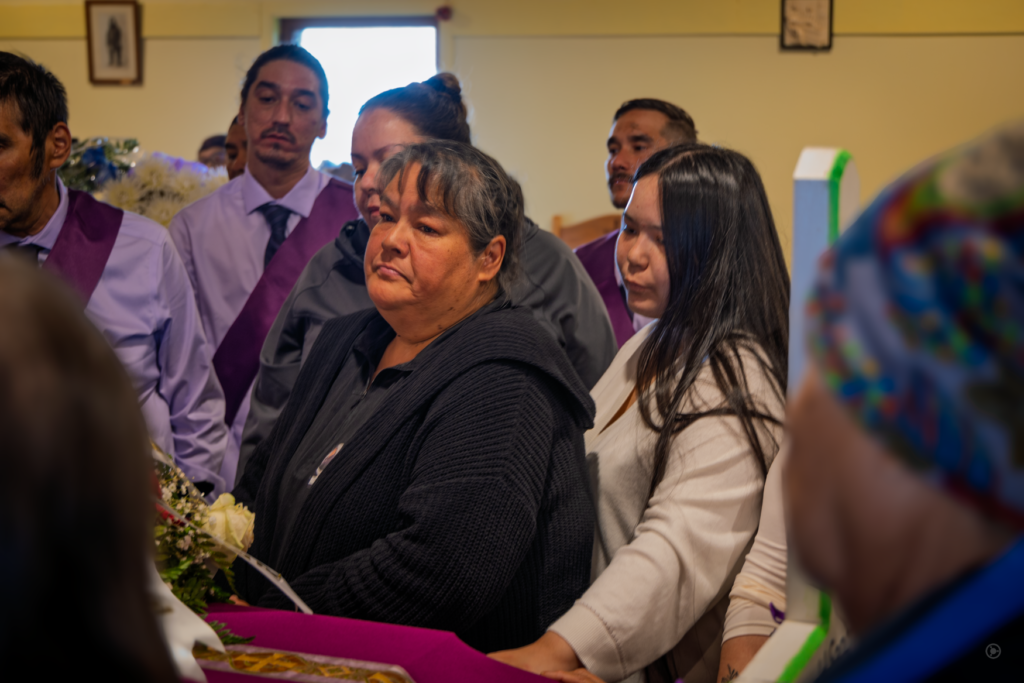
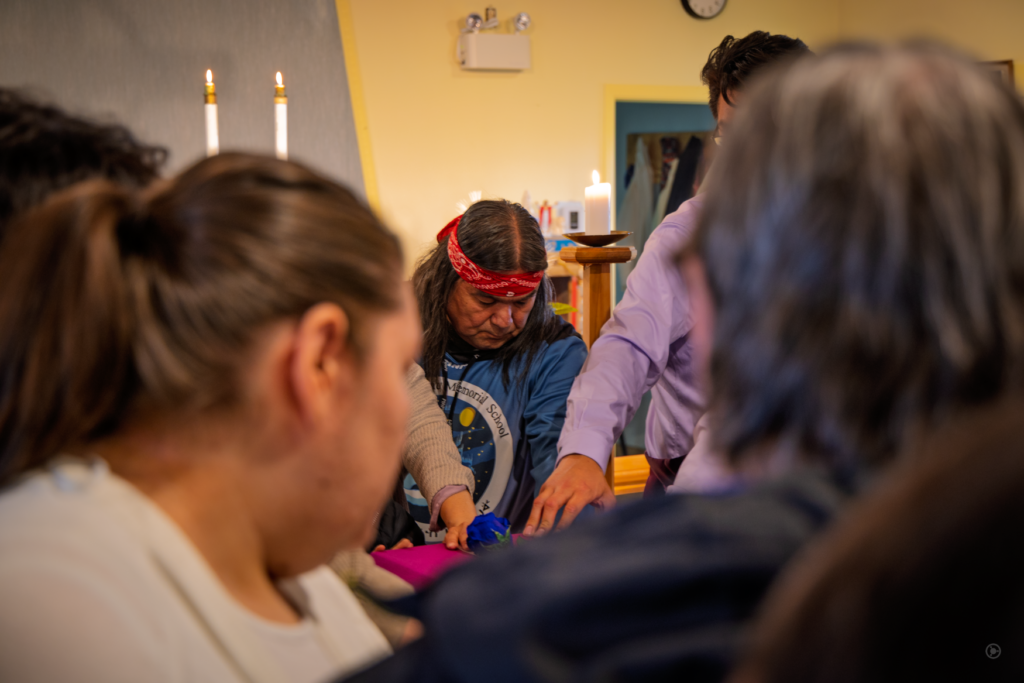
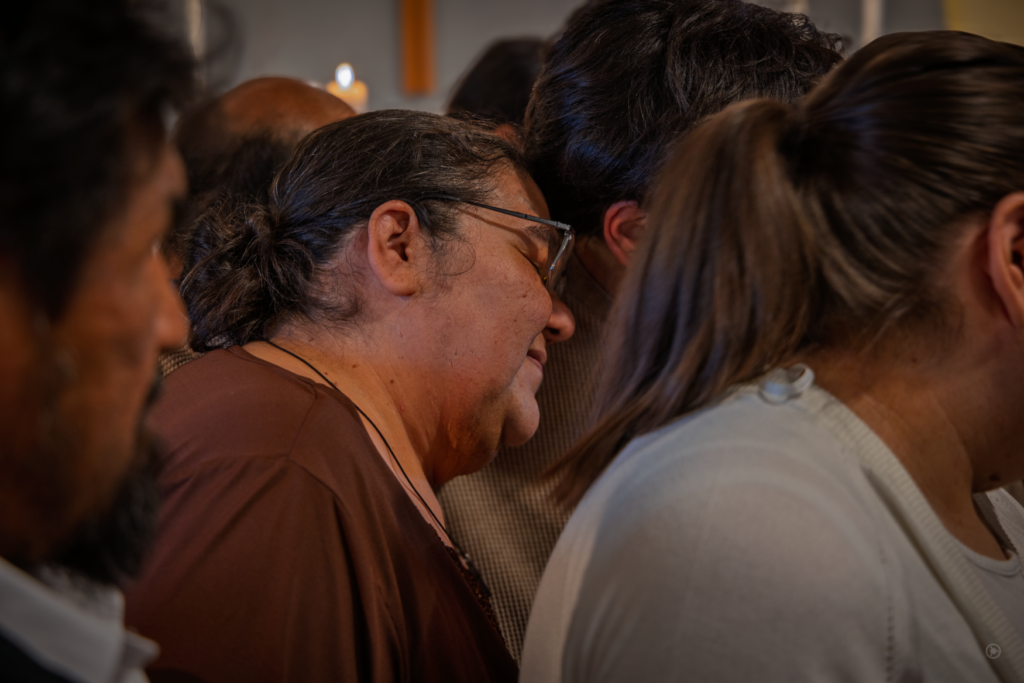
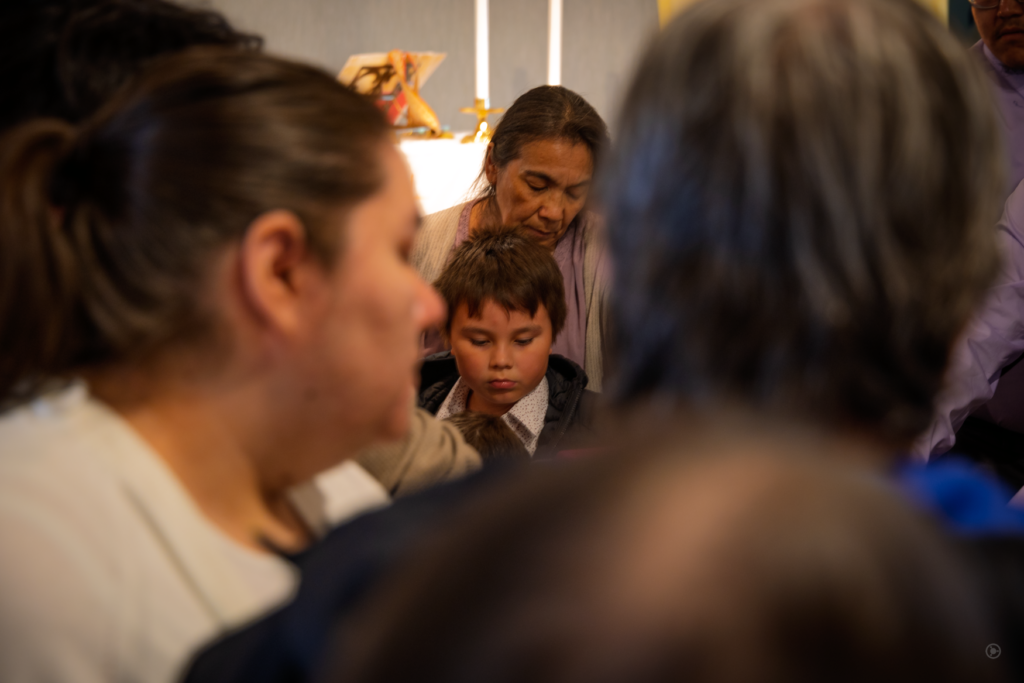
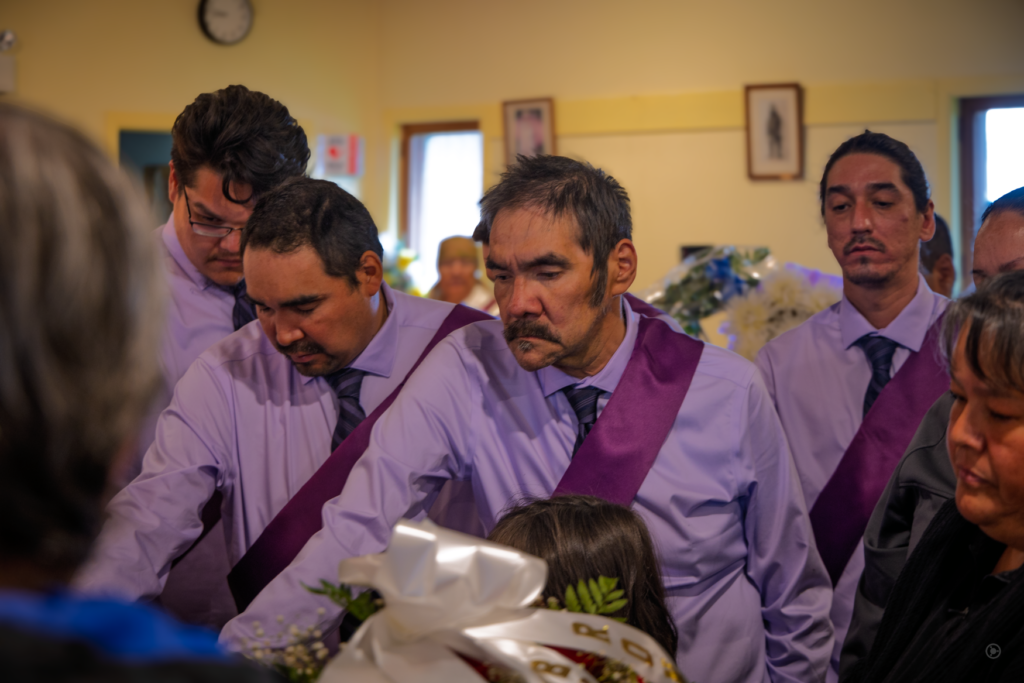
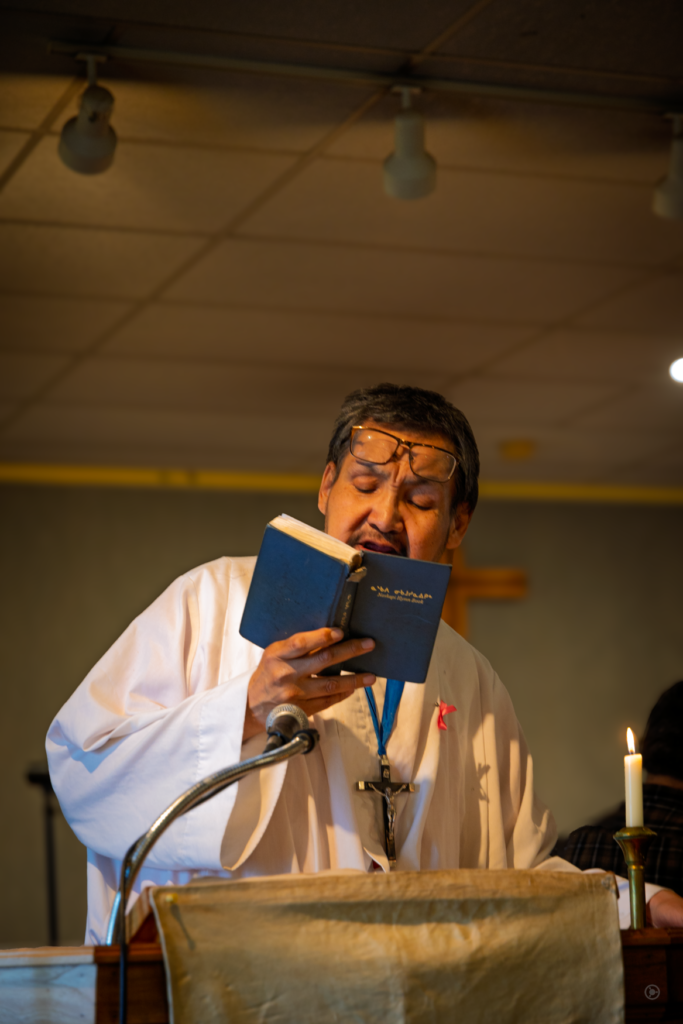
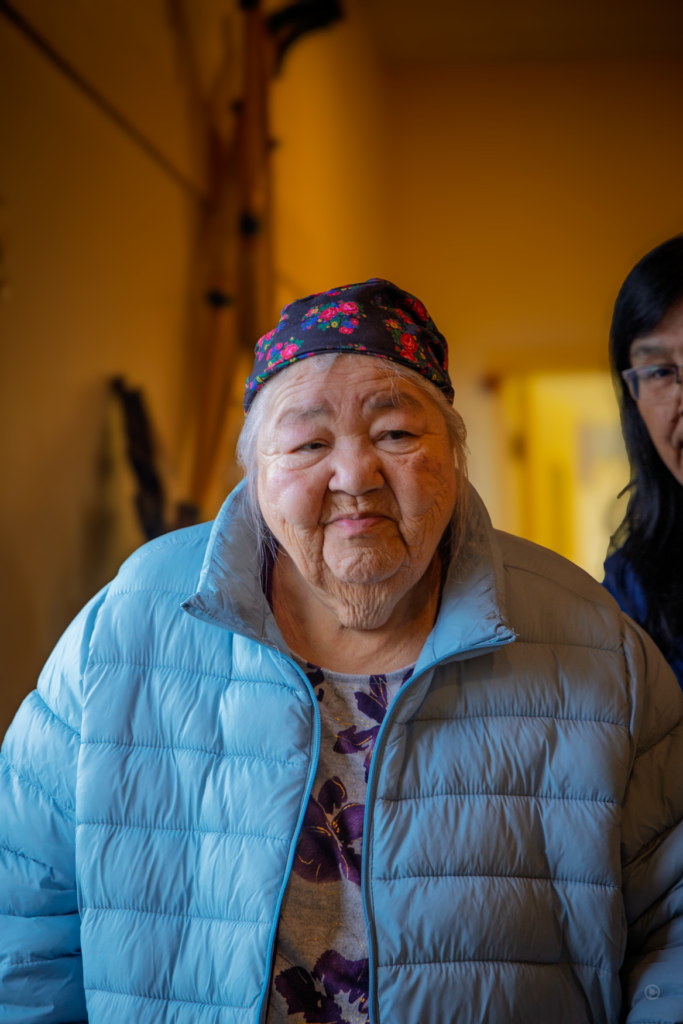
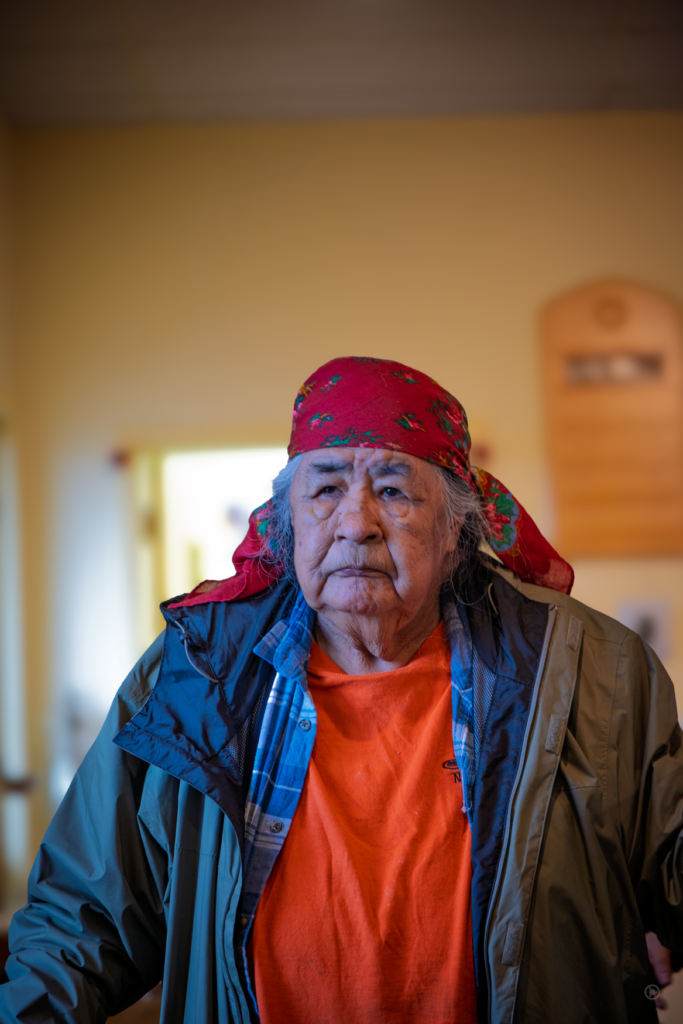
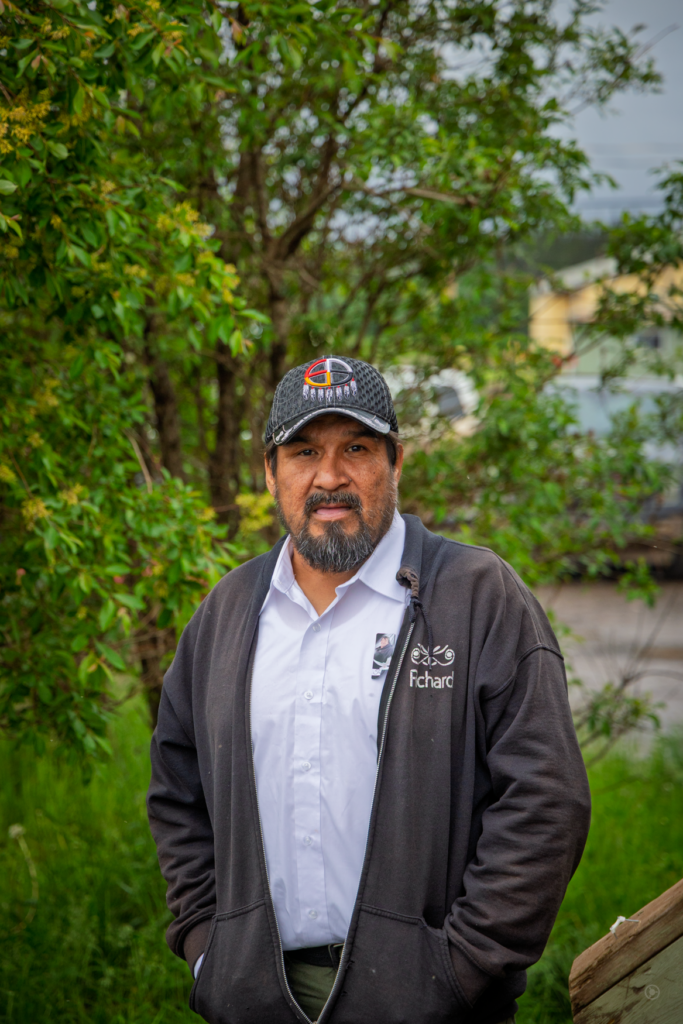
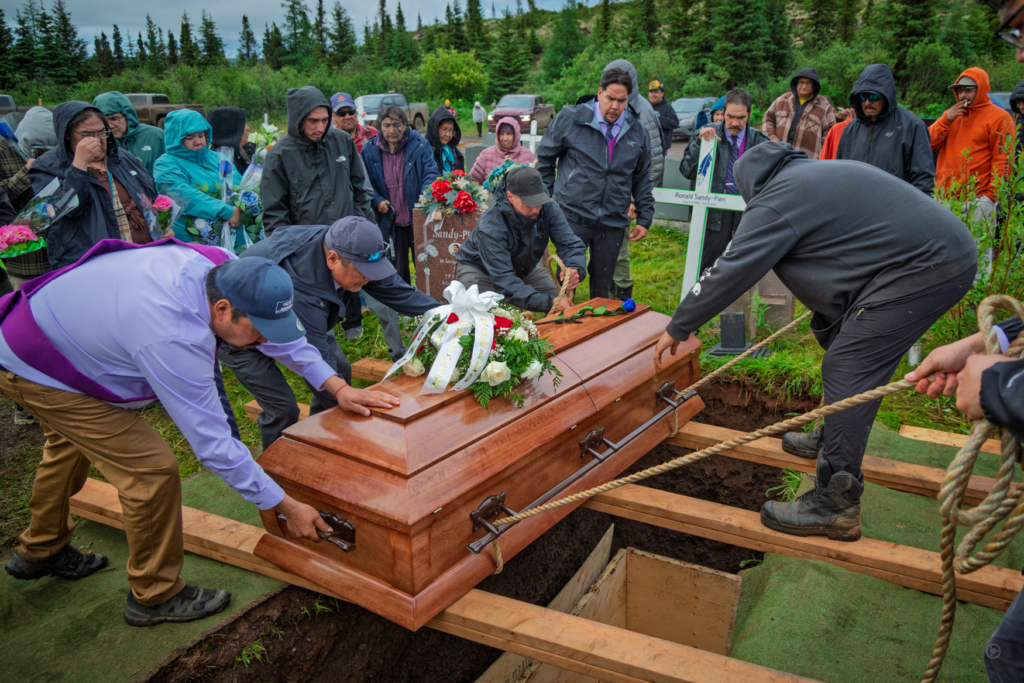
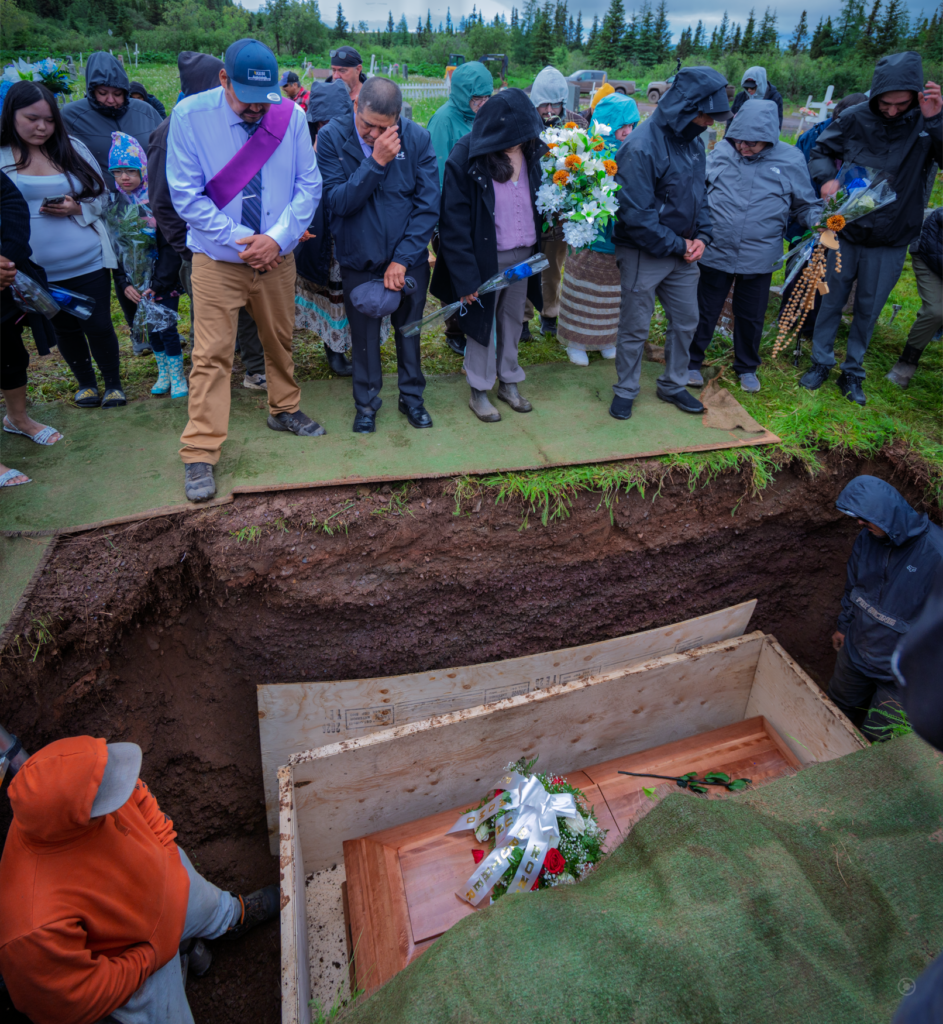
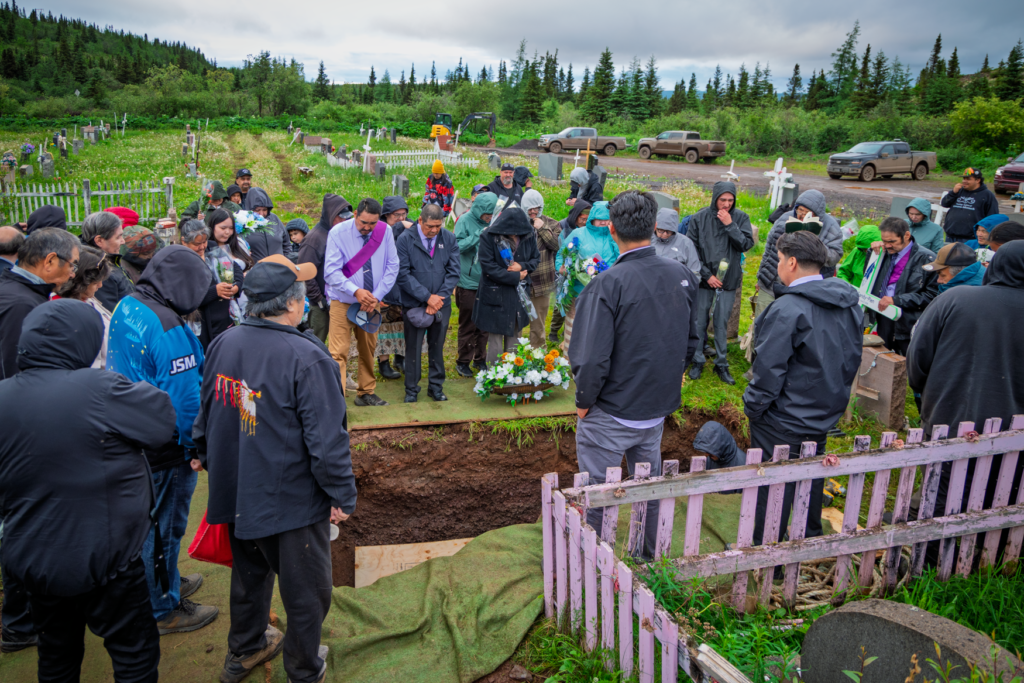
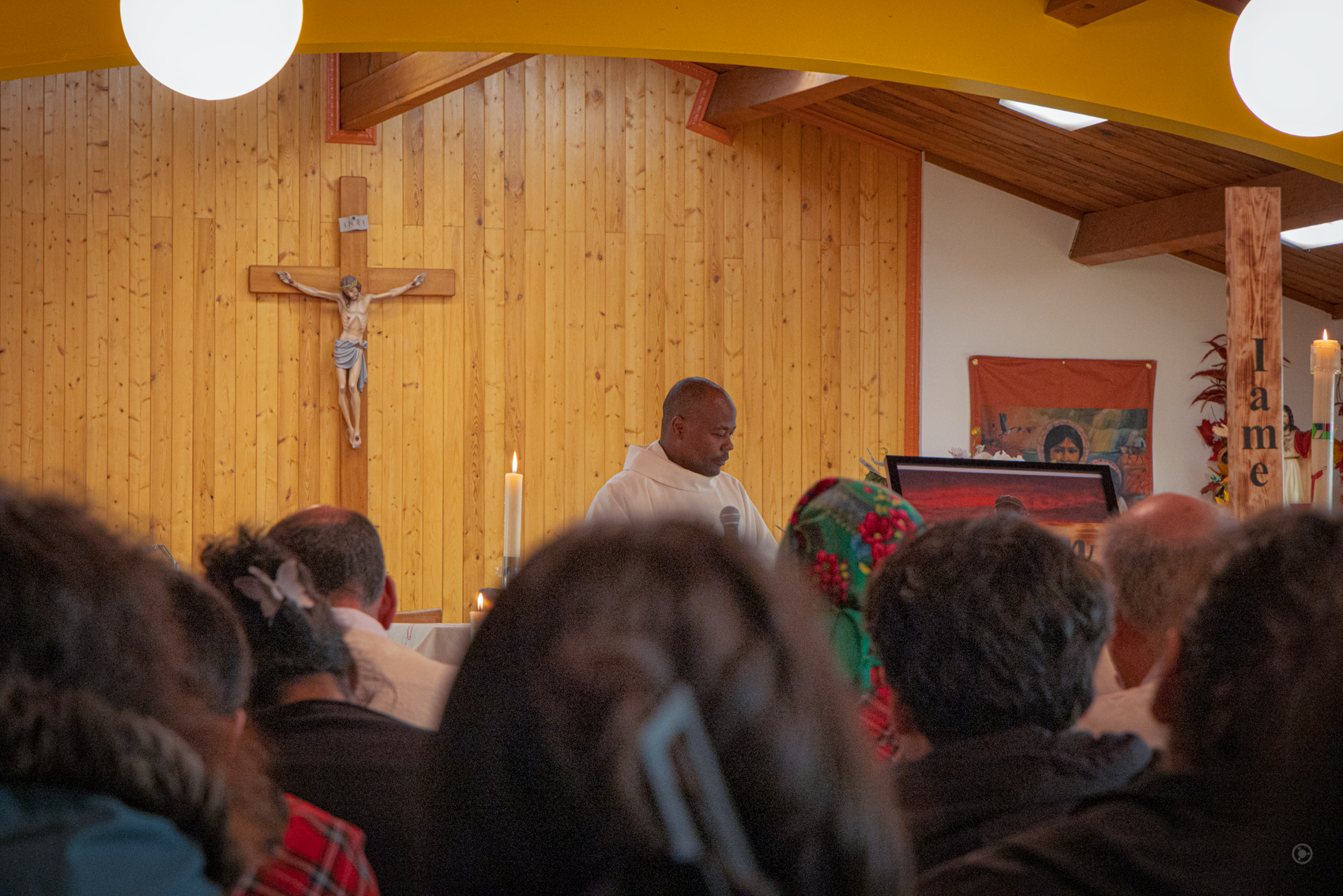
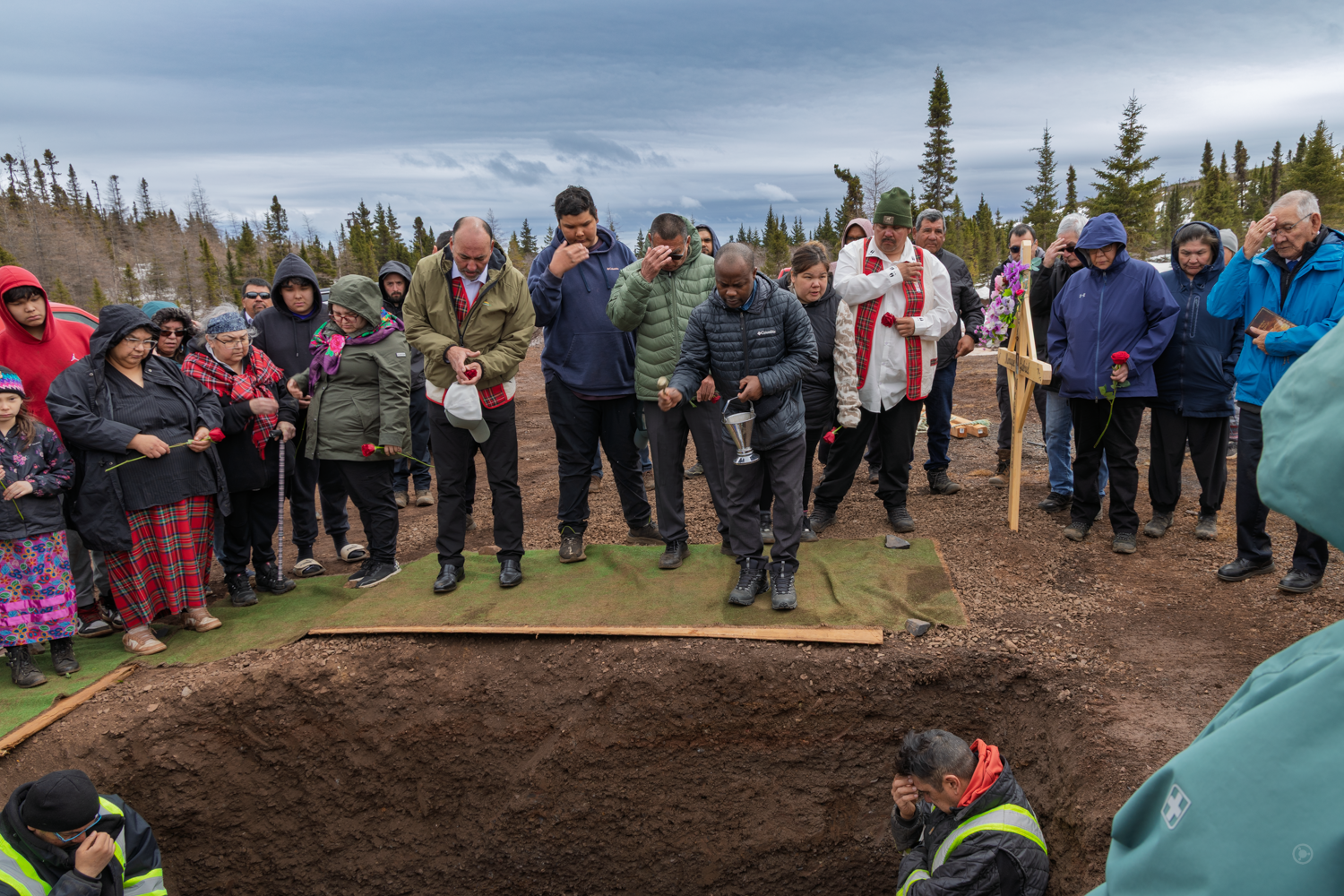
Yesterday, the community gathered in Kawawachikamach to lay Ronald Sandy Pien to rest. He was 57. He had been living in Sept-Îles, and in June, his life was taken by violence. He was brought home to be buried.
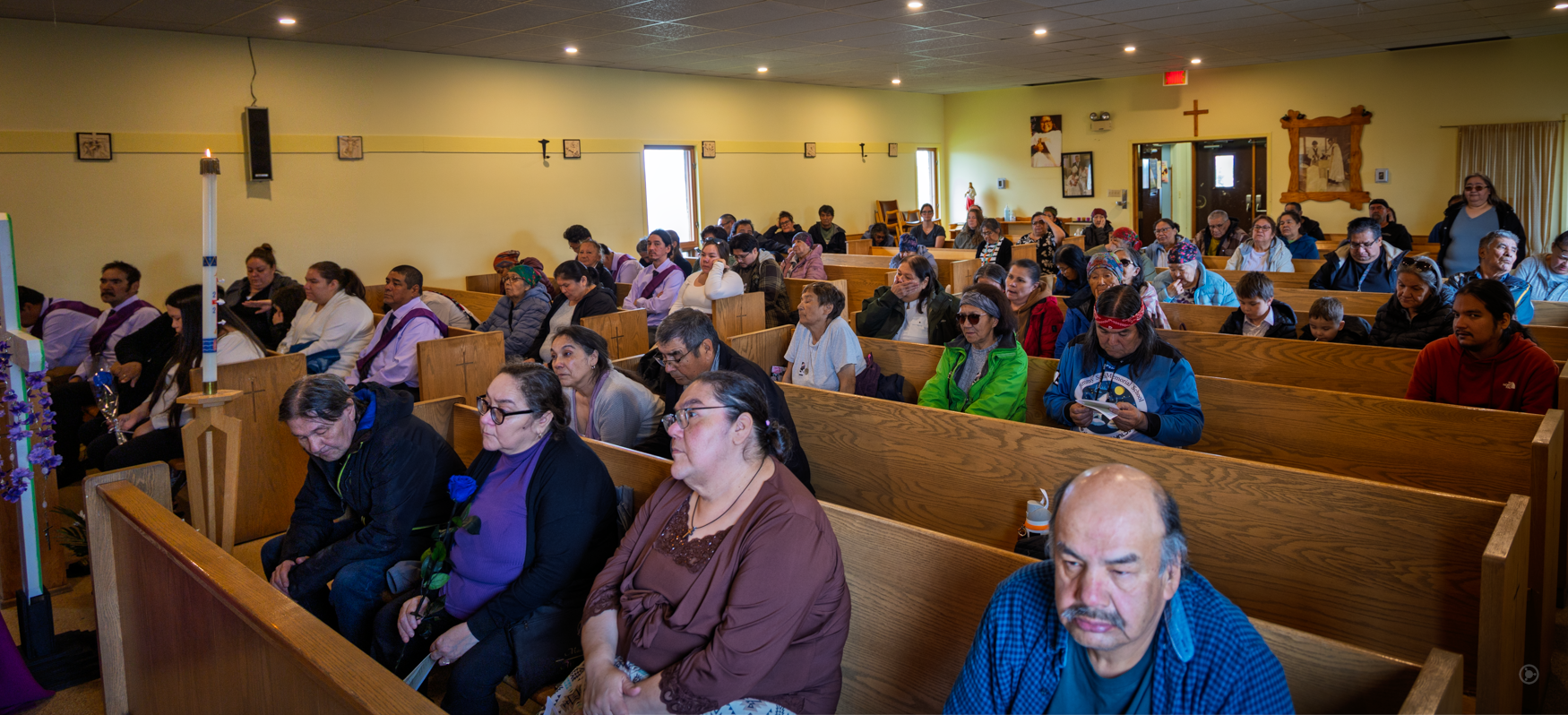
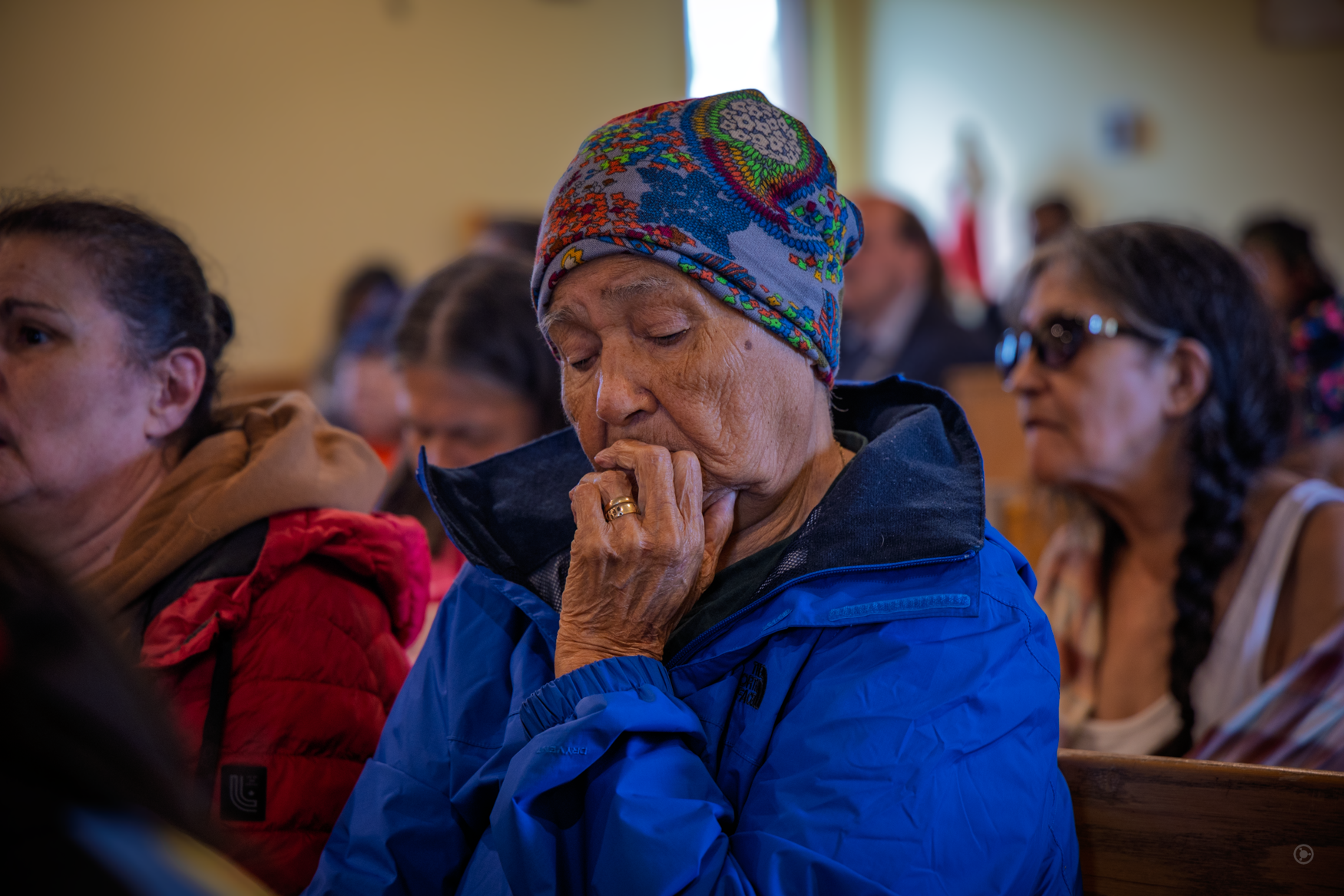
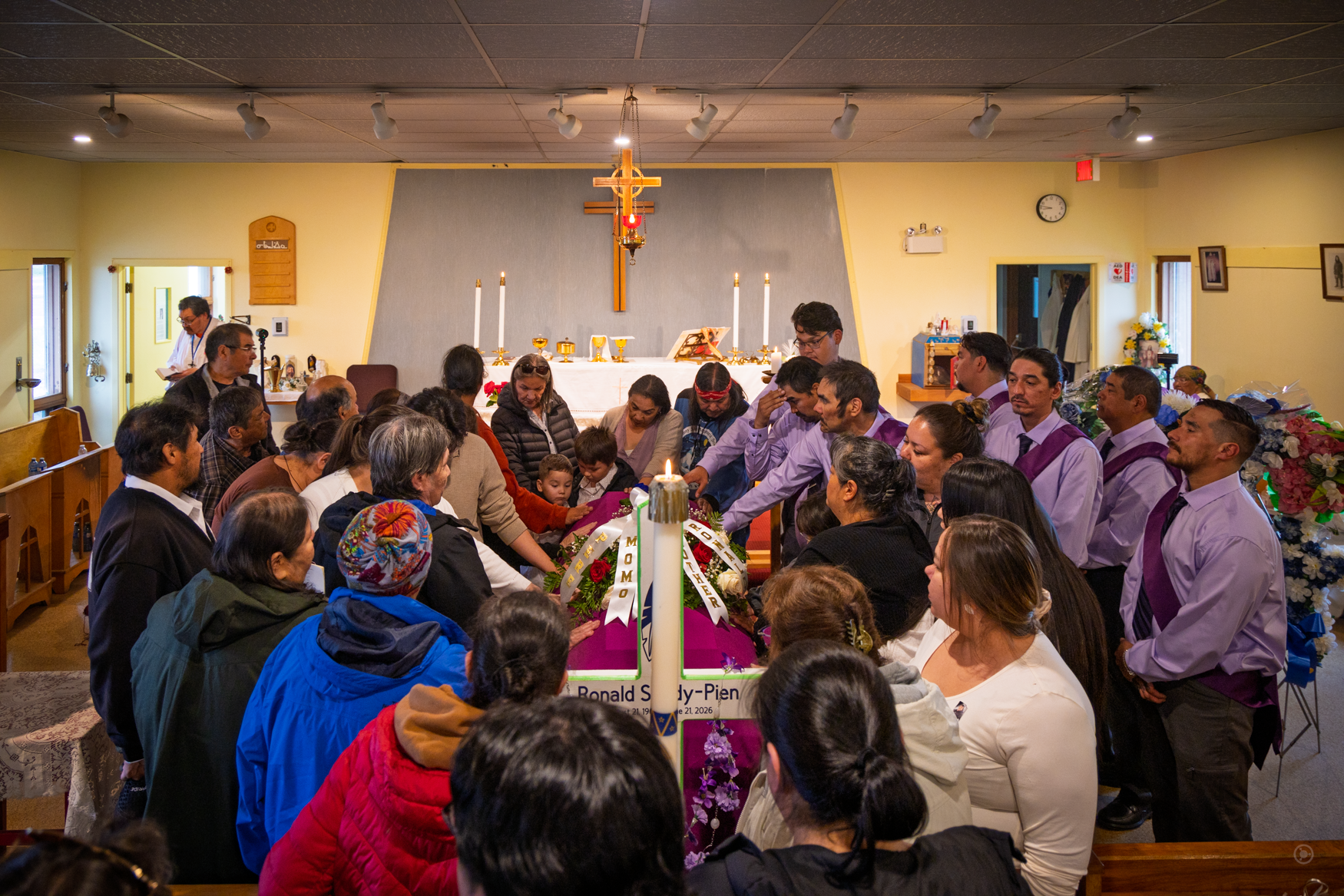
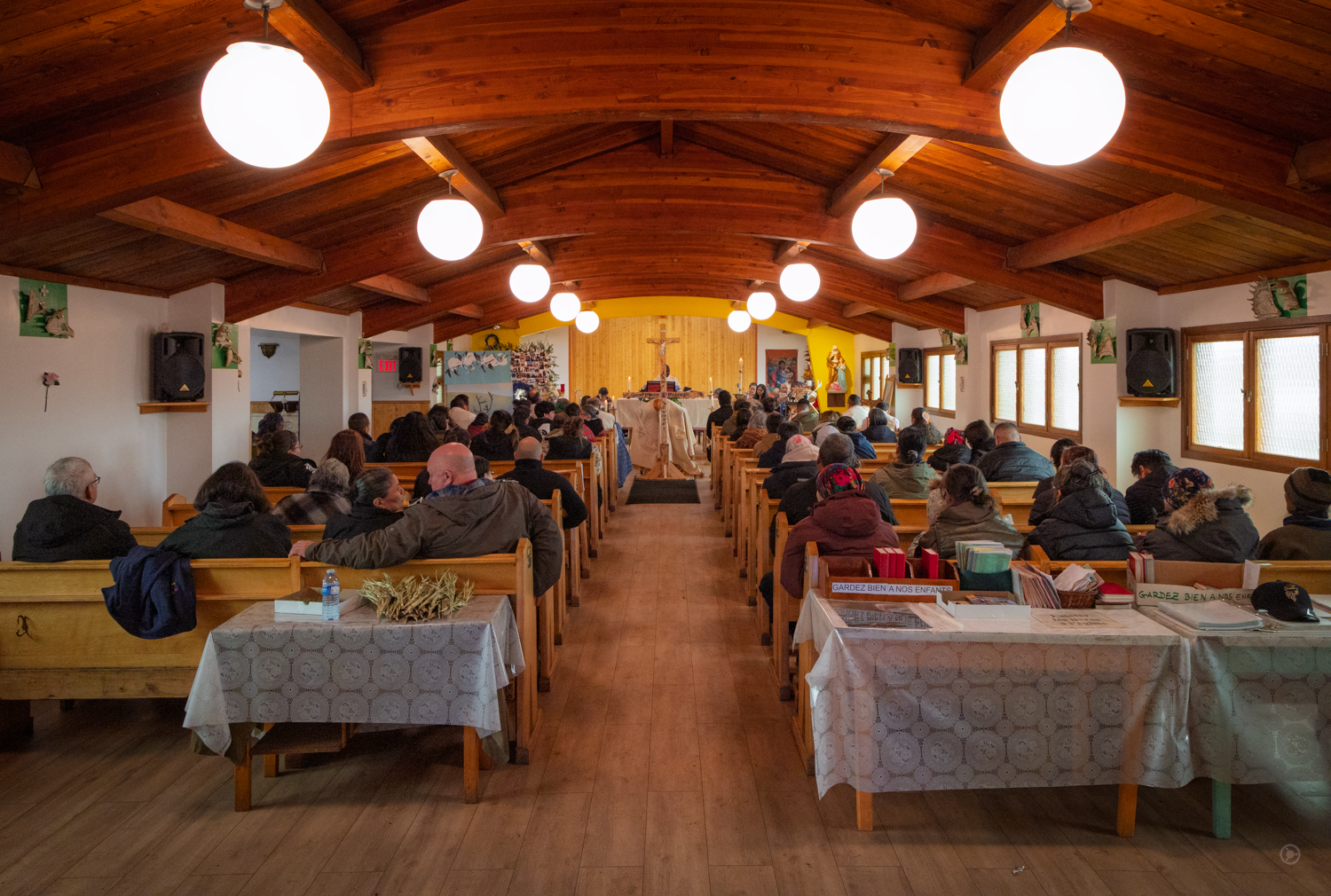
The funeral was set for 2, but word went around on Facebook that it had been pushed to 4. So many people down south wanted to be there that they needed the time to fly up. By the time it started, the church was already full, and it kept filling up throughout the service.
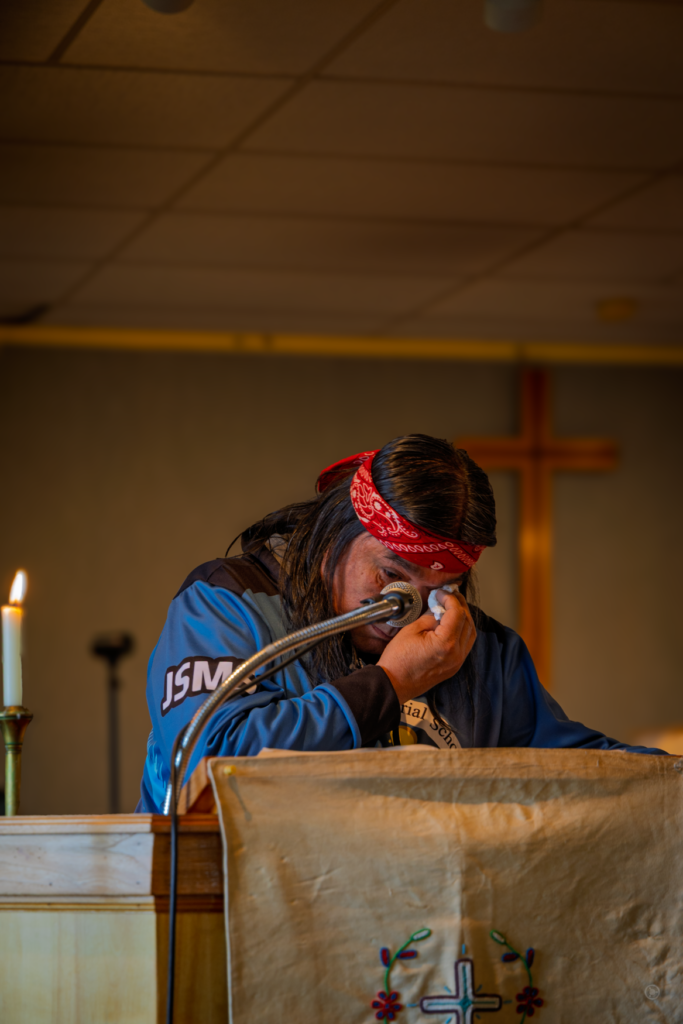
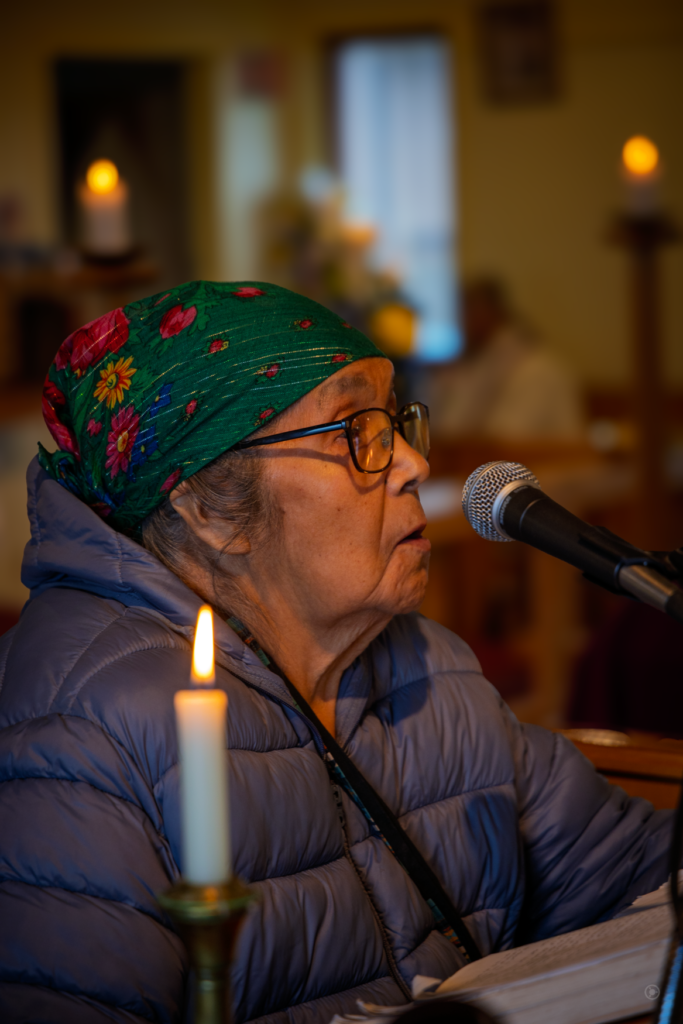
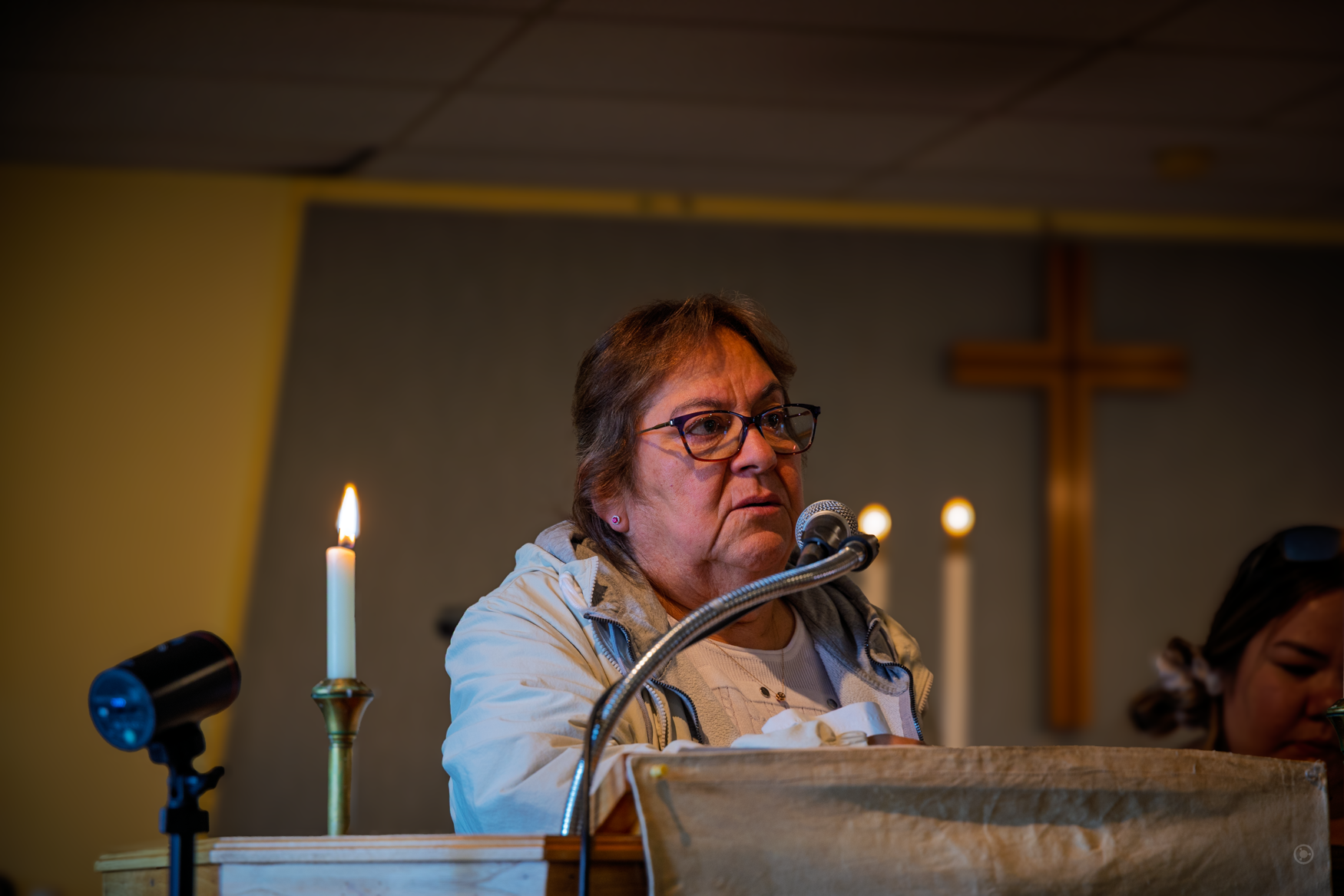
It was one of the longest funerals I have been to. So many people had something to say in his memory, and about what has been happening. I got up to speak for myself. The chief could not be there, so I read what she had written.
To my community,
My heart is heavy as I write this. Like so many of you, I have been thinking of the death of Ronald Sandy Pien, a Naskapi whose life was taken by violence. That loss has stayed with me, and I know it has stayed with many of you, too.
His passing has me thinking hard about something we do not talk about enough.
Bullying is not small. It is not something children simply grow out of. We have watched it grow into adult cruelty, into name-calling, into shaming, into belittling, and into violence. We have watched it take people we love. Some were beaten. Some carried wounds we could not see until it was too late. Some of them were so very young.
I carry my own memories of this. I know what it is to be a child and to feel like you cannot go on. Too many of us know that feeling, and we have carried it in silence for too long.
Bullying should have no place in Kawawachikamach. Cruelty should have no place here. Name-calling, shaming, belittling, threatening one another, none of it should belong in our community.
We can choose something better, and we can begin today. We can teach kindness at home, in our schools, and everywhere we gather. We can stand beside the ones being hurt instead of looking away. We can speak up when we see someone treated badly, in person or online. And we can check on each other, especially the ones who seem to be struggling.
If you are hurting right now, please reach out. Come to an Elder, to a teacher, to anyone you trust. You are not alone, and you are not a burden to anyone. Your life matters to this community far more than you know.
If you need someone to talk to and you are not ready to talk to someone you know, the Hope for Wellness Helpline is there for Indigenous people across Canada, day or night, at 1-855-242-3310.
We are Naskapi. We have carried each other through so much already. We can protect one another.
With love, and with strength, Chief Louise Nattawappio
Some spoke about Ronald. Some spoke about what has been happening, and what has to change.
It went on long past when a funeral usually ends. Nobody rushed it.
The room listened and journed together.
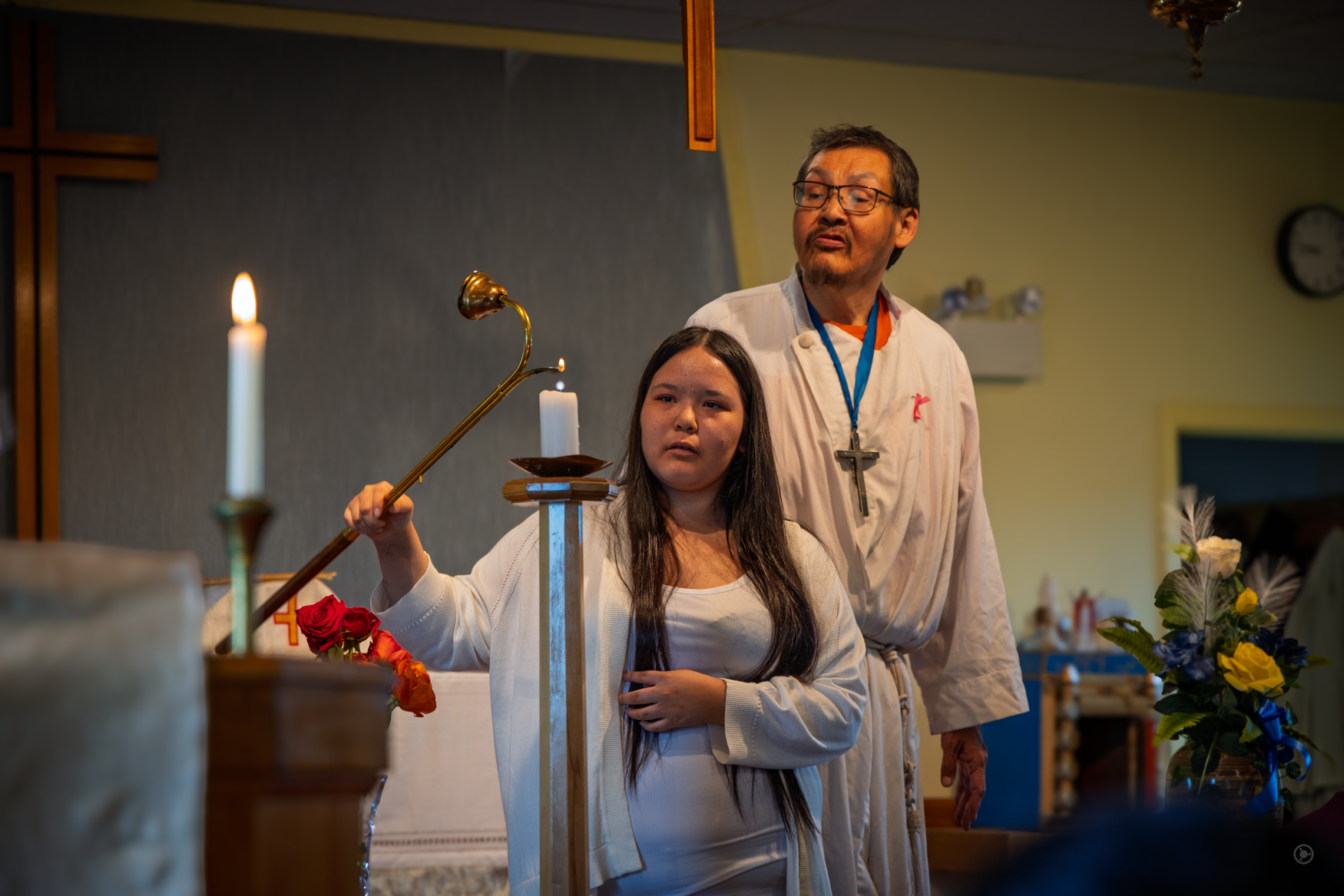
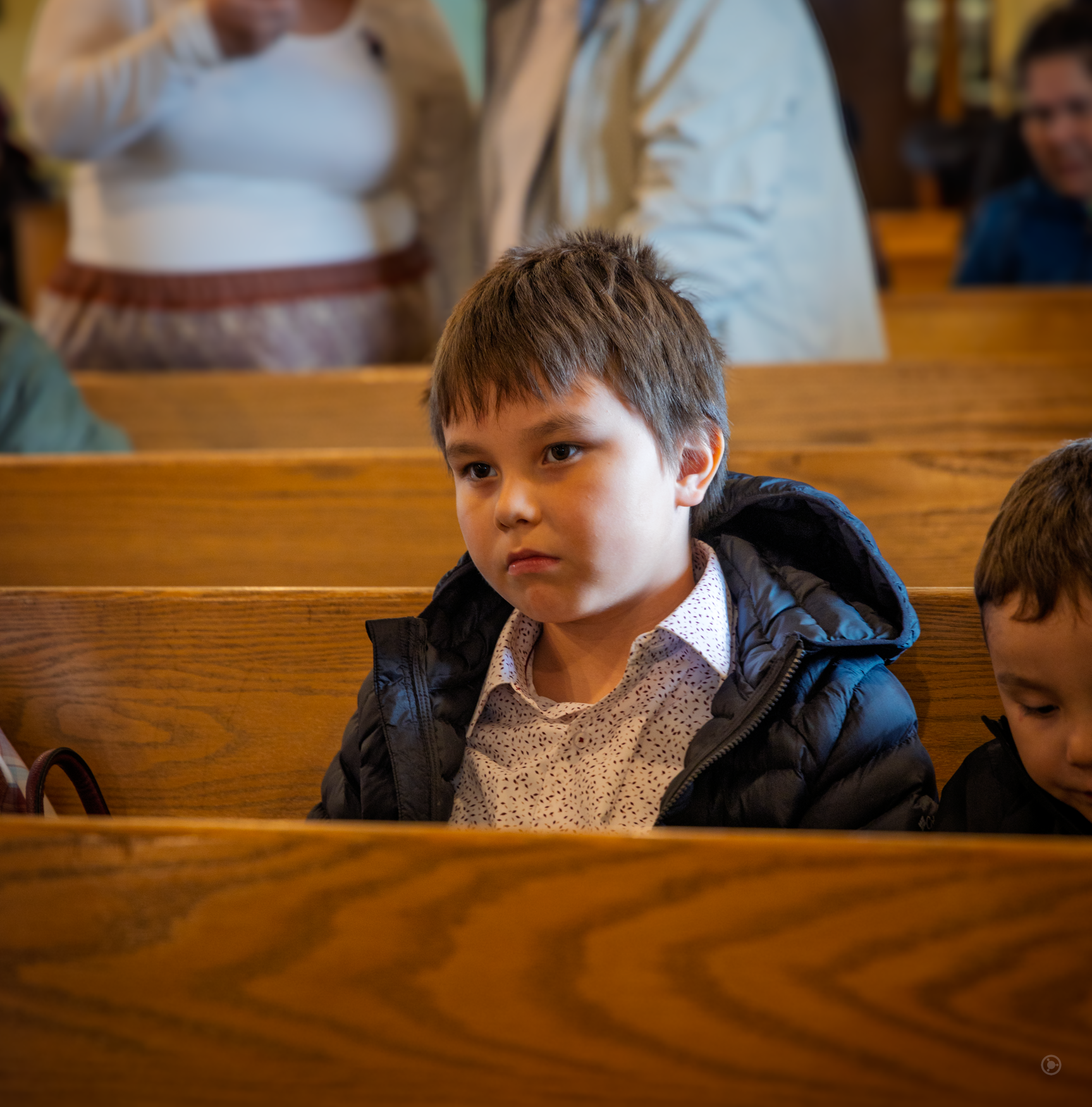
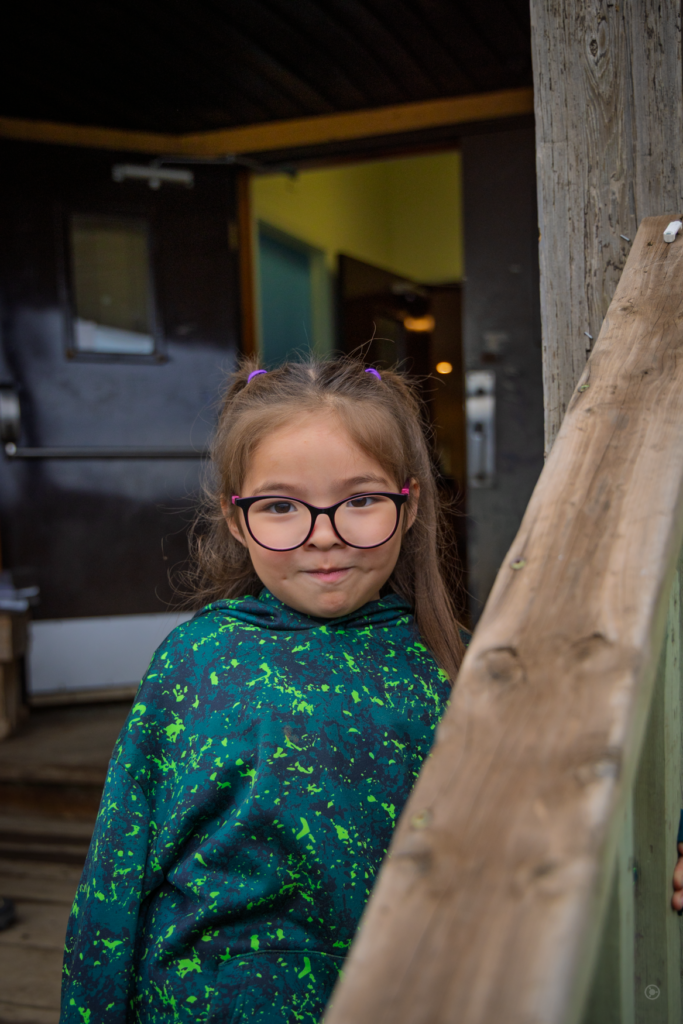
The children were there for all of it.
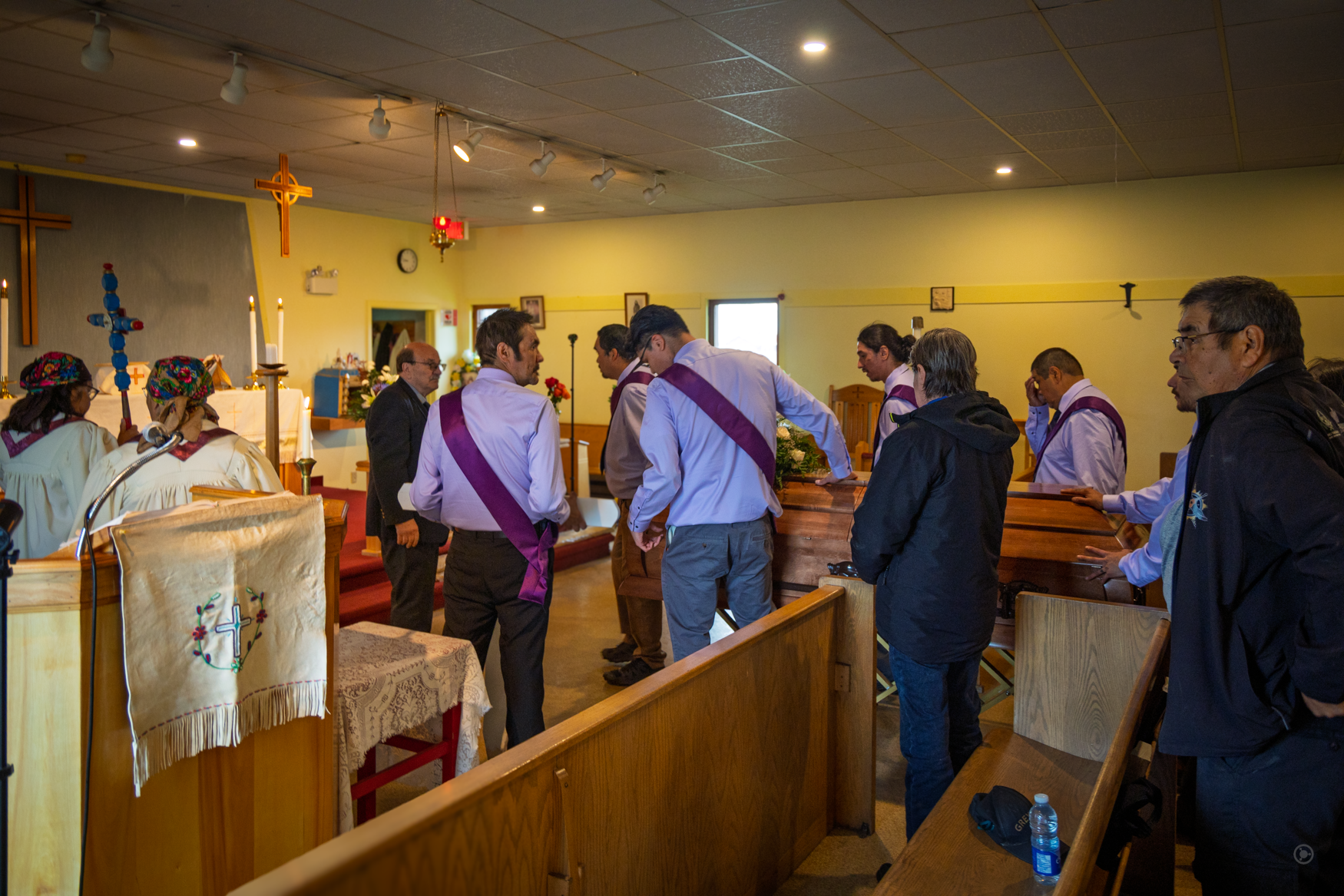
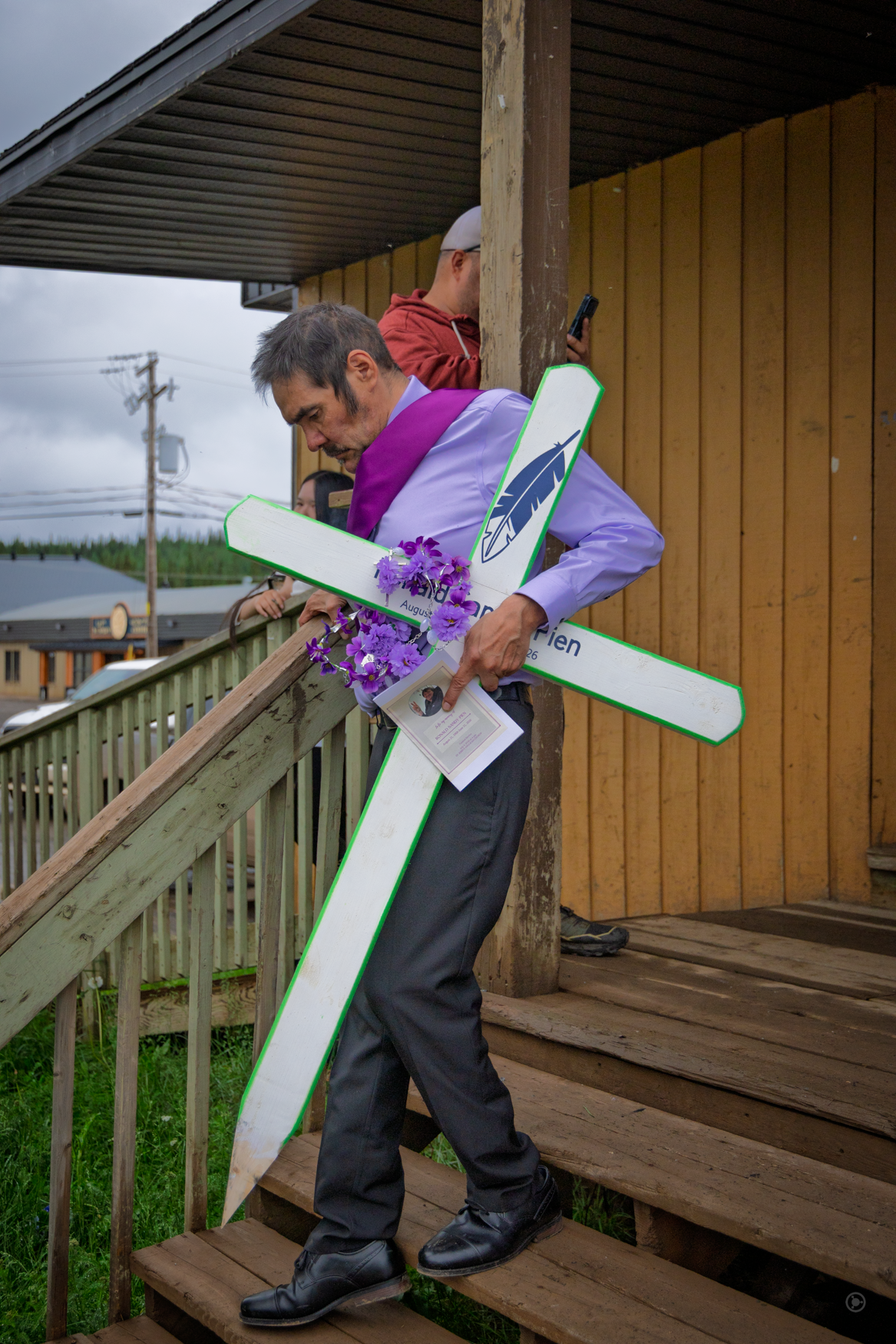
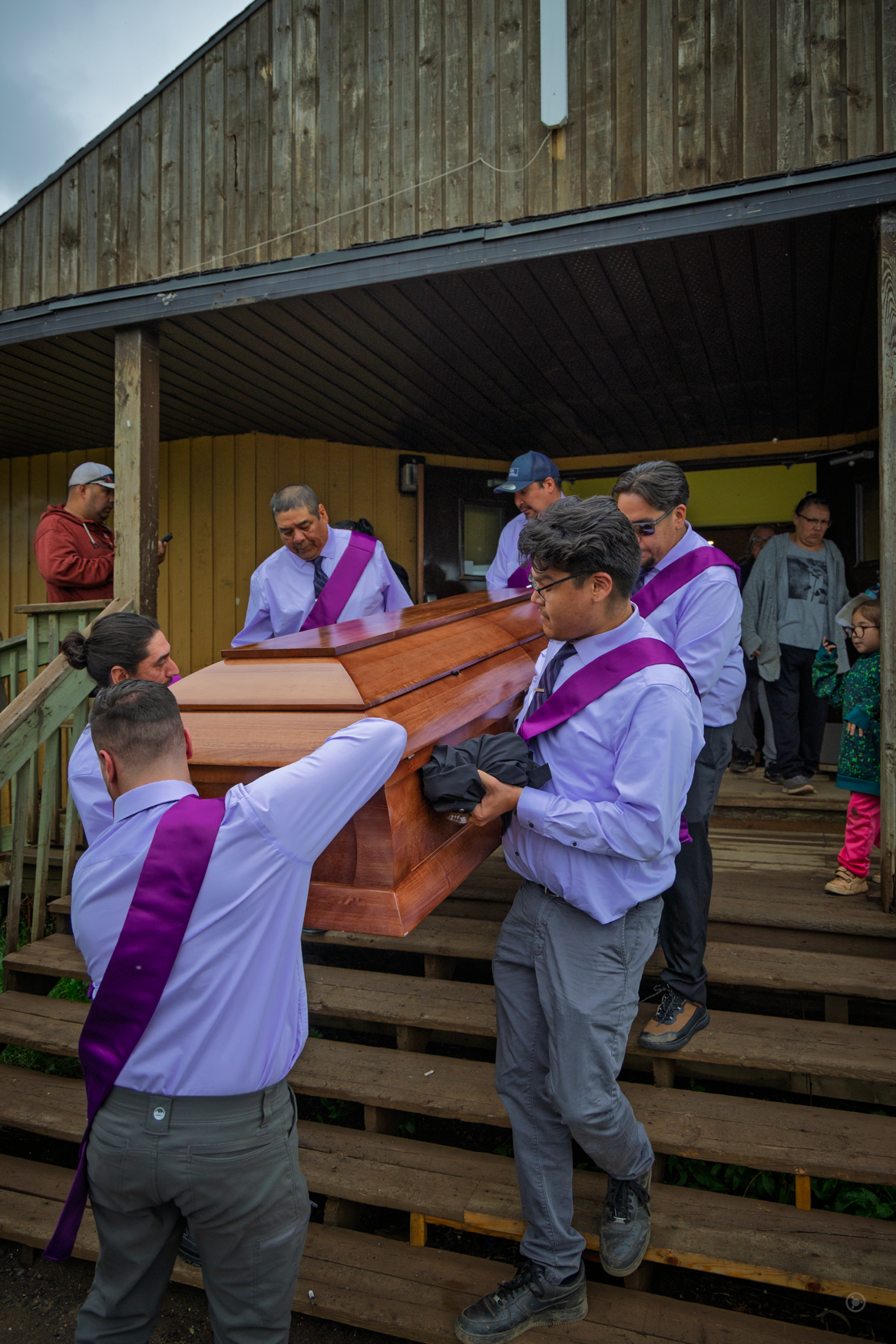
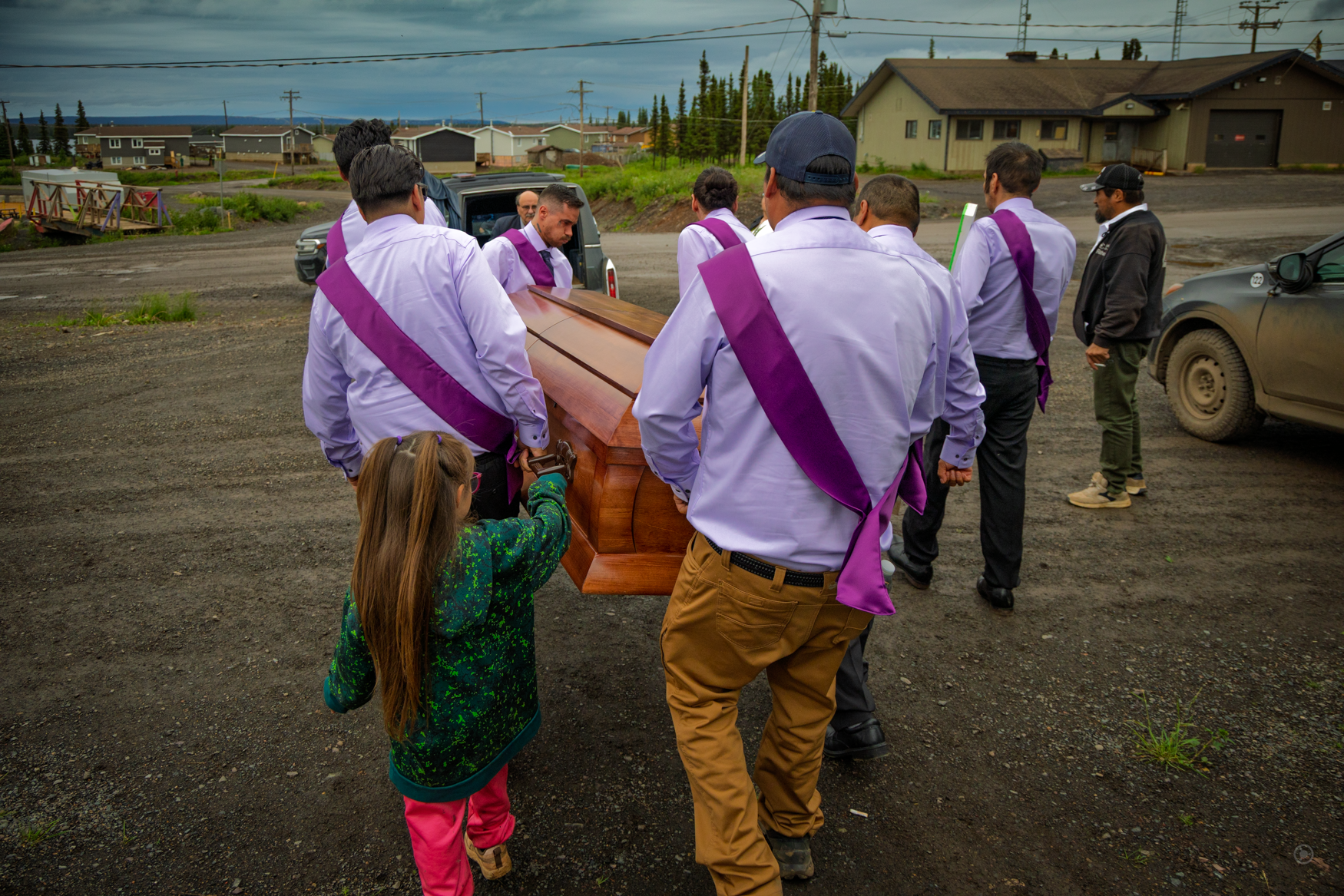
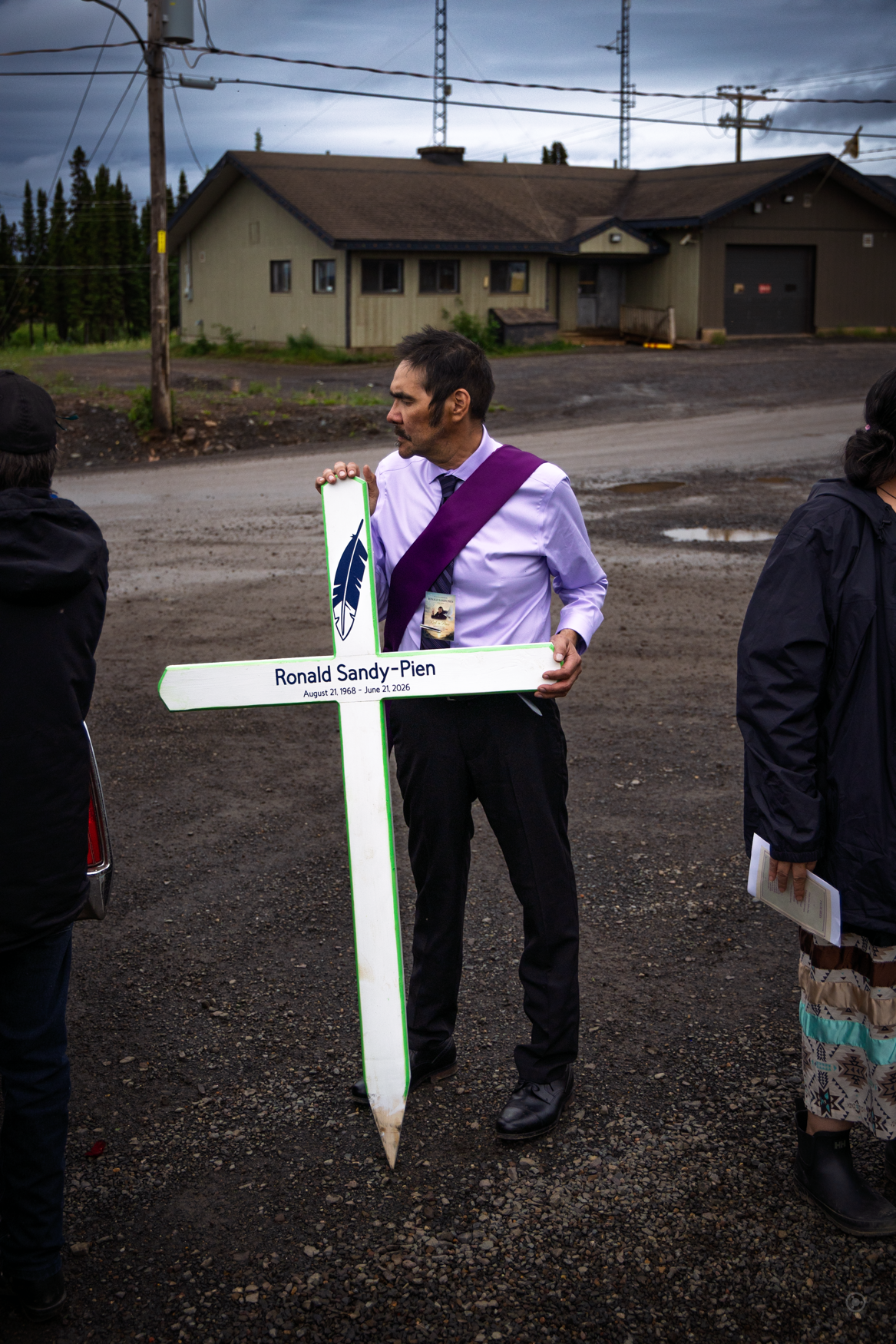
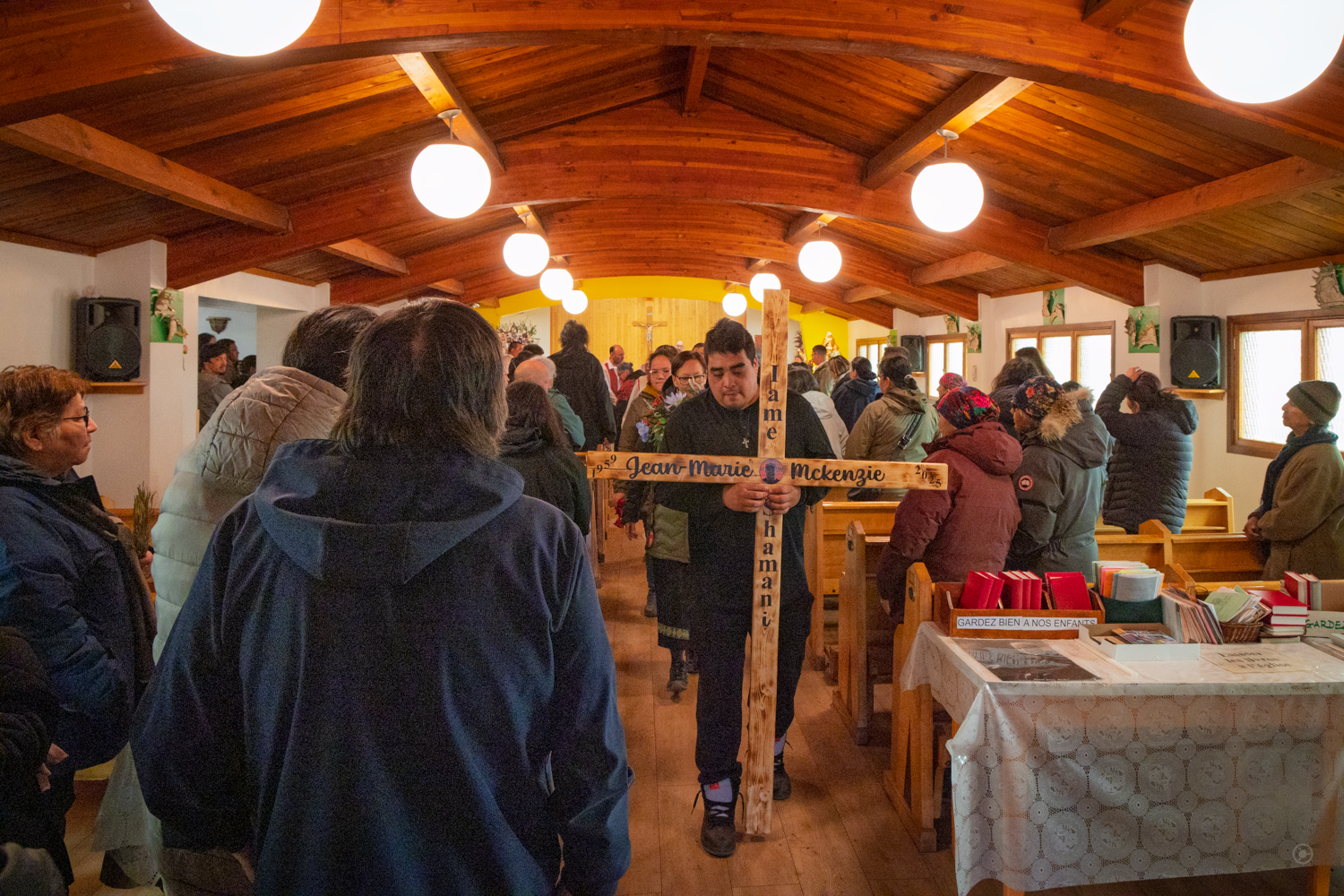
When it was finally over, the cross led the way back out.
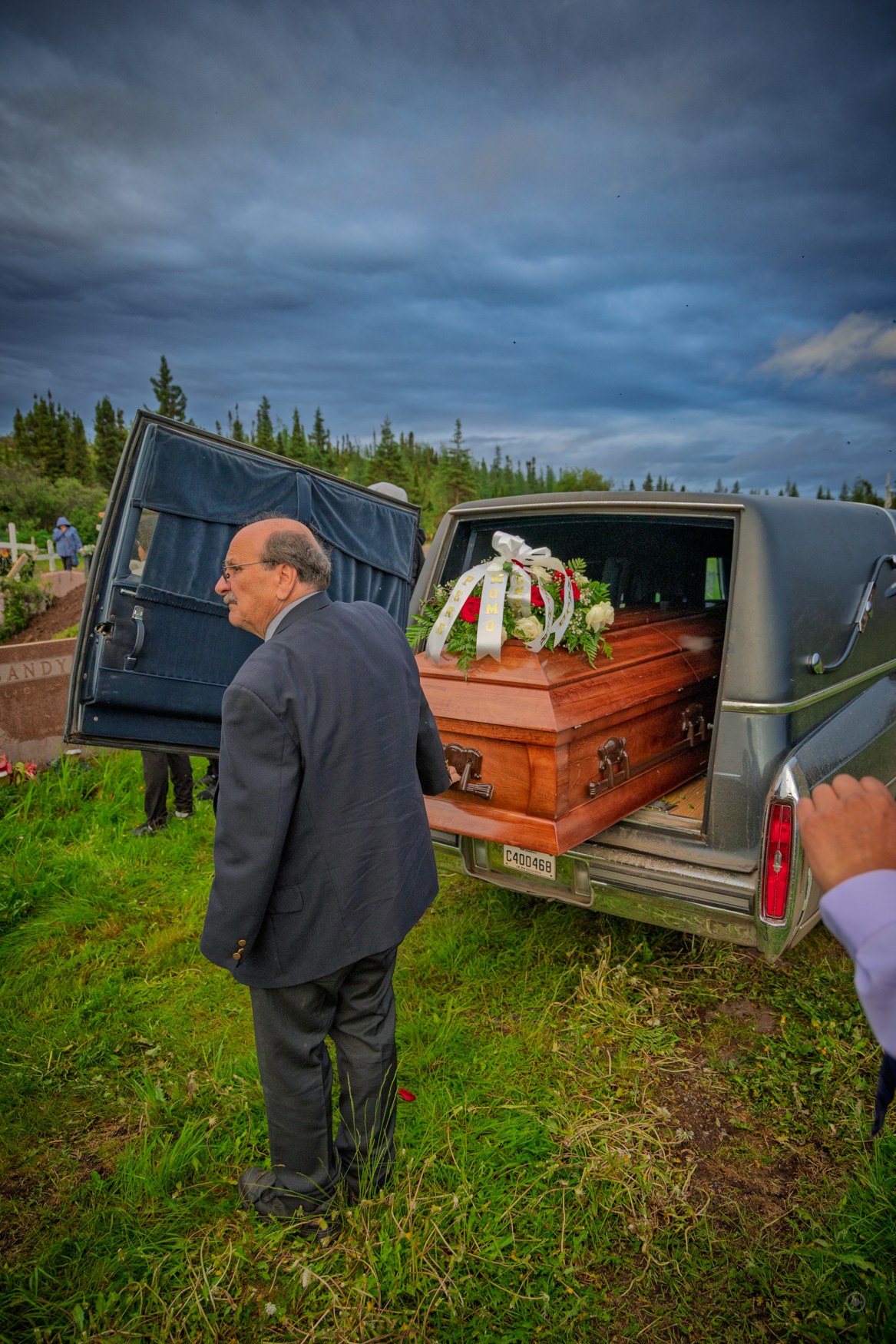
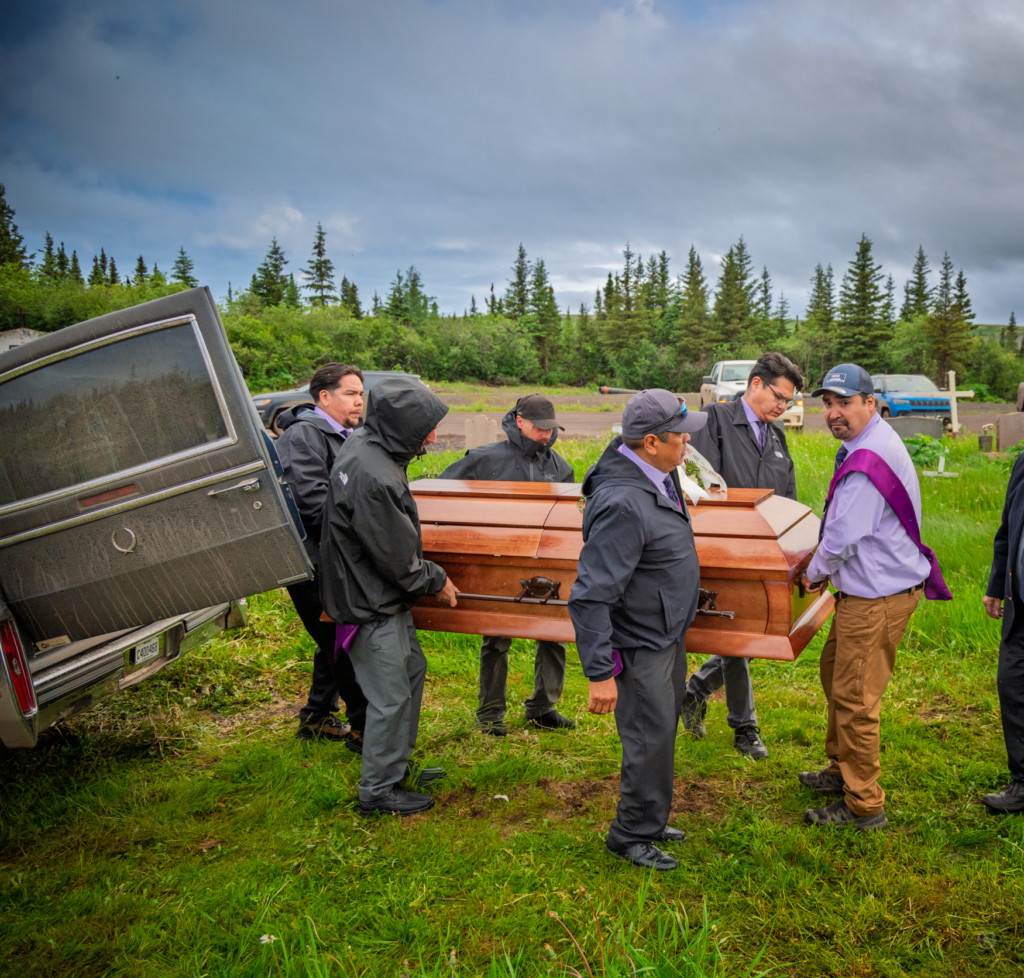
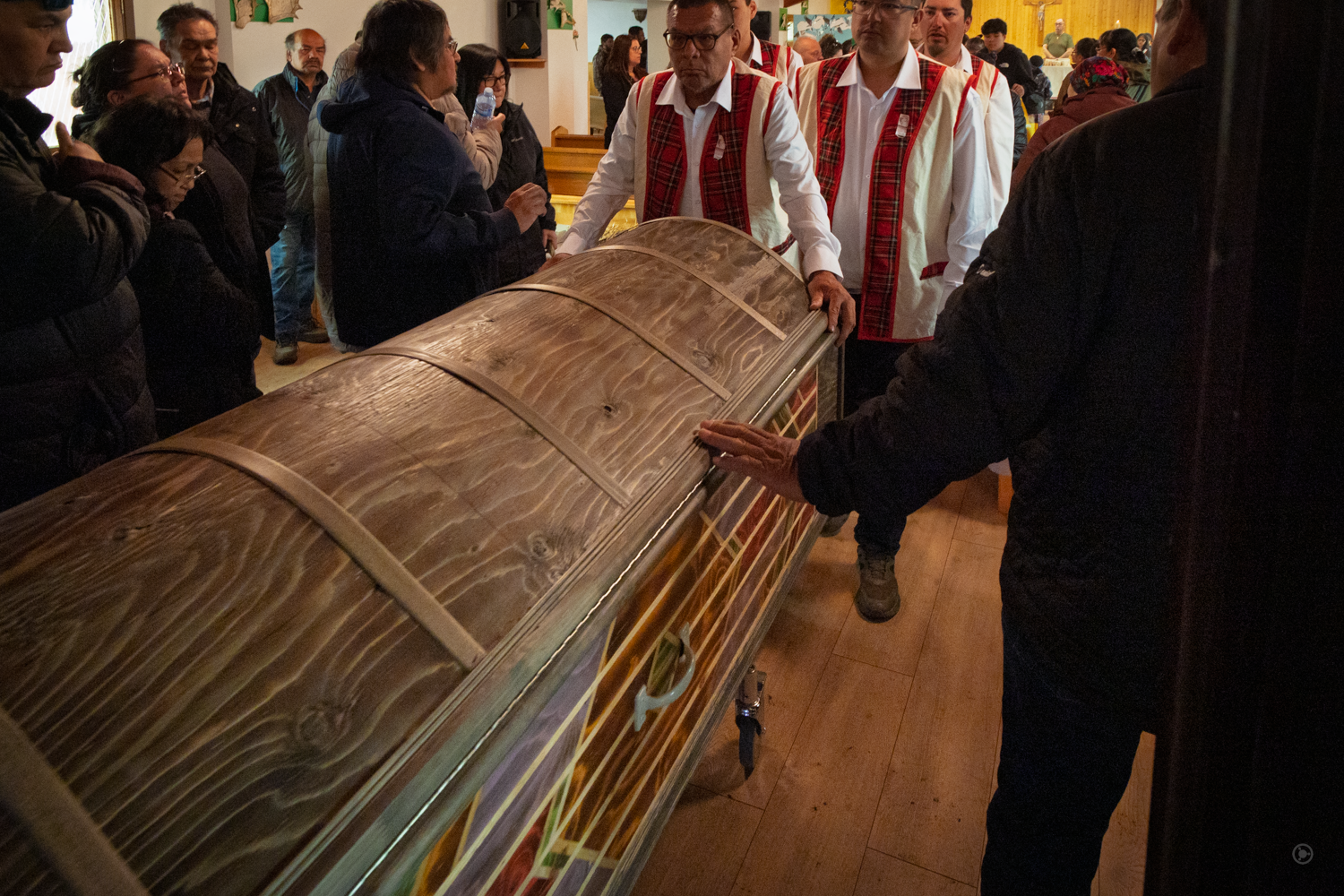
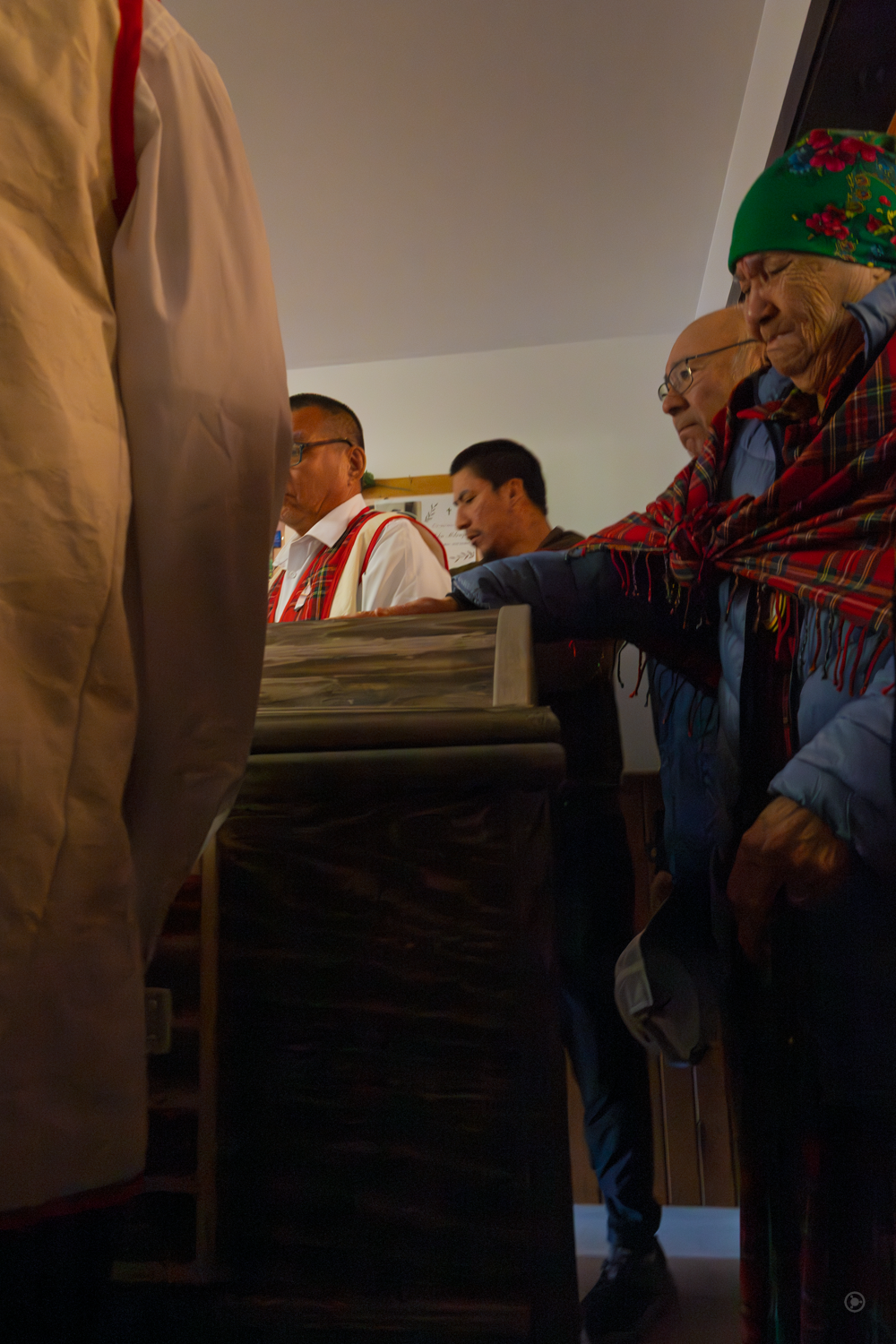
Maddison reached up and kept her hand on the casket the whole way to the hearse.
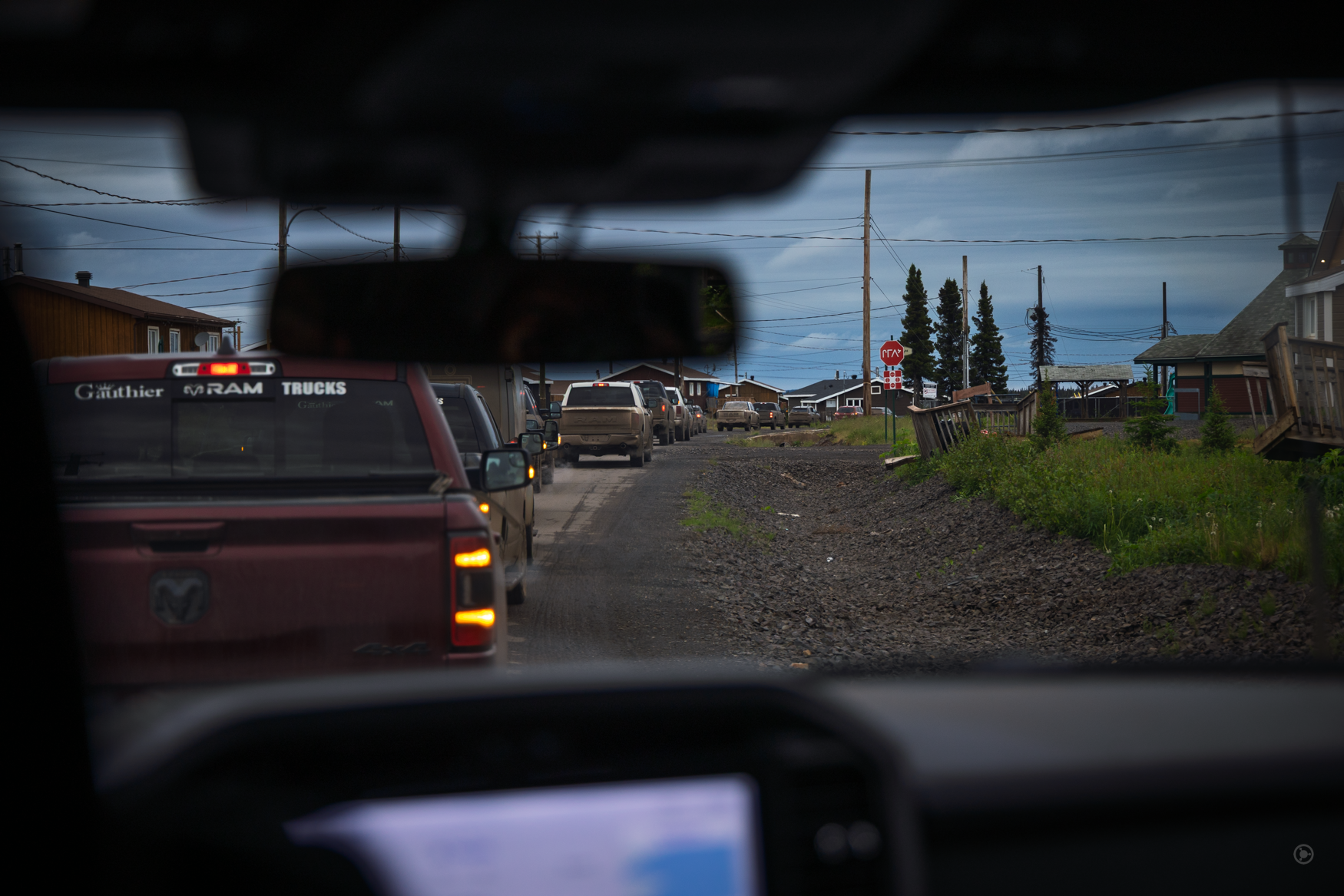
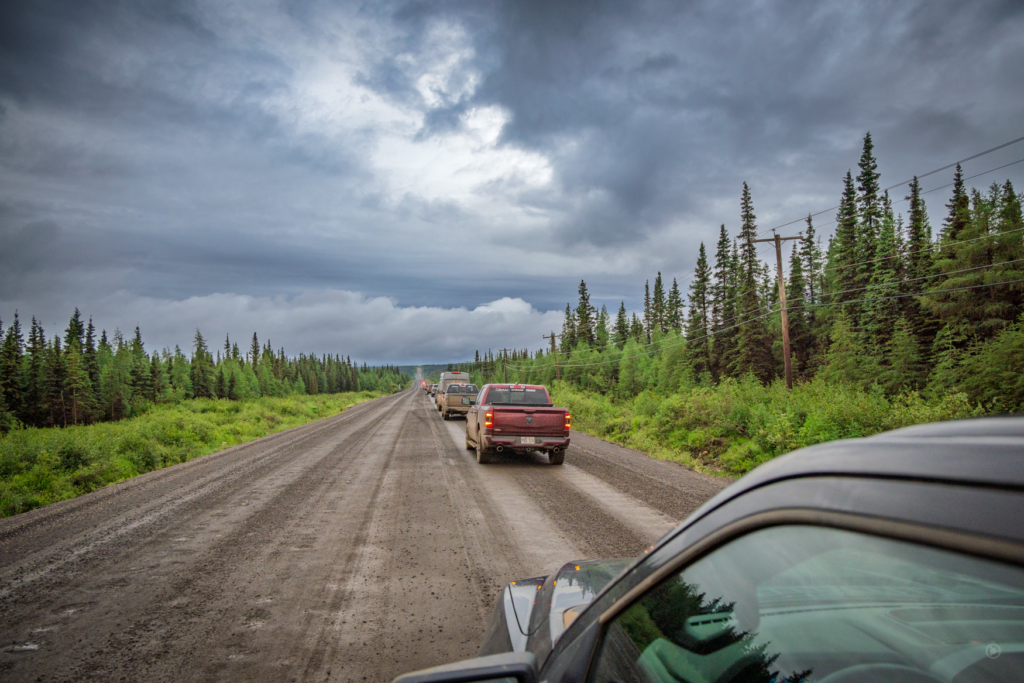
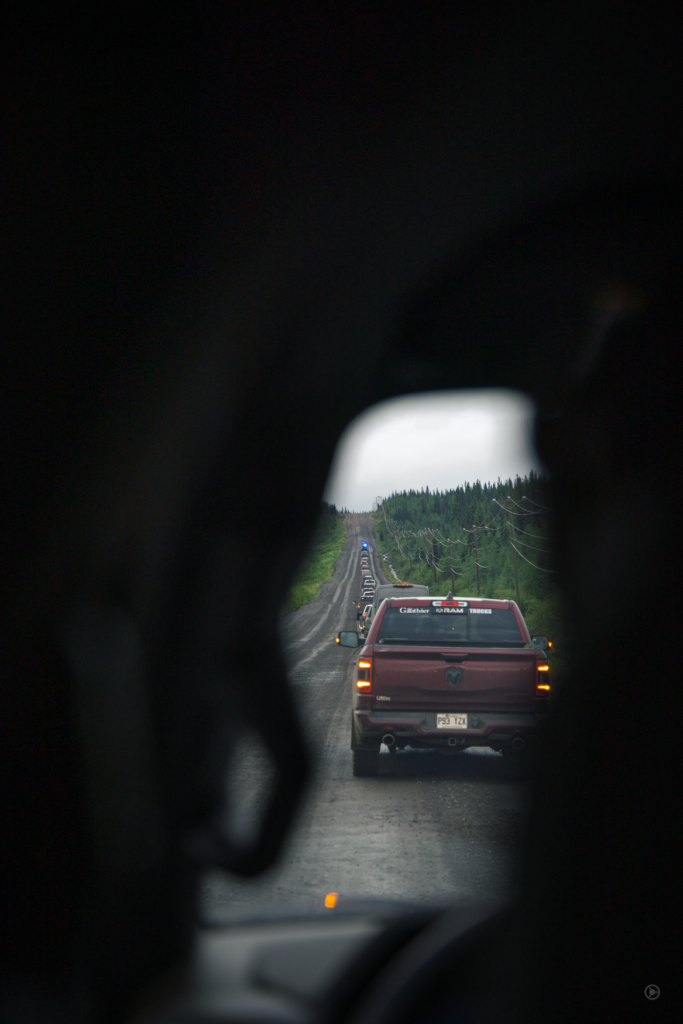
Before driving out, we did the traditional parade around the community, the cross carried at the front.
Then everyone piled into trucks. I still do not have one, so I rode with family.
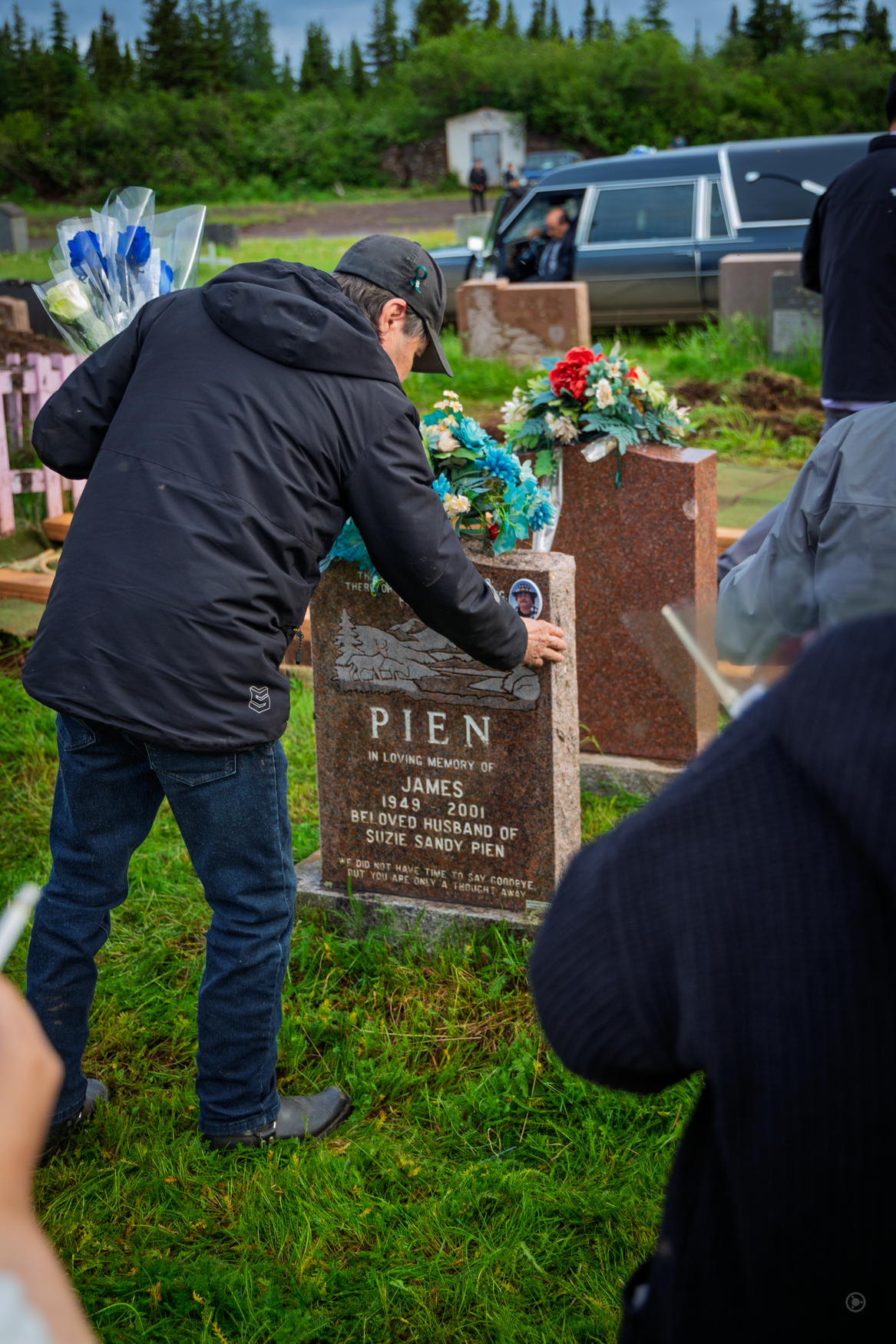
At the cemetery, people went to visit the graves already there.
The cemetery sits in a dip in the ridge where the wind does not reach. After a morning of rain the blackflies came up out of the bushes in clouds and did not let up.
We sang one song. Then people covered the casket with flowers, handful after handful, until you could not see the wood anymore.
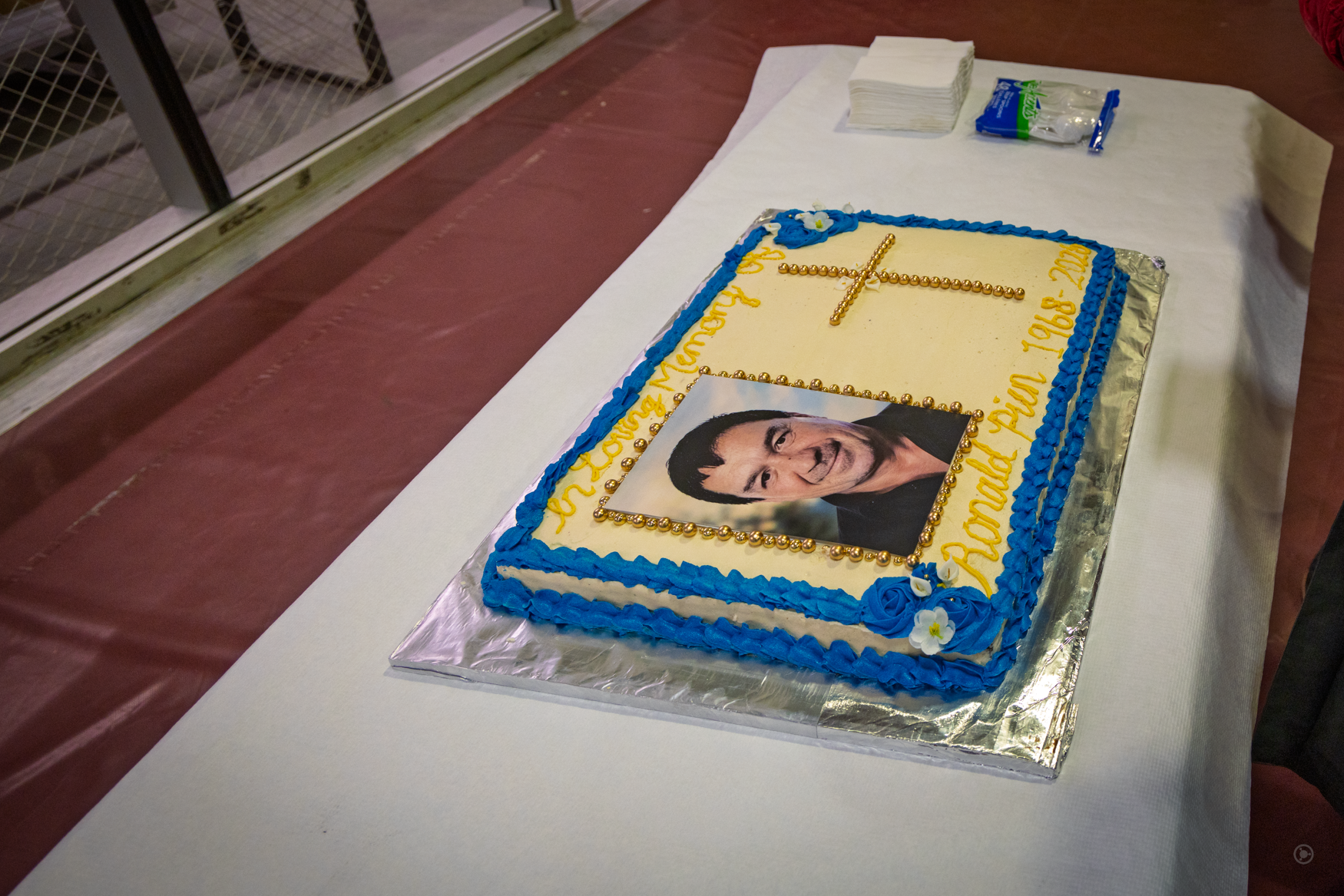
There was a feast at the Jimmy Sandy Memorial School. Platter after platter of traditional food, so much of it that they made everyone take a plate home. His face was on the cake.
Every Wednesday in the small town of Canton, New York, a protest happens.
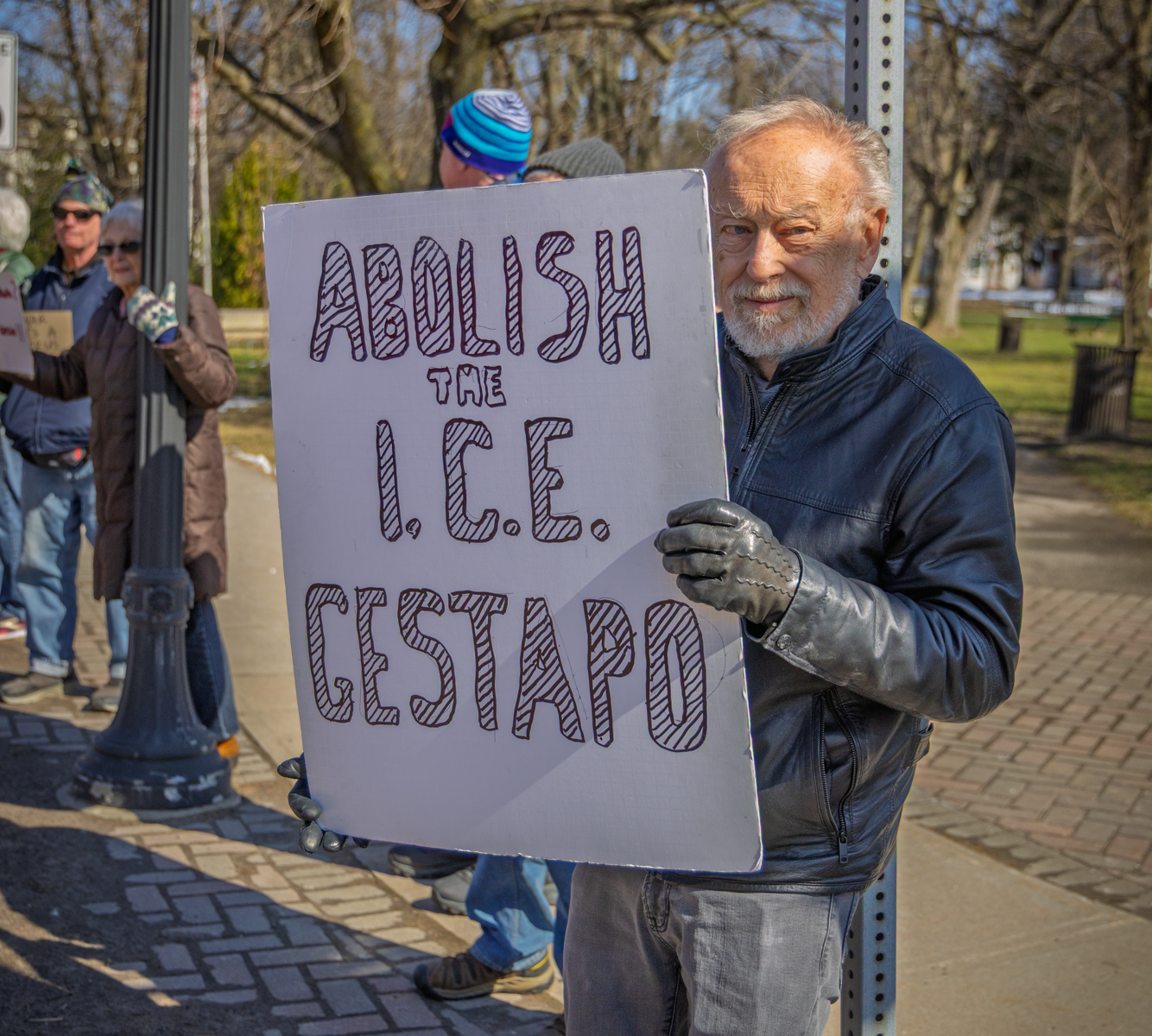
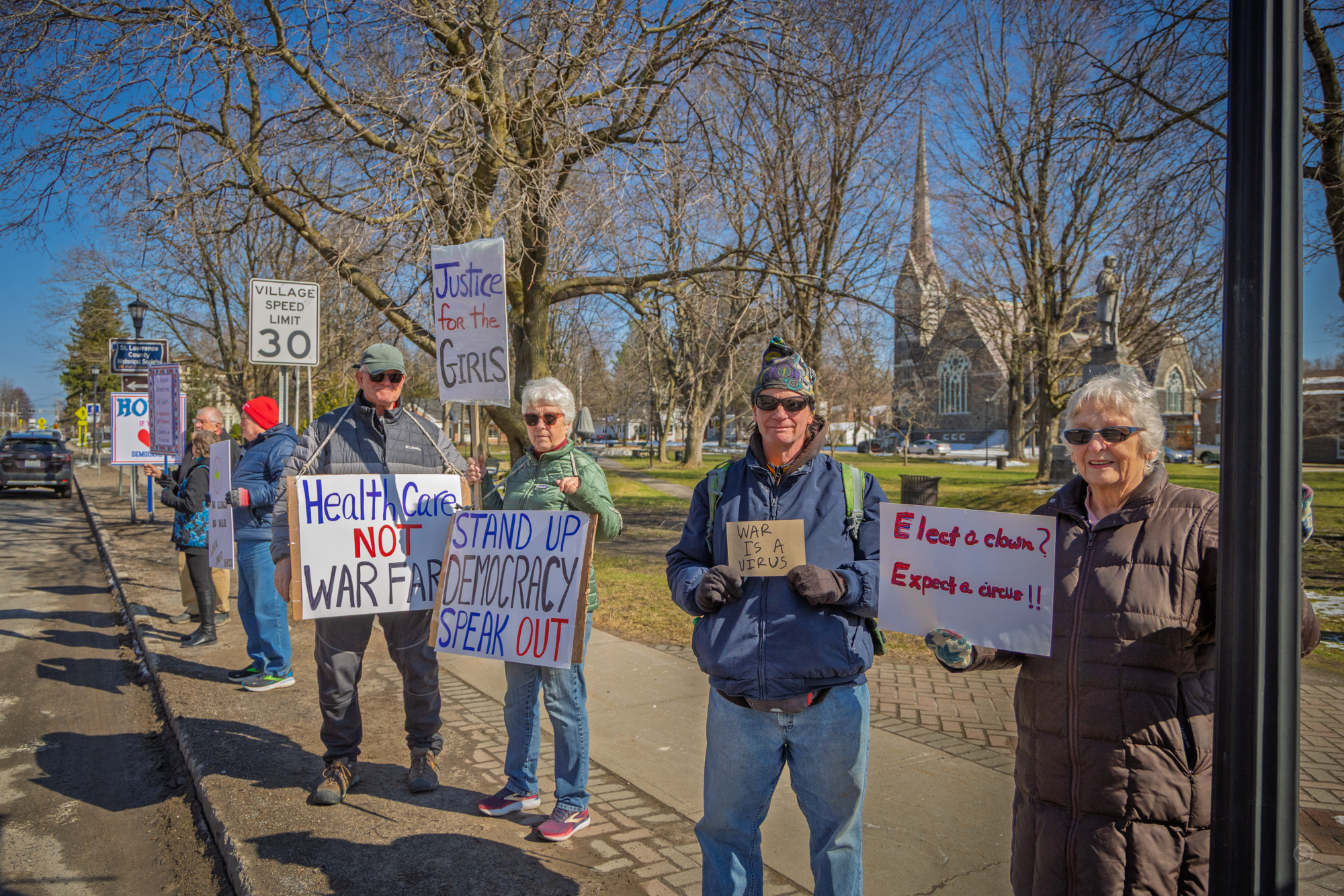
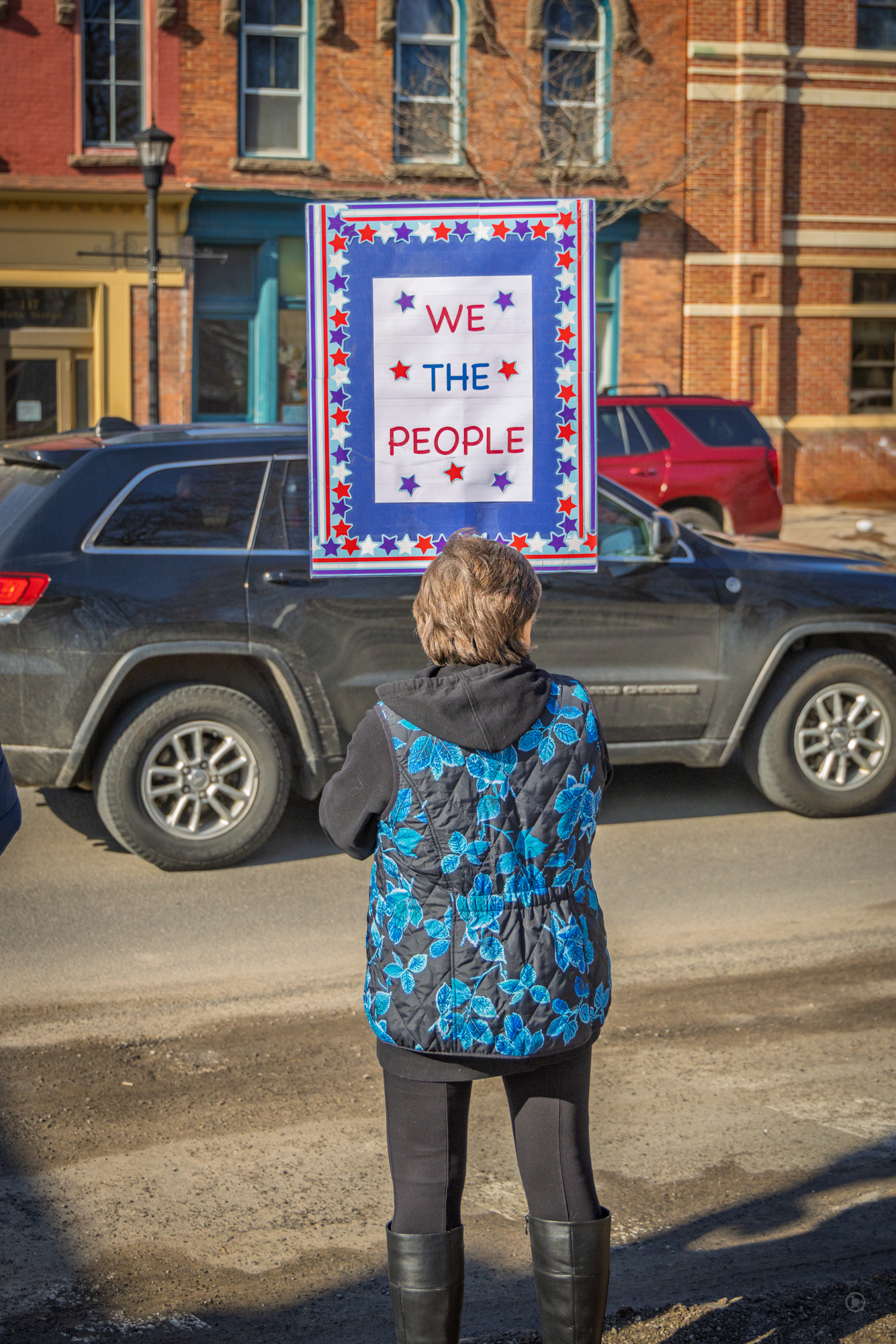
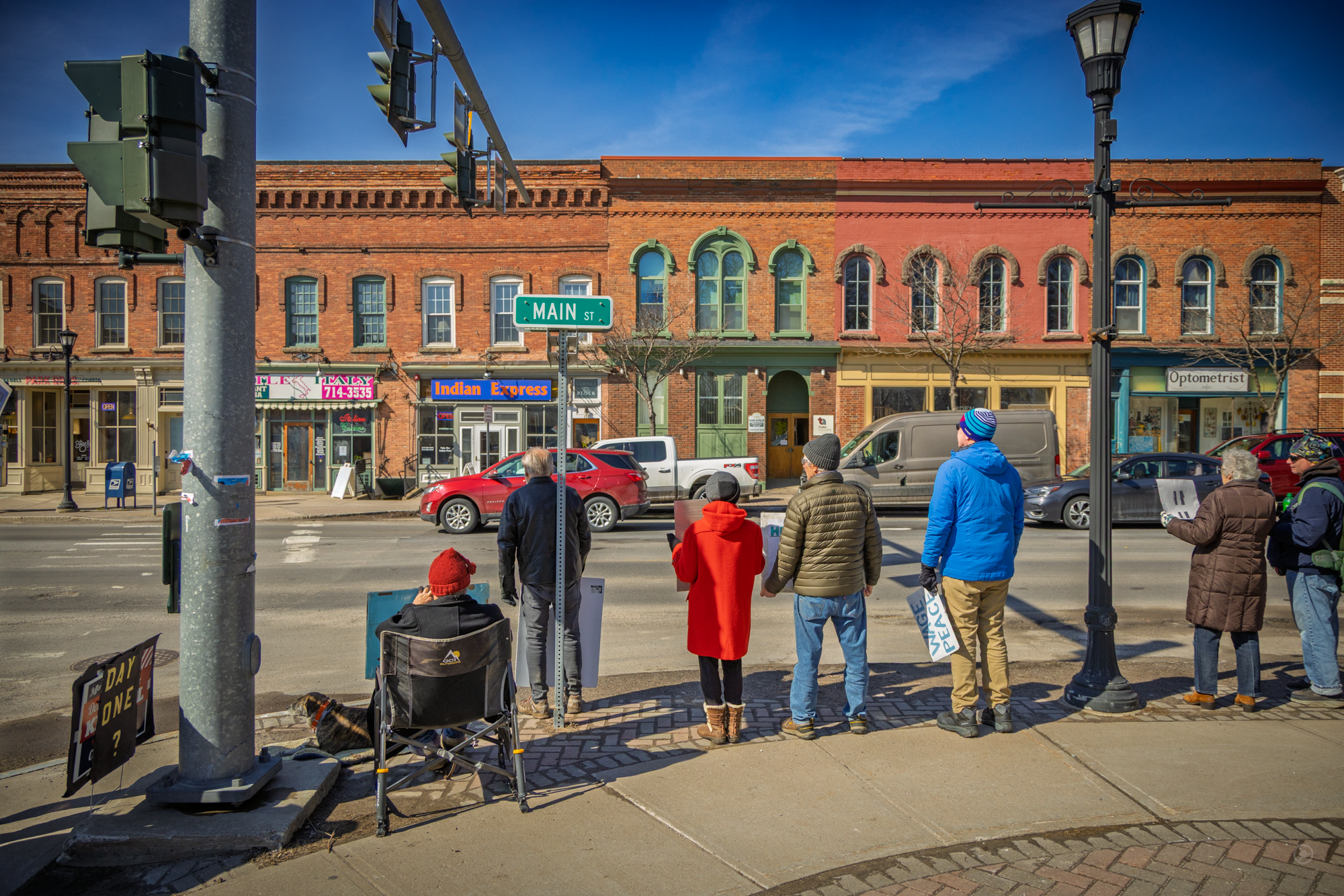
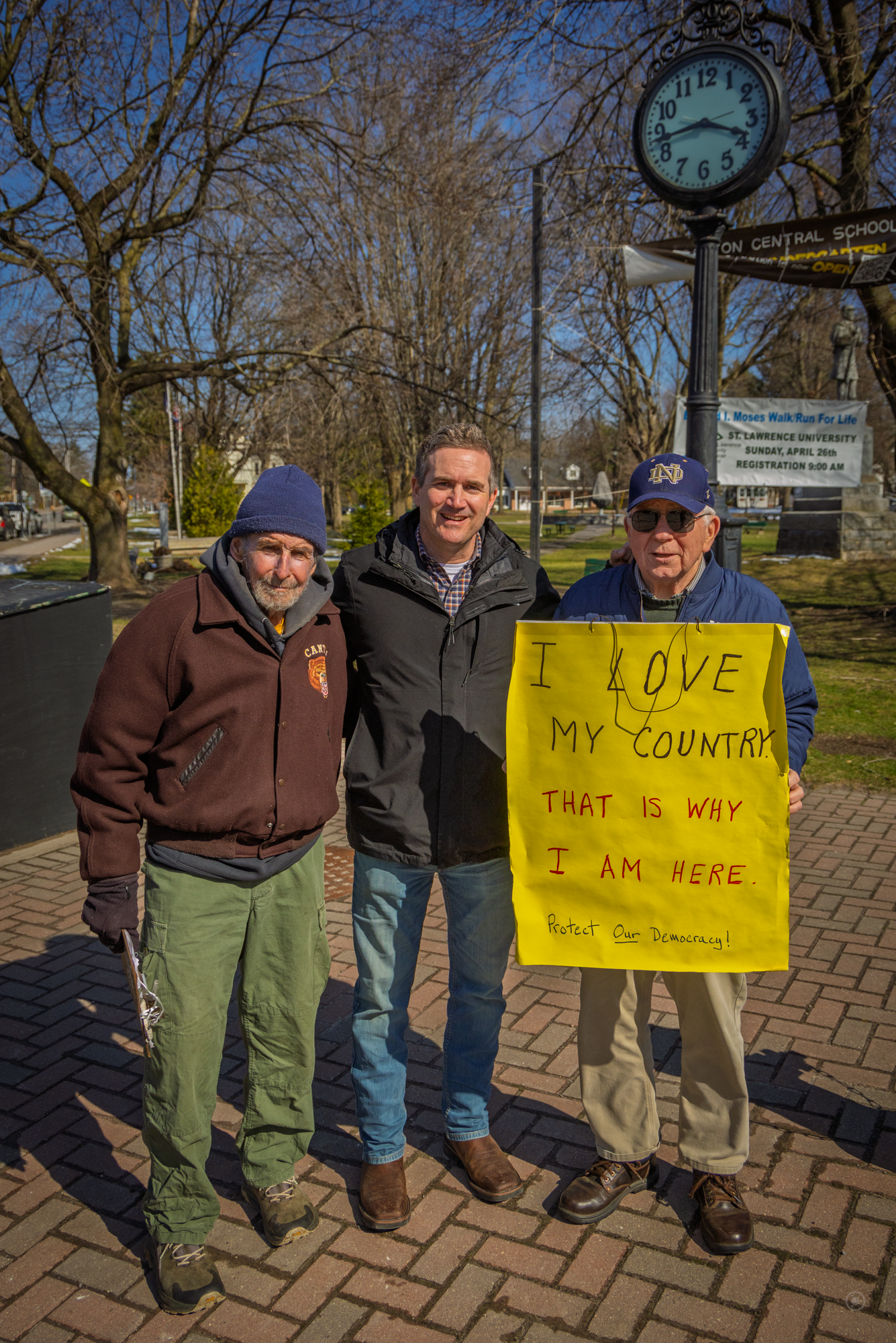
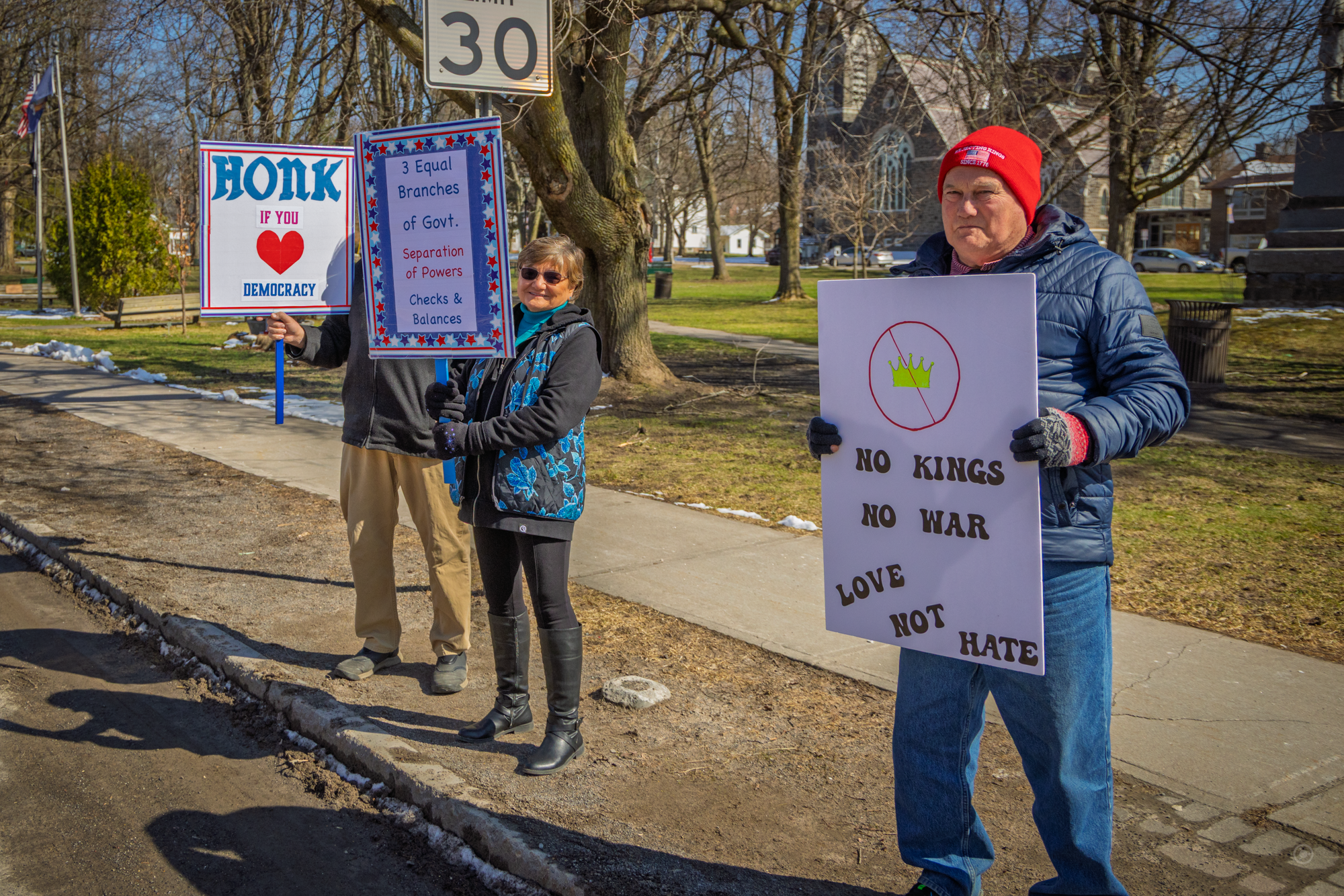
Around twenty-five to thirty people gather at the corner of Main and Park, some with signs, some without, waving at passing cars and greeting pedestrians. The signs are mostly handmade. “Abolish the I.C.E. Gestapo.” “Healthcare Not Warfare.” “No Kings, No War, Love Not Hate.” “Honk if you ❤️ Democracy.” One woman holds a panel framed in red and blue stars that simply reads “We The People.”
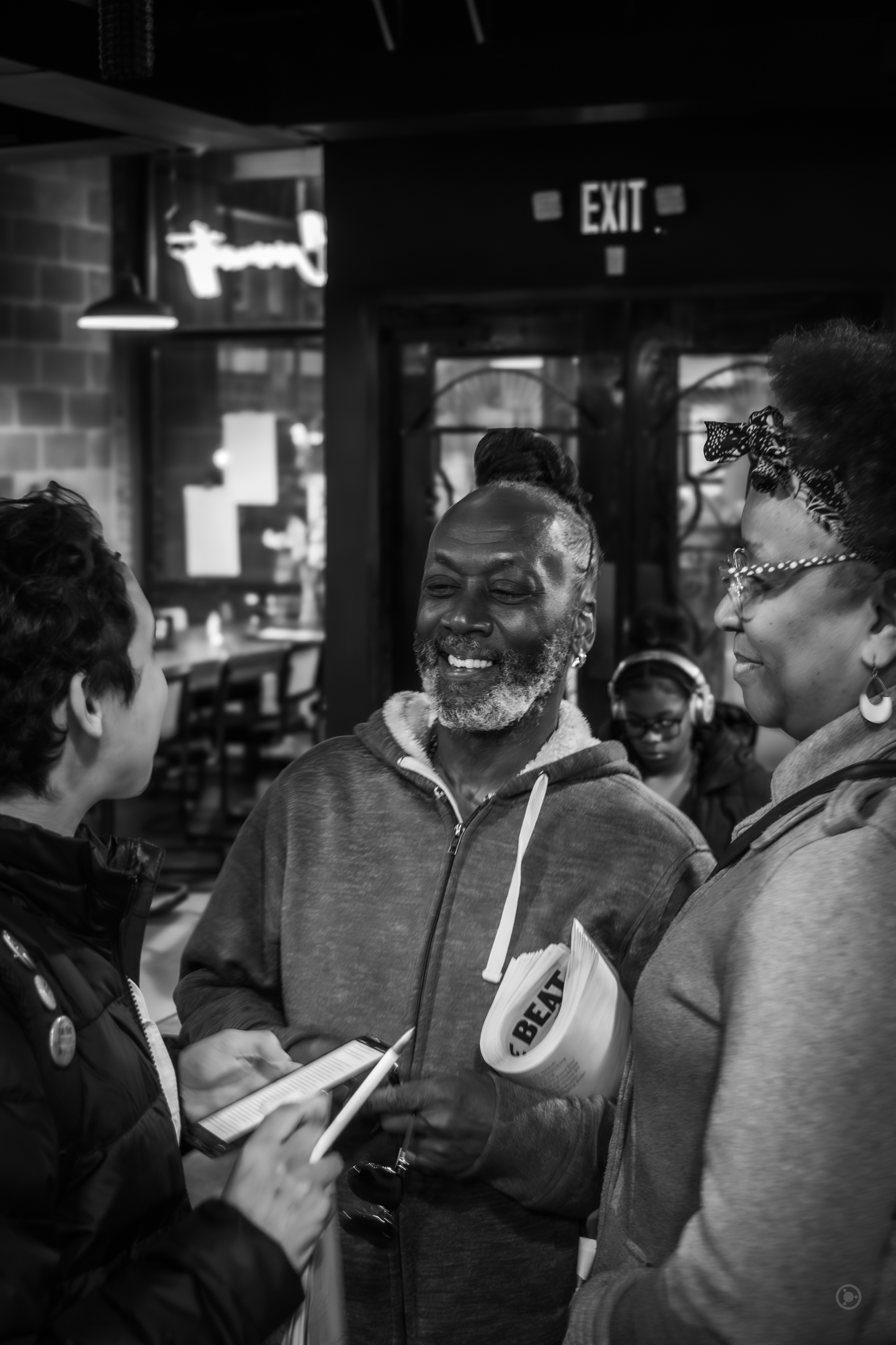
John was working the sidewalk with a clipboard, counting heads and taking notes. “This is about what we get,” he said. “We meet every Wednesday. Although for No Kings, we got a LOT more.” They have been doing this for over a year. “We hit 52 weeks a couple of weeks ago. We just didn’t feel right with…” he gestured widely at the street and the sky, “…everything that is going on. So we started meeting up.”
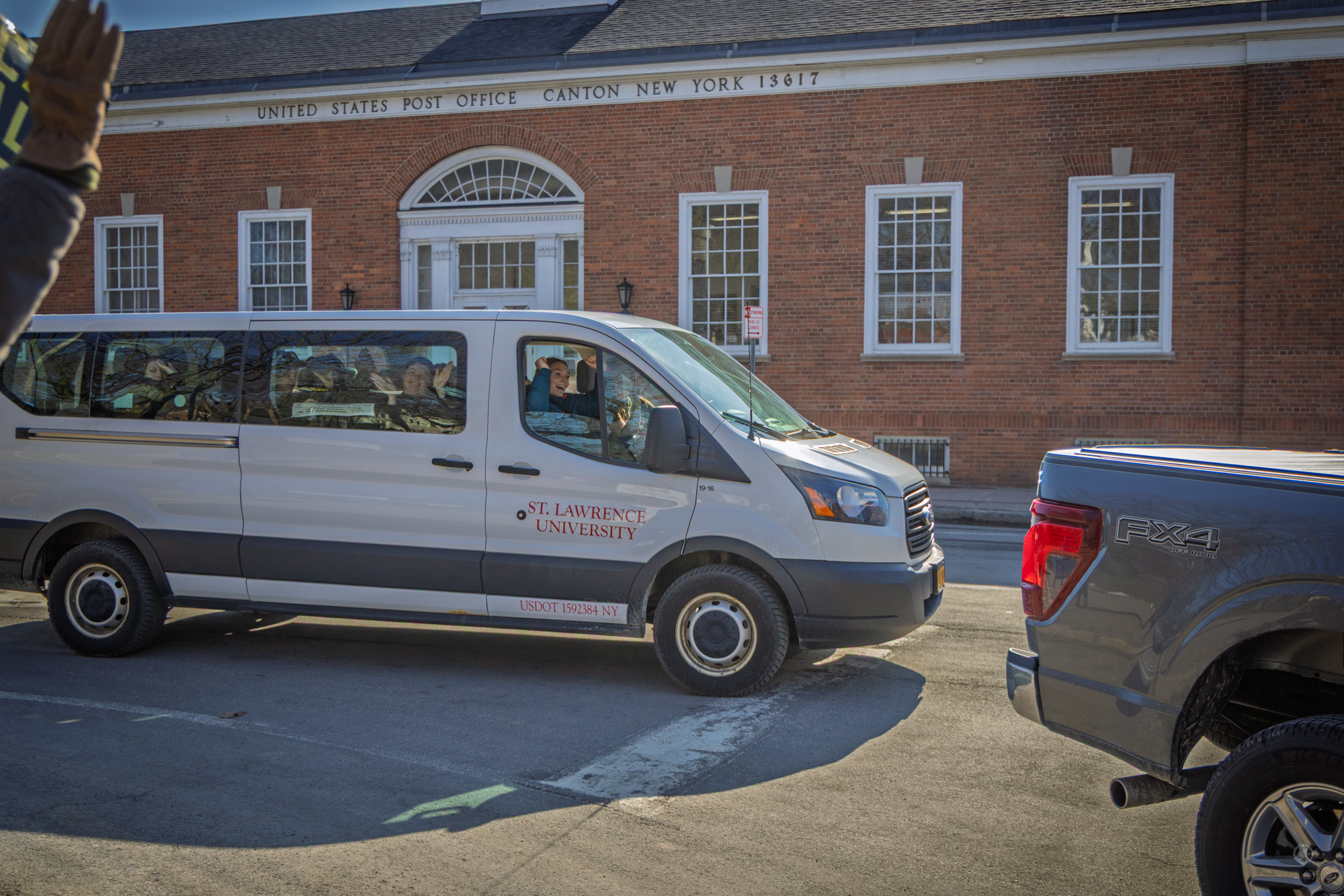
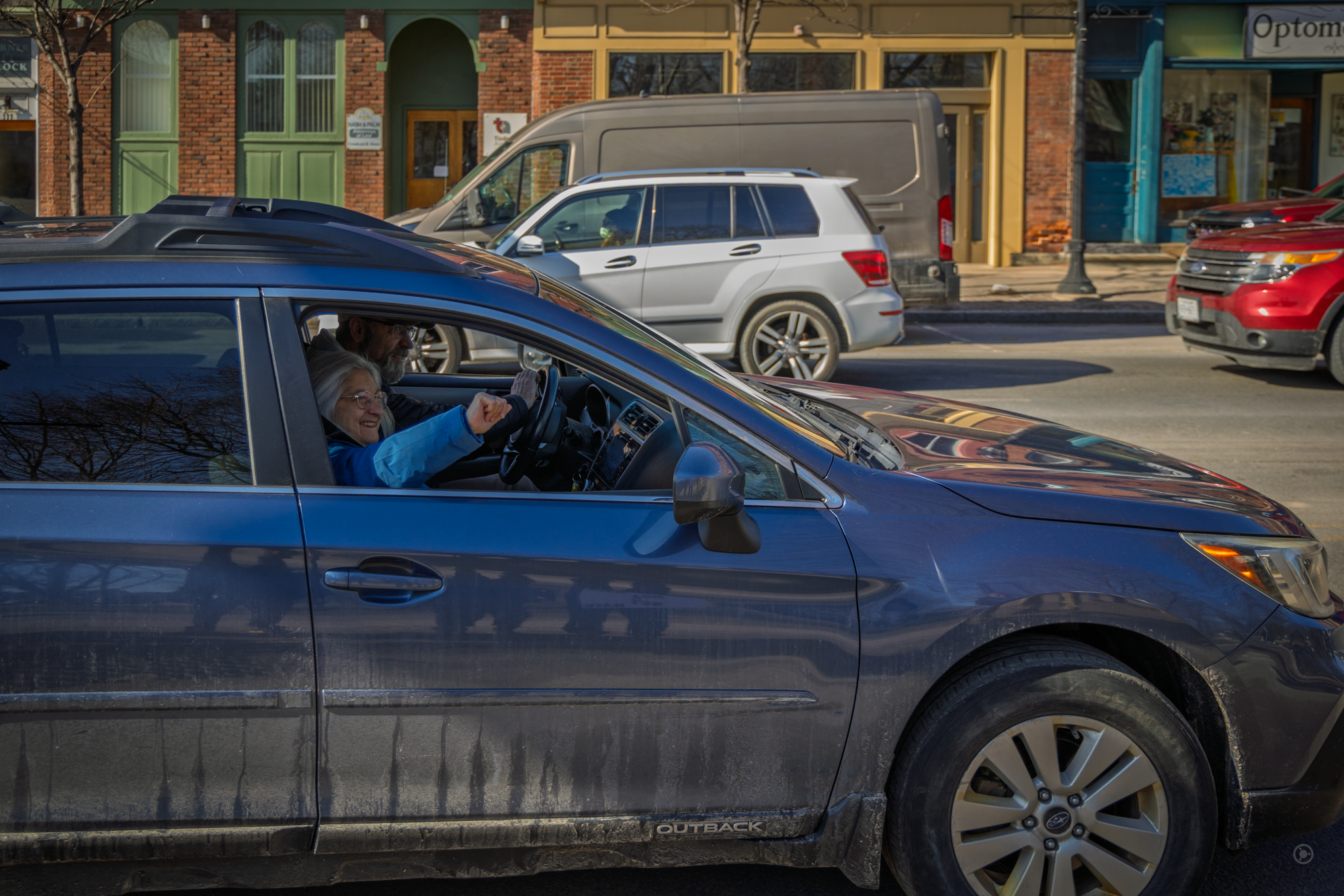
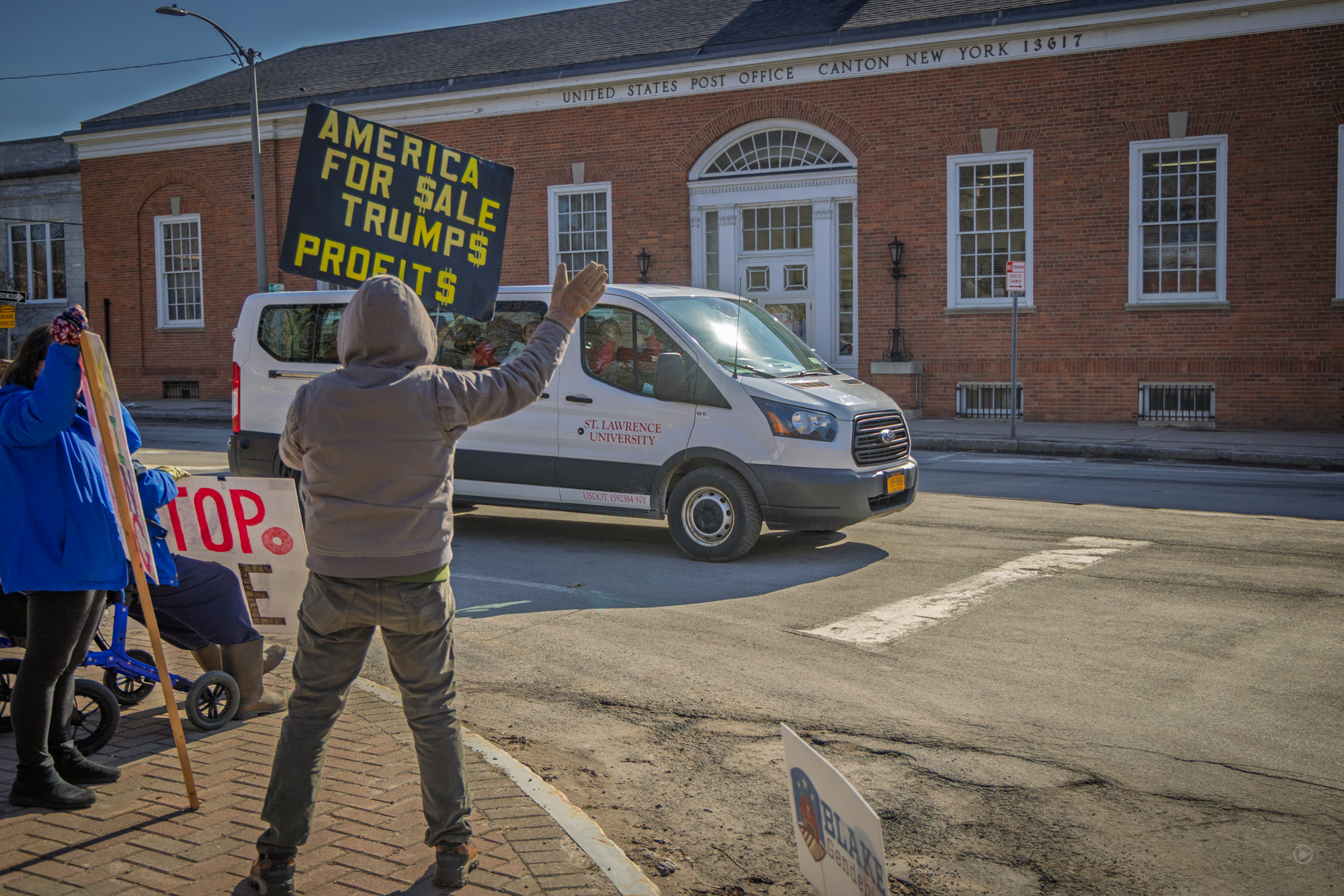
They get reactions. About one in three cars honked in support as they passed. A woman in a dusty blue Subaru Outback pumped her fist out the window as she slowed at the light. A St. Lawrence University van rolled past with students waving from inside. The protest runs into the edge of rush hour, which in Canton means steady traffic more than heavy traffic, but enough to keep the horns going. “St Lawrence County is pretty red,” John said. “So this helps people not feel so alone.”
He is not wrong about the math. In the 2024 presidential election, Trump beat Kamala Harris in St. Lawrence County by about eighteen percent, a comfortable margin. But the more interesting number is the one that tends not to get cited. Roughly 48 percent of eligible voters in the county stayed home entirely. That means Trump’s win, for all its size, came from only about 31 percent of eligible voters actually casting a ballot for him. And this same county voted for Obama. Twice.
The town itself carries an older, more stubborn politics just under the surface. The center of Canton is taken up by the austere stone buildings of St. Lawrence University, founded in 1856 by the Universalist Church. It was coeducational from its very first day, which makes it the oldest continuously coeducational college in New York State. The Universalists championed sex equality well before the Civil War, and the campus became a kind of northern hub for women who led the charge as reformers and suffragists. That history doesn’t live on a plaque. It’s walked over every day.
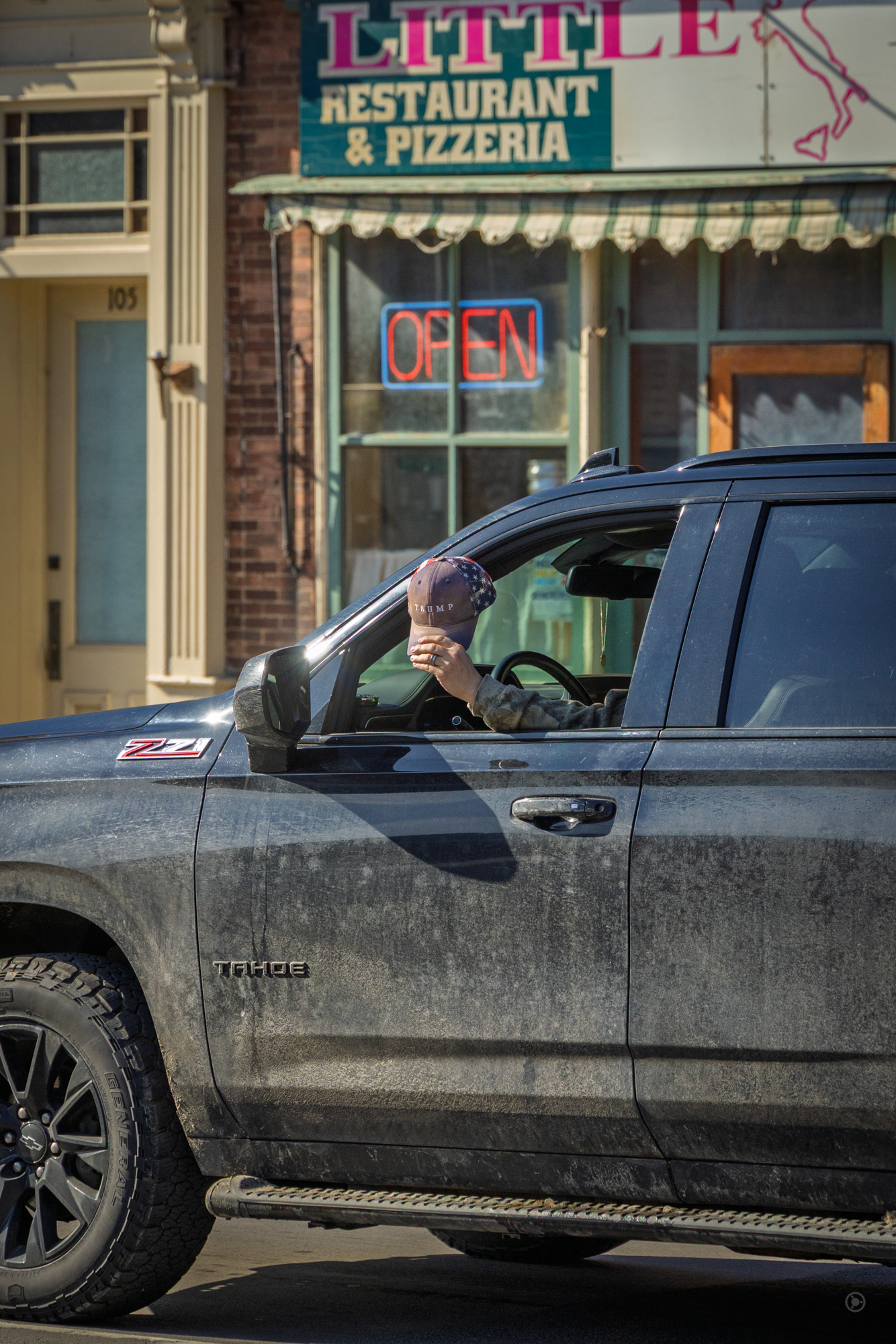
None of which means the protest goes unopposed. A few drivers held up middle fingers out their windows as they passed. One man in a black Chevy Tahoe, wearing a Trump cap with an American flag on the brim, held the hat out the window as a kind of silent rebuttal. Another driver, rounding the corner, shouted, “GET A JOB.”
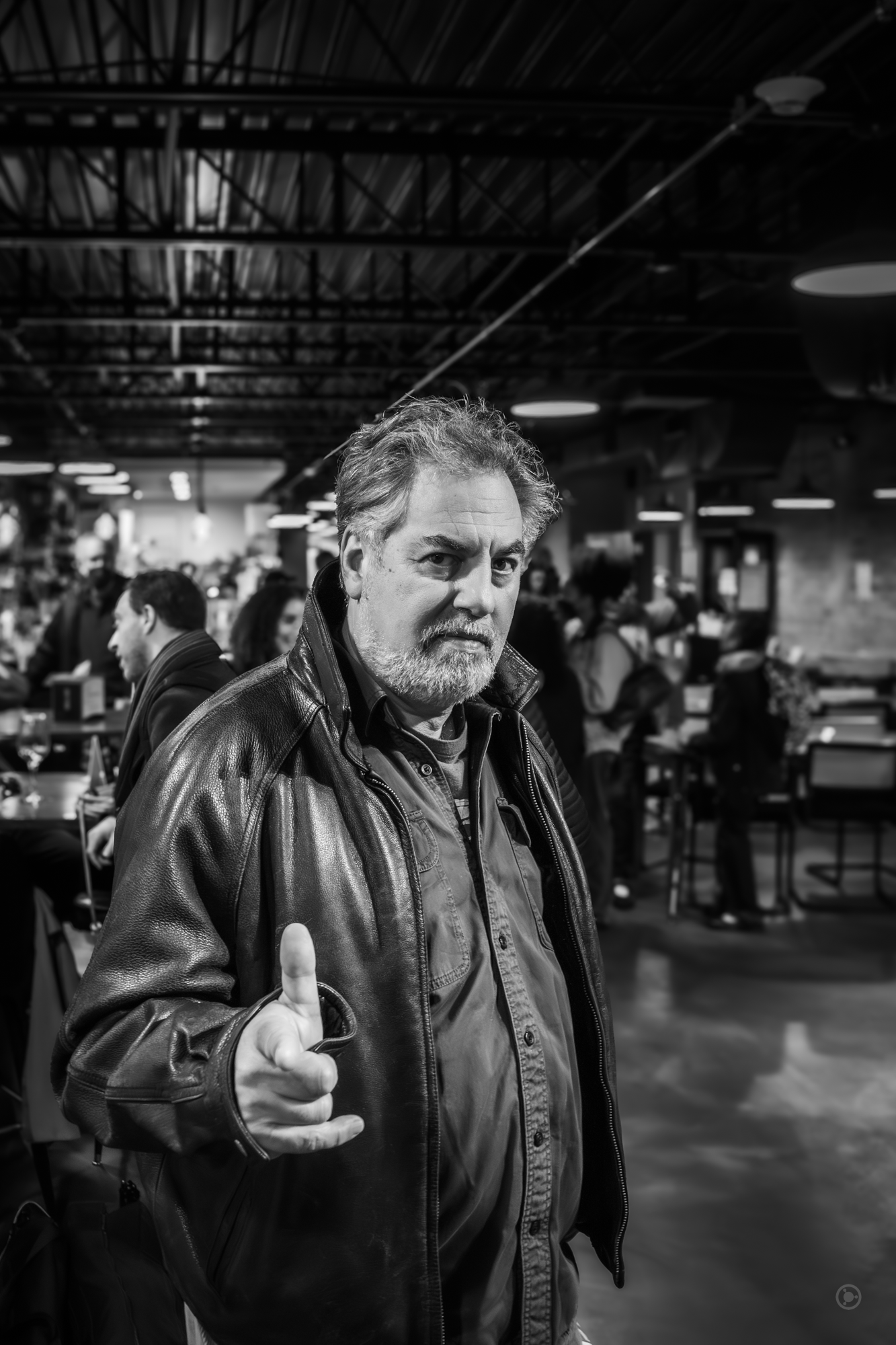
A handful of protestors laughed. “That’s ironic,” said Bob, a well-known track coach in town. “Most of us are retired. And even when we WERE working, we were giving back and supporting our community. This feels like a continuation of that.”
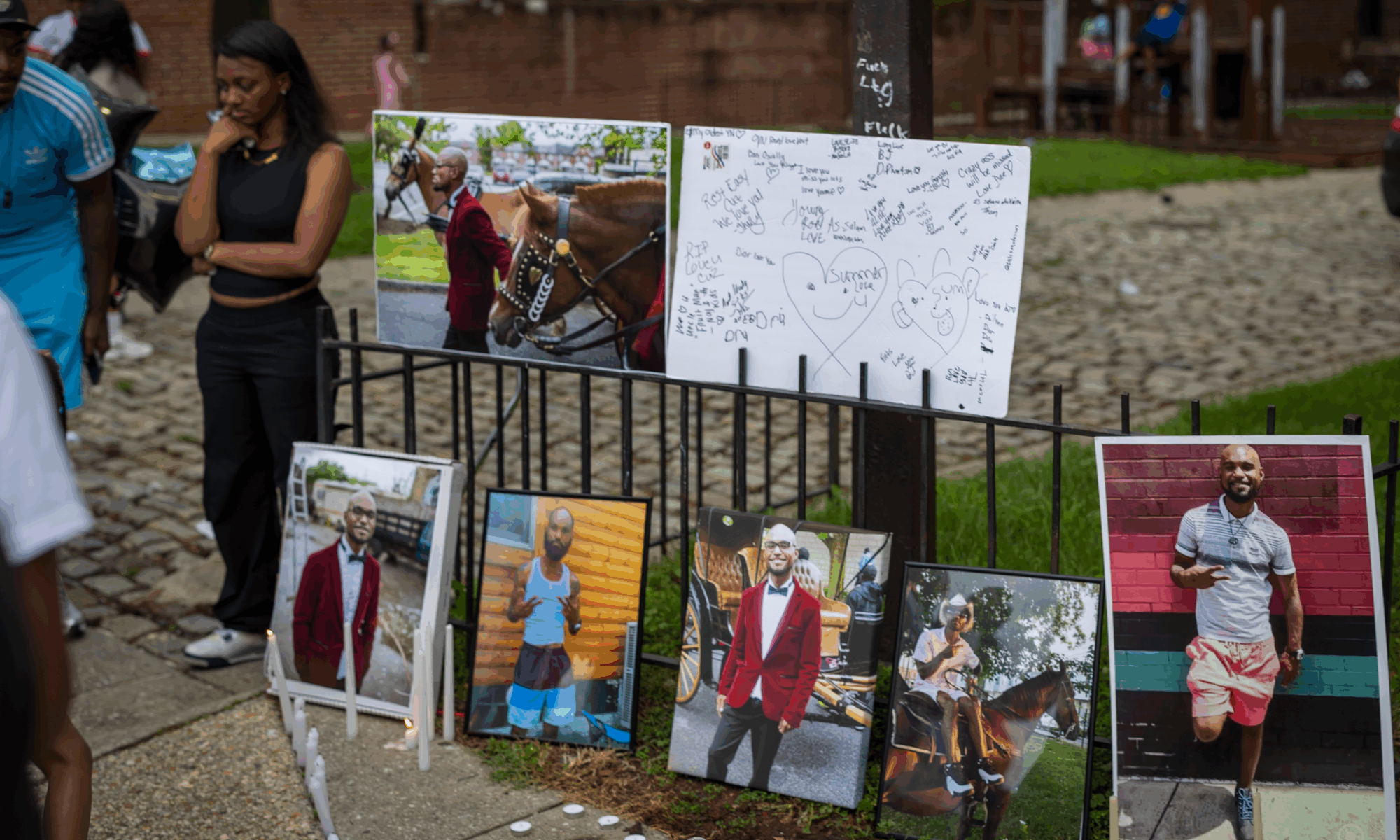
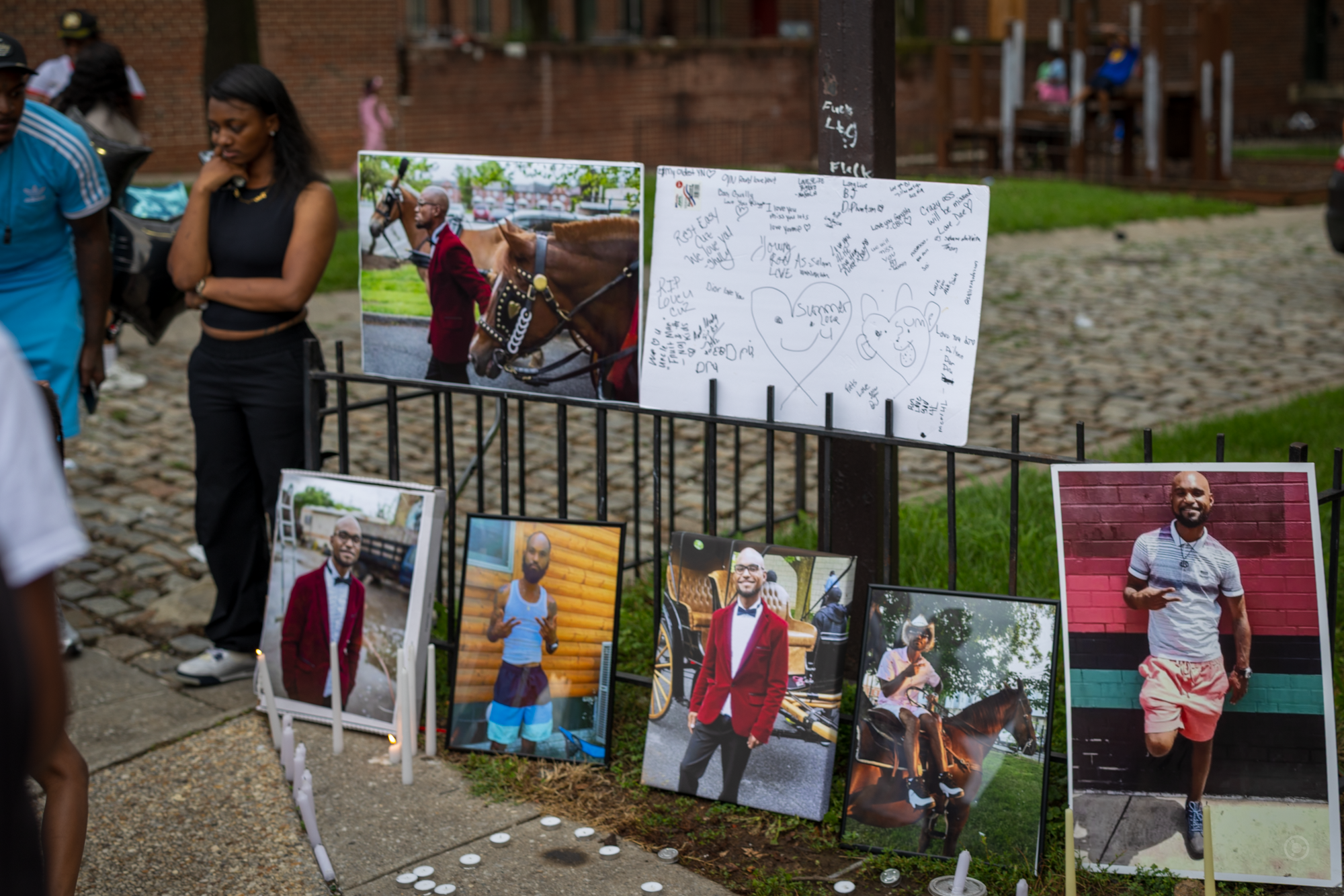
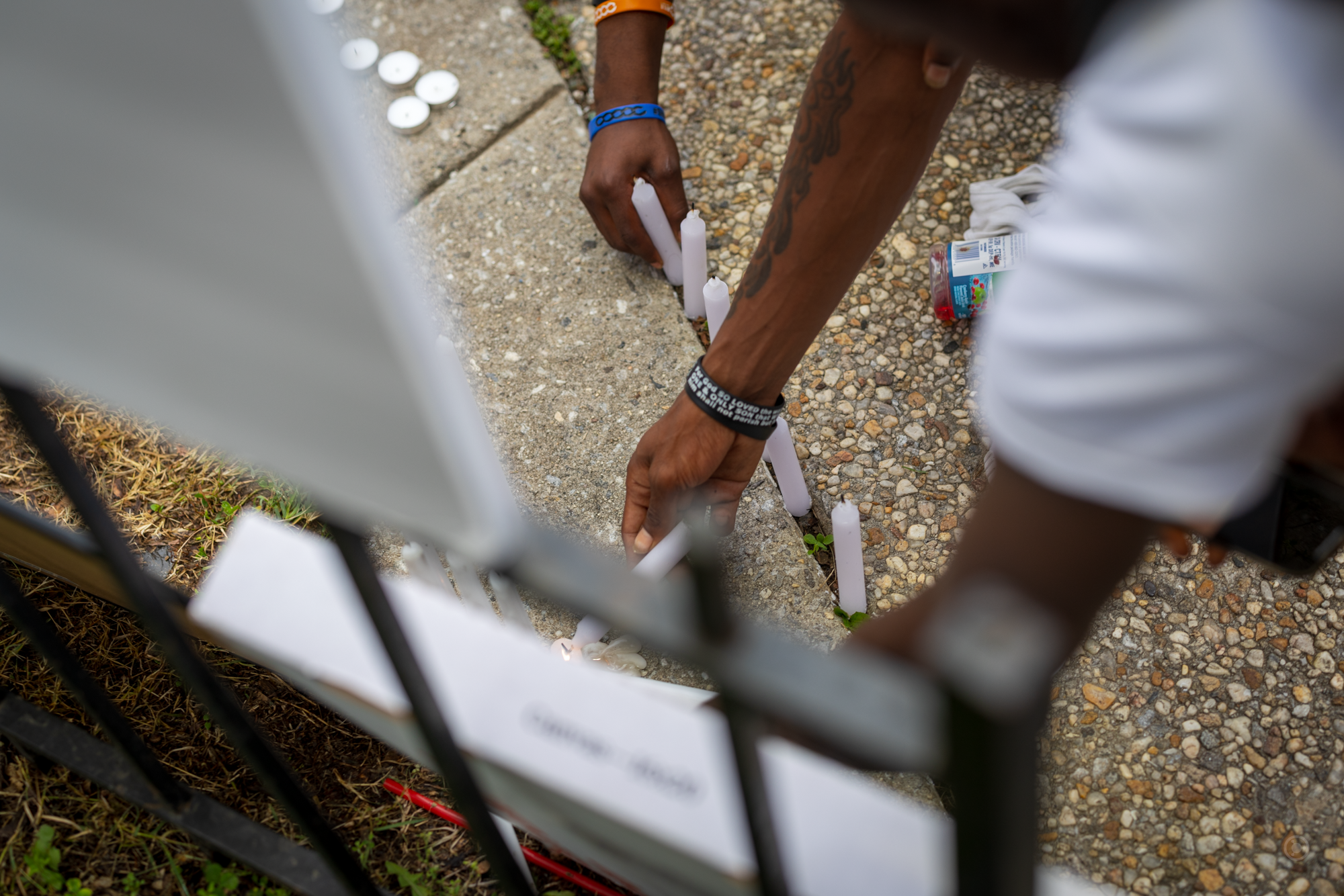
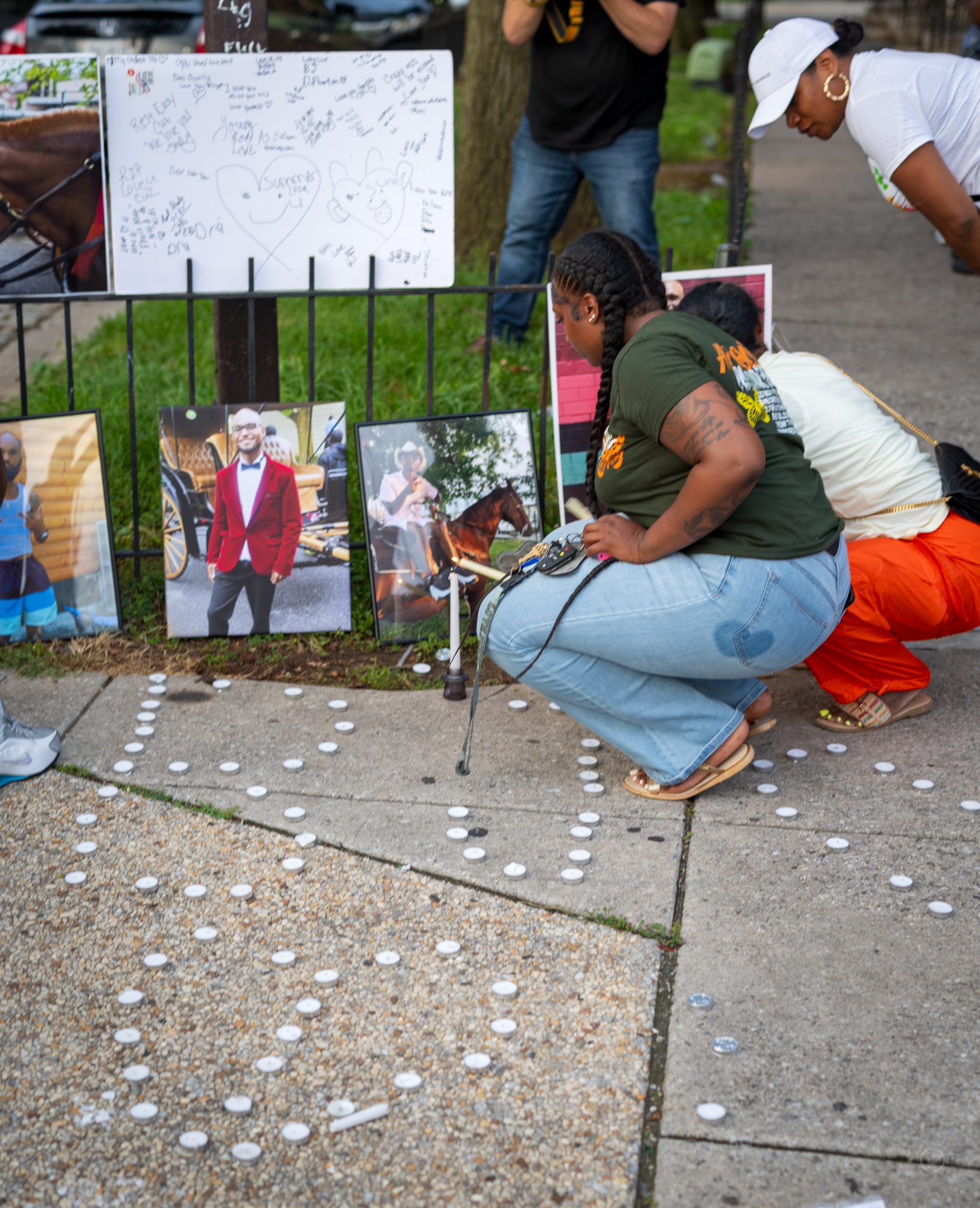
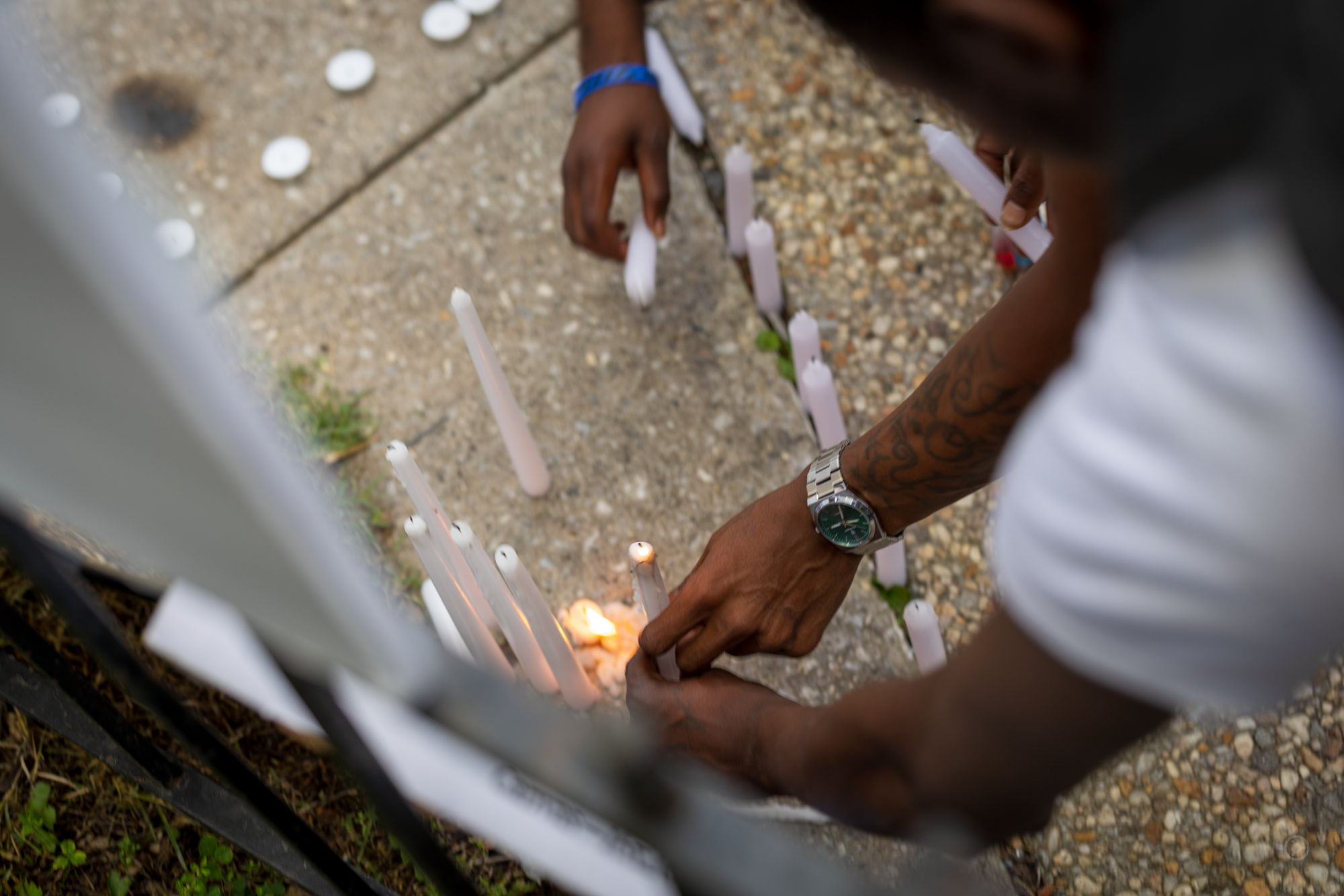
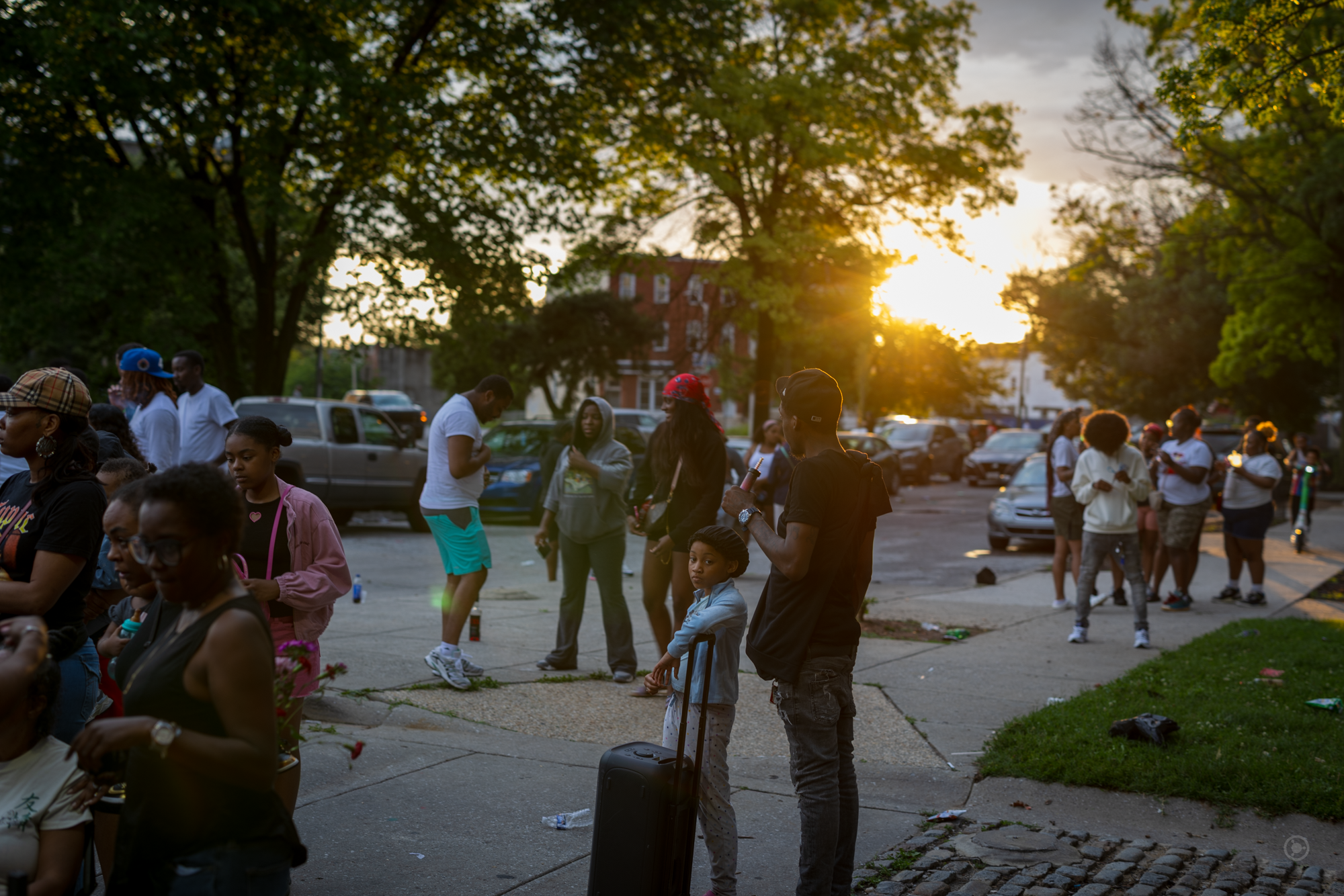
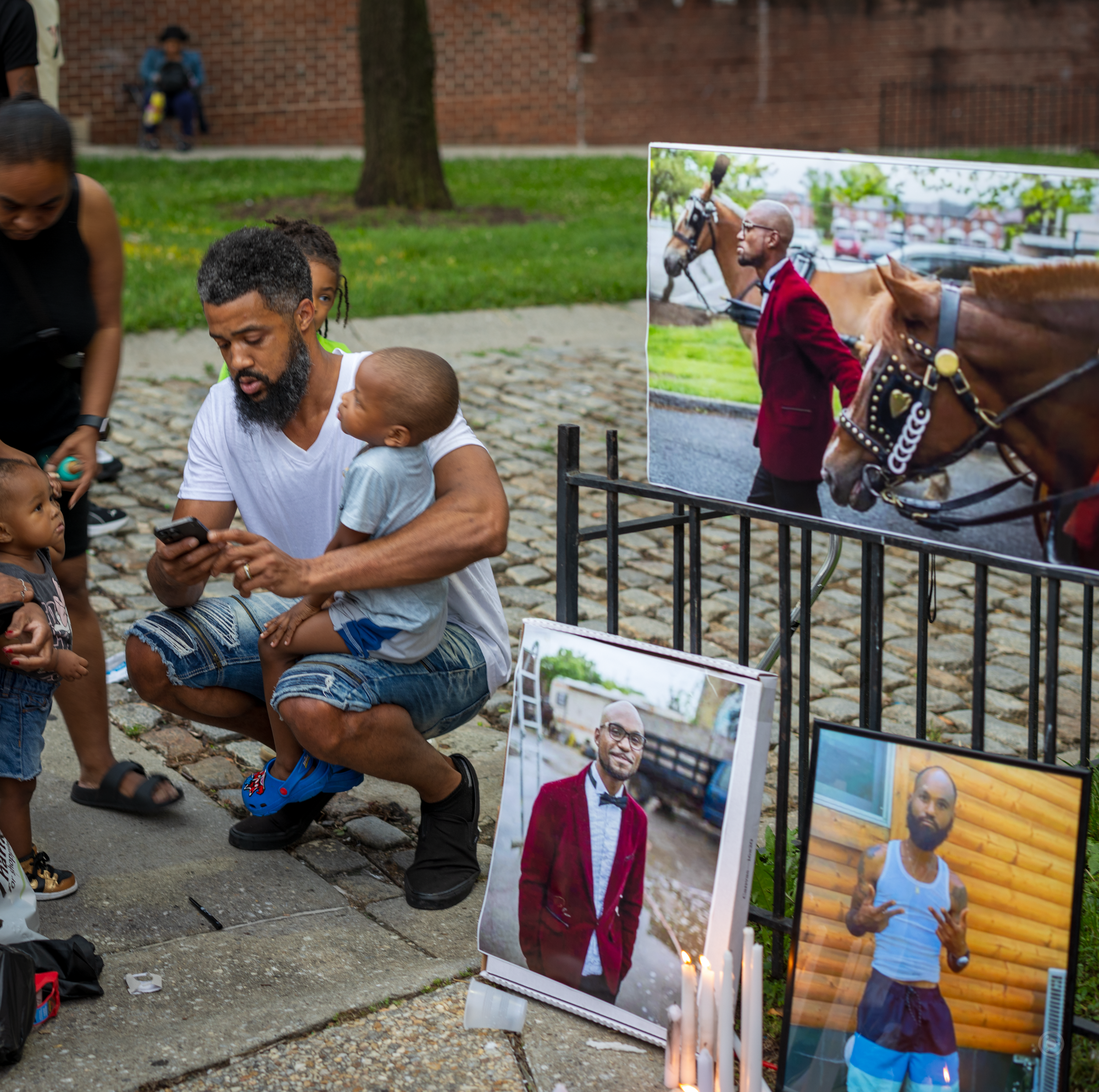
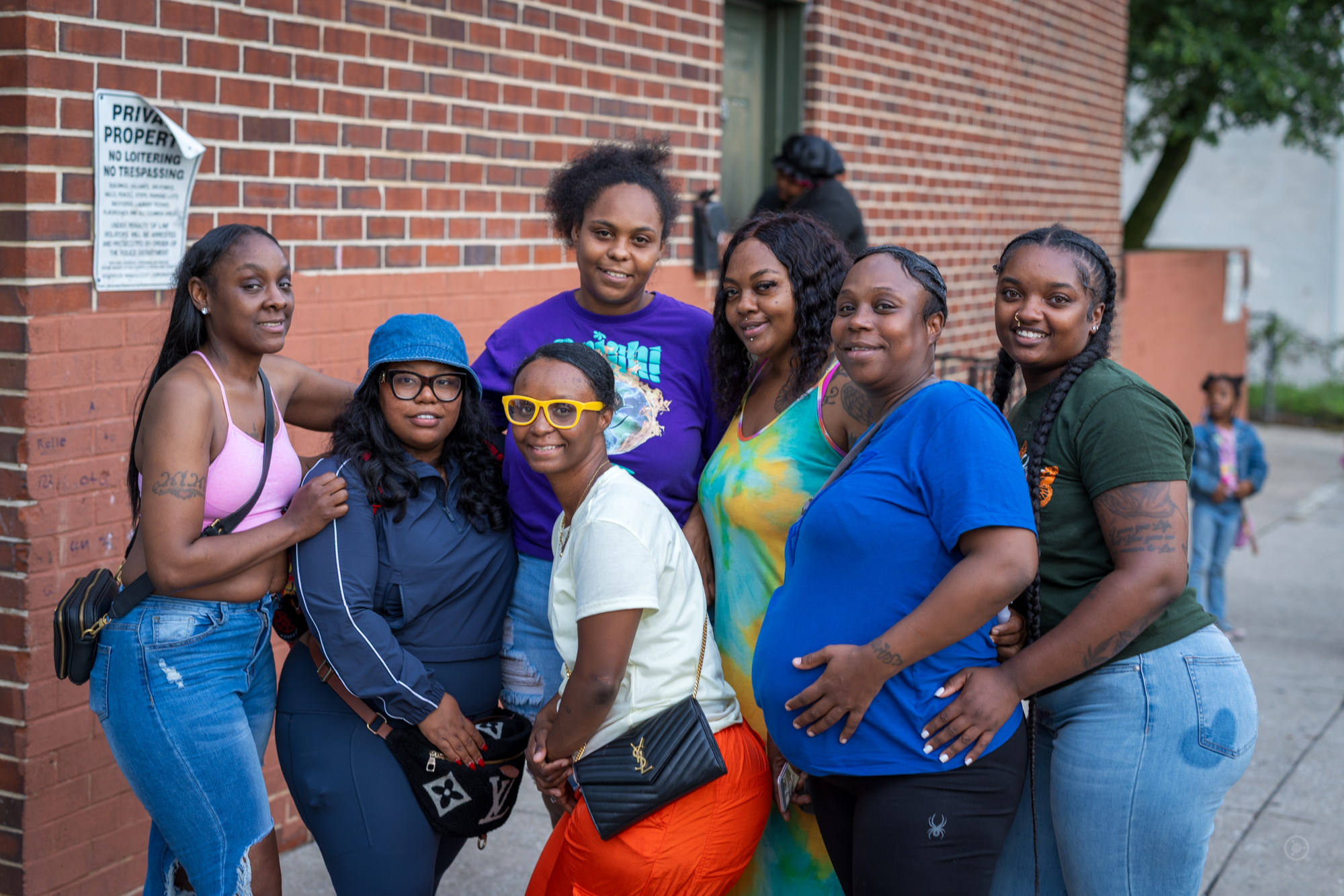
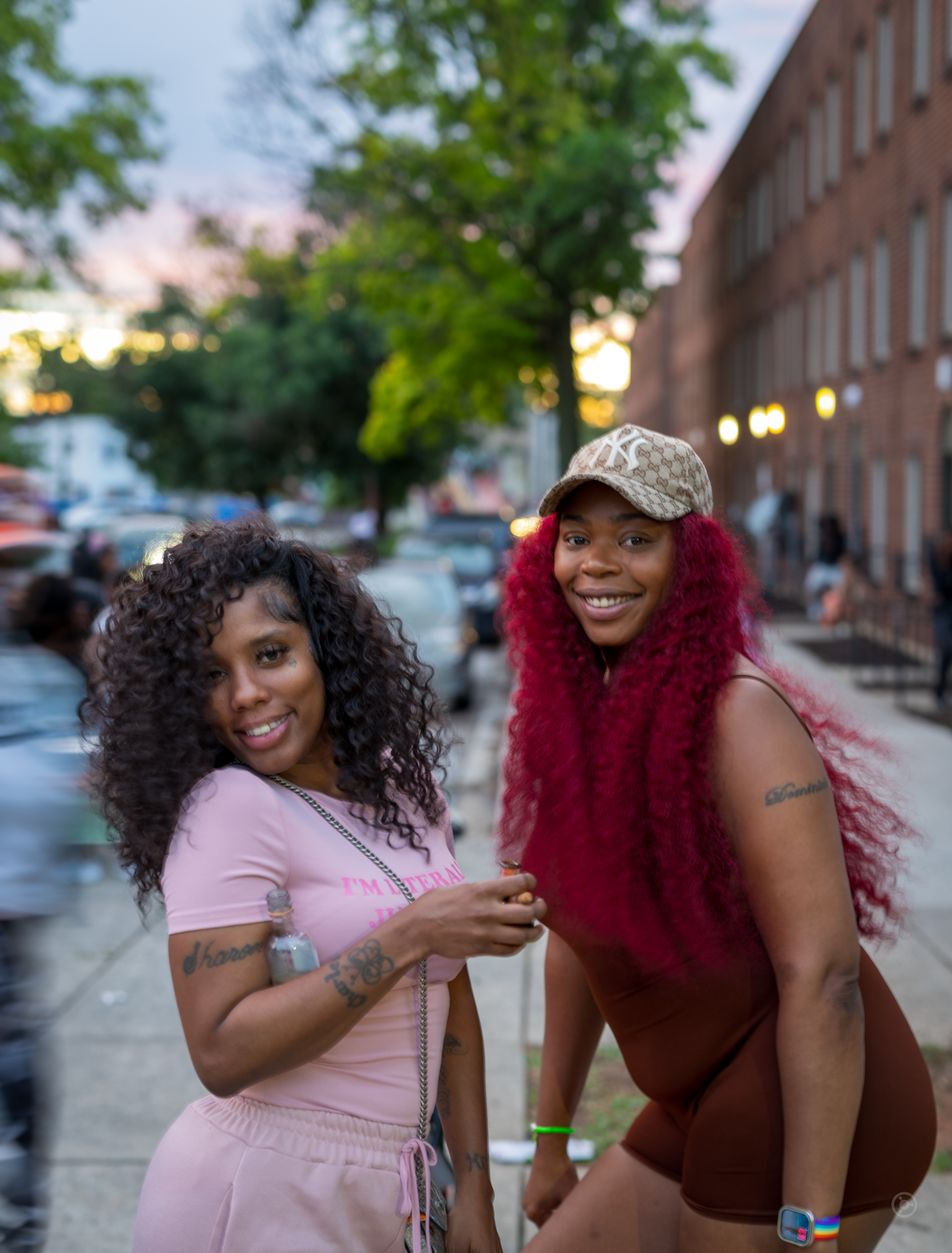
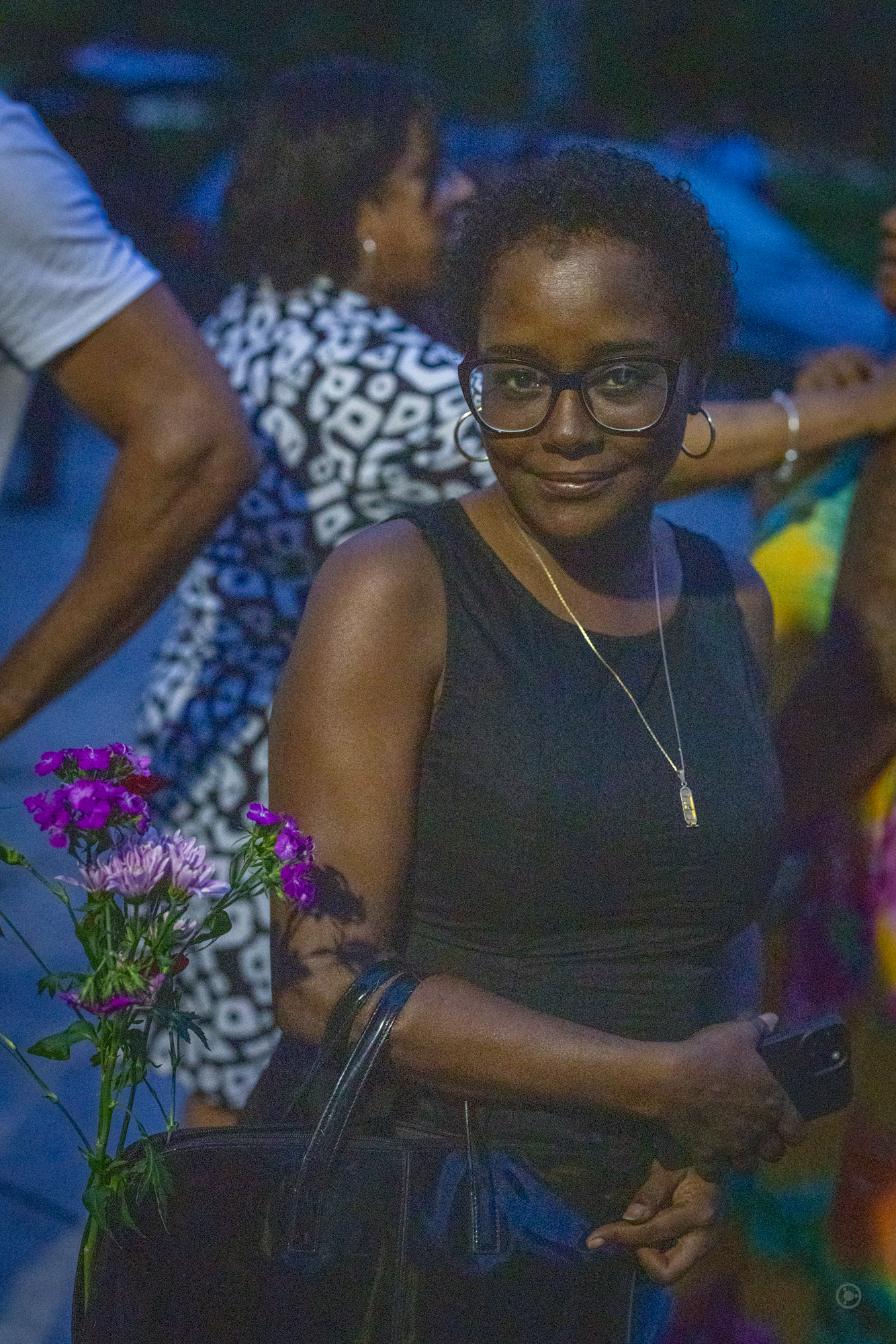
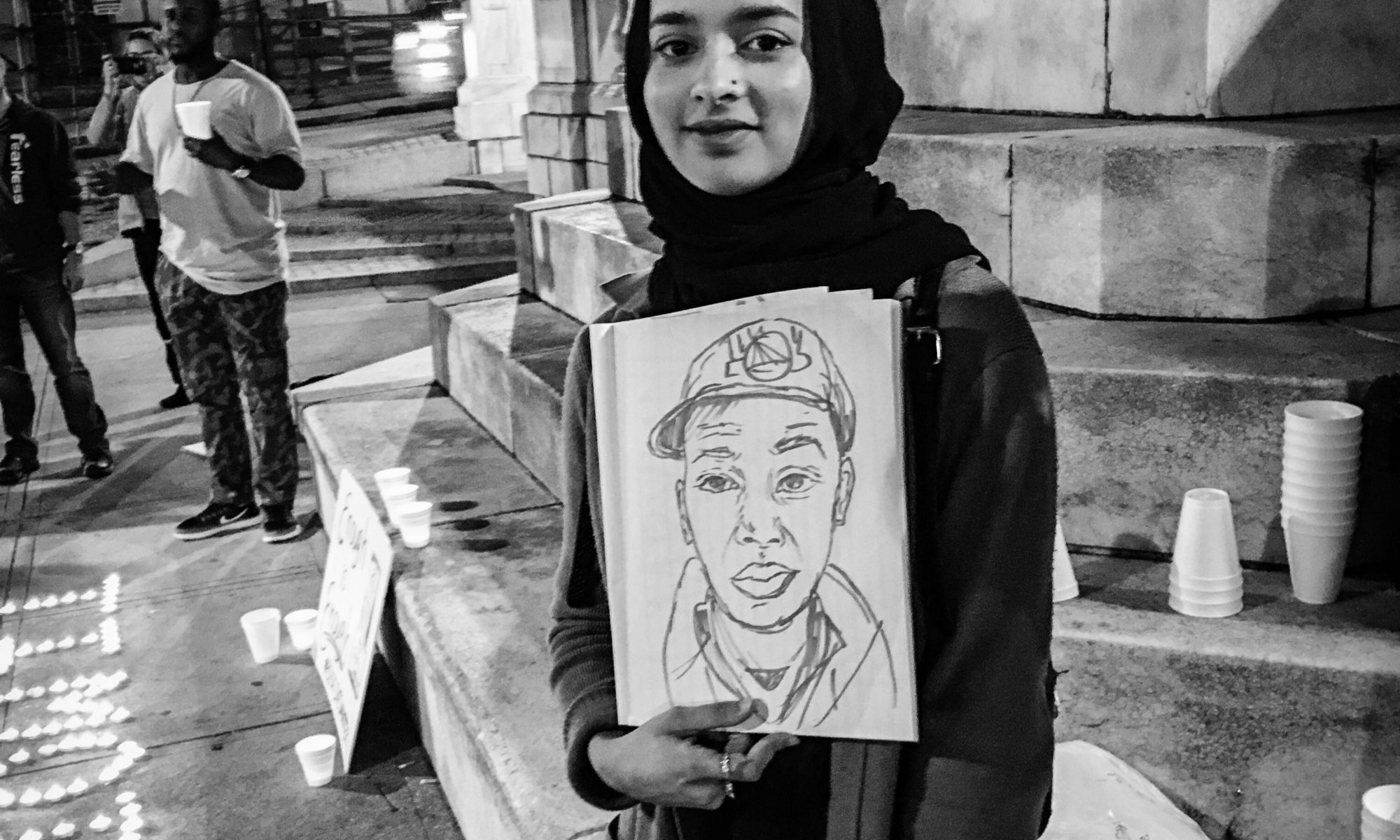
A memorial was set up with photos of Bilal and lots of candles. Hundreds came and signed posterboards in memorial.
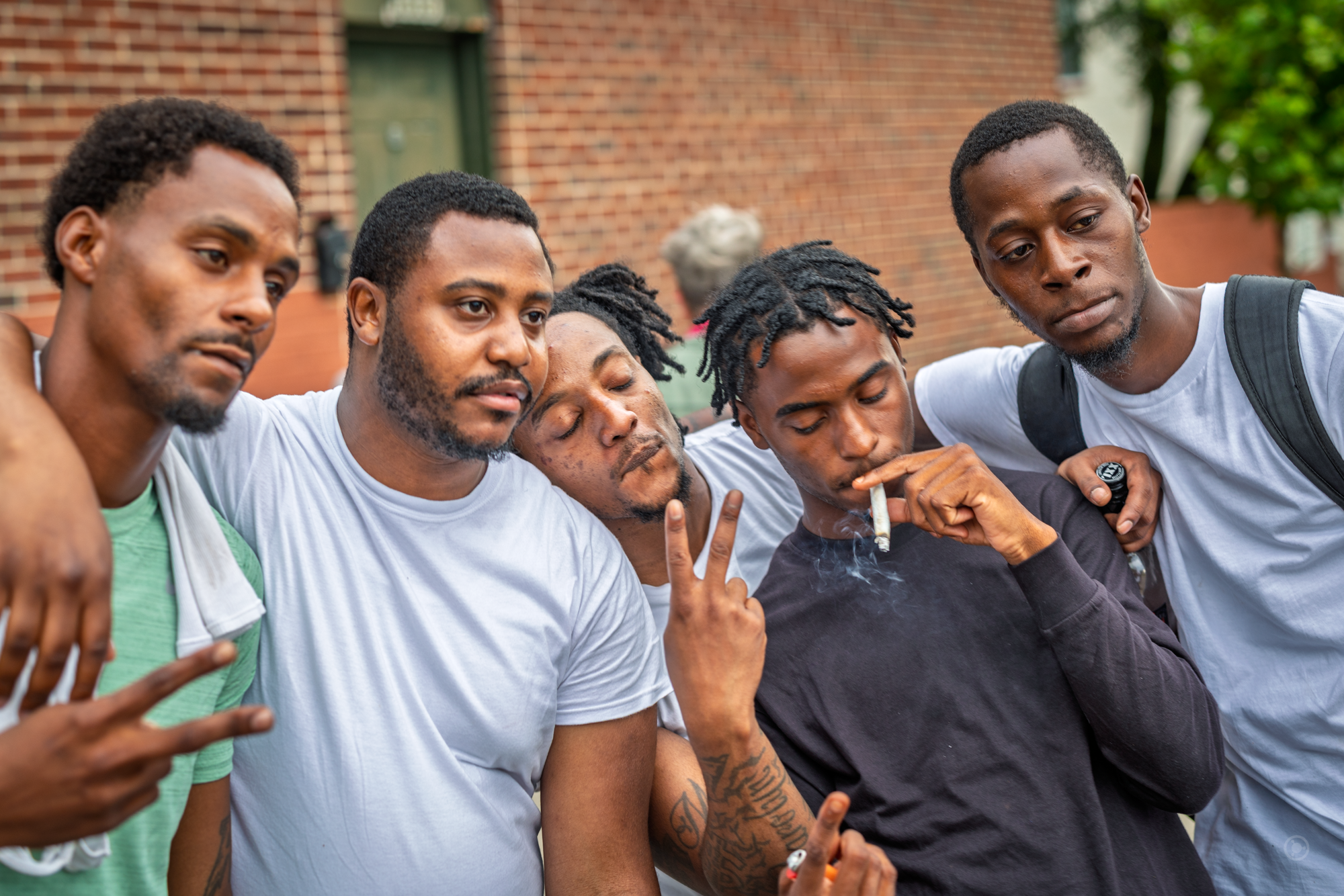
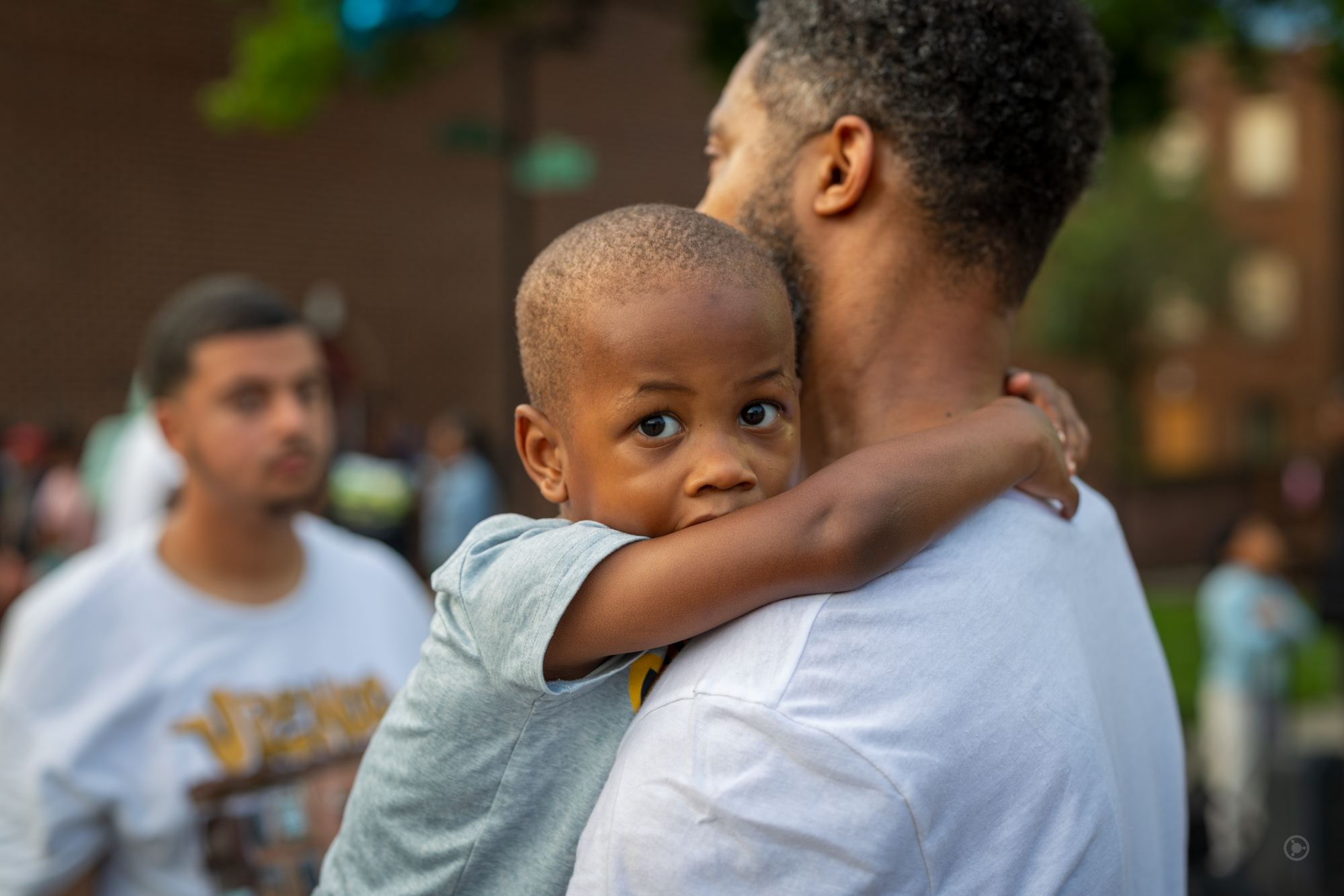
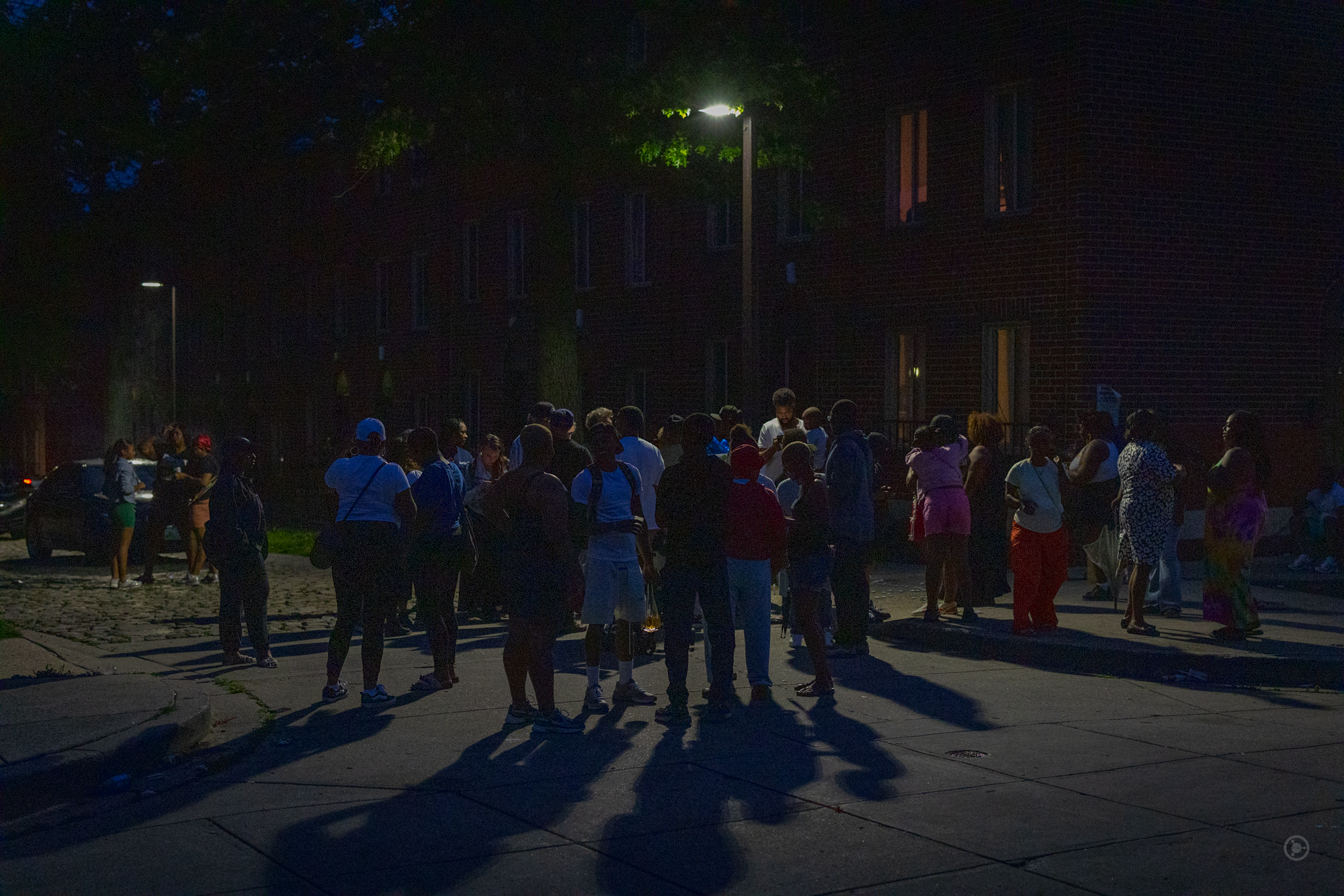
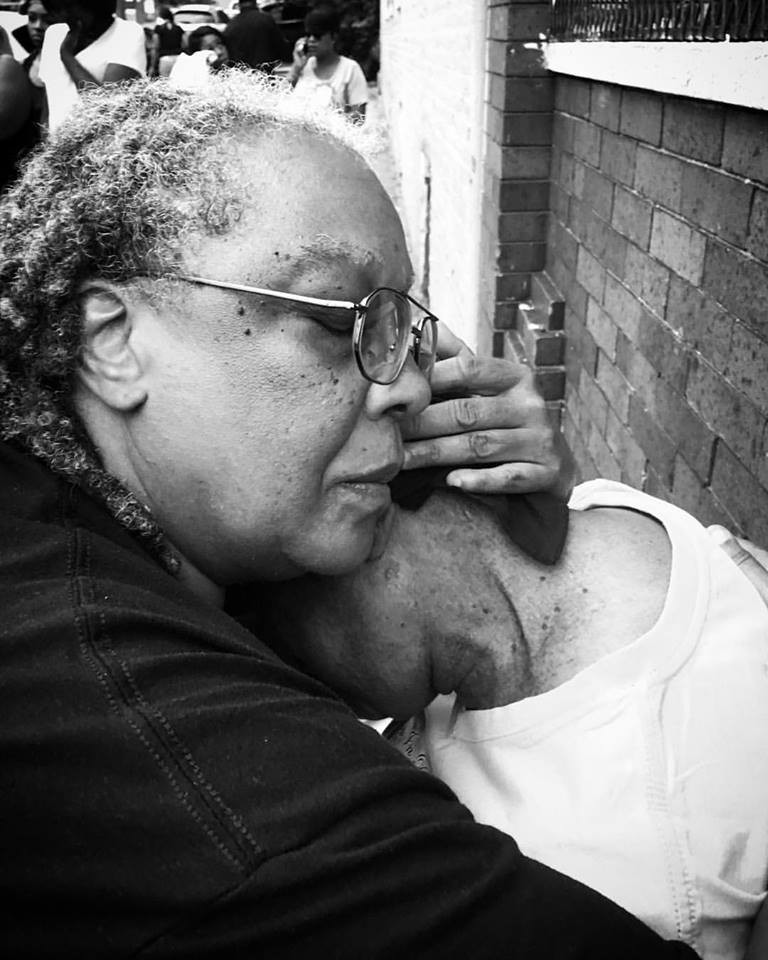
Many who were his friends and family came to celebrate him. The mixture of attempts to bring joy in remembering his life and the deep pain of losing him was thick in the air.
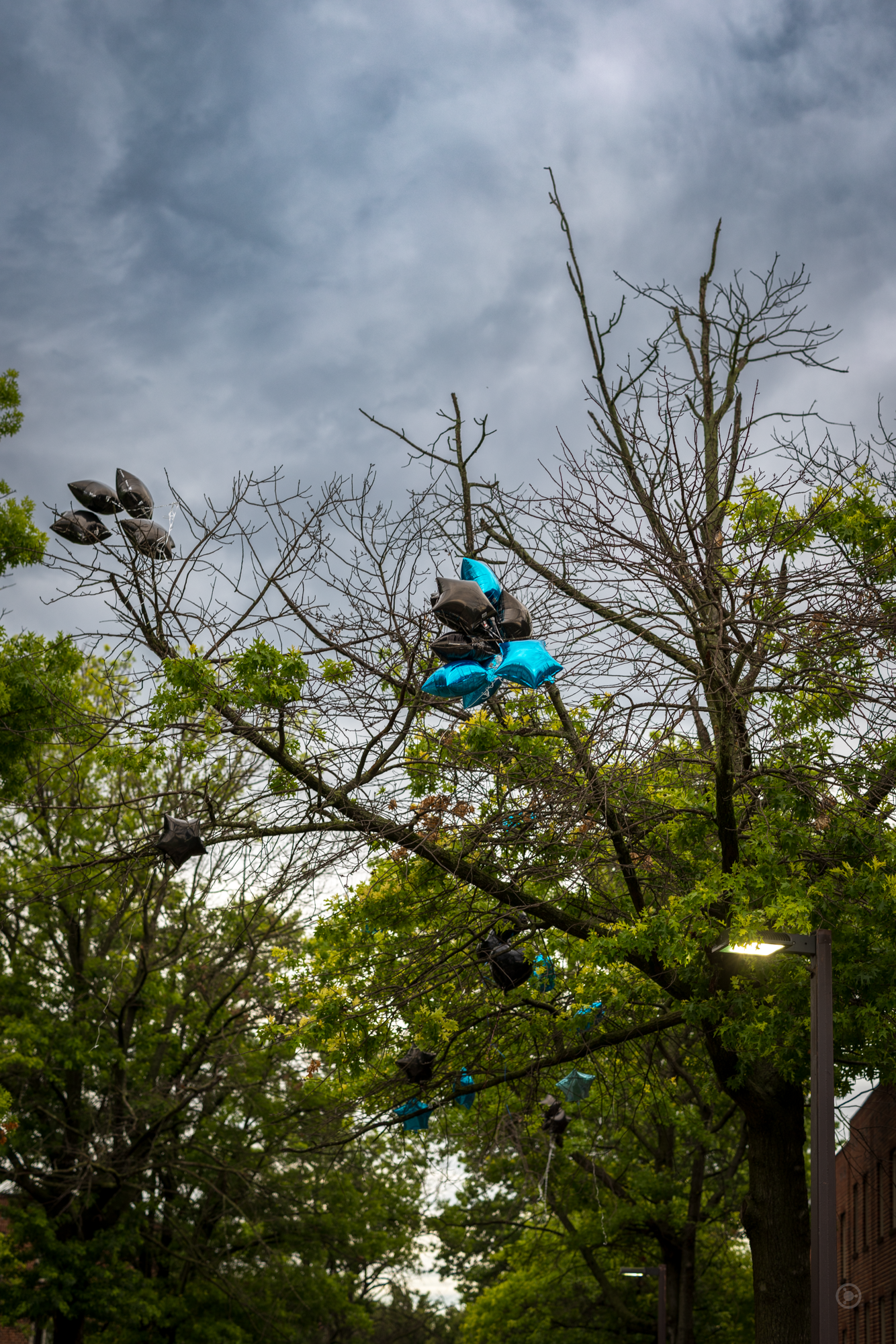
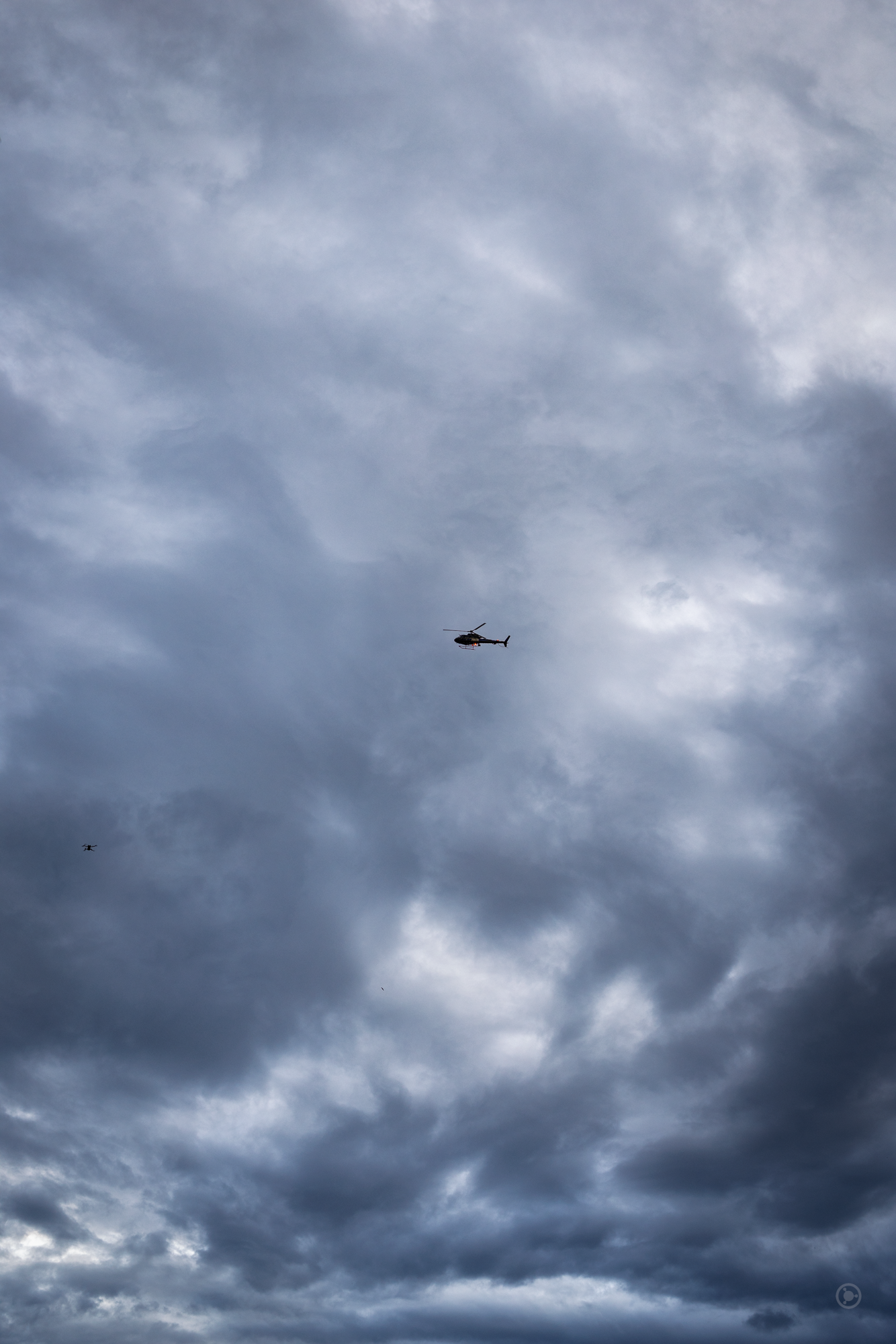
A heavy storm had delayed the vigil by several hours, which meant that a lot of the heavy police presence from earlier in the day dissipated. The police helicopter continued to circle the people lighting candles for hours though.
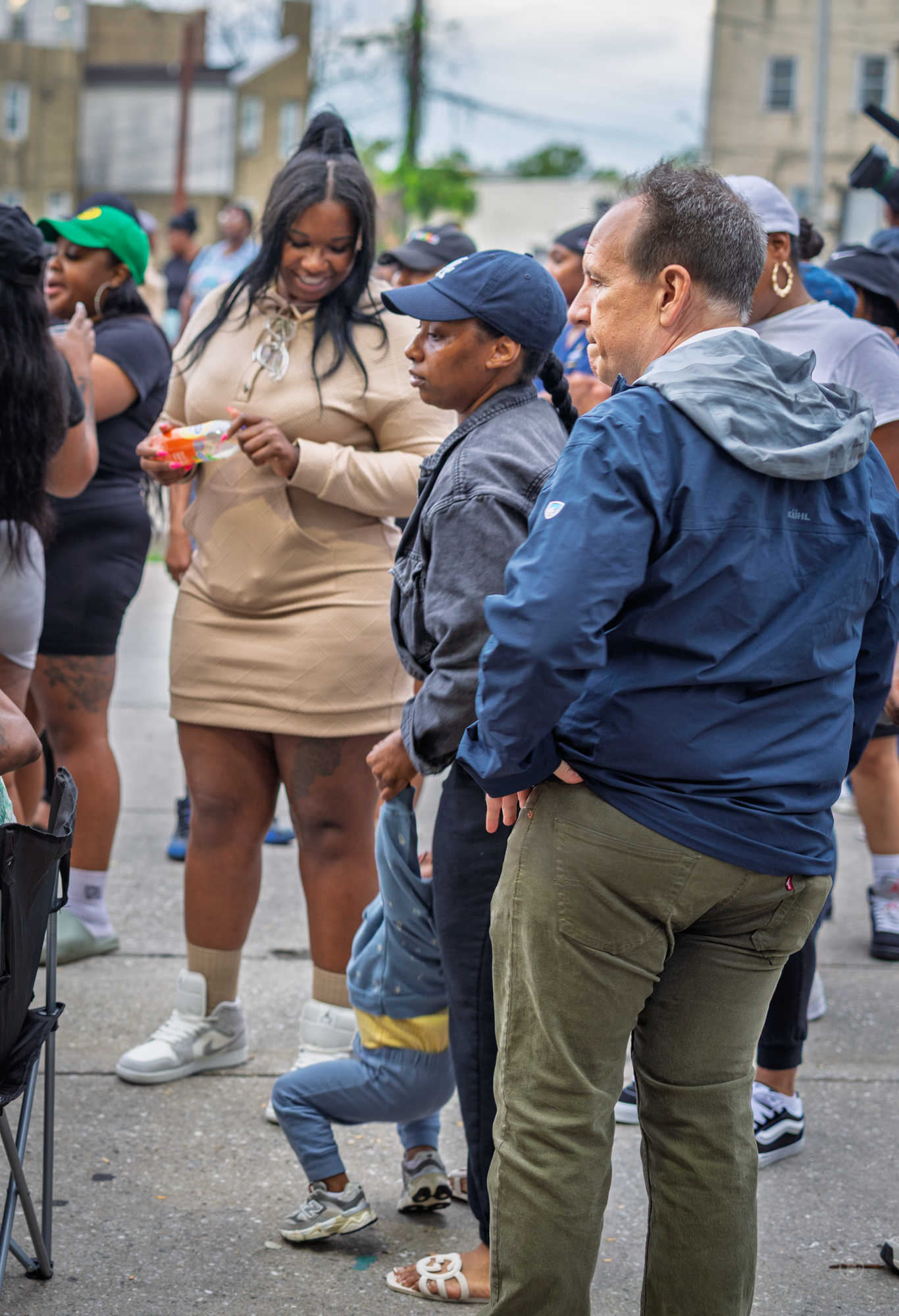
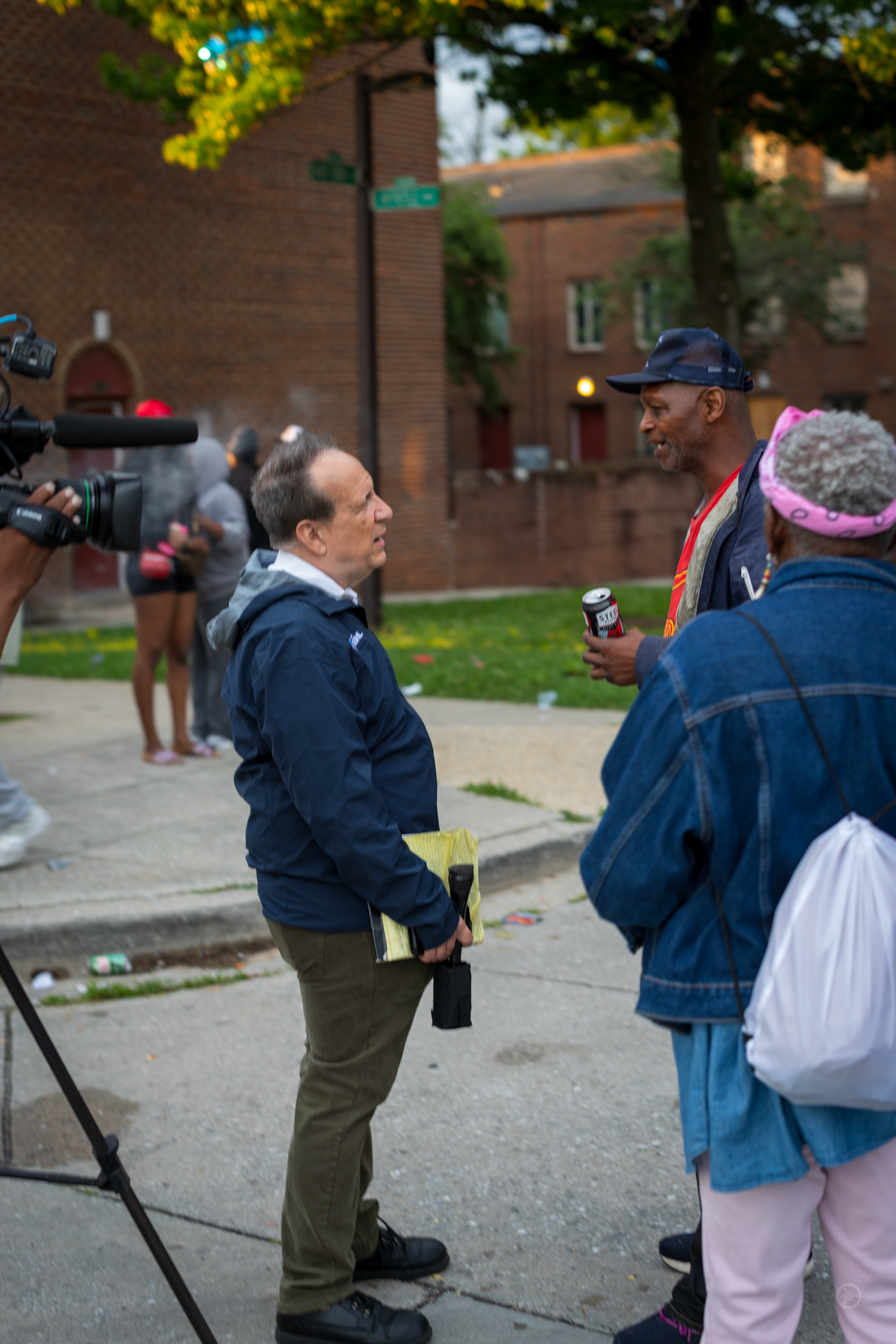
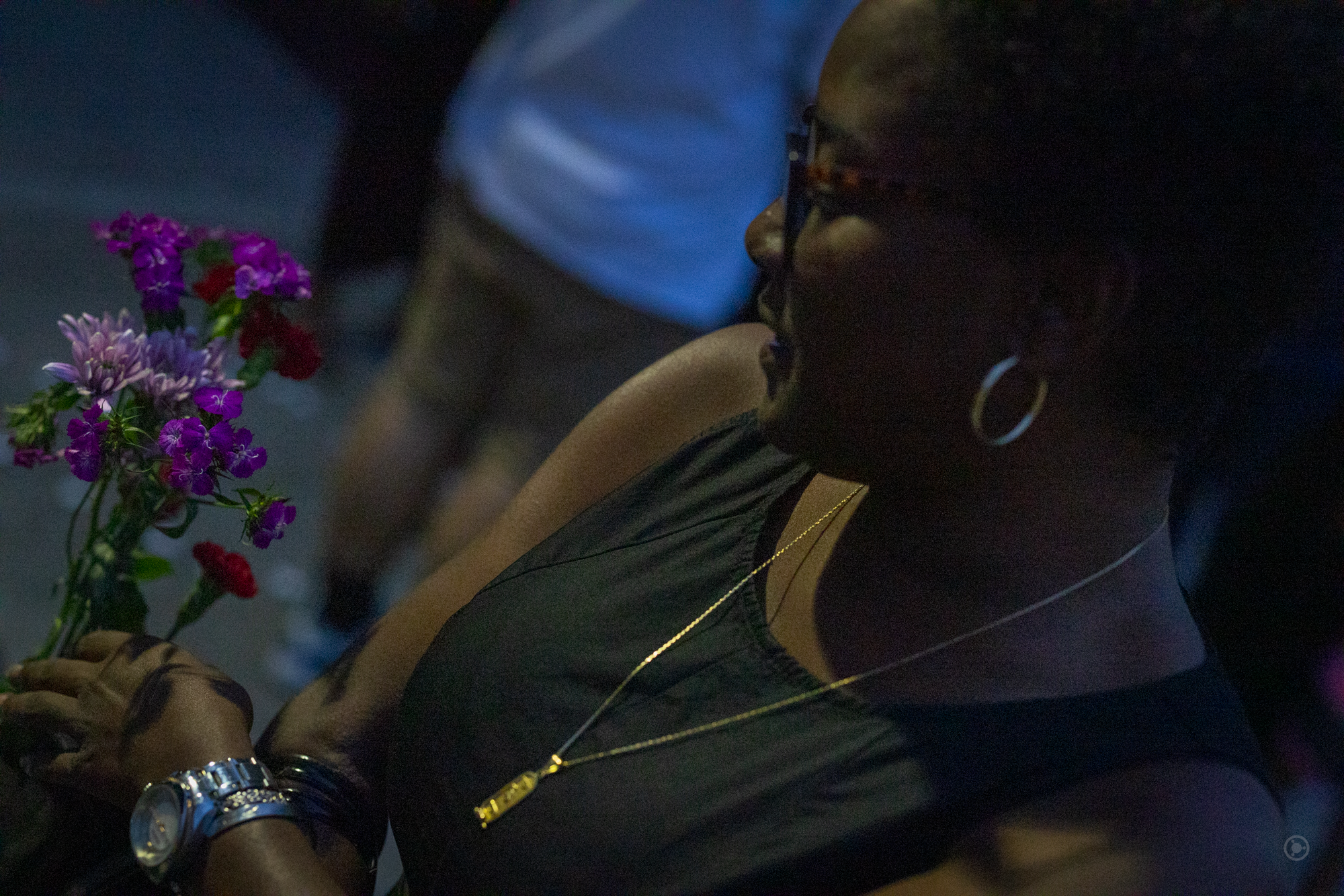
Jeff Abell from Fox News kept trying to get close to Bilal’s mother, who made it very clear she did not want to be photographed, videoed, or interviewed. She had been injured by the police trying to get to her son when he had been shot, and sat in a chair near the memorial. People kept telling Jeff that he was not welcome, and blocked his camera. He finally gave up and left.
Though the breeze was heavy and kept blowing the candles out, a steady rotation of people came back and kept relighting them each and every time.
As it was setting, the sun broke through the storm clouds, casting a golden glow over the entire scene. “That’s Bilal,” his mother said, “He’s come to thank us for being here.”
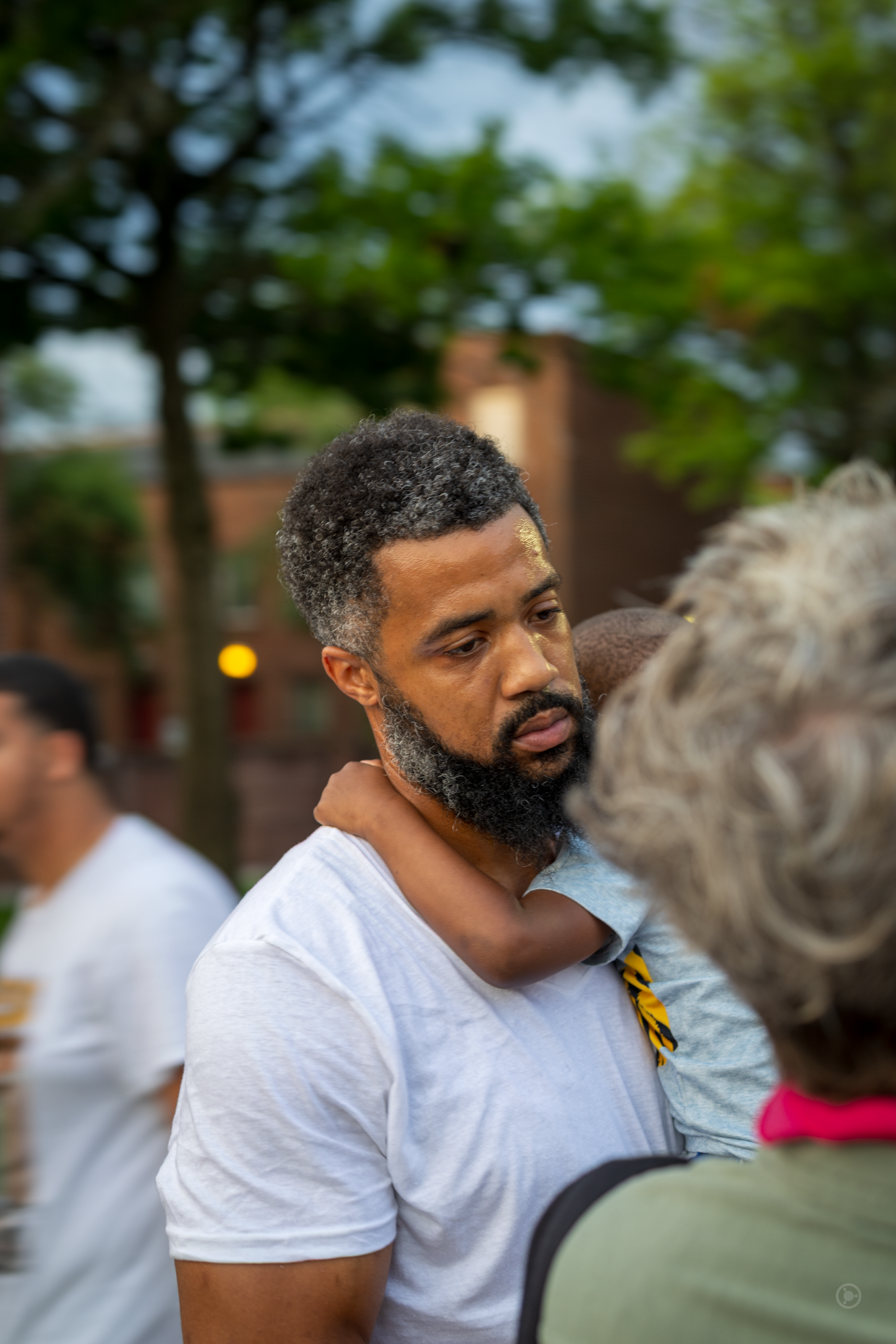
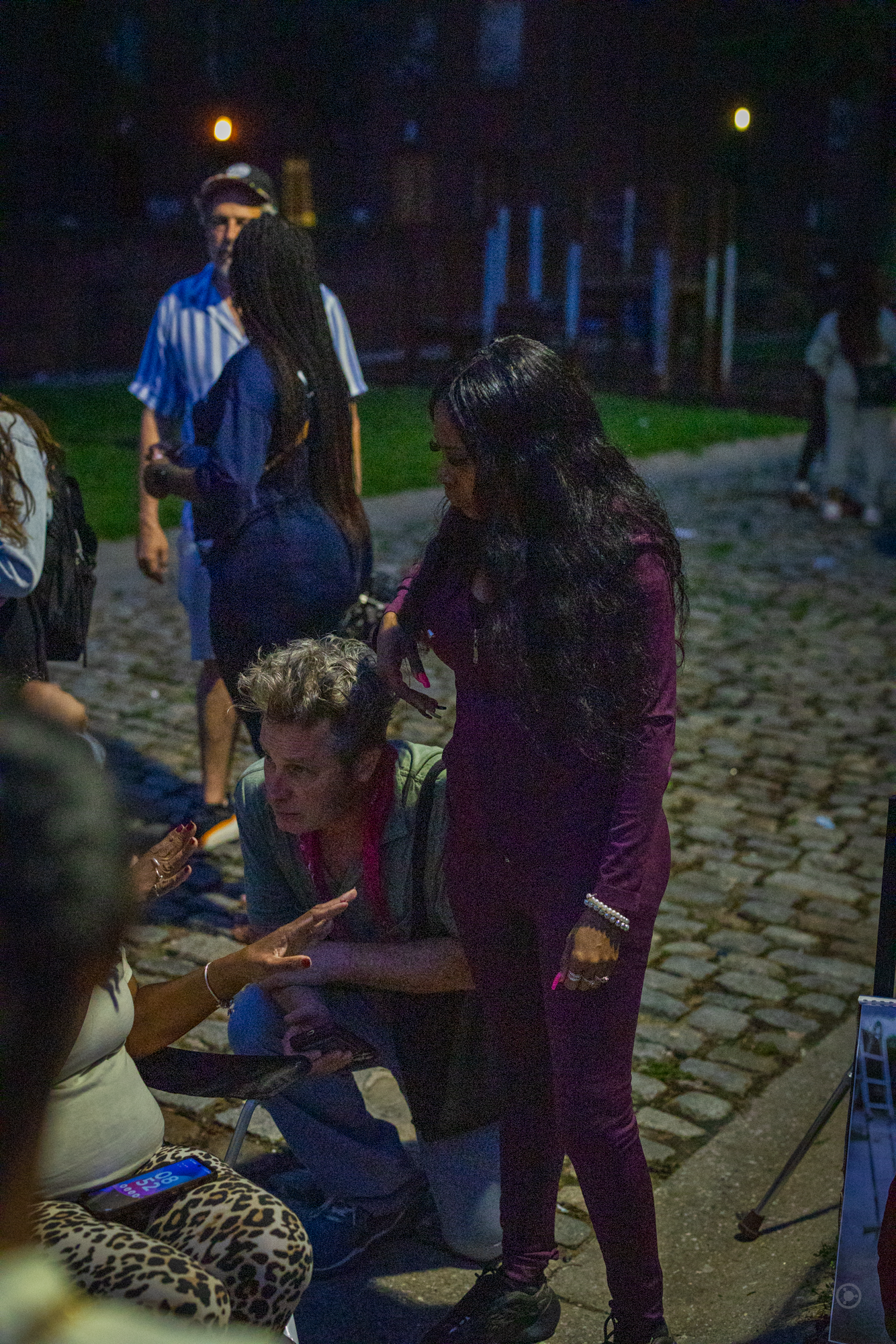
Aaron Maybin, a community activist and board member of the Civilian Review Board, came with his kids to console Bilal’s mother and provide updates to Baynard Woods, the Baltimore Beat’s journalist. “They keep pushing back the release of the body camera footage,” he said.
Realizing I was there for them, Bilals family began asking me to take photos of them gathered. “It’s sad that this is what brought us all together” one of them said.
Catalina Byrd, Tawanda Jones, and Baynard Woods stayed near Bilal’s mother, letting her talk through her pain. “I hate this,” said Tawanda, “I hate that she’s now part of this club,” referring to the group of people in Baltimore who have had loved ones killed by the Baltimore Police. Tawanda’s brother, Tyrone West, was beaten to death by the police in 2013. Every Wednesday since then, Tawanda has led a protest in his honour.
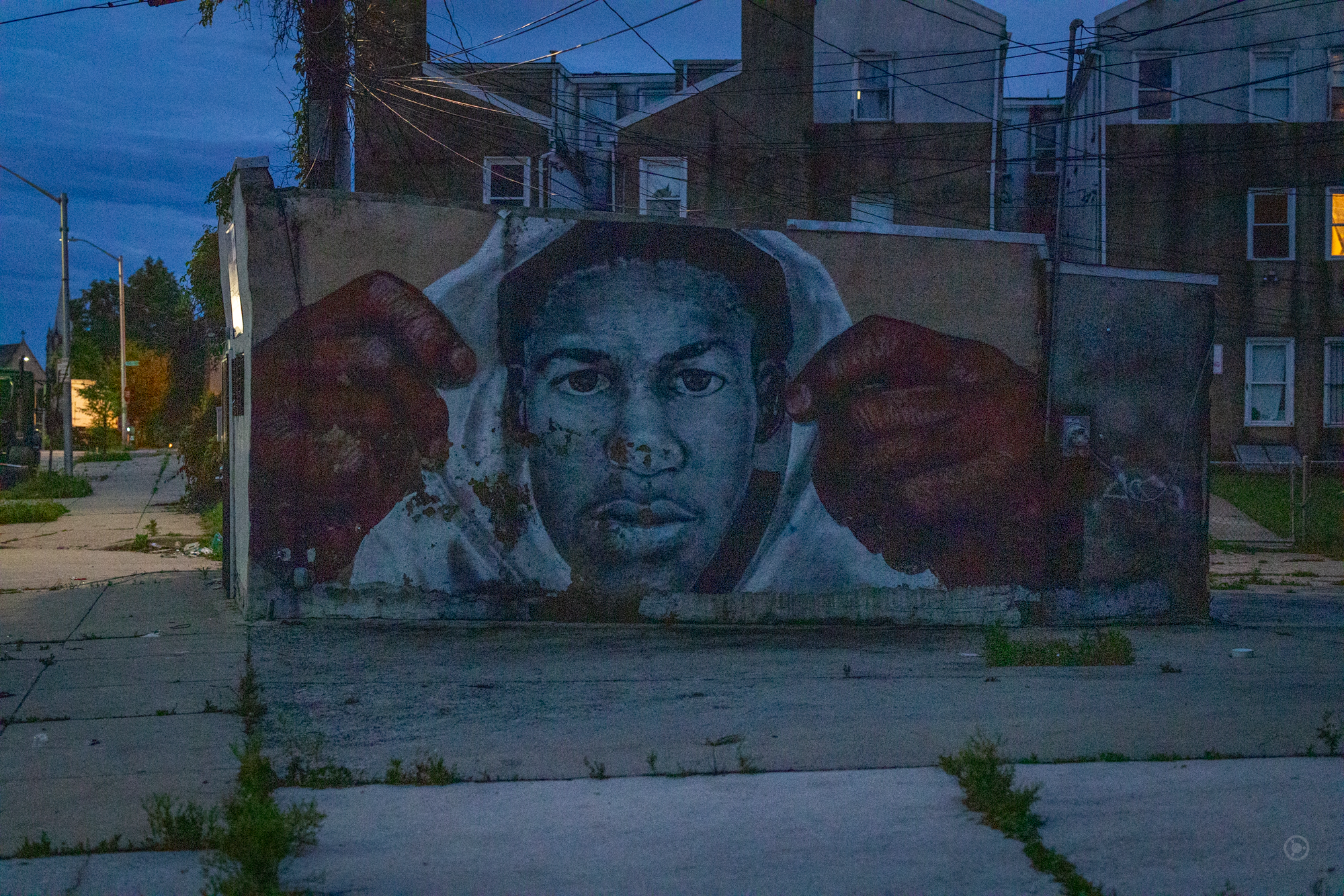
For many people attending the vigil, there were echoes everywhere. “This feels like Freddie Gray,” one young man said, lighting a candle. Freddie Gray was killed by the Baltimore Police in 2015. Directly across from the vigil, a mural of Trayvon Martin had been painted on the side of a garage. “There’s just so much pain here.”
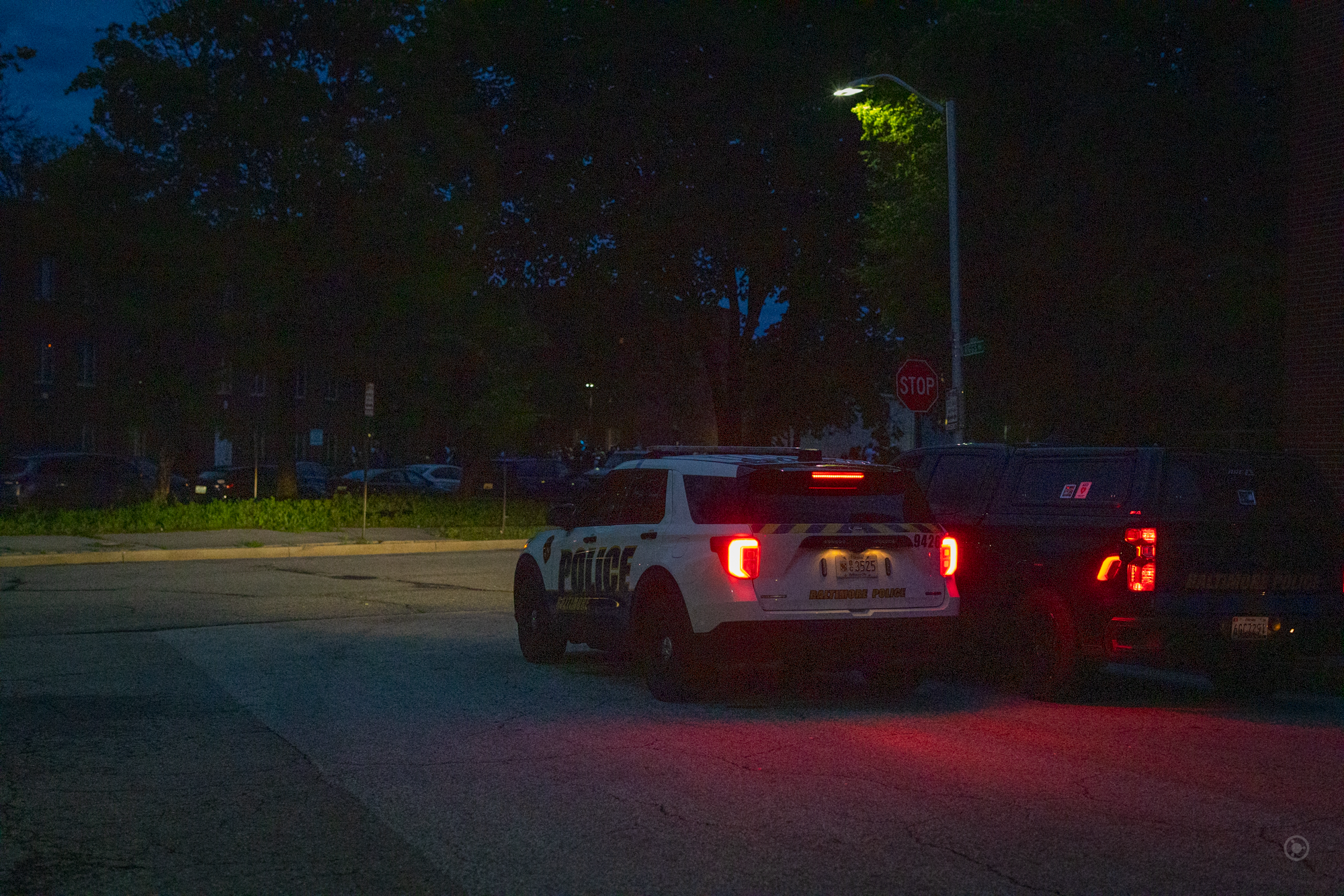
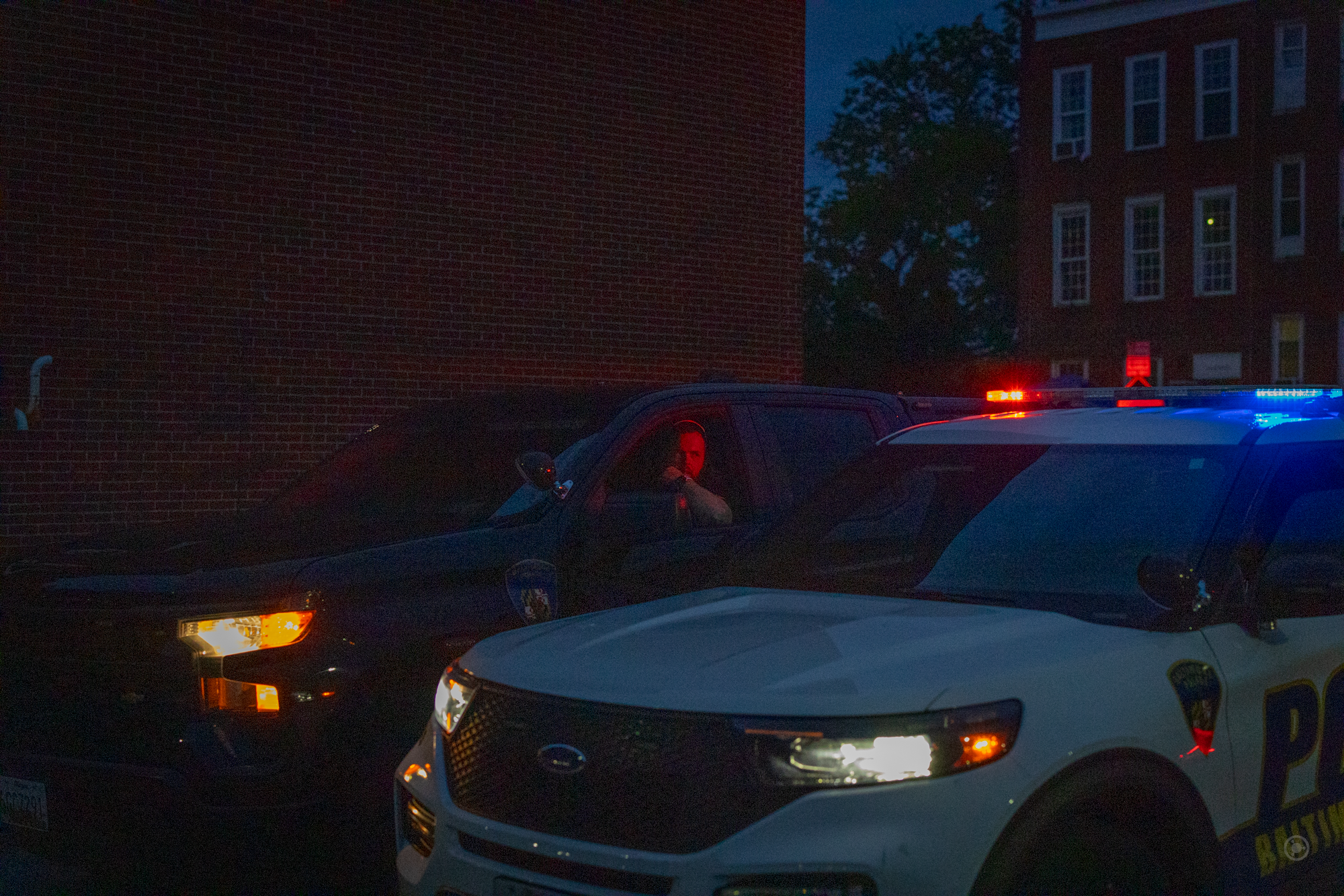
On the outskirts, police vehicles sat, lights blinking into the crowd. There was nowhere anyone could go to mourn without being able to see the police on the fringes.
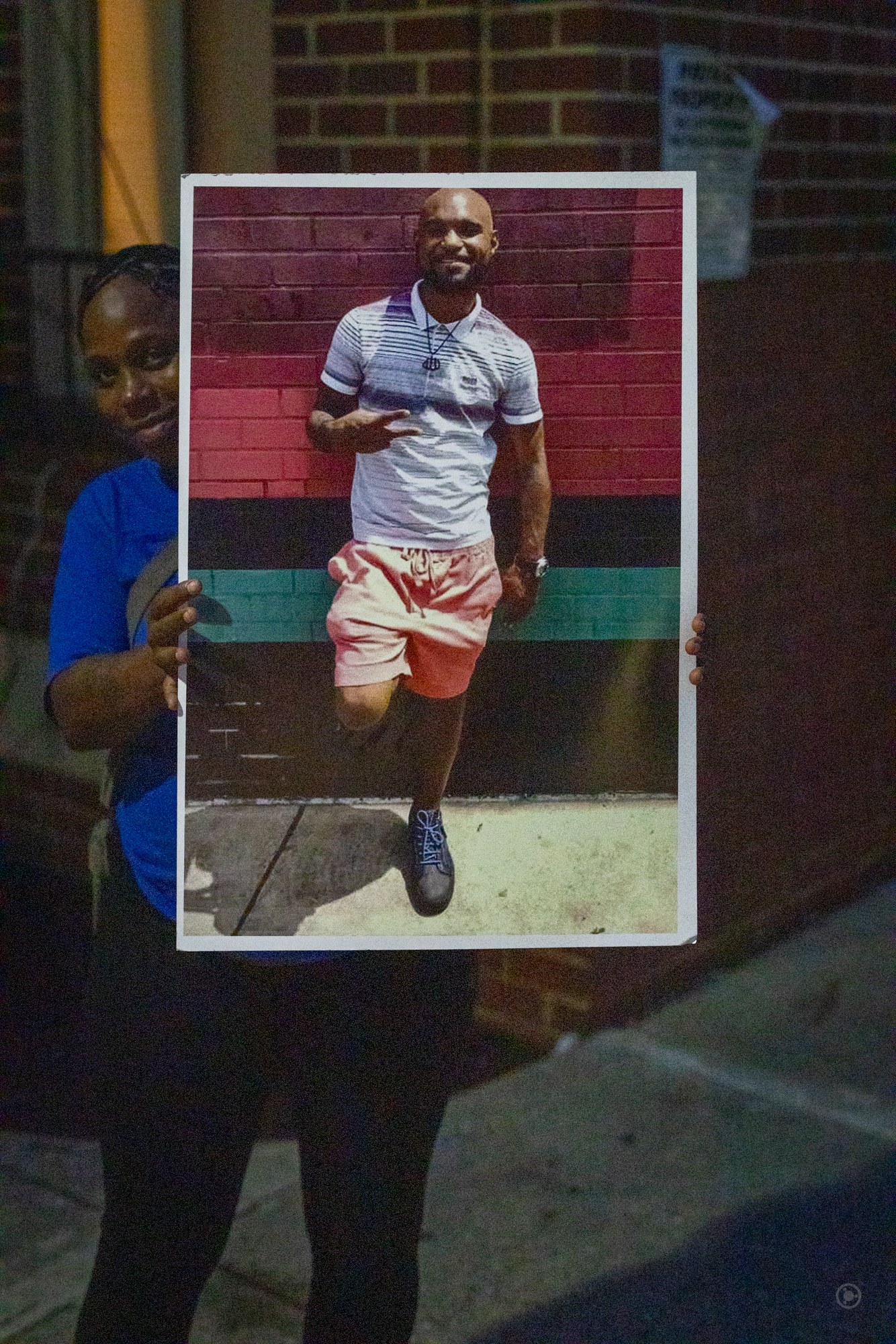
As it got darker, people began to filter home, and a soft rain began to fall. Family members picked up the photos of Bilal to take with them. “Bilal was my rock. My foundation,” one woman said, holding up a photo of Bilal standing in front of a red, black, and green wall.
The sky rumbled with thunder softly as people walked home. Tonight was about peace.
Yesterday, the communities of Matimekush and Kawawachikamach came together to lay to rest Jean-Marie (Shamani) McKenzie. The Matimekosh church, with its beautiful architecture and warm light, served as the sacred space for his farewell.
Father Gerard Tsetsalam, originally from Cameroon, delivered the entire funeral service in Innu. Later, at the feast, we exchanged words in Innu ourselves—an exchange so unexpected that someone nearby chuckled, “This has to be the weirdest conversation in Innu I’ve ever heard”.
The church was full. Family, friends, elders, and youth packed the pews. Shamani was deeply loved, and his memory brought together generations.
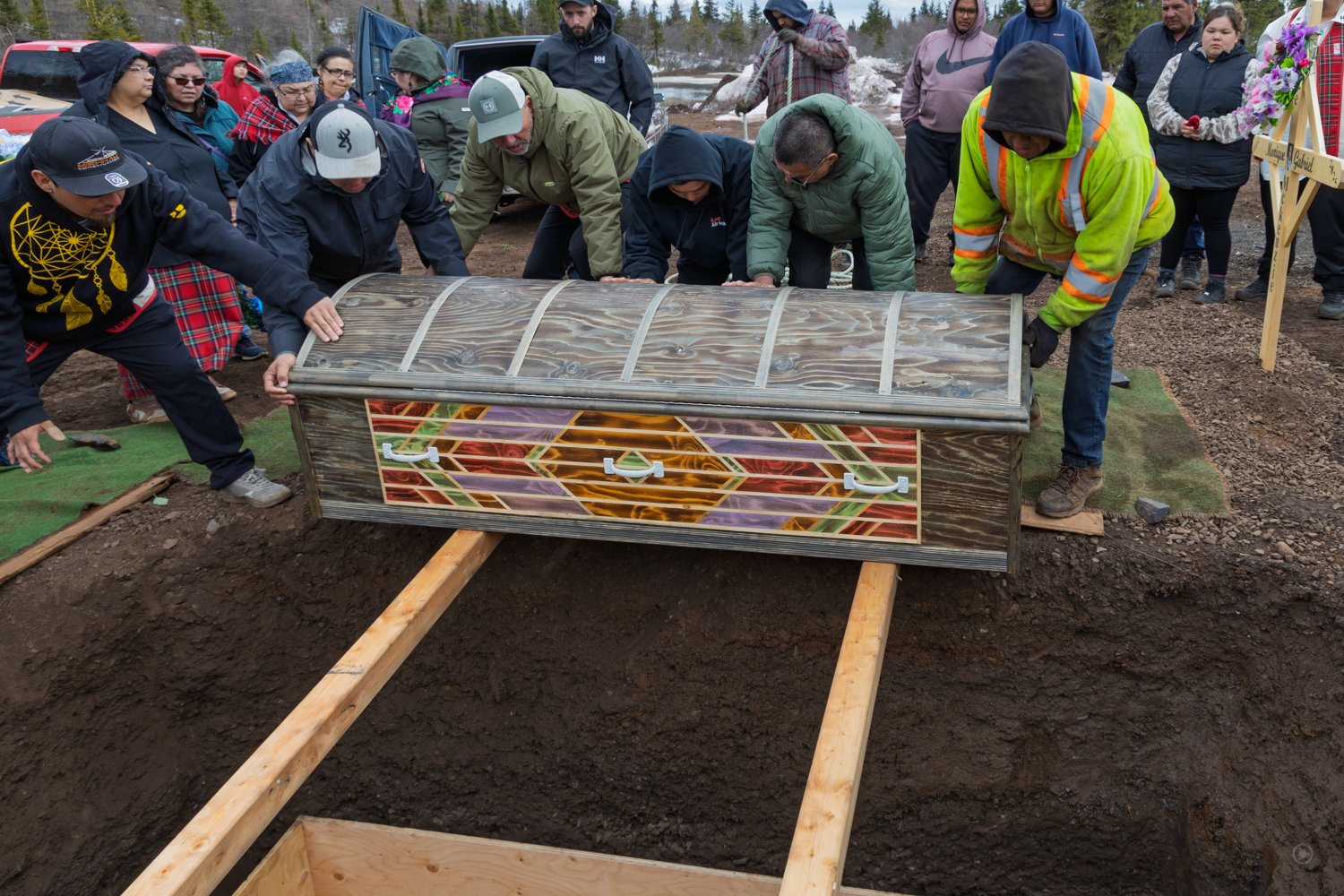
The casket, handcrafted by Craig Jaques, was a true work of art. With a curved lid and inlaid wood, it stood as a testament not only to craftsmanship but also to the love poured into Shamani’s farewell.
Susie Uniam McKenzie, Shamani’s mother, held onto the casket as long as she could before it was loaded into the hearse.
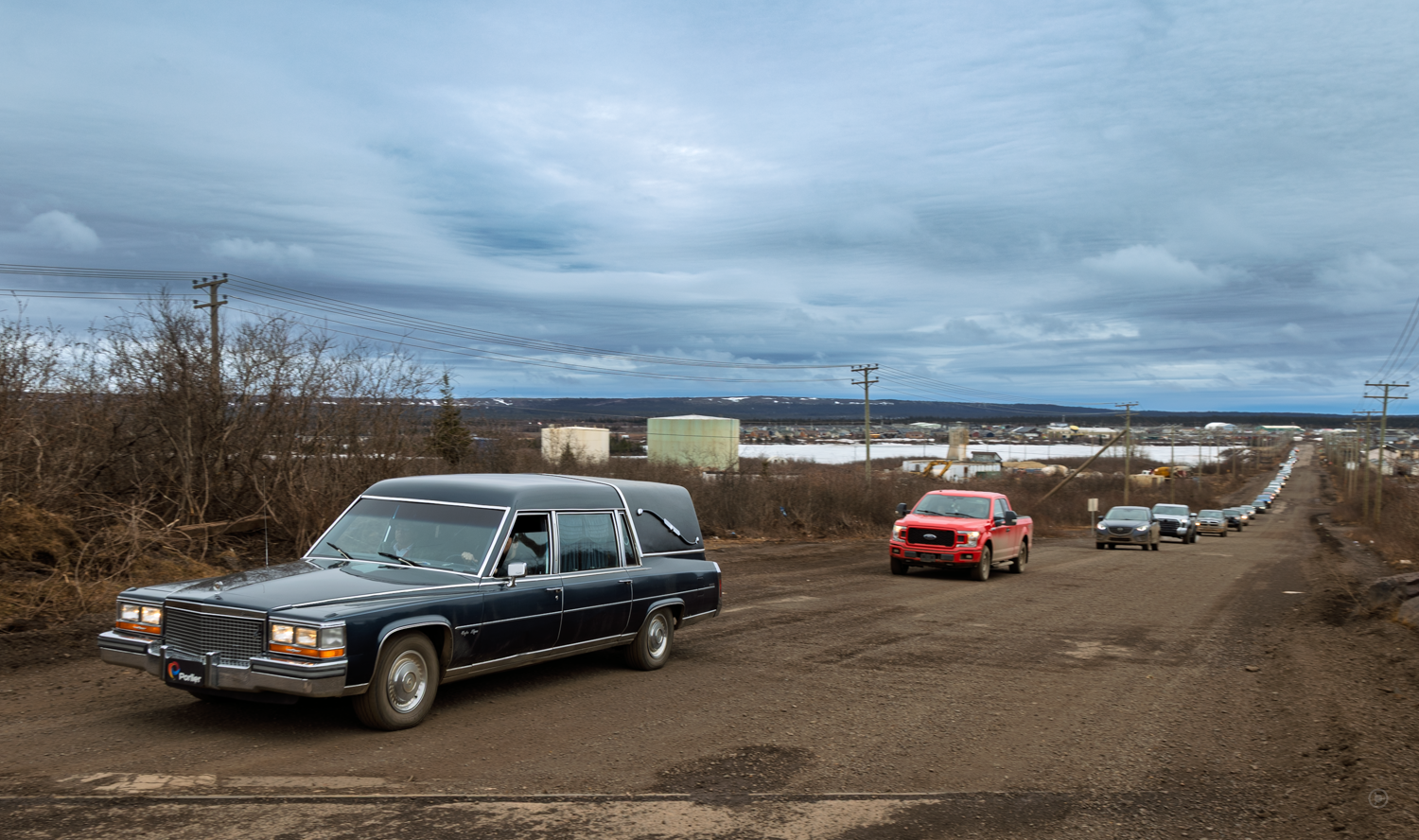
Following tradition in both communities, a long procession followed the hearse out of Schefferville, making its way up the hill to the cemetery.
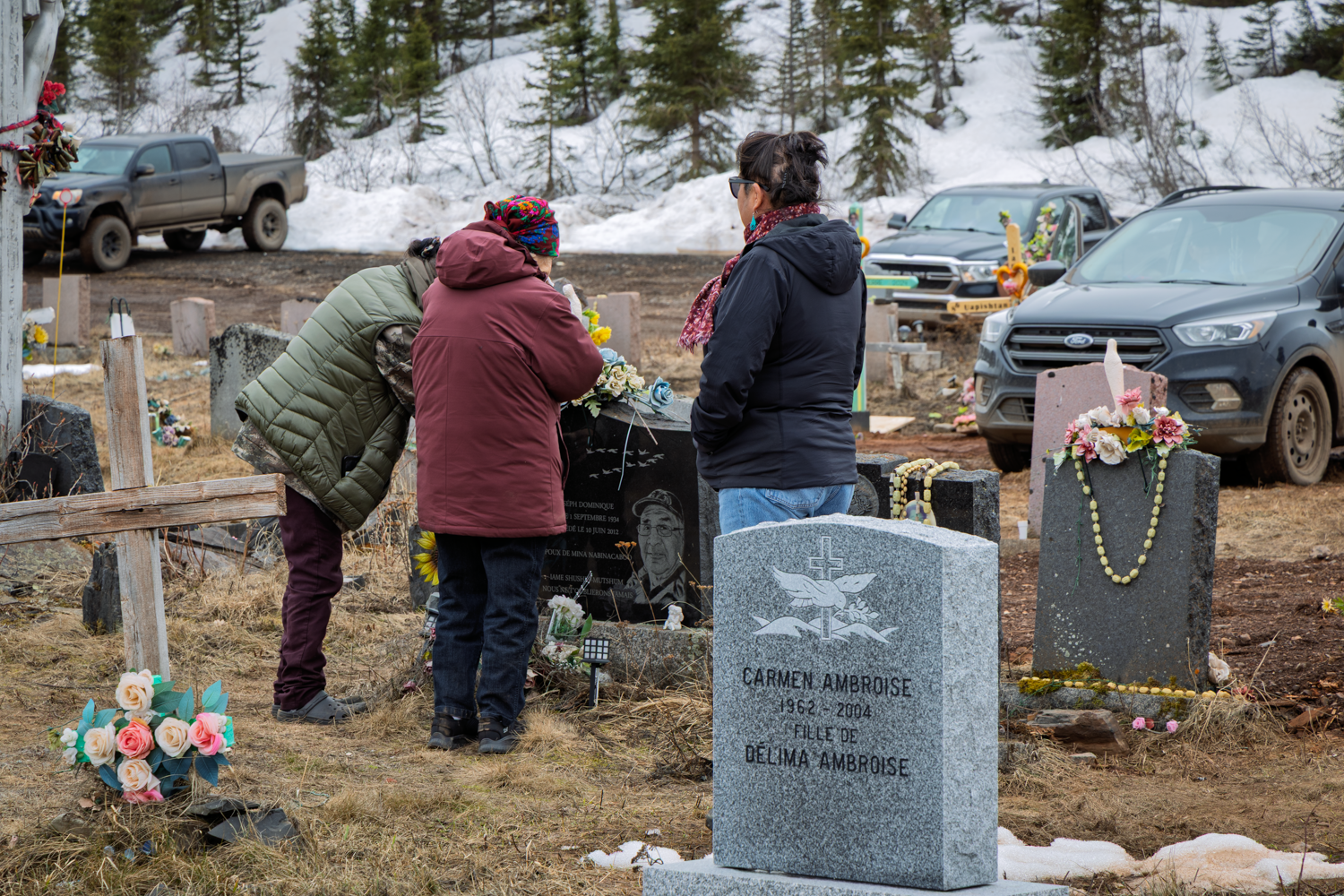
While the casket was prepared for burial, many took the opportunity to visit their own loved ones buried nearby—an unspoken ritual of connection and remembrance.
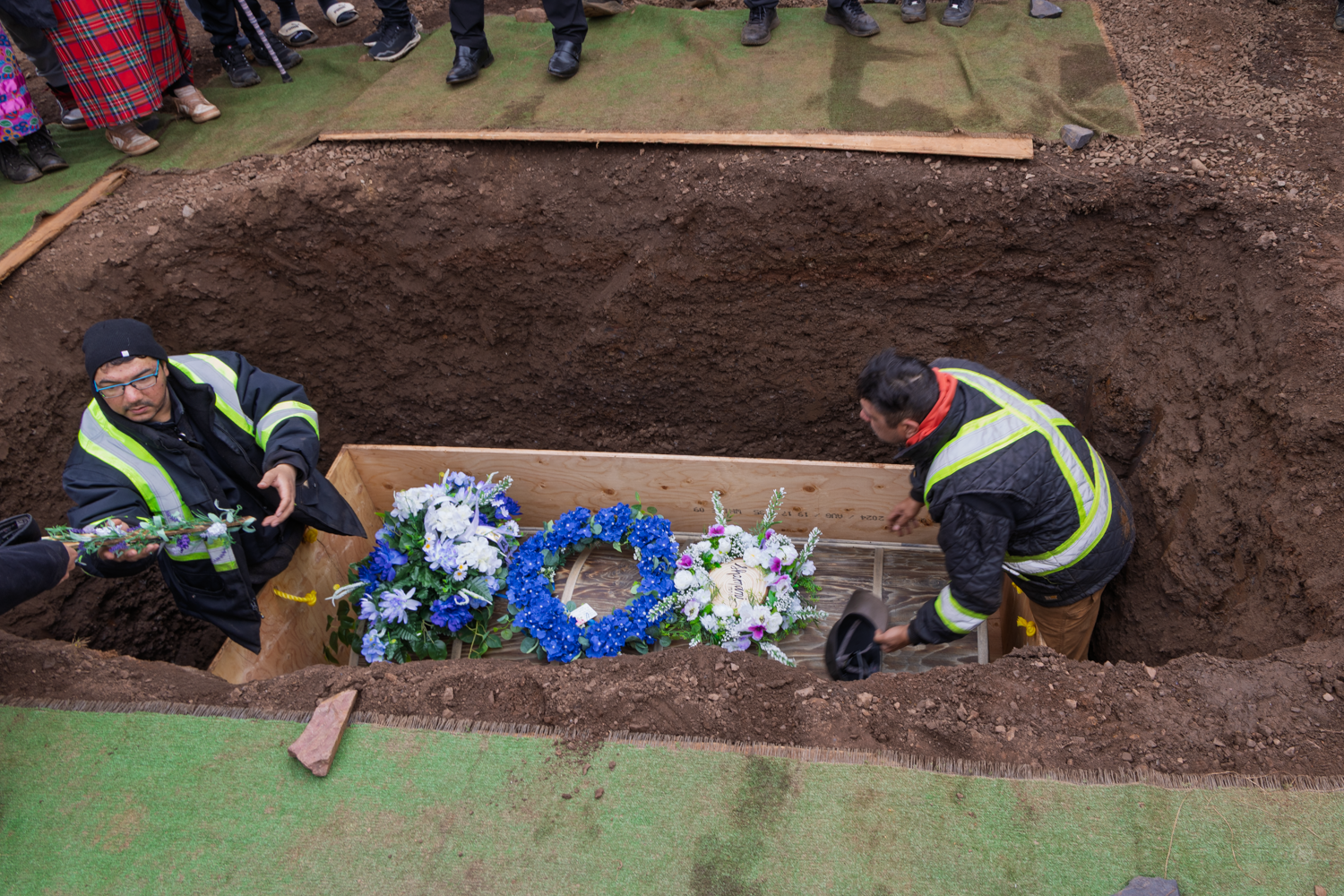
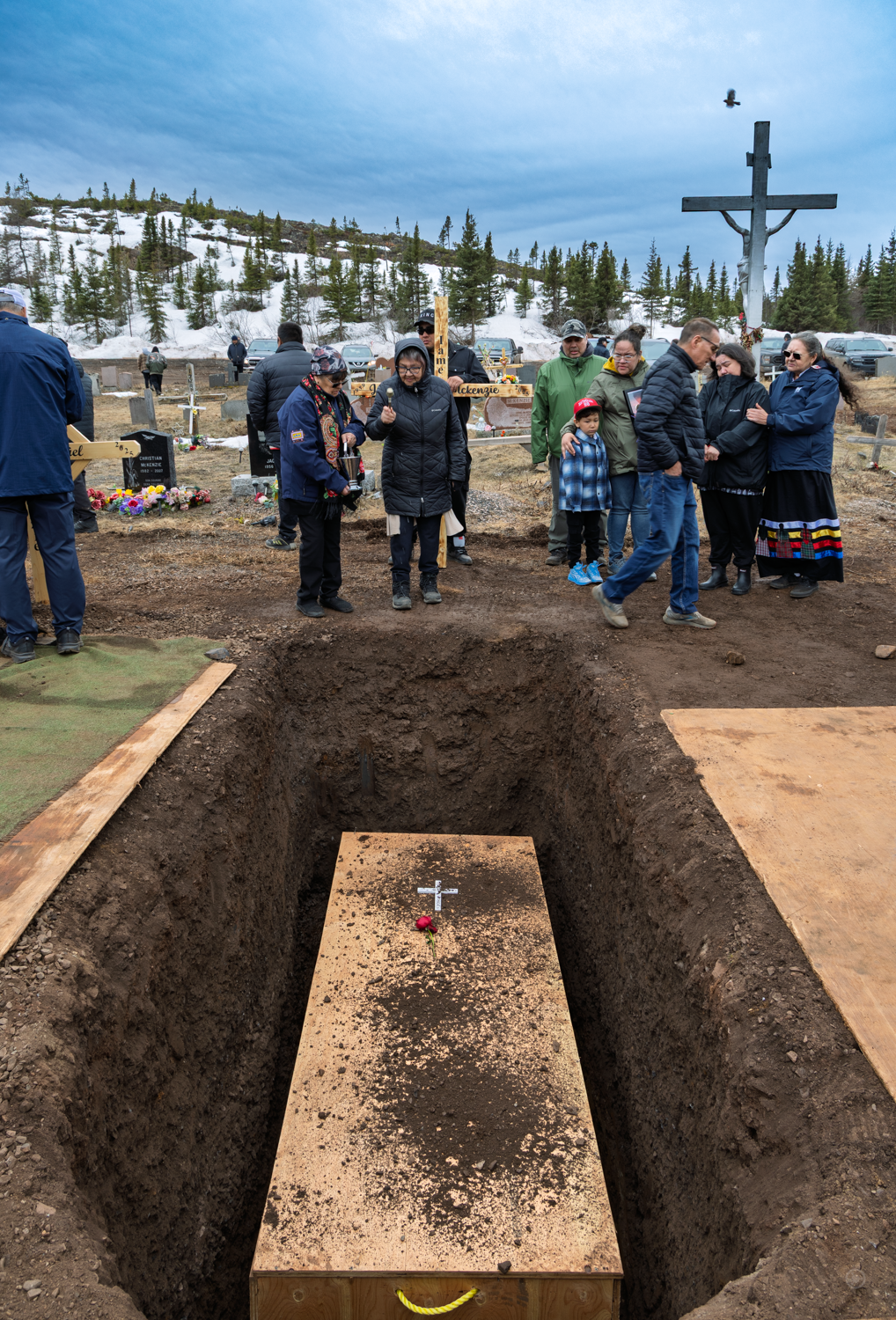
The casket was gently lowered onto boards and then into the grave with ropes. His family laid flowers across it before it was sealed inside the outer box.
As the outer box was sealed, Father Tsetsalam offered one last blessing over Shamani’s resting place.
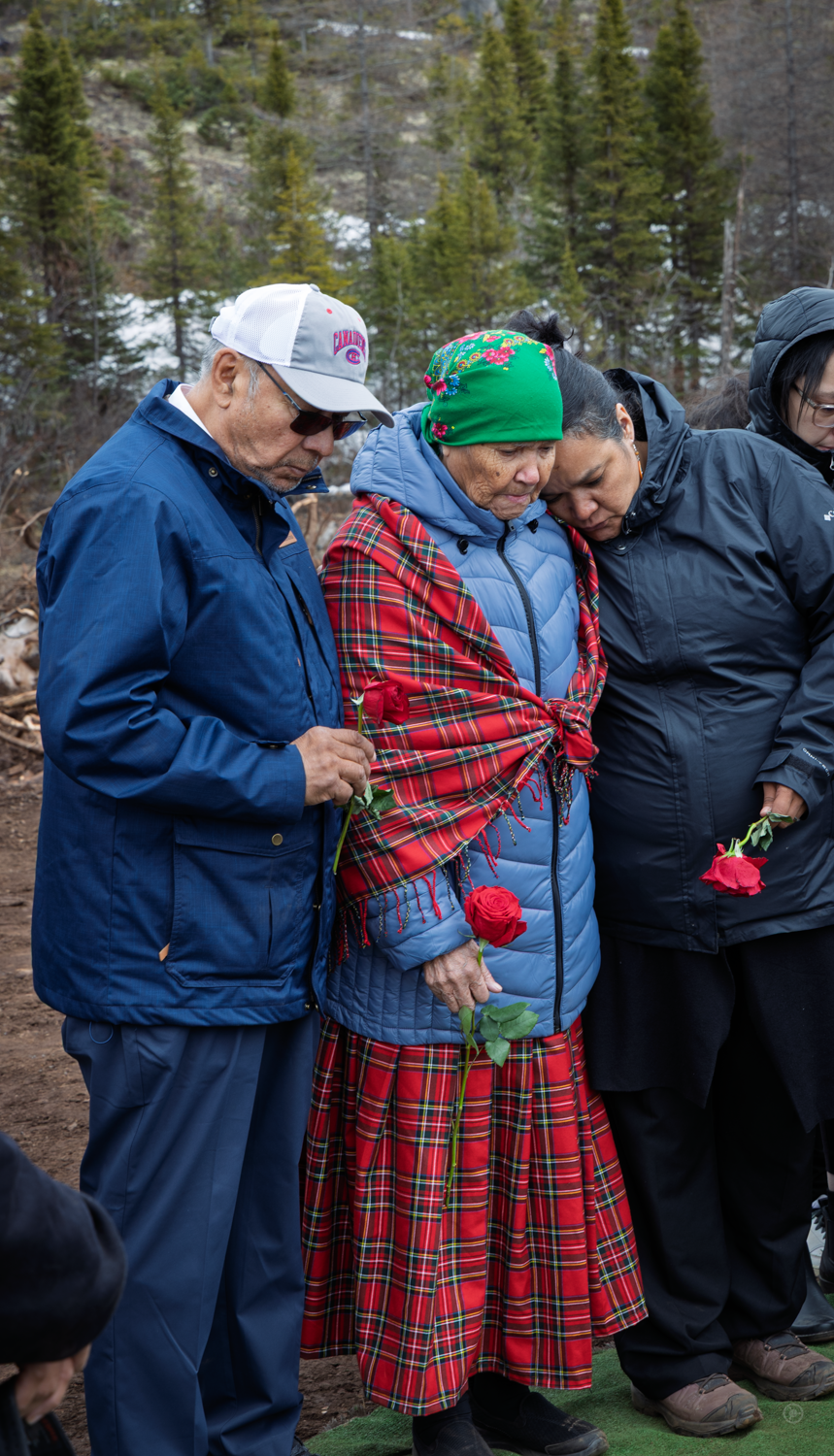
Pierre-Jacques McKenzie, Shamani’s stepfather, and Jacynthe, his niece, embraced Susie Uniam McKenzie before casting their flowers.
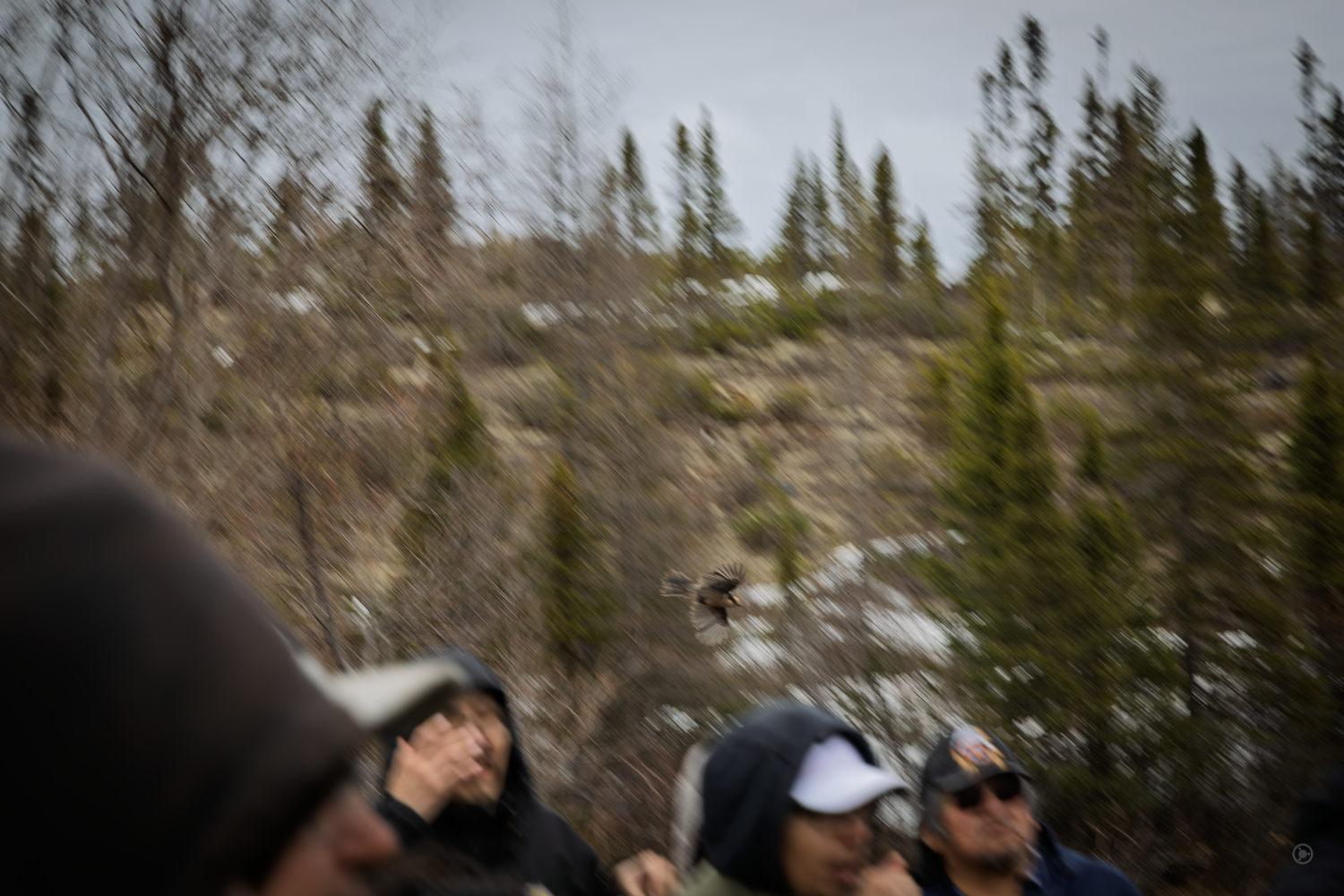
As the blessing was spoken, a Whiskichak (Canada Jay) flew low over the mourners, weaving between us before alighting on a wachinakin tree overlooking the grave.
The bird circled a few more times before resting on the large cross at the center of the cemetery. It remained there until every handful of earth had been placed and the crowd began to drift away.
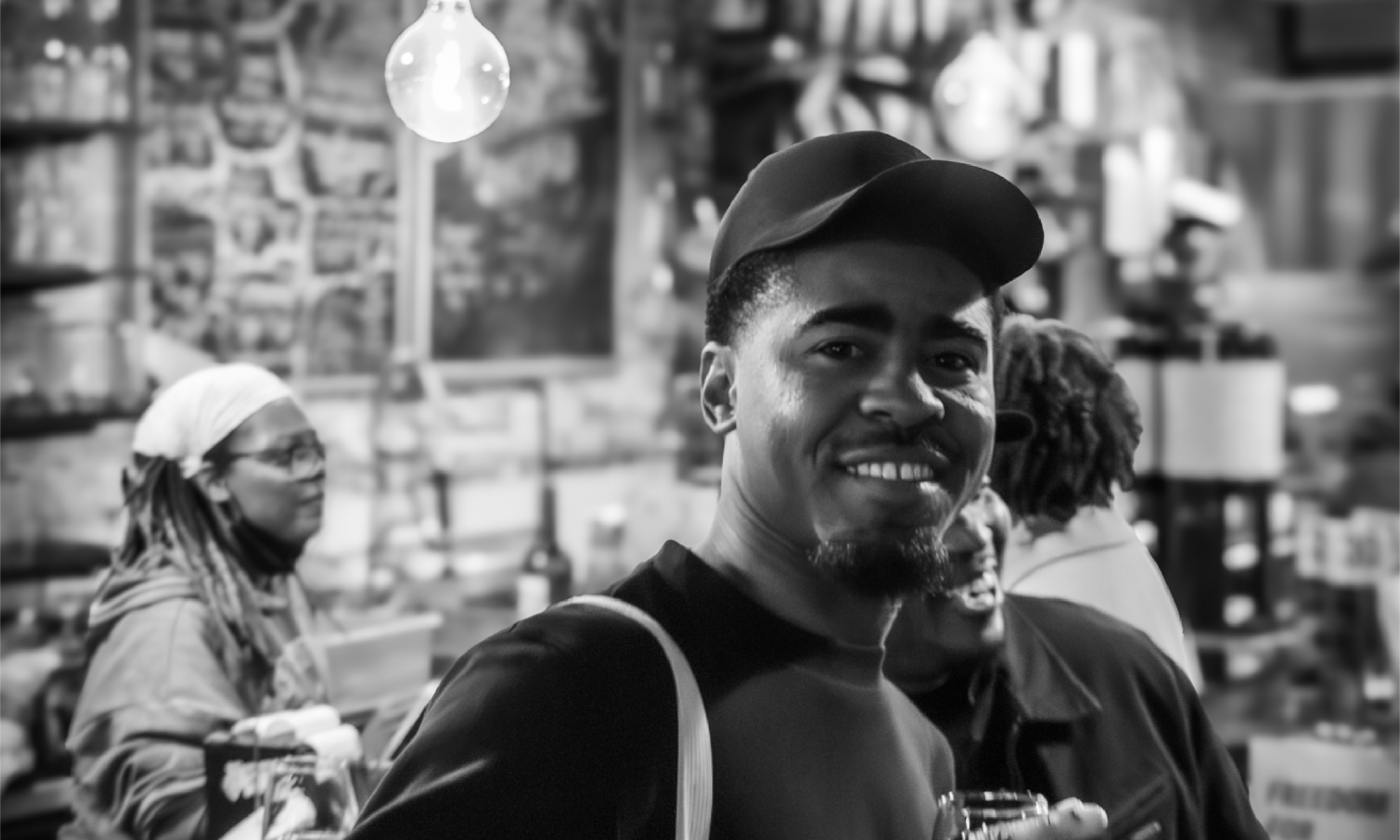
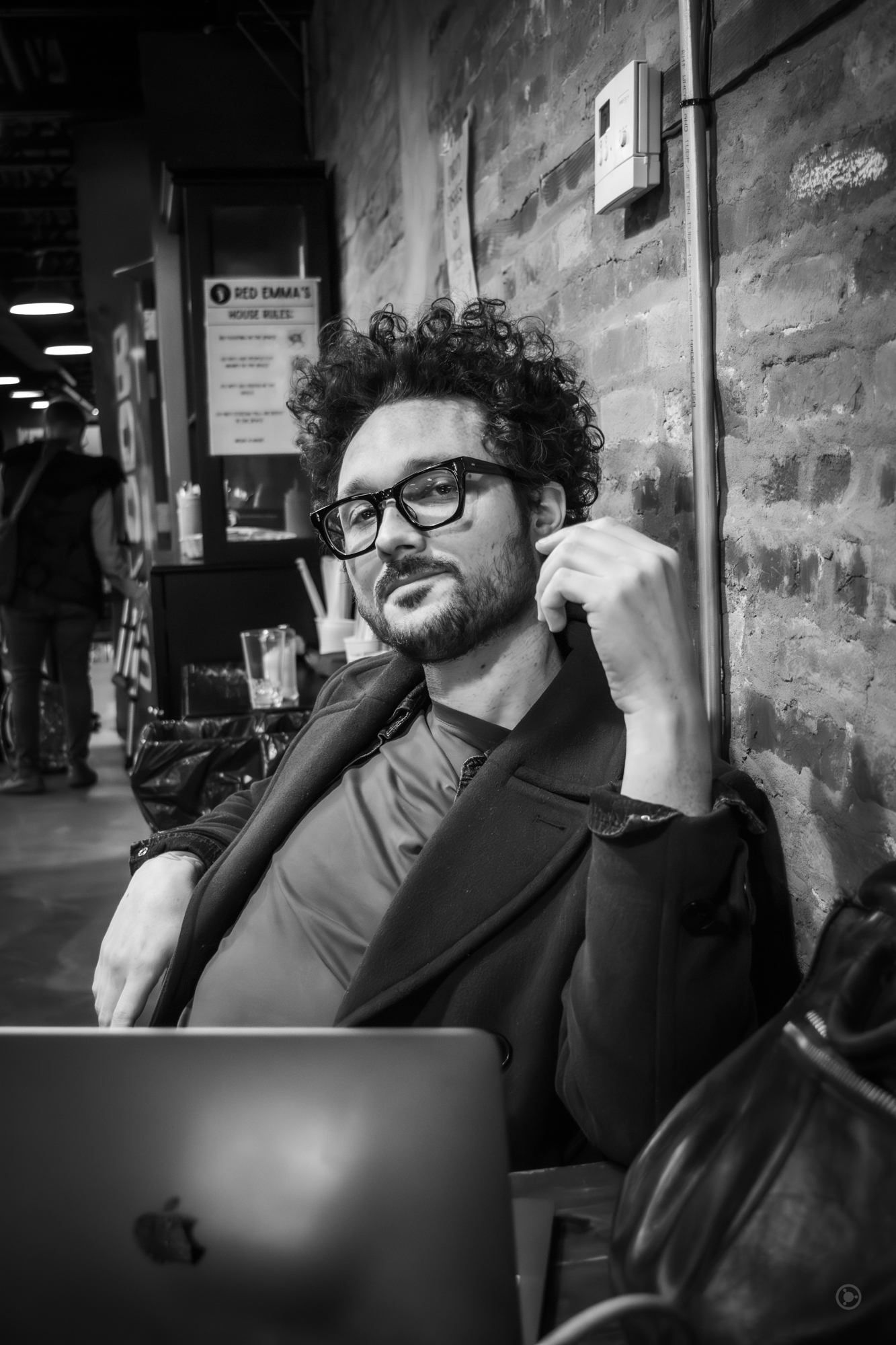
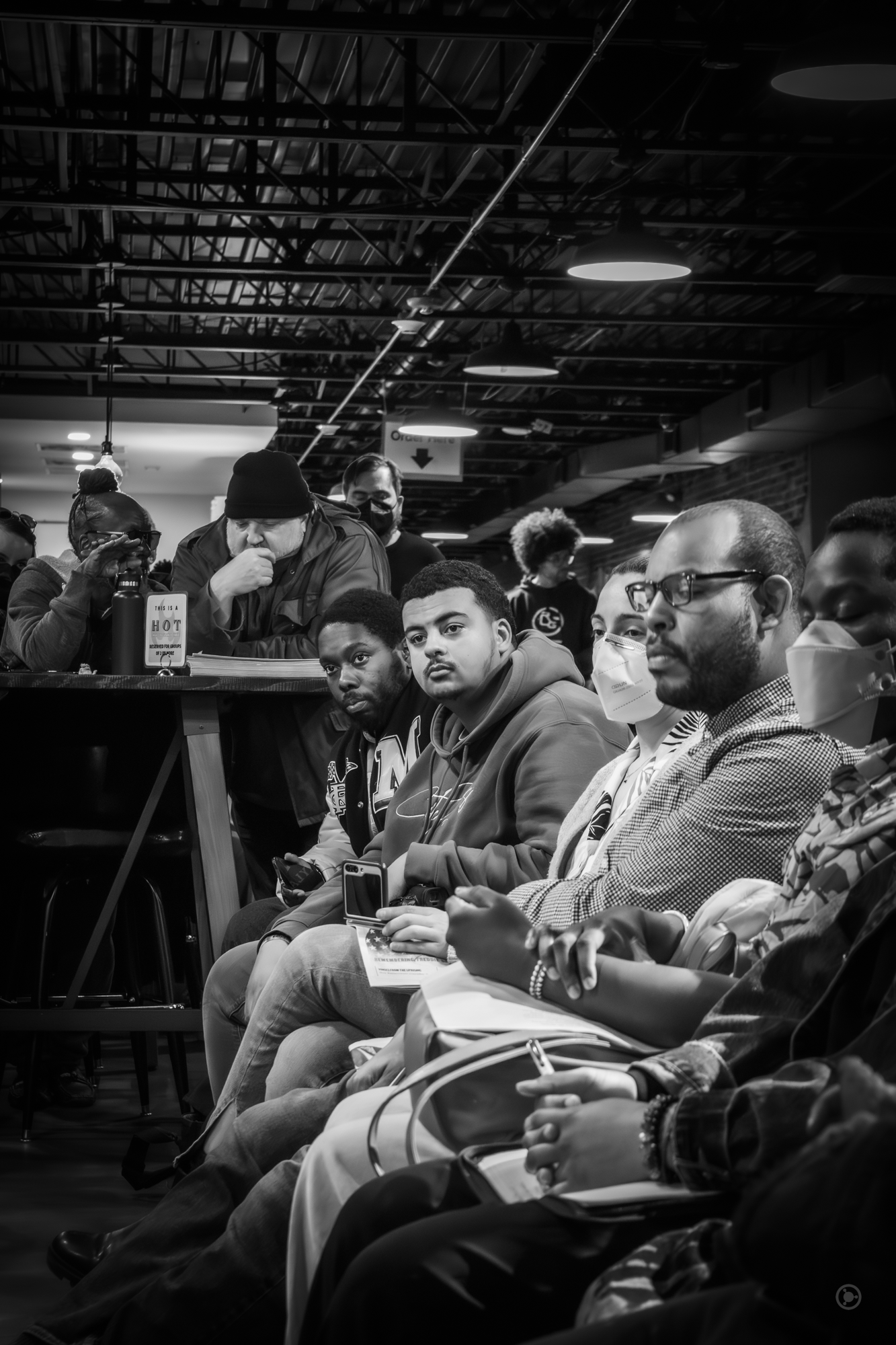
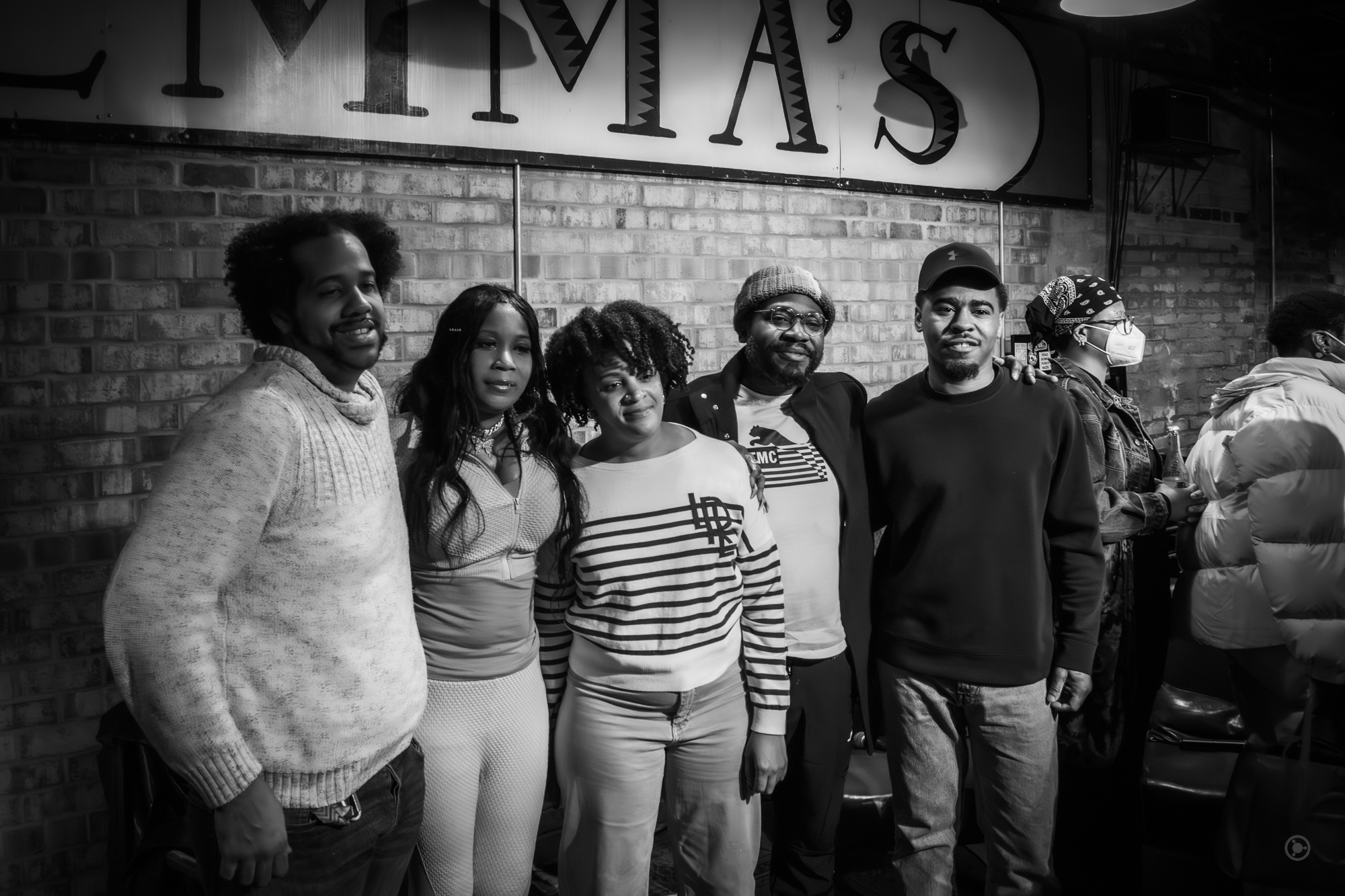
On Wednesday night, I had the honor of photographing a very special edition of West Wednesday—its 611th gathering—hosted by Baltimore Beat at Red Emma’s.
The panel was titled “Looking Back. Moving Forward”, and it marked 10 years since the death of Freddie Gray and the 2015 Uprising that followed. The evening served as both reflection and rallying cry—a chance to grieve, to remember, and to imagine what justice can still look like in our city.
The Panelists
The conversation was led by some of Baltimore’s most powerful voices:
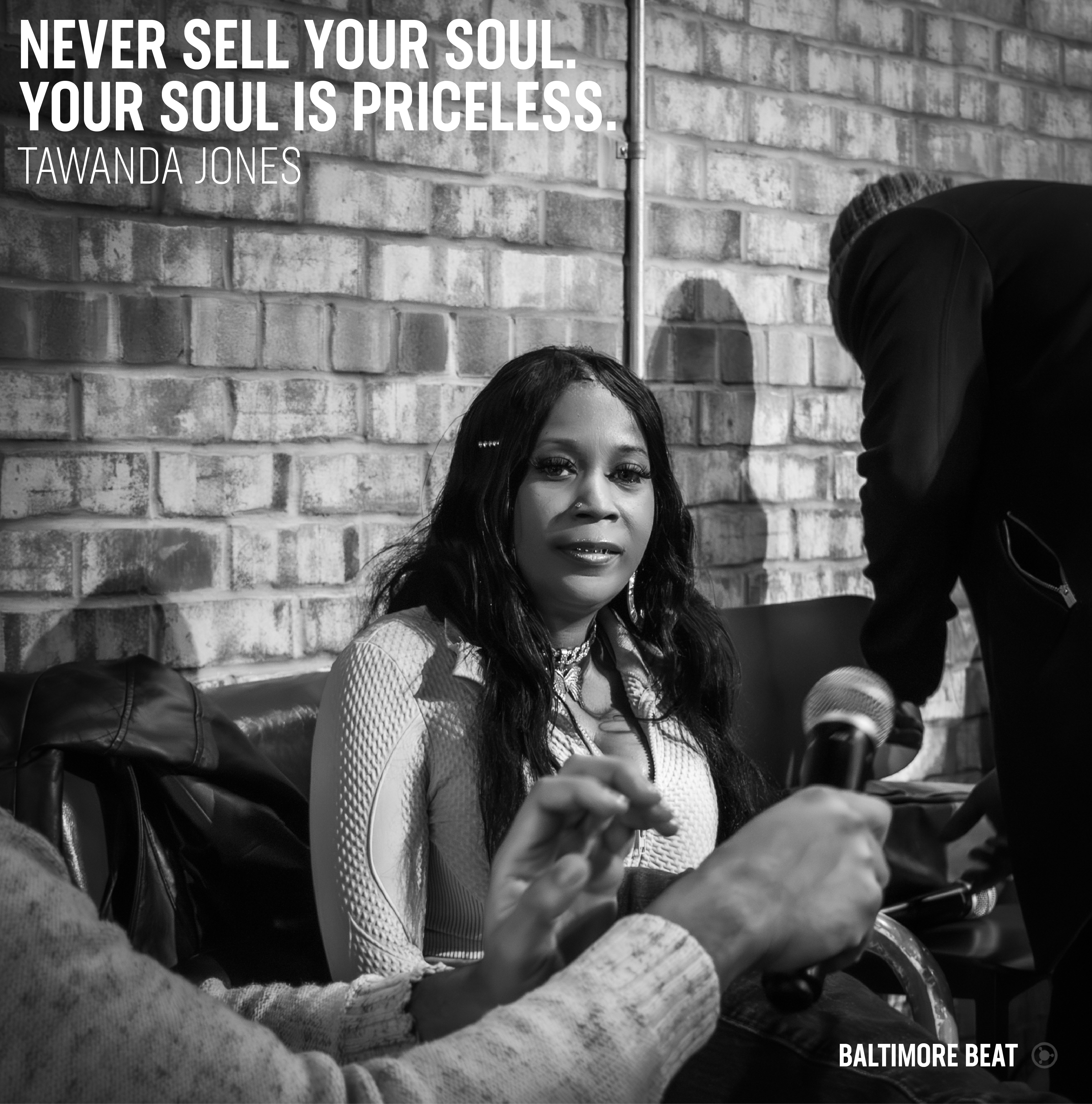
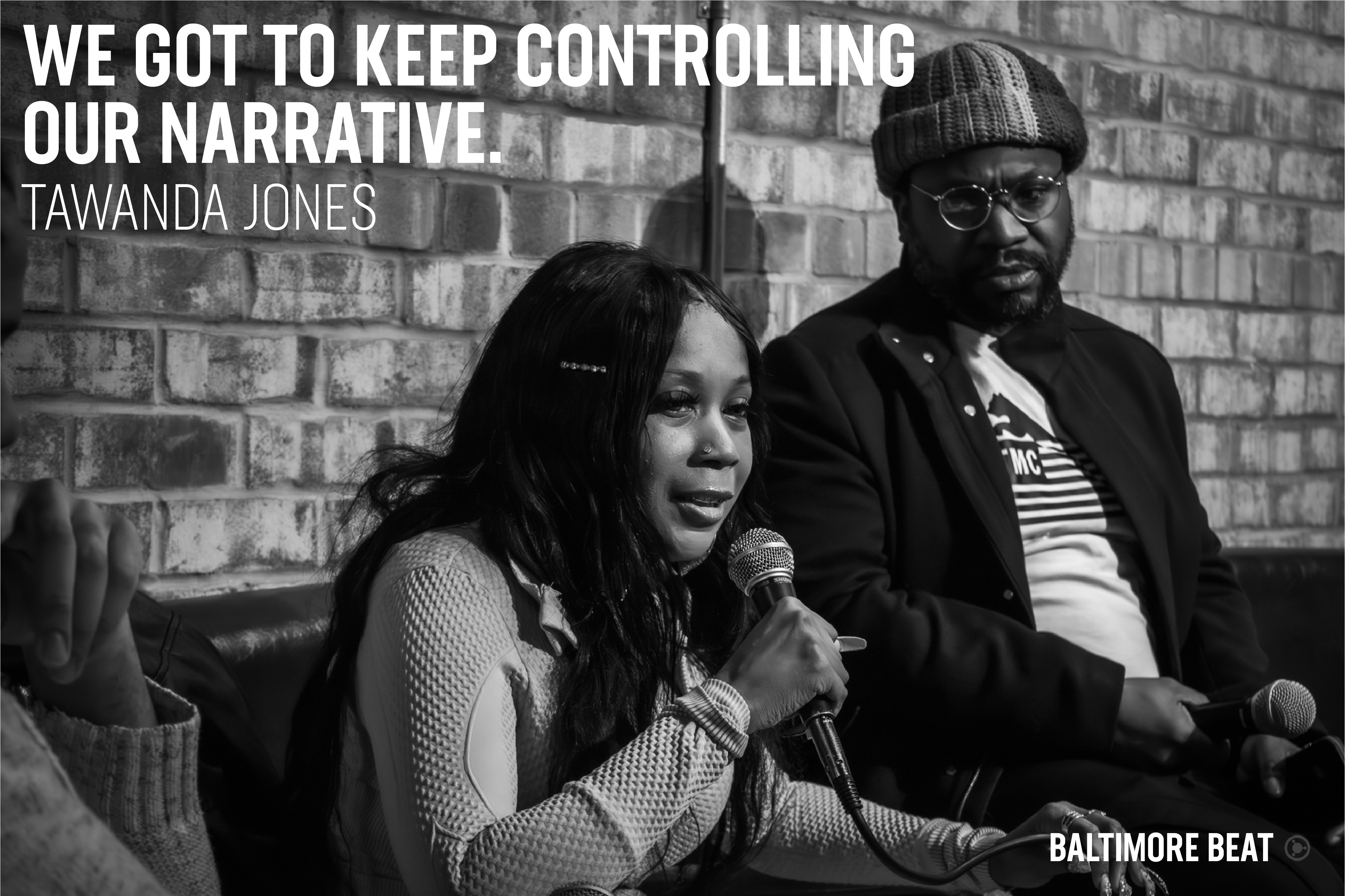
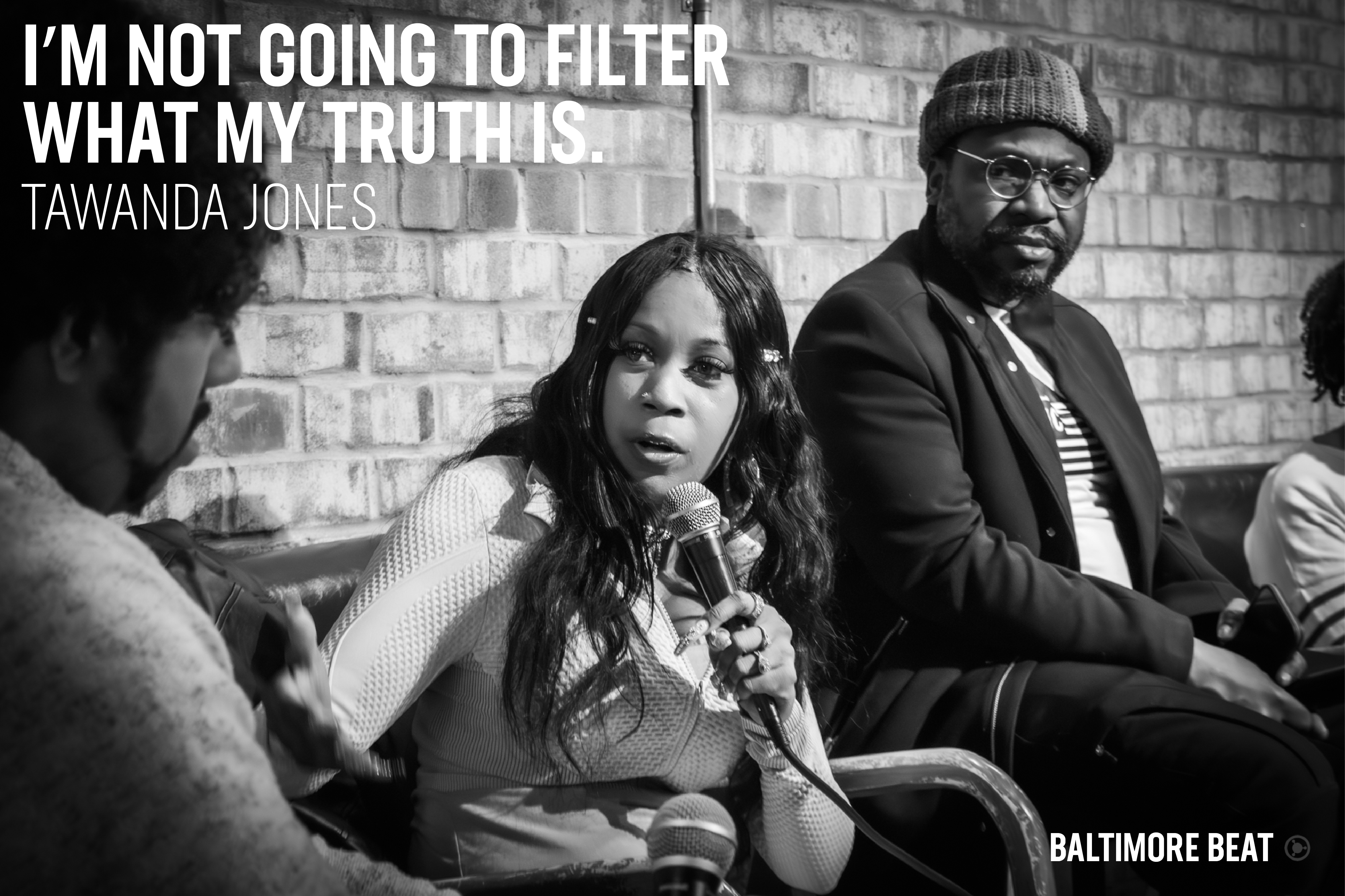
Tawanda Jones – Activist, sister of Tyrone West (killed by Baltimore Police in 2013), and the driving force behind West Wednesdays
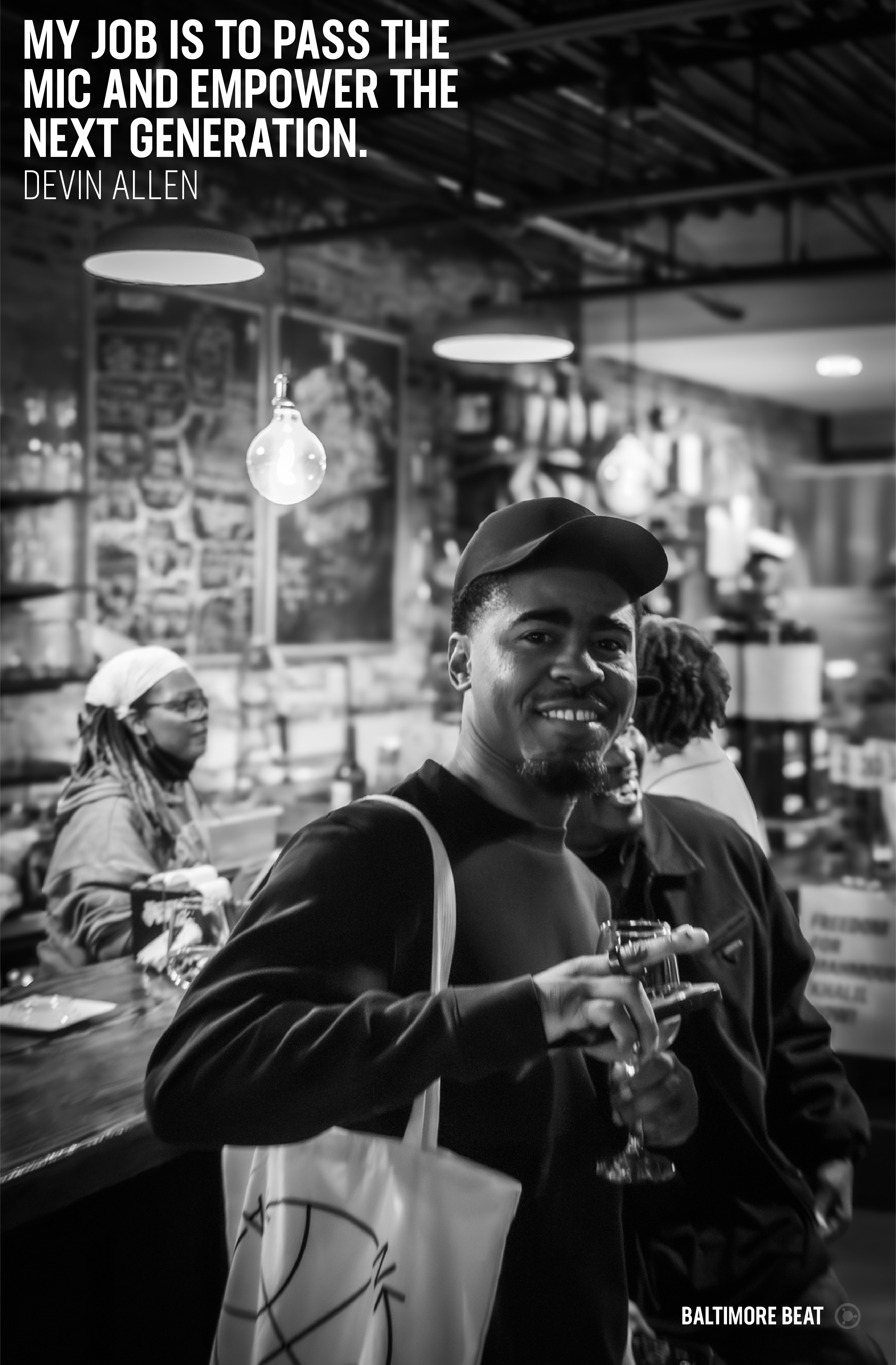
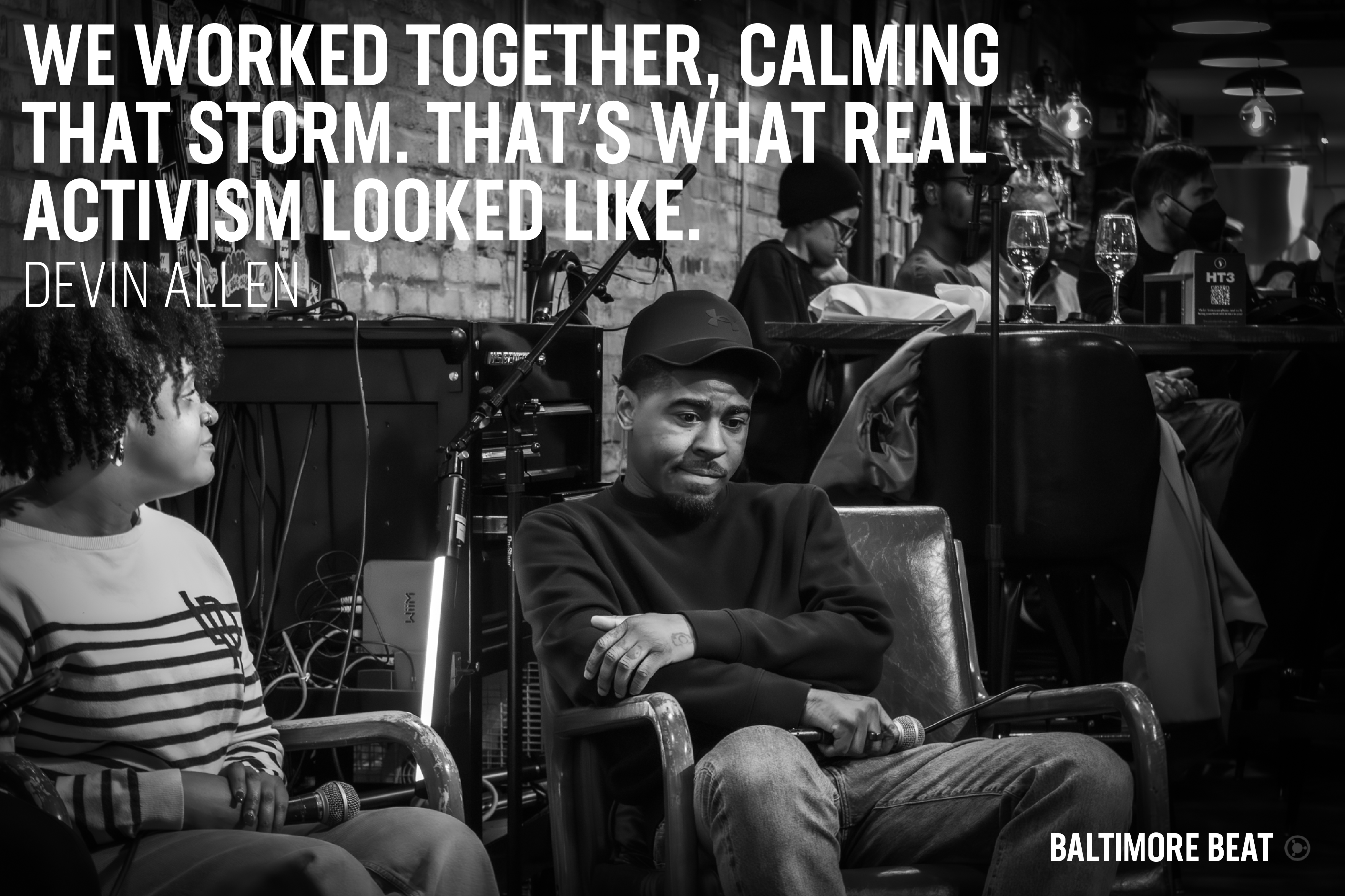
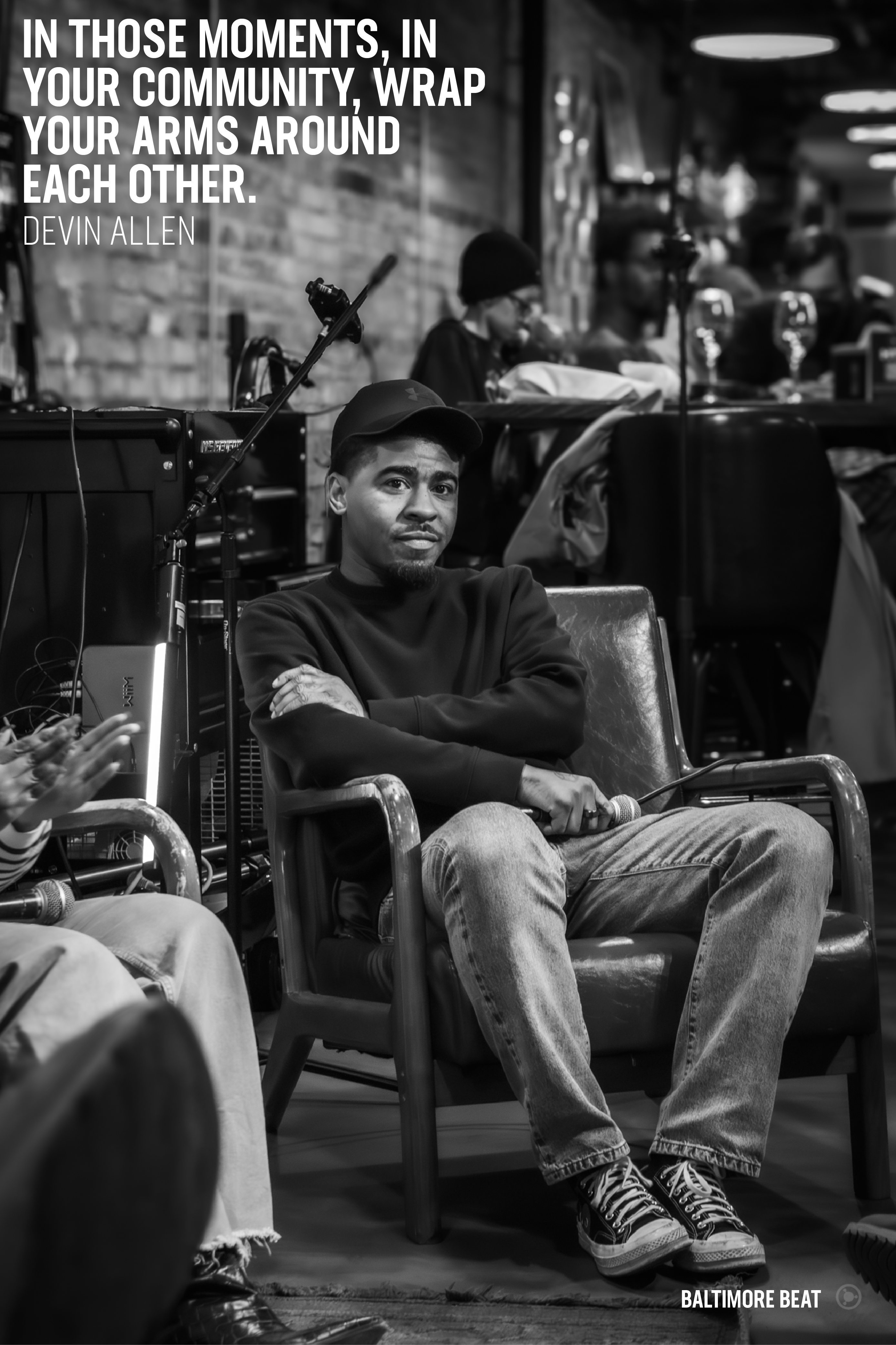
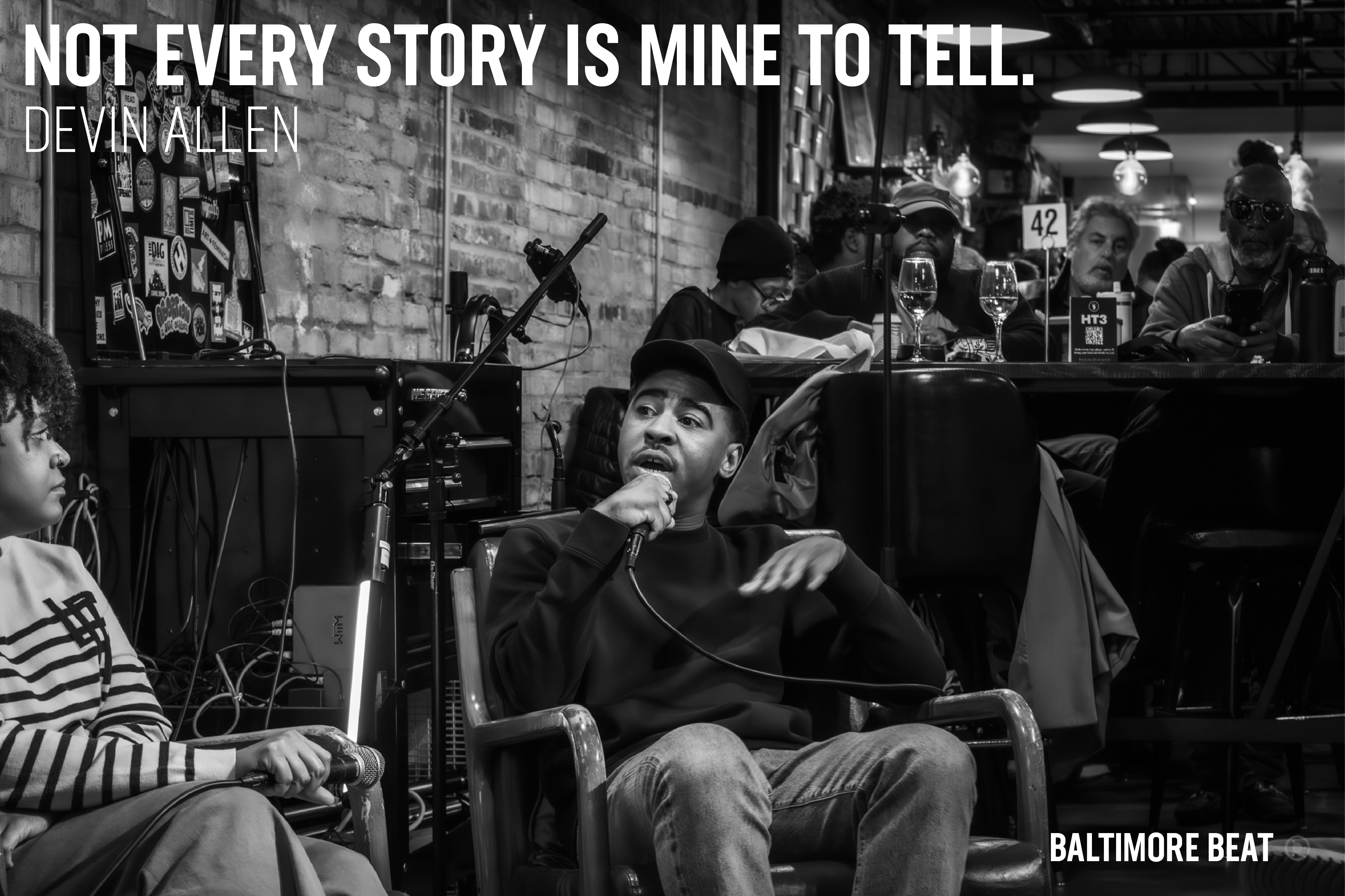
Devin Allen – Award-winning photographer whose images from 2015 made national headlines
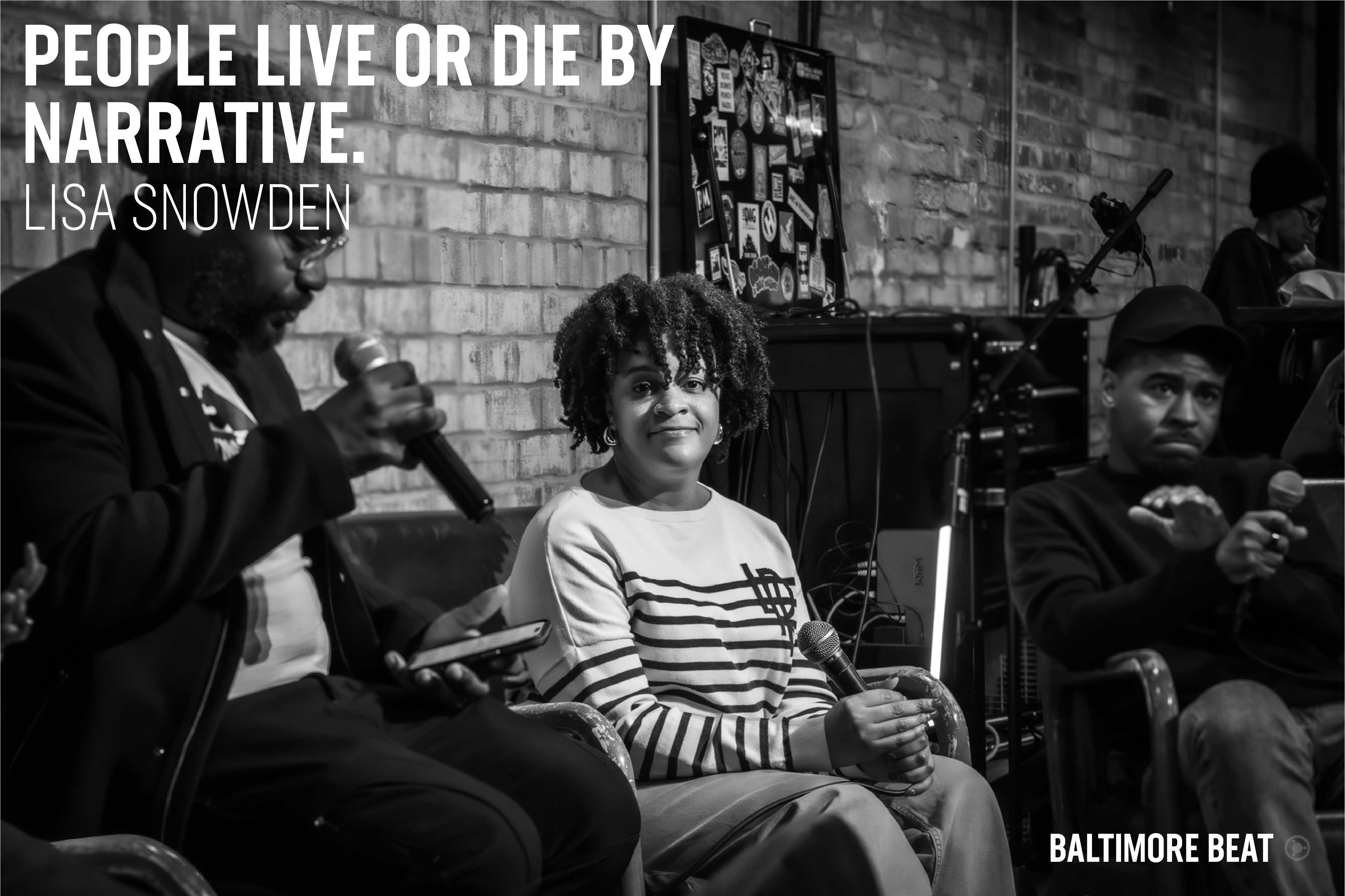
Lisa Snowden – Editor-in-chief of Baltimore Beat
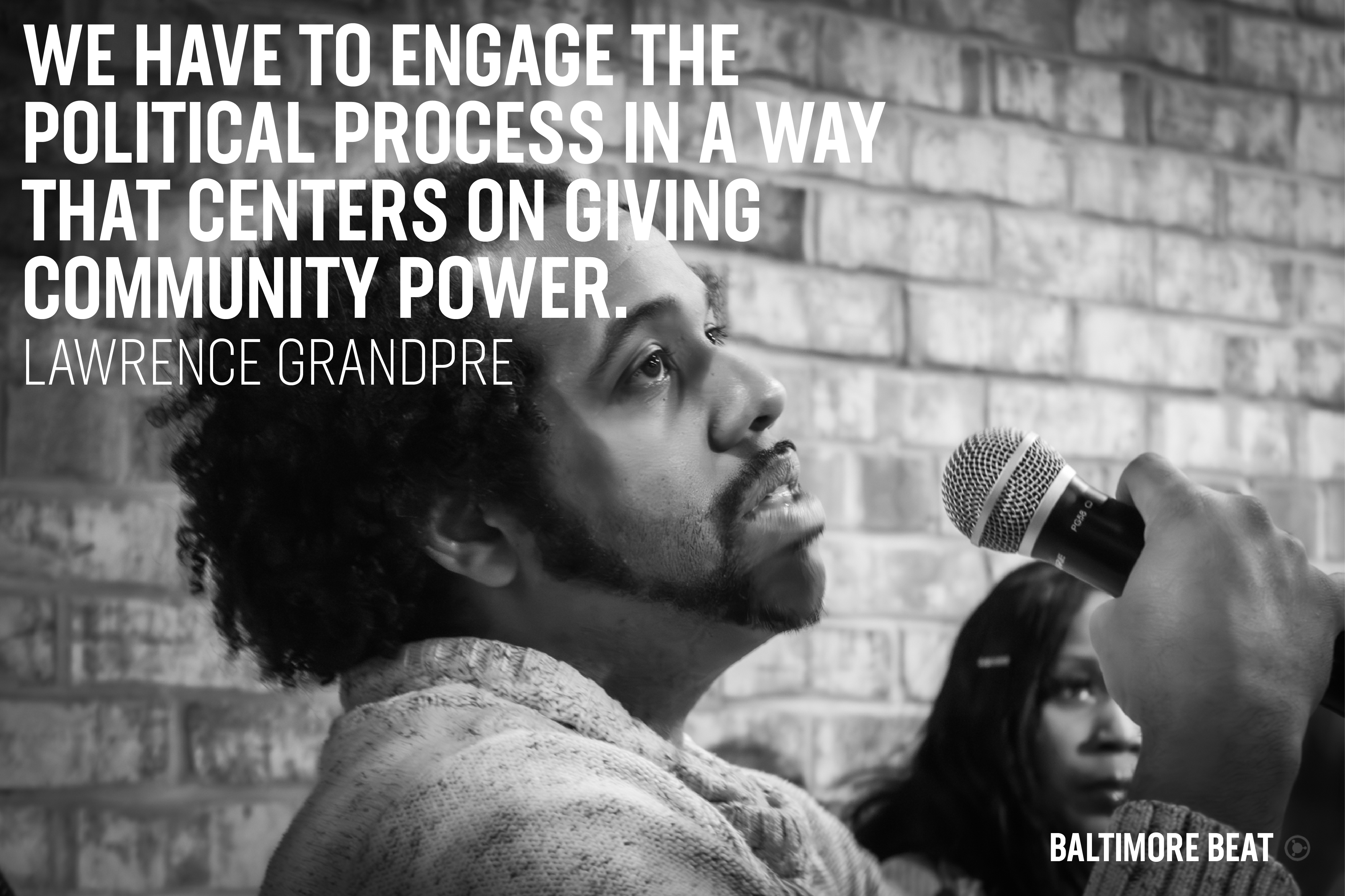
Lawrence Grandpre – Author and Director of Research at Leaders of a Beautiful Struggle
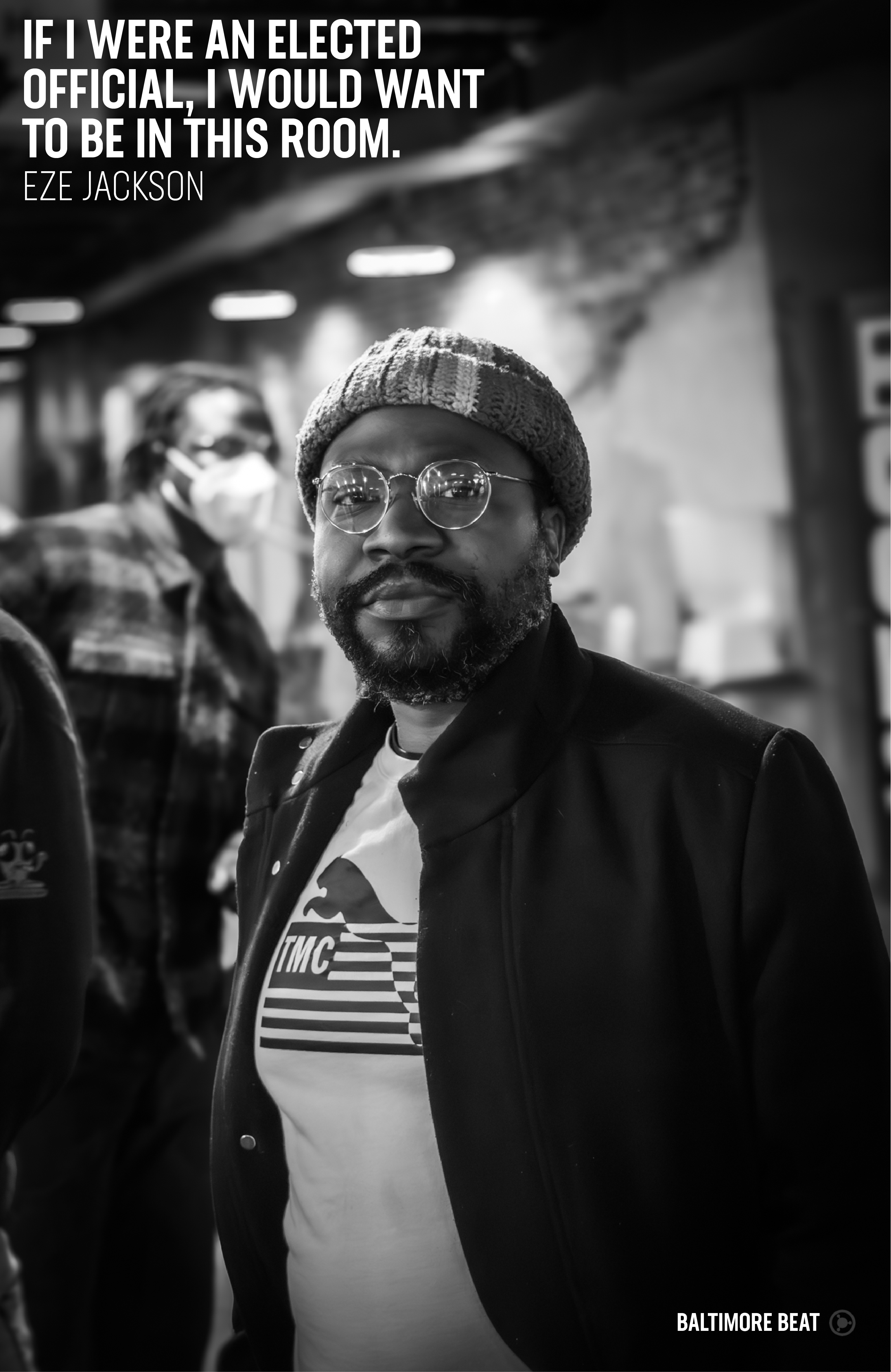
Eze Jackson – Musician, moderator, and one of the city’s strongest community voices
Each of them brought truth, vulnerability, and a fierce clarity to the conversation.
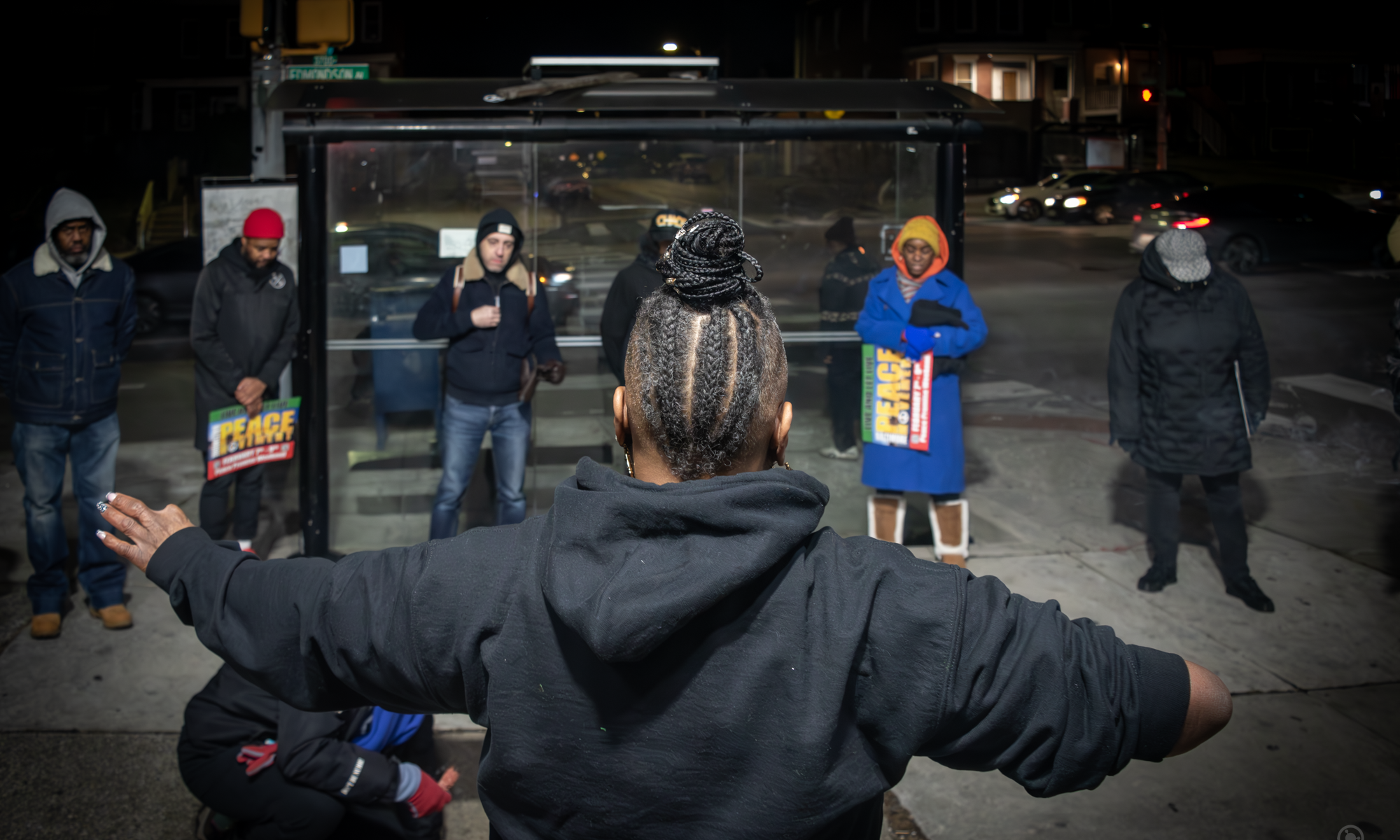
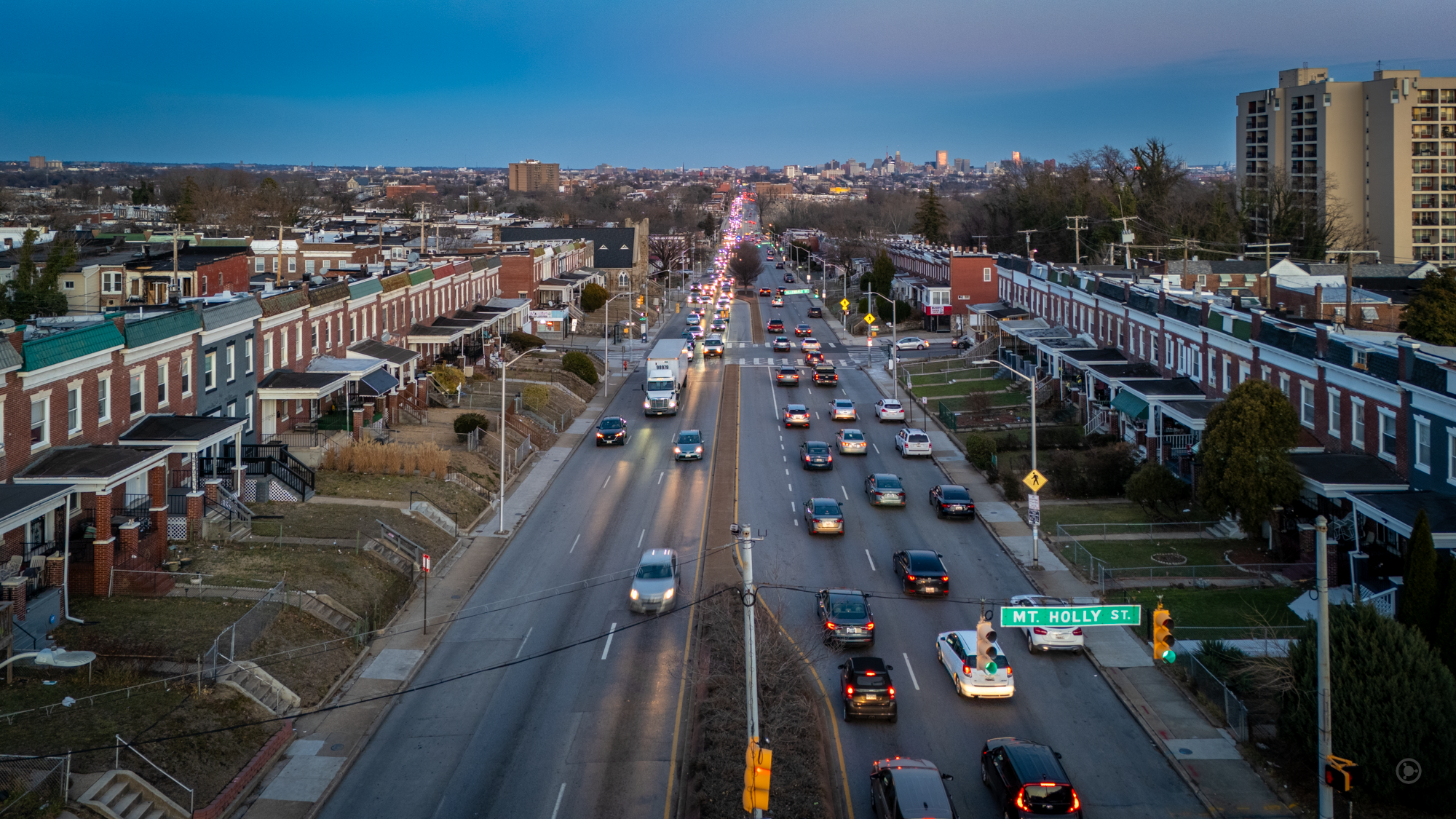
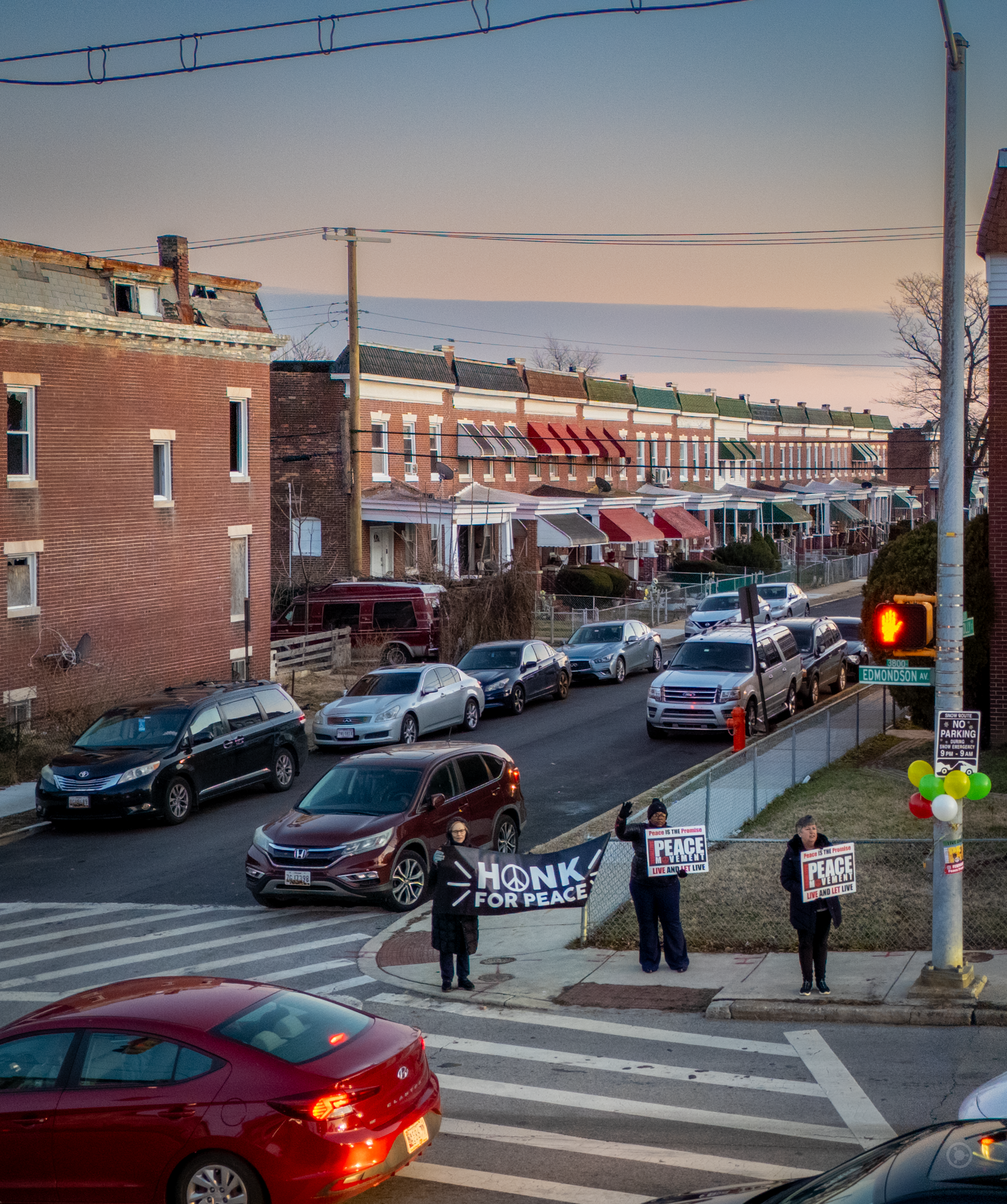
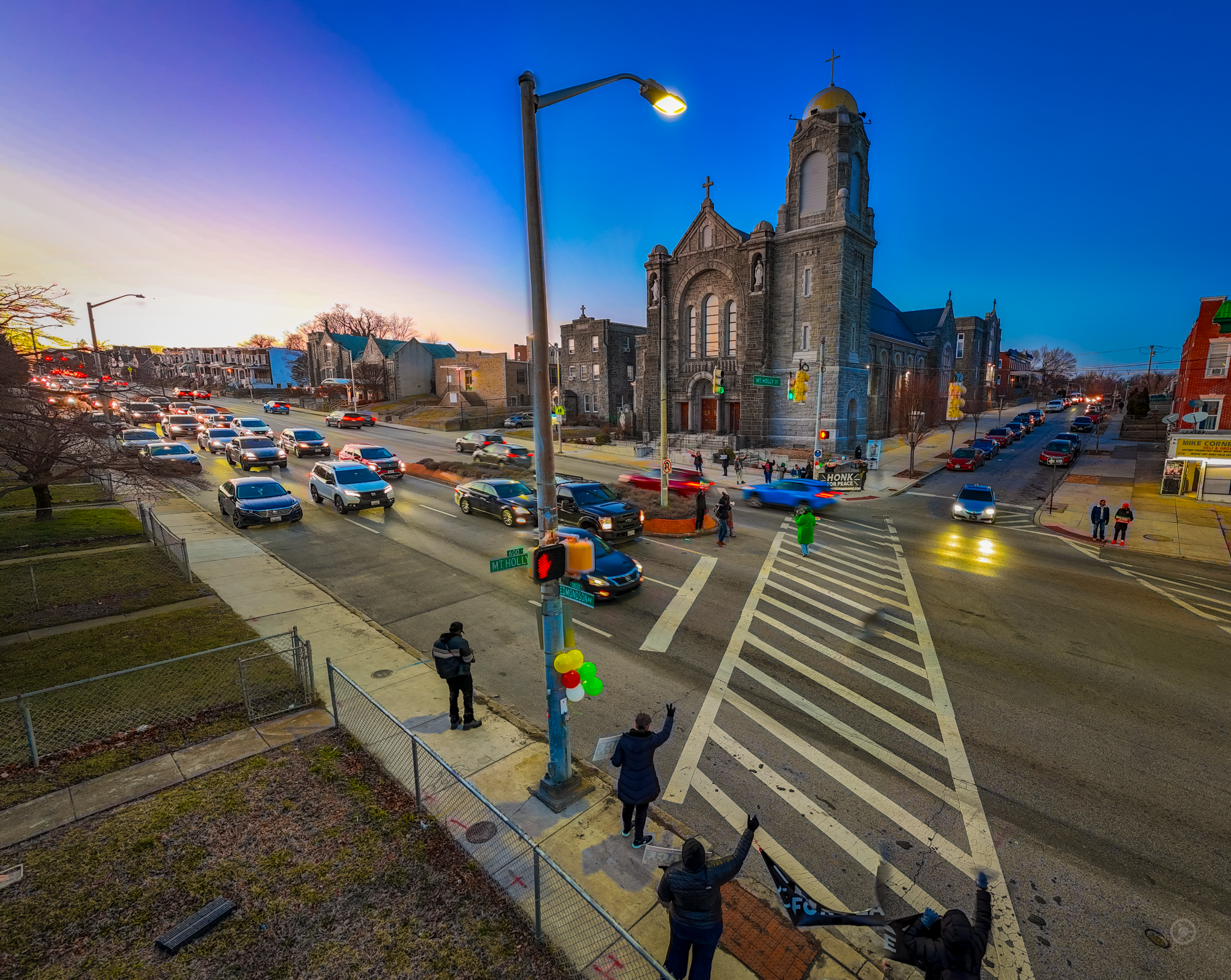
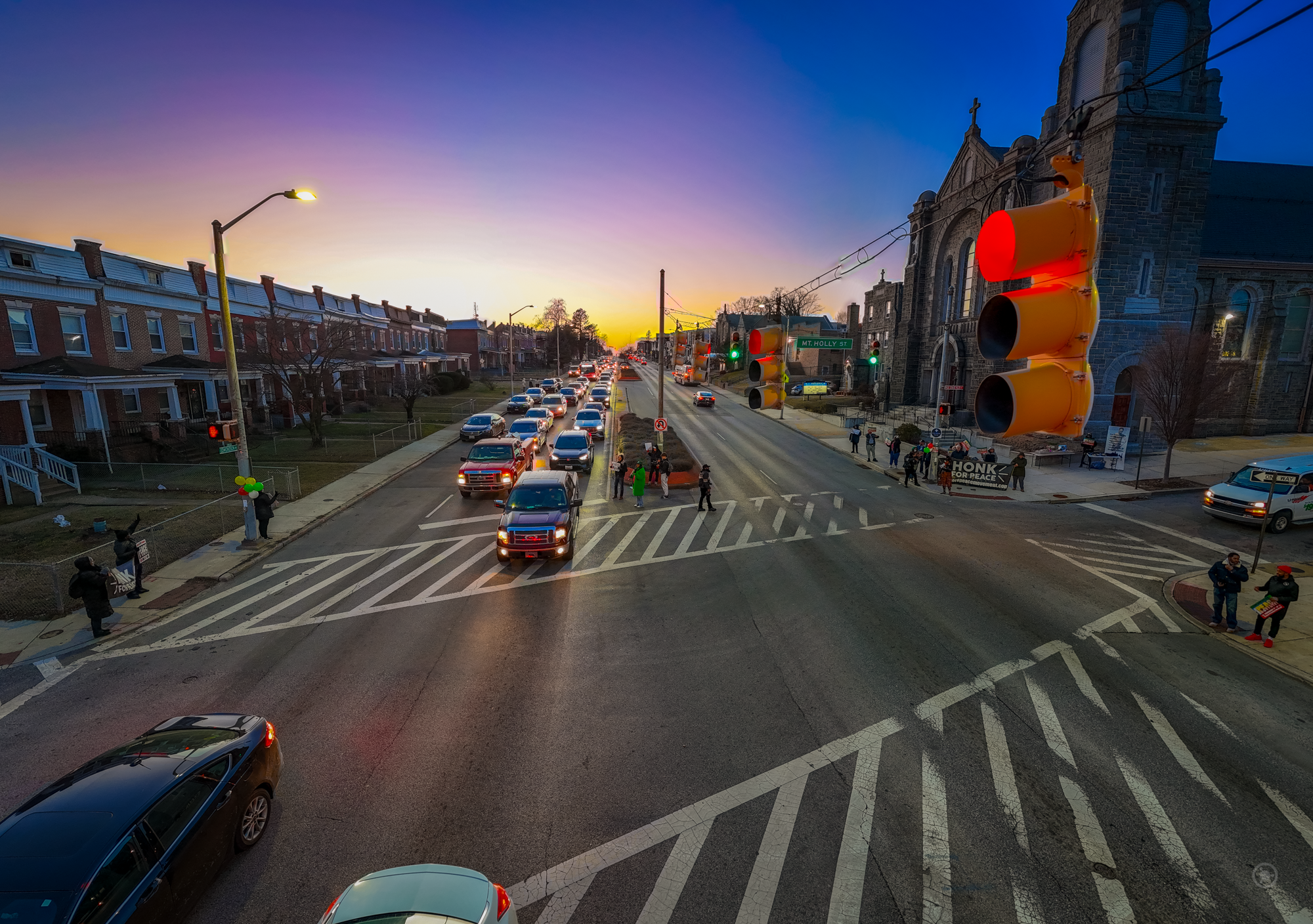
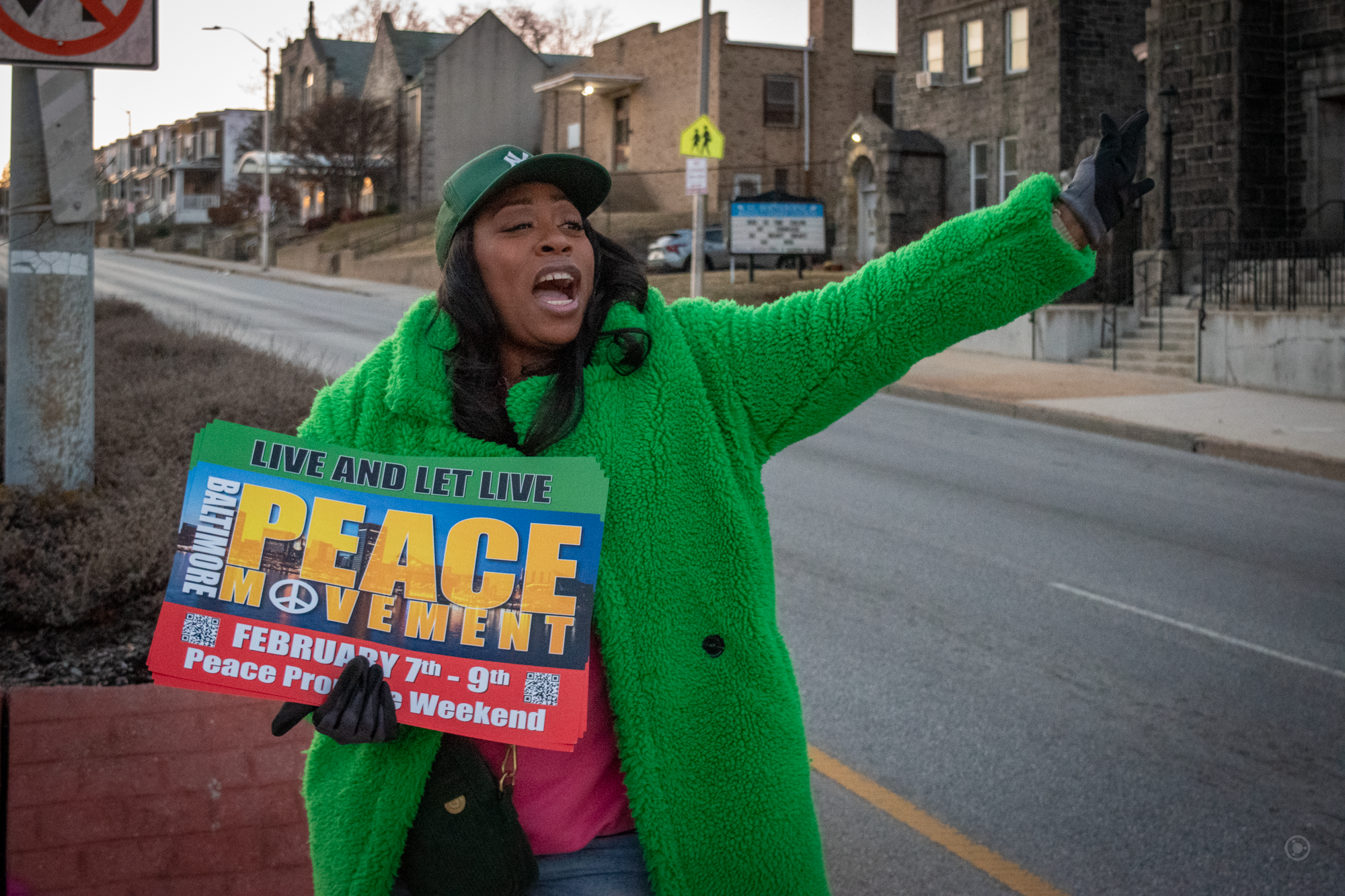
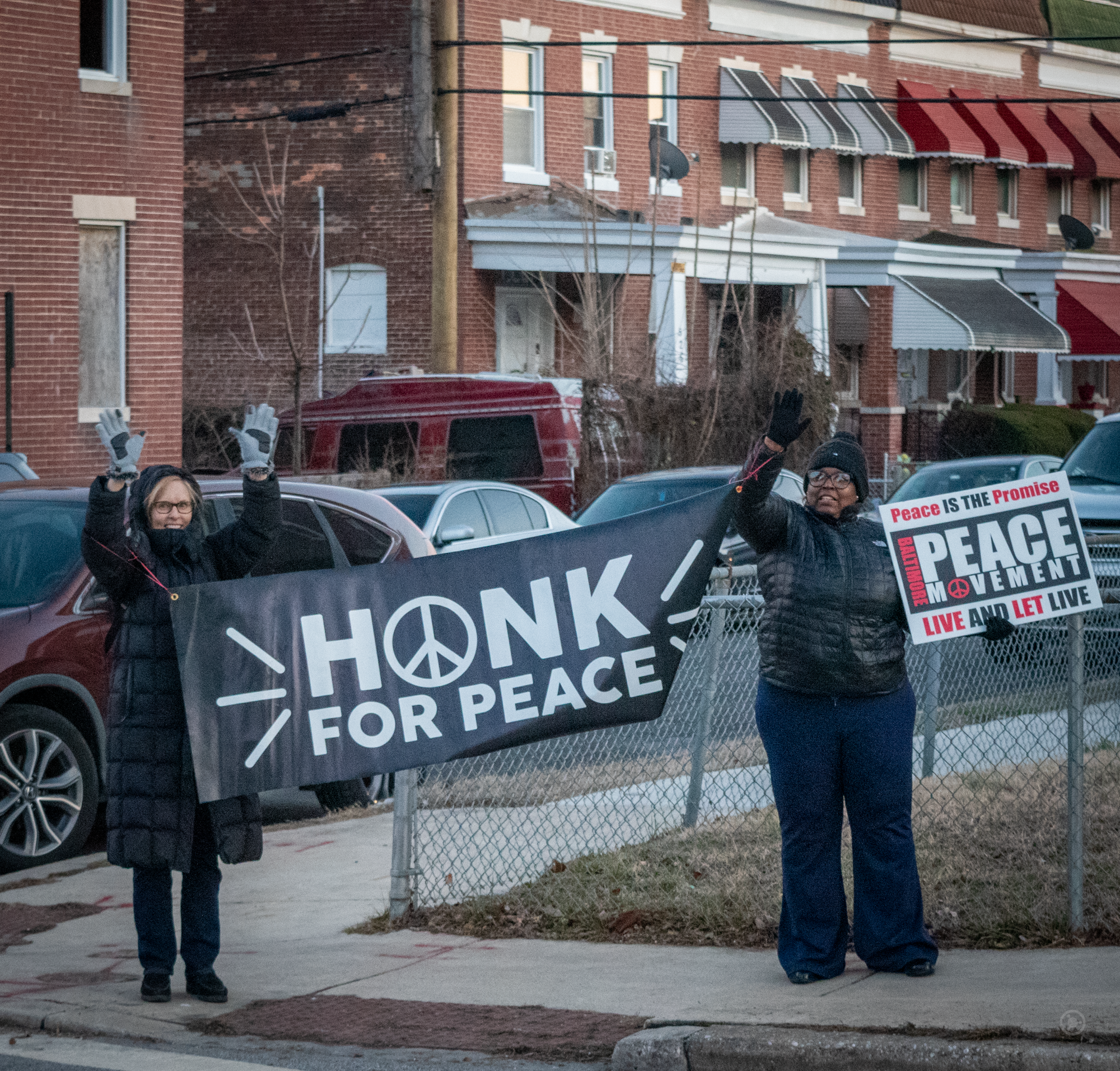
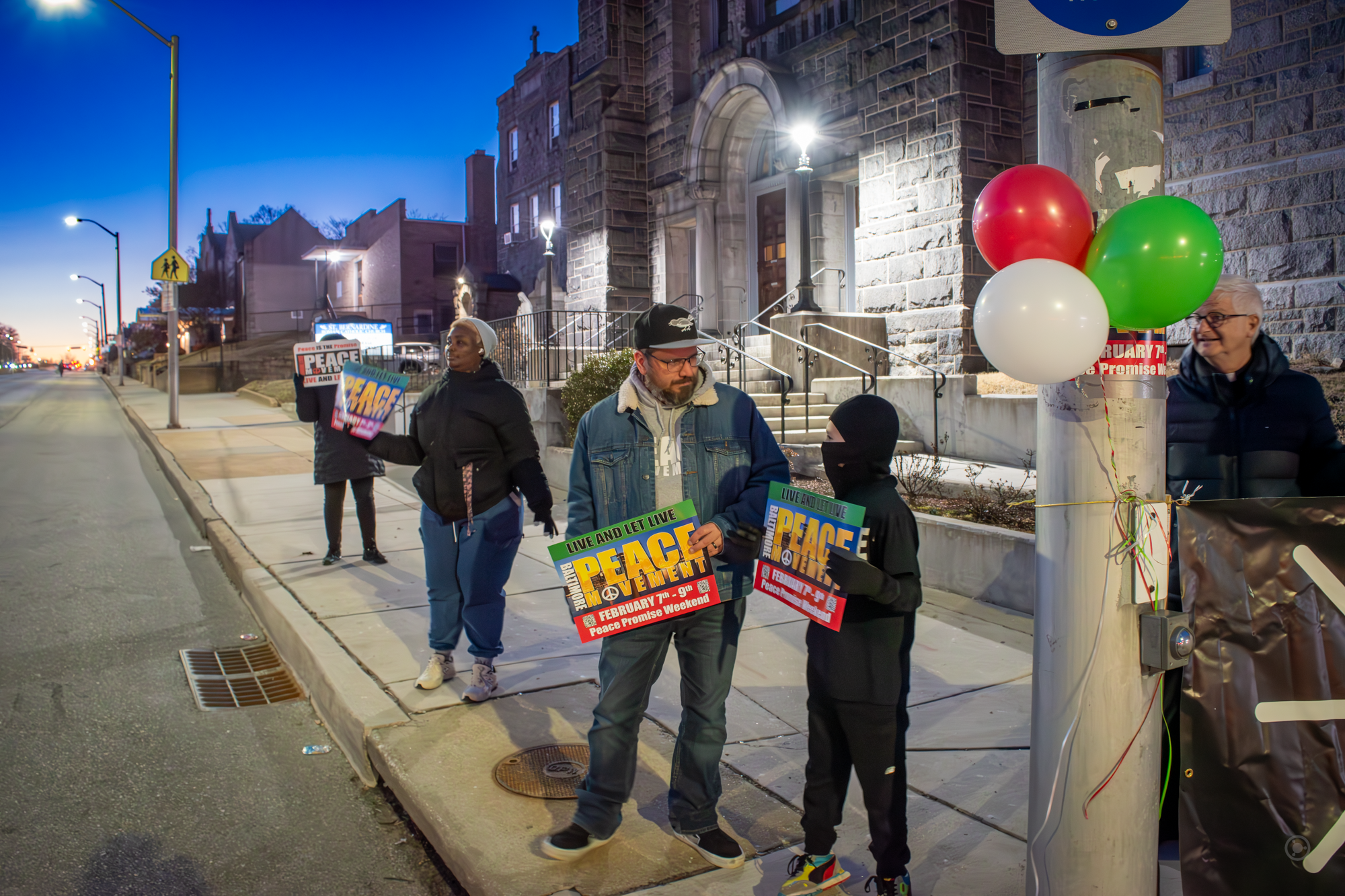
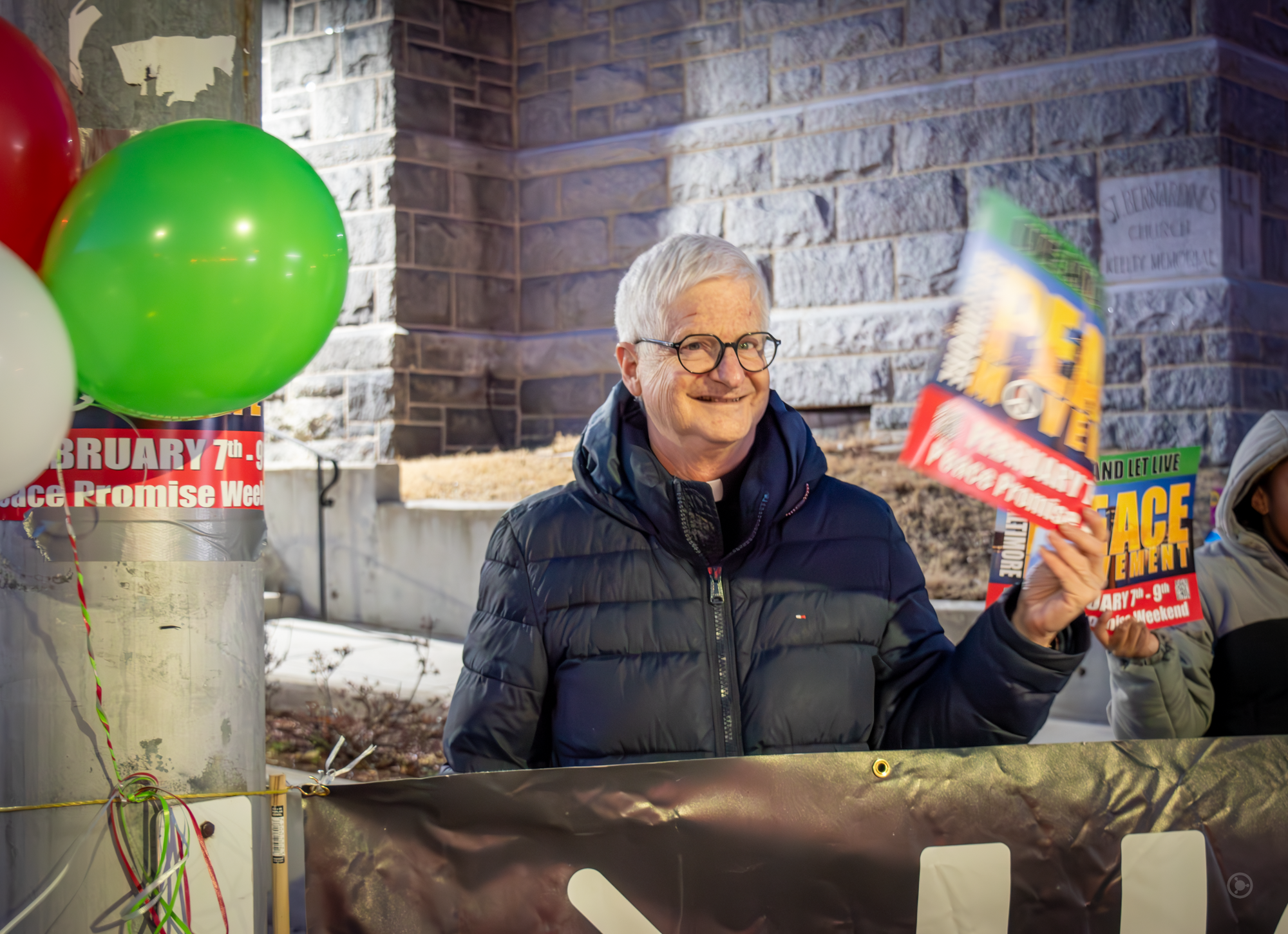
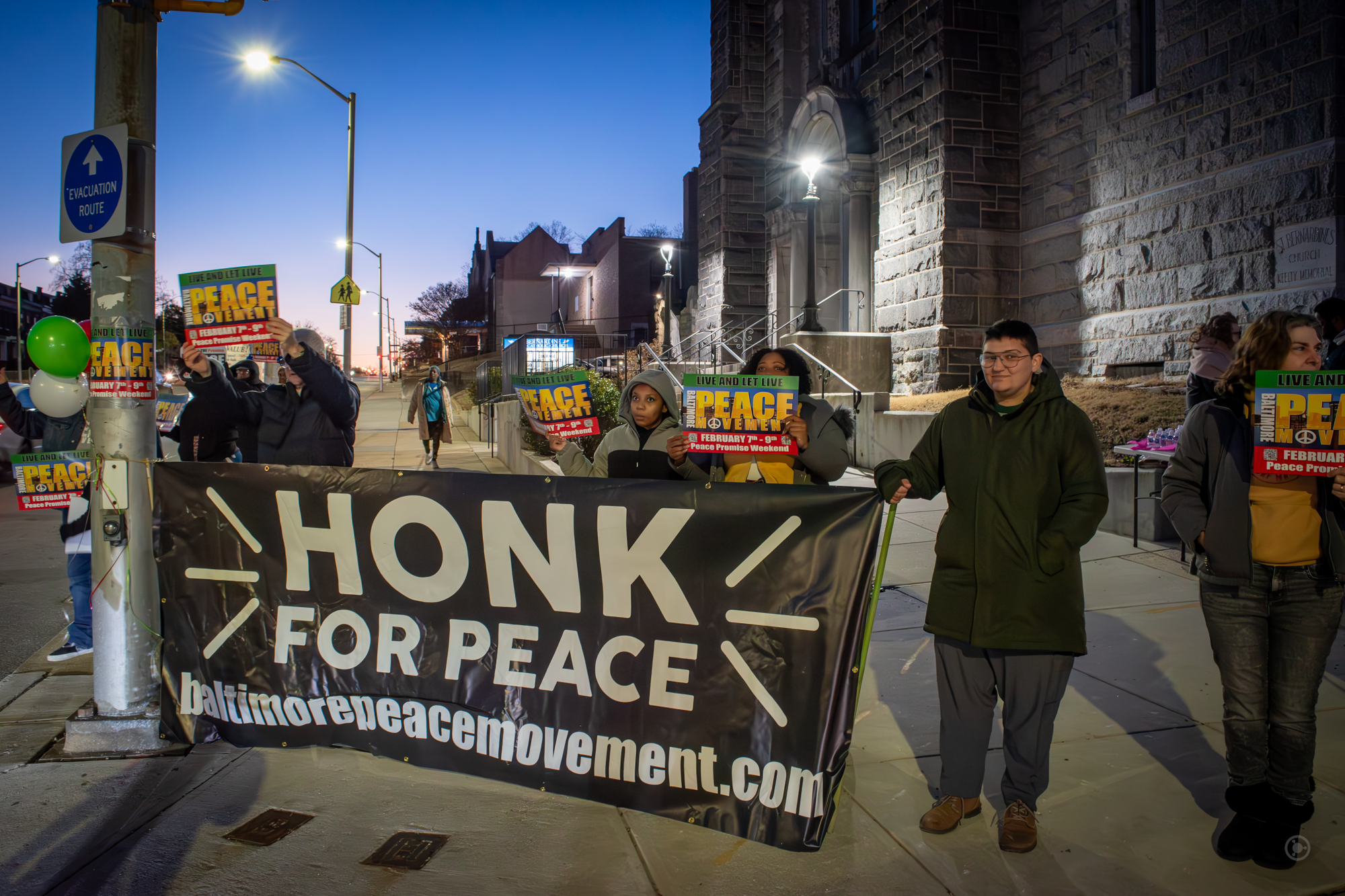
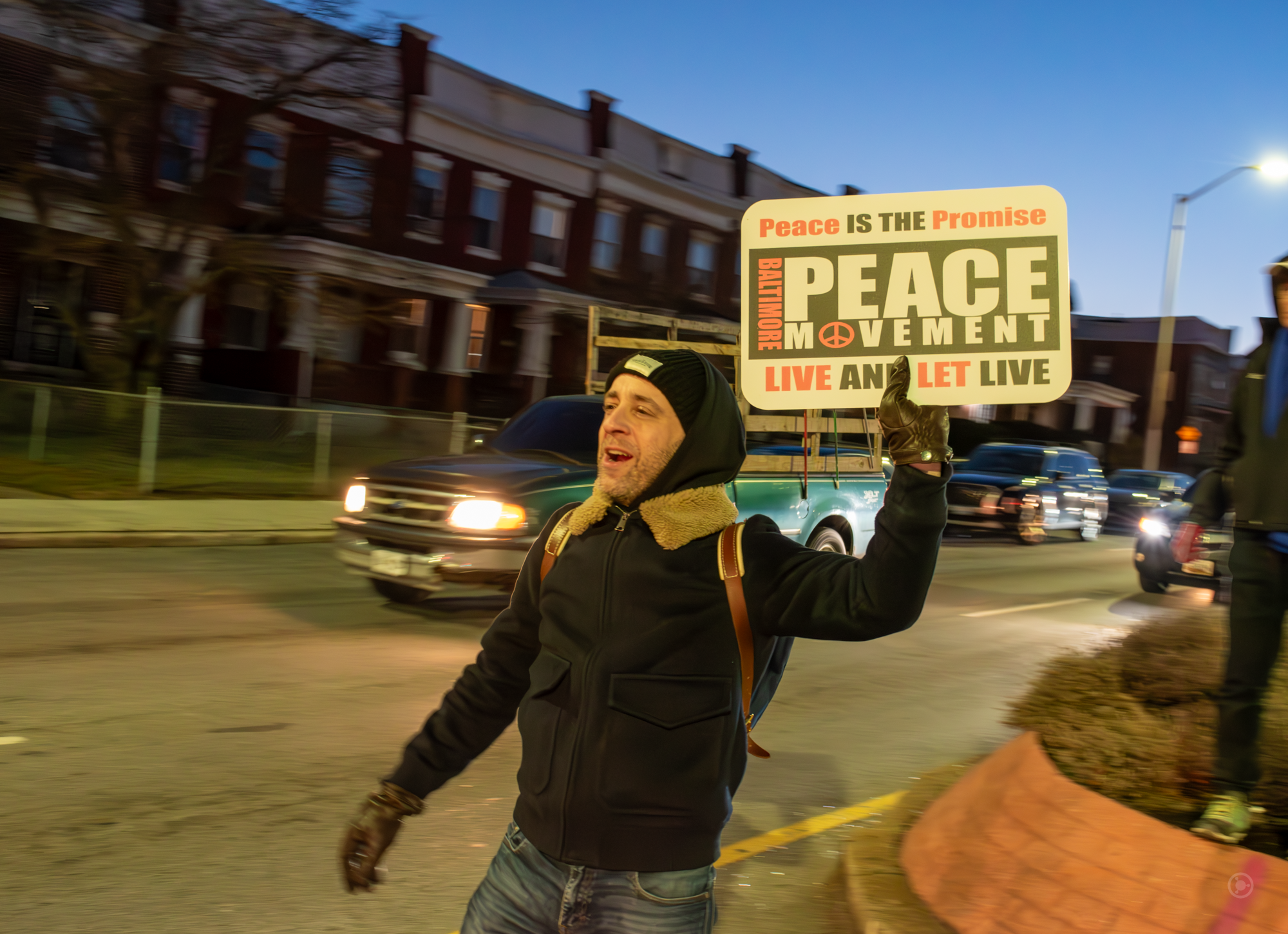
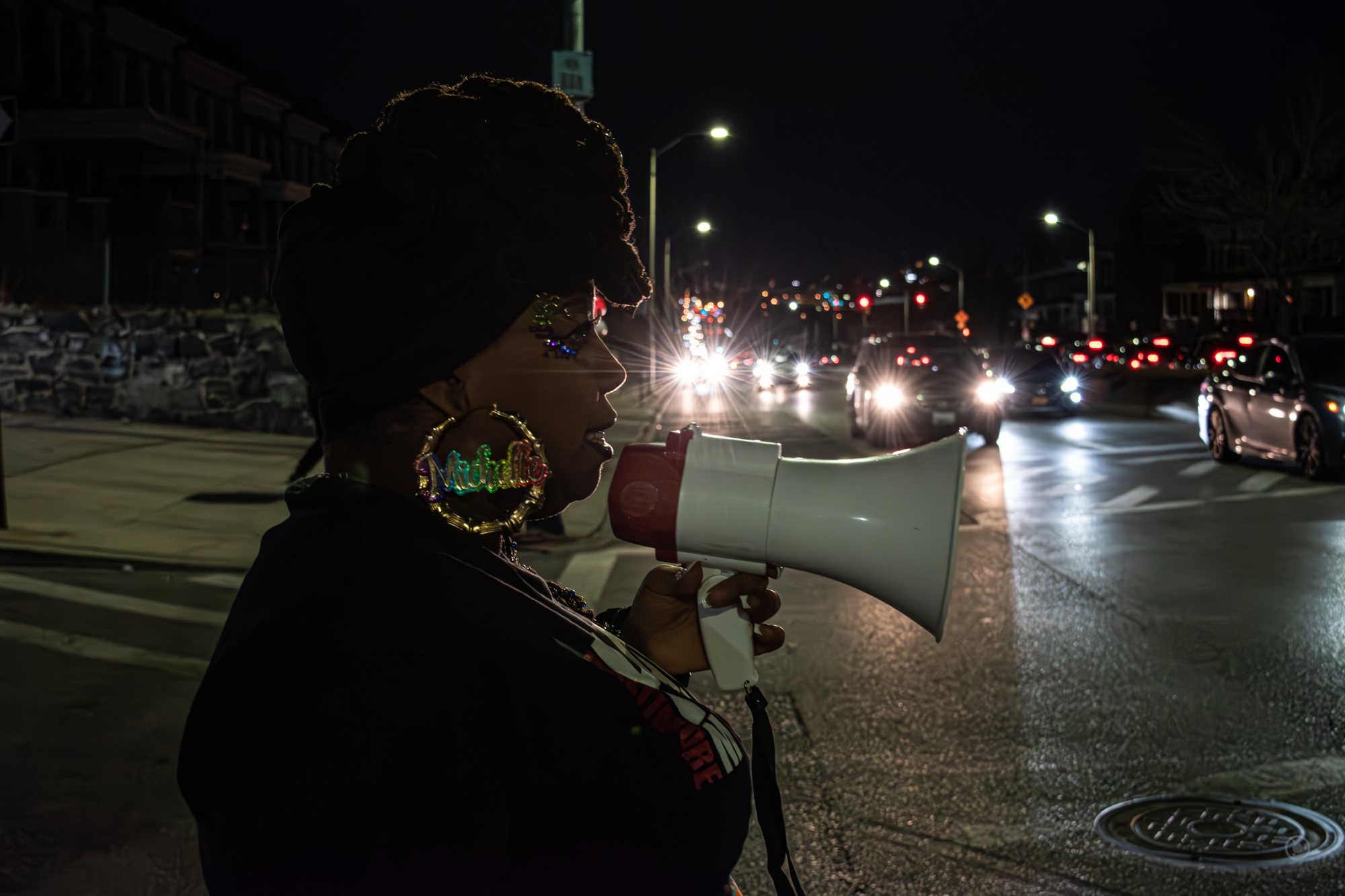
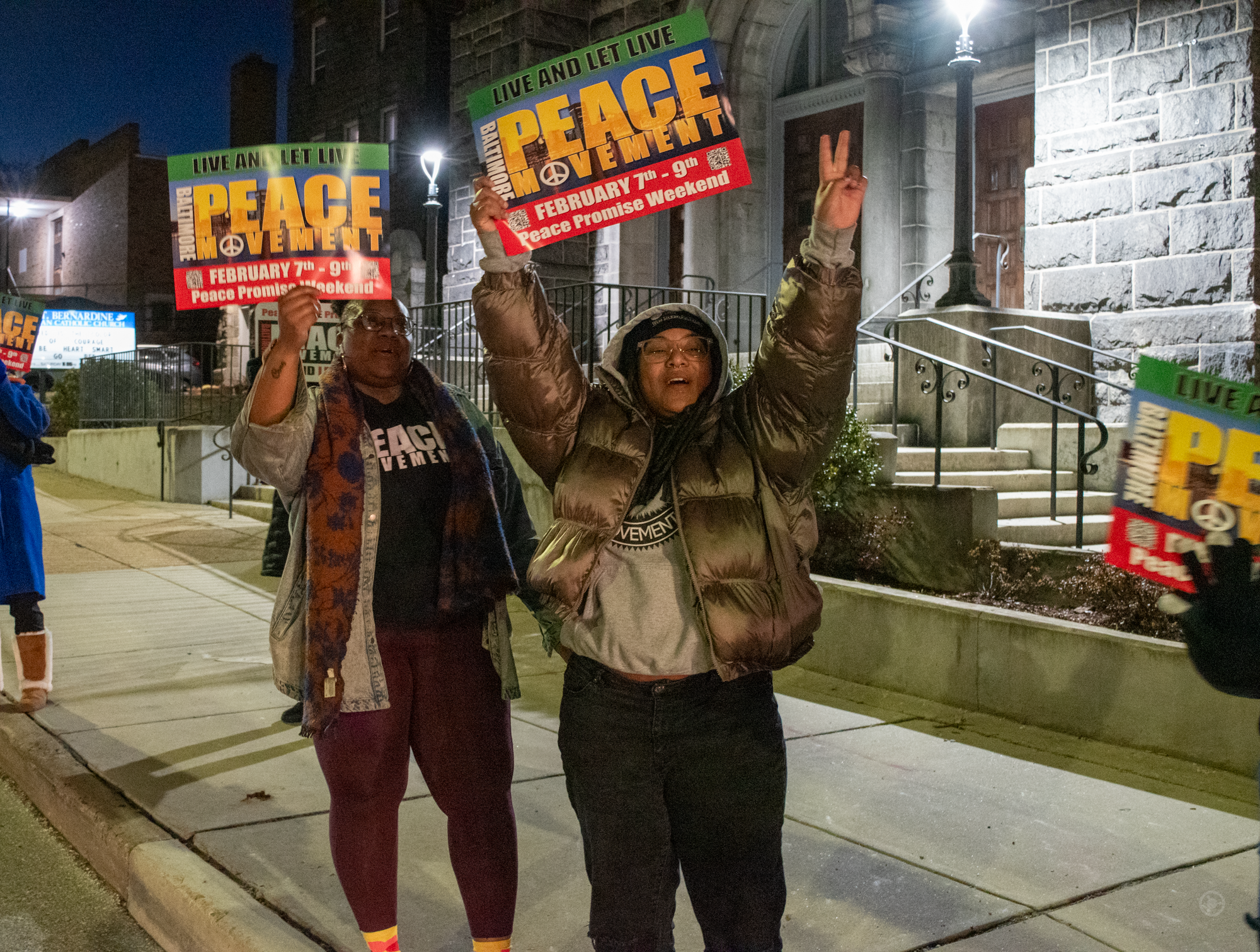
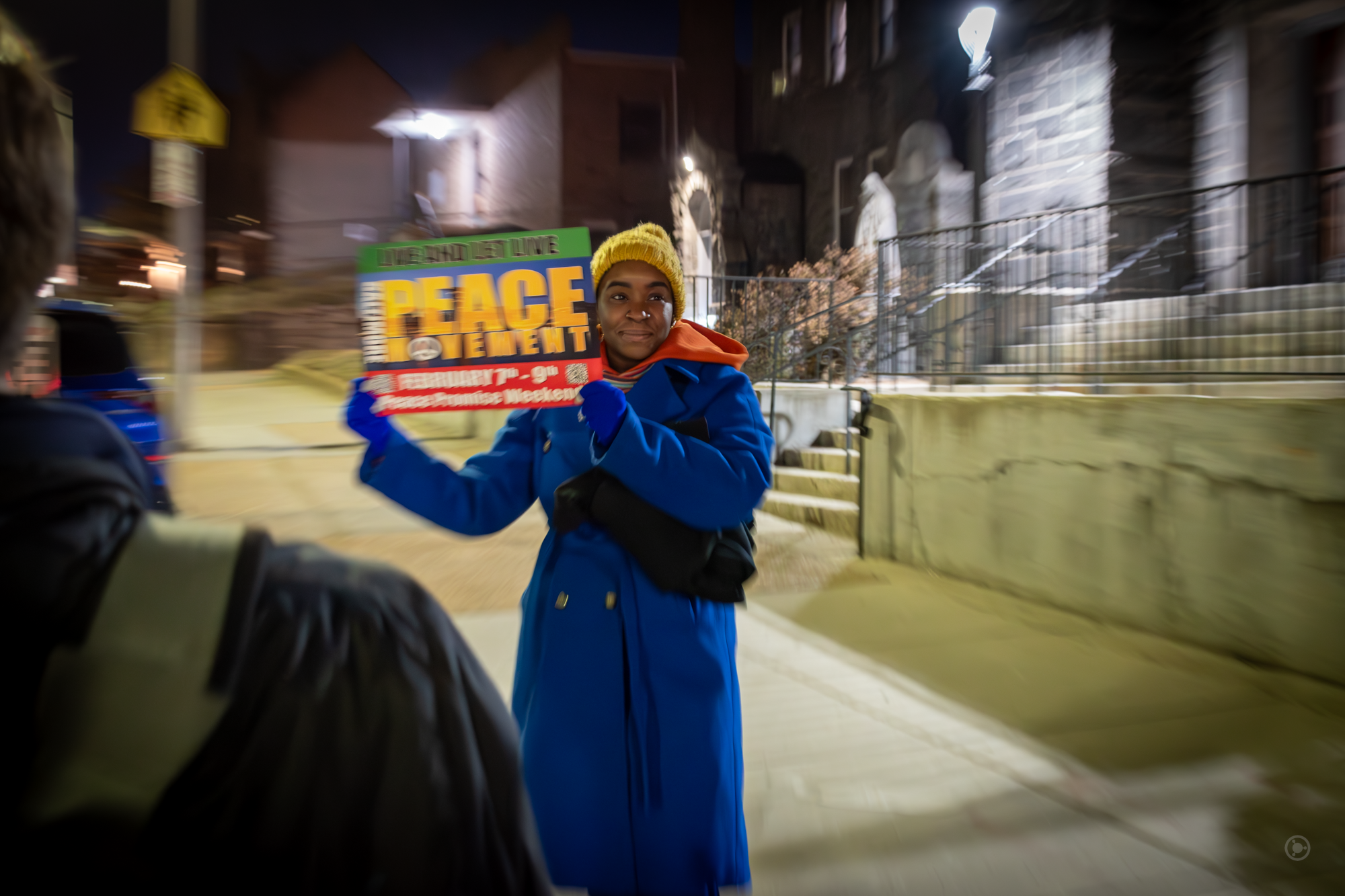
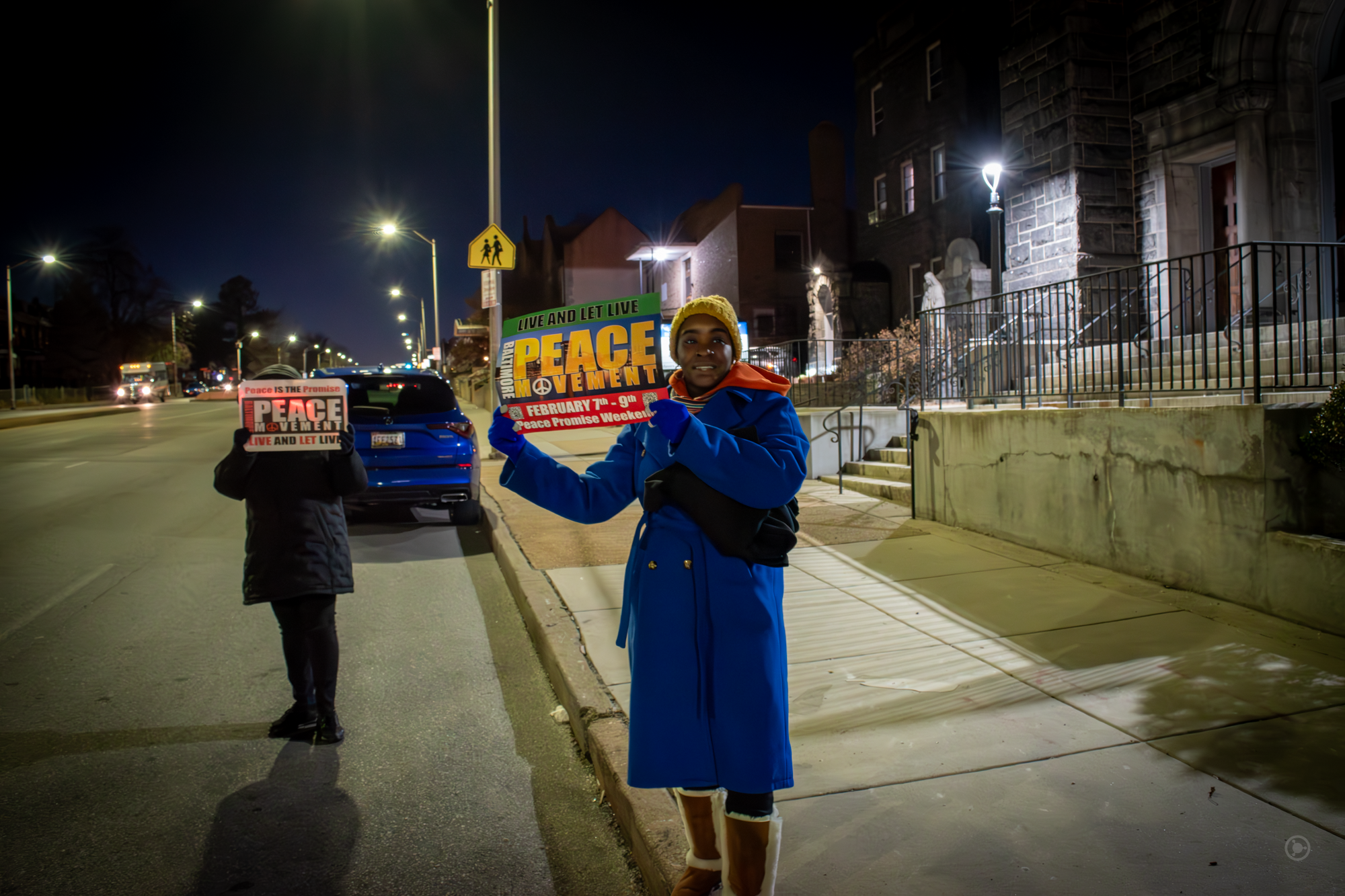
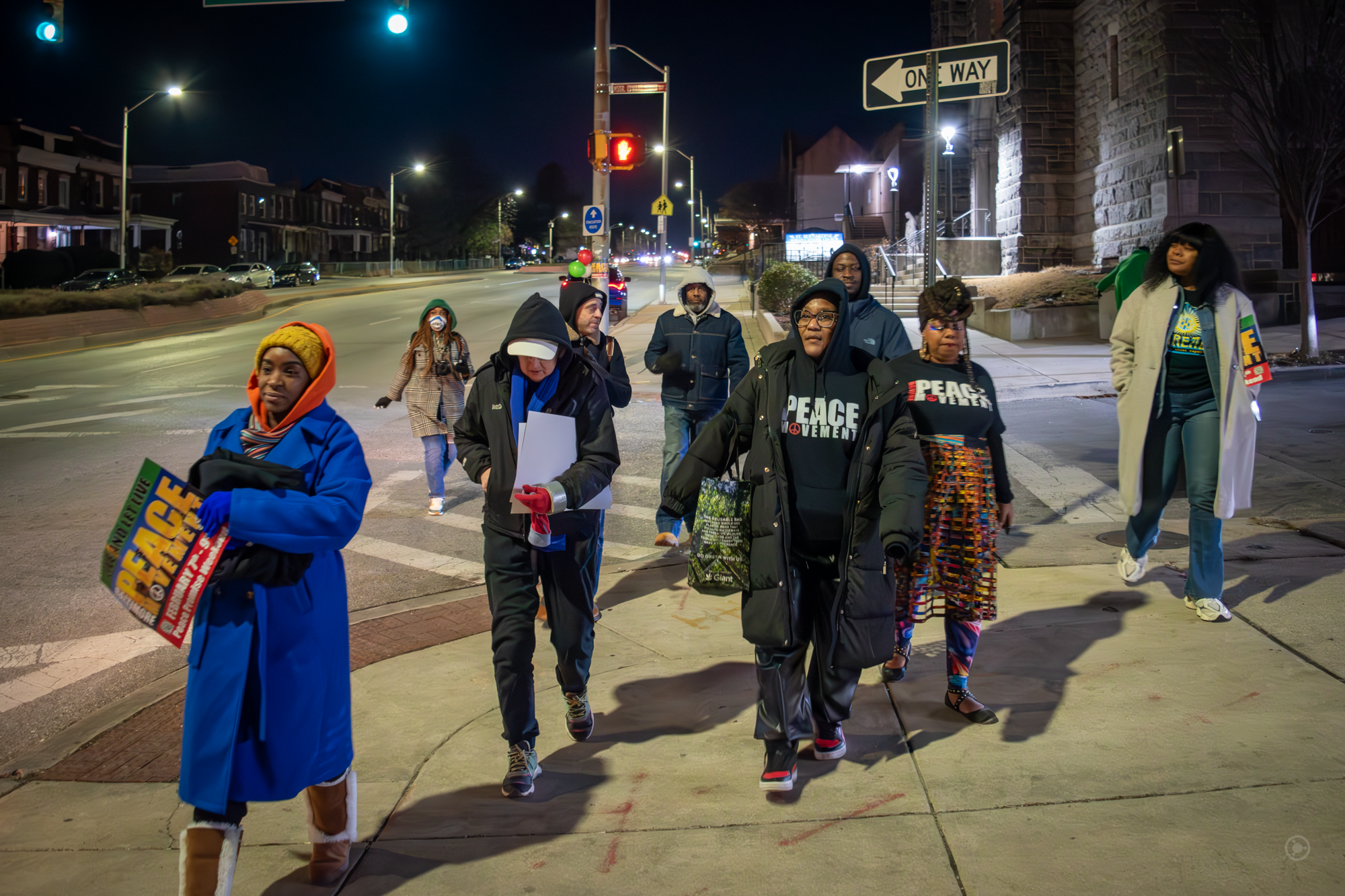
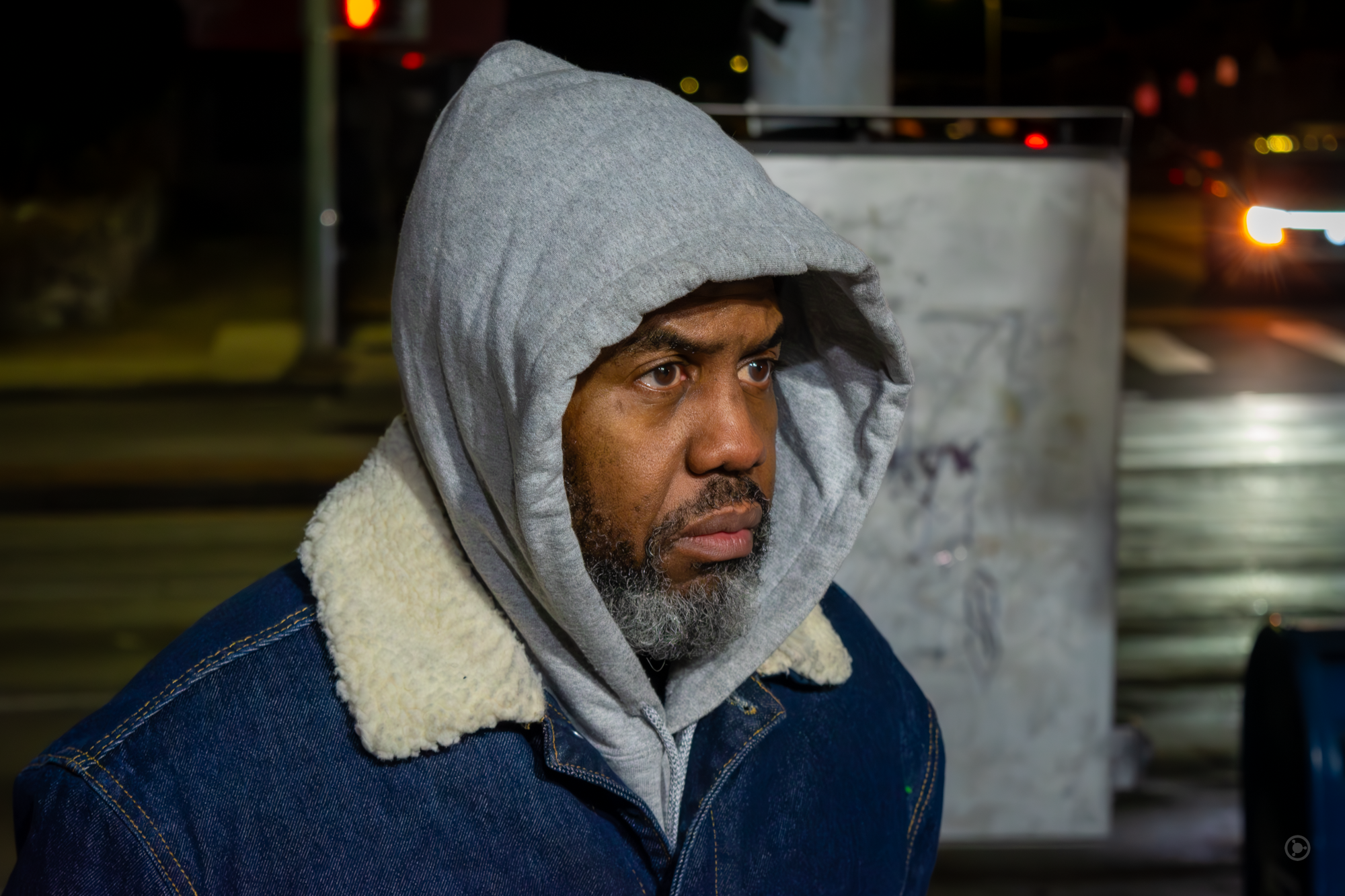
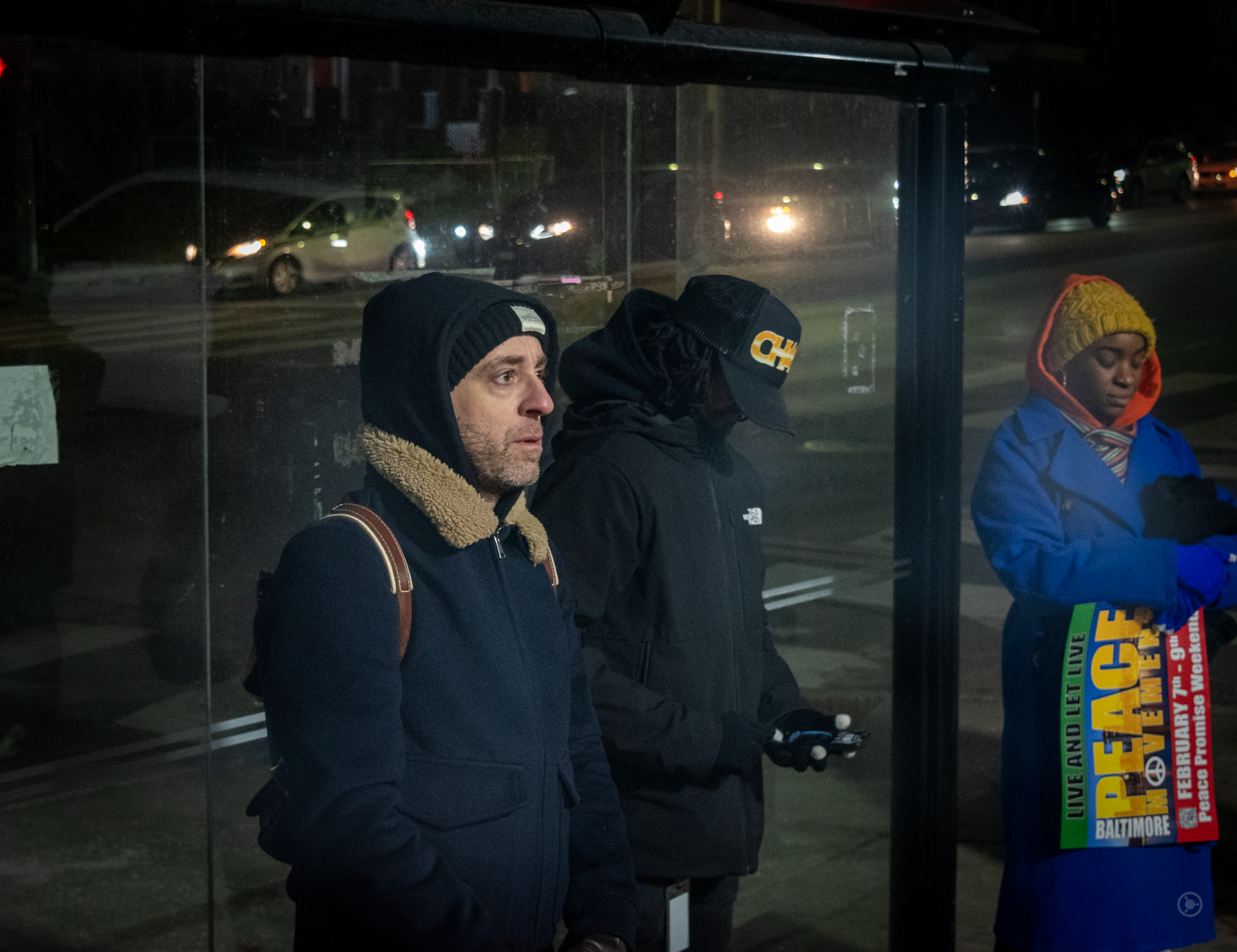
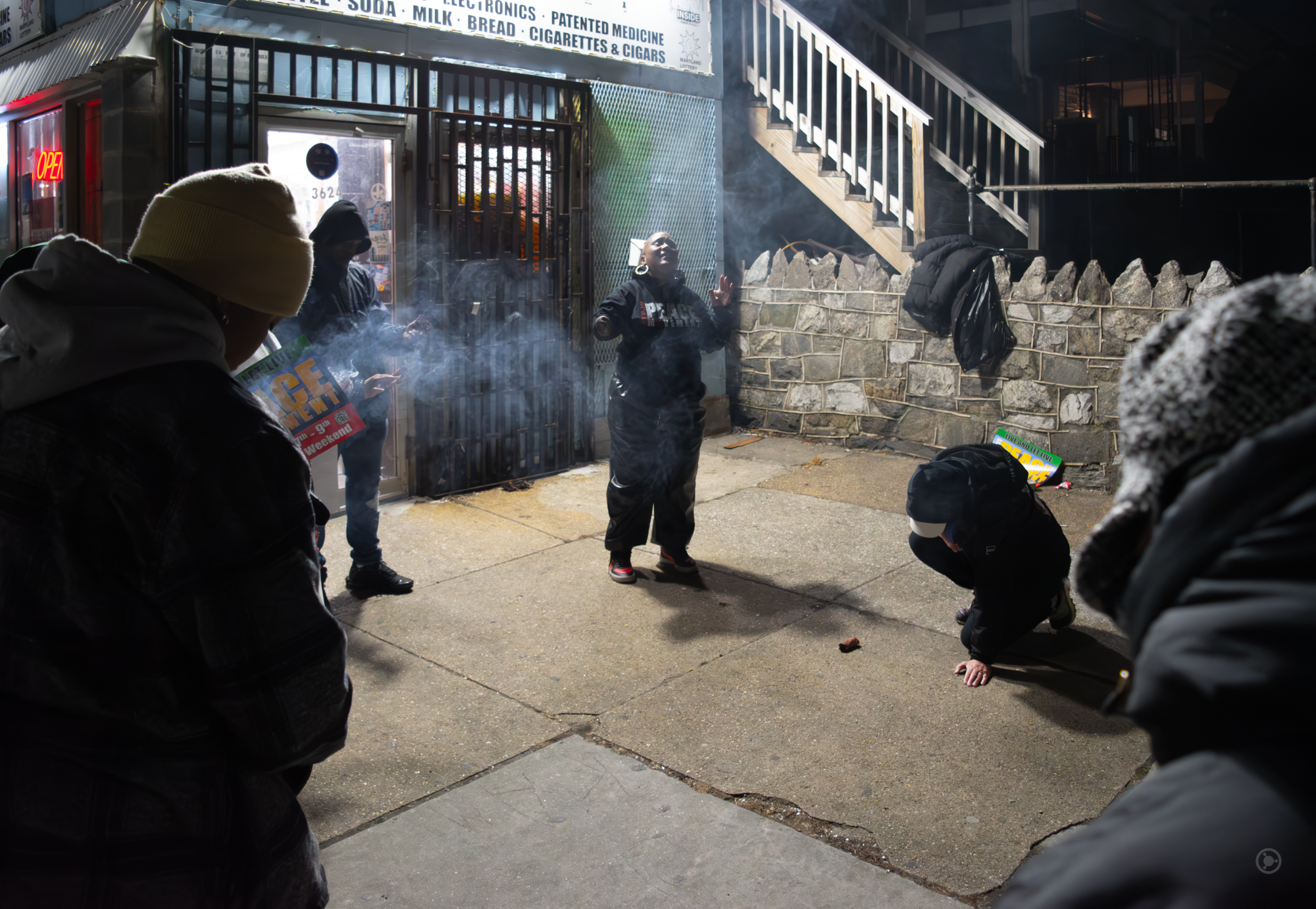
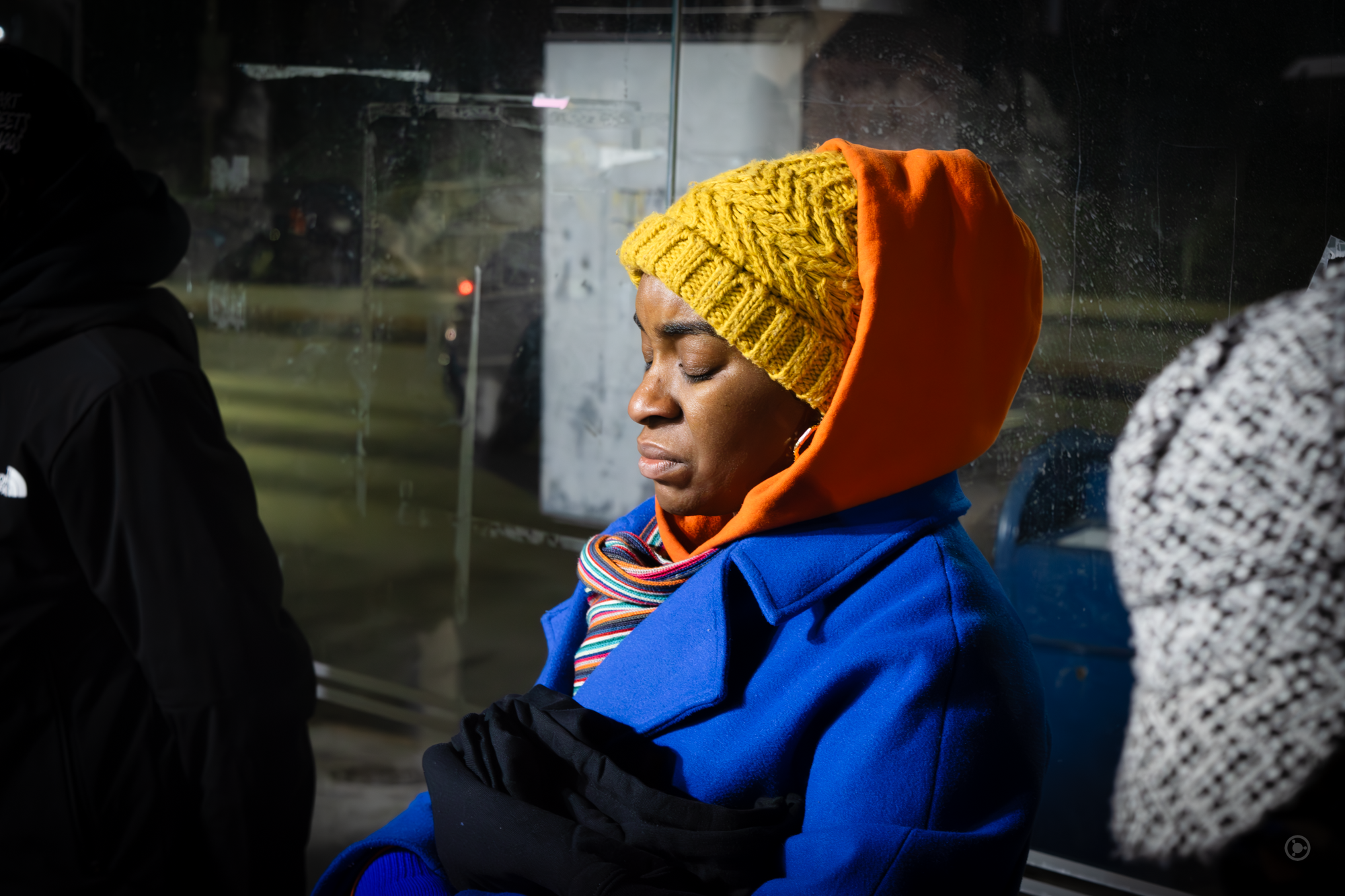
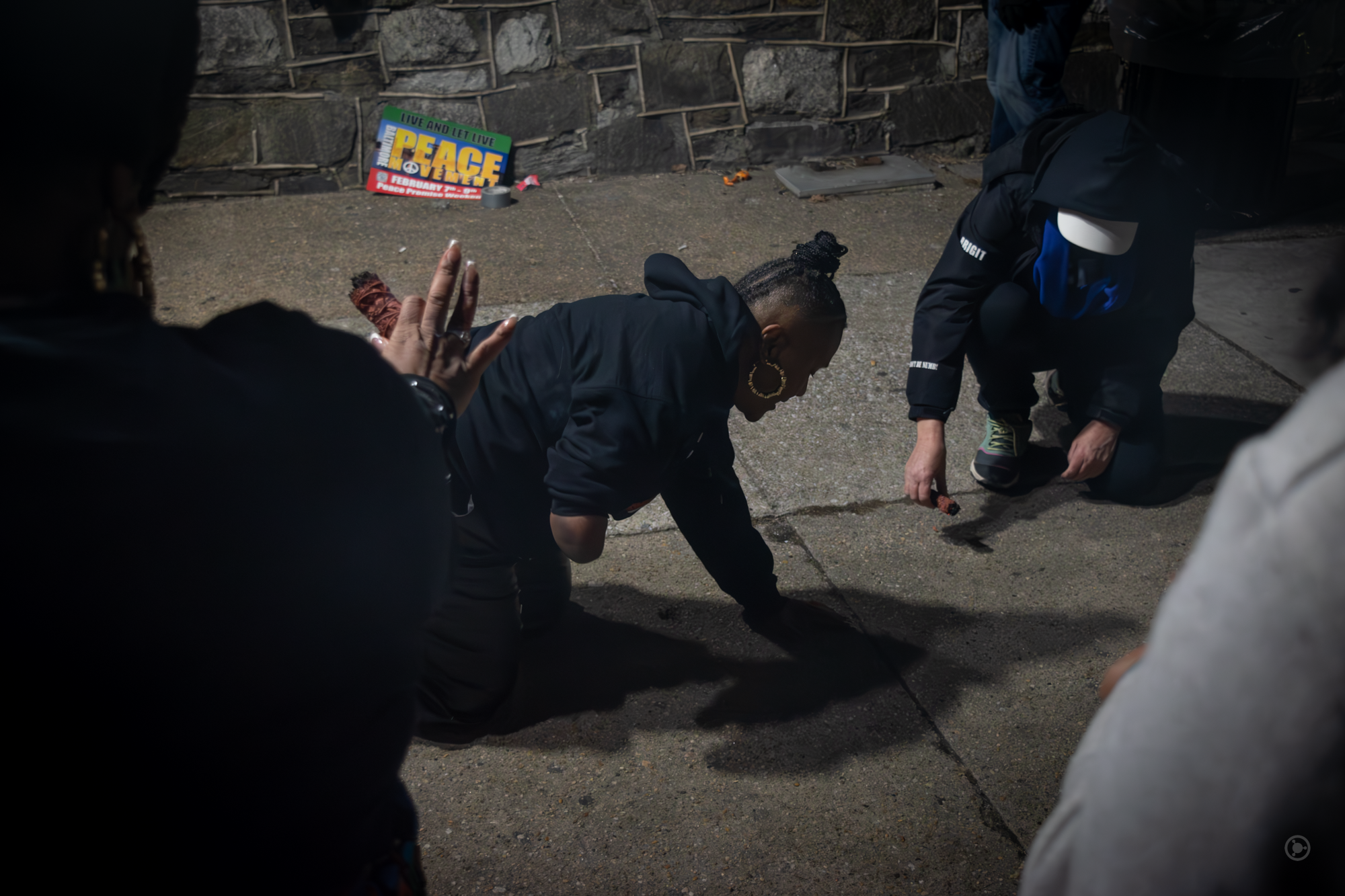
We gathered at Mount Holly & Edmonson Ave, a block west of where we normally meet. Because of the cold, St Bernardine Roman Catholic Church opened its doors so that those who were cold could warm up.
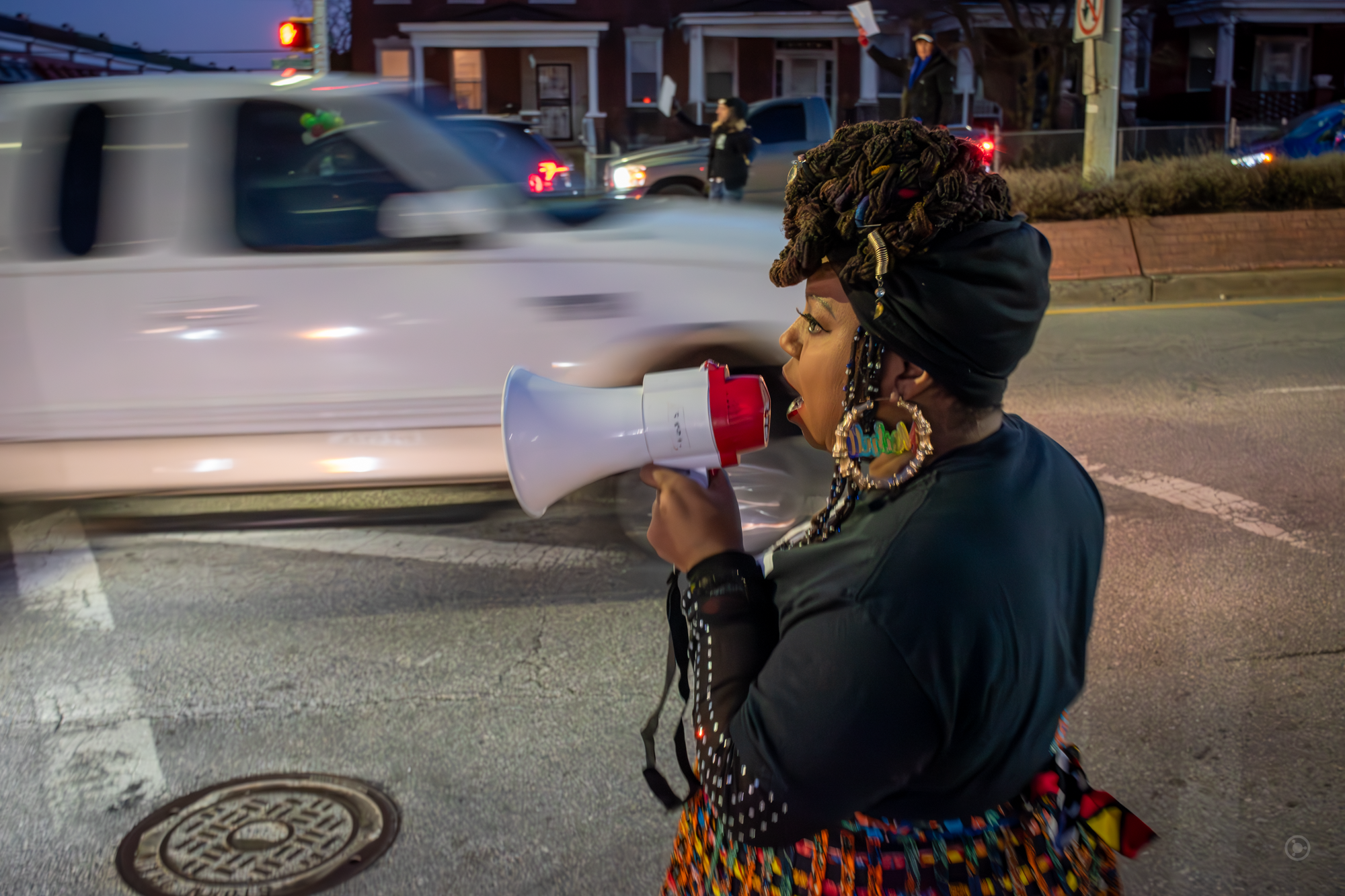
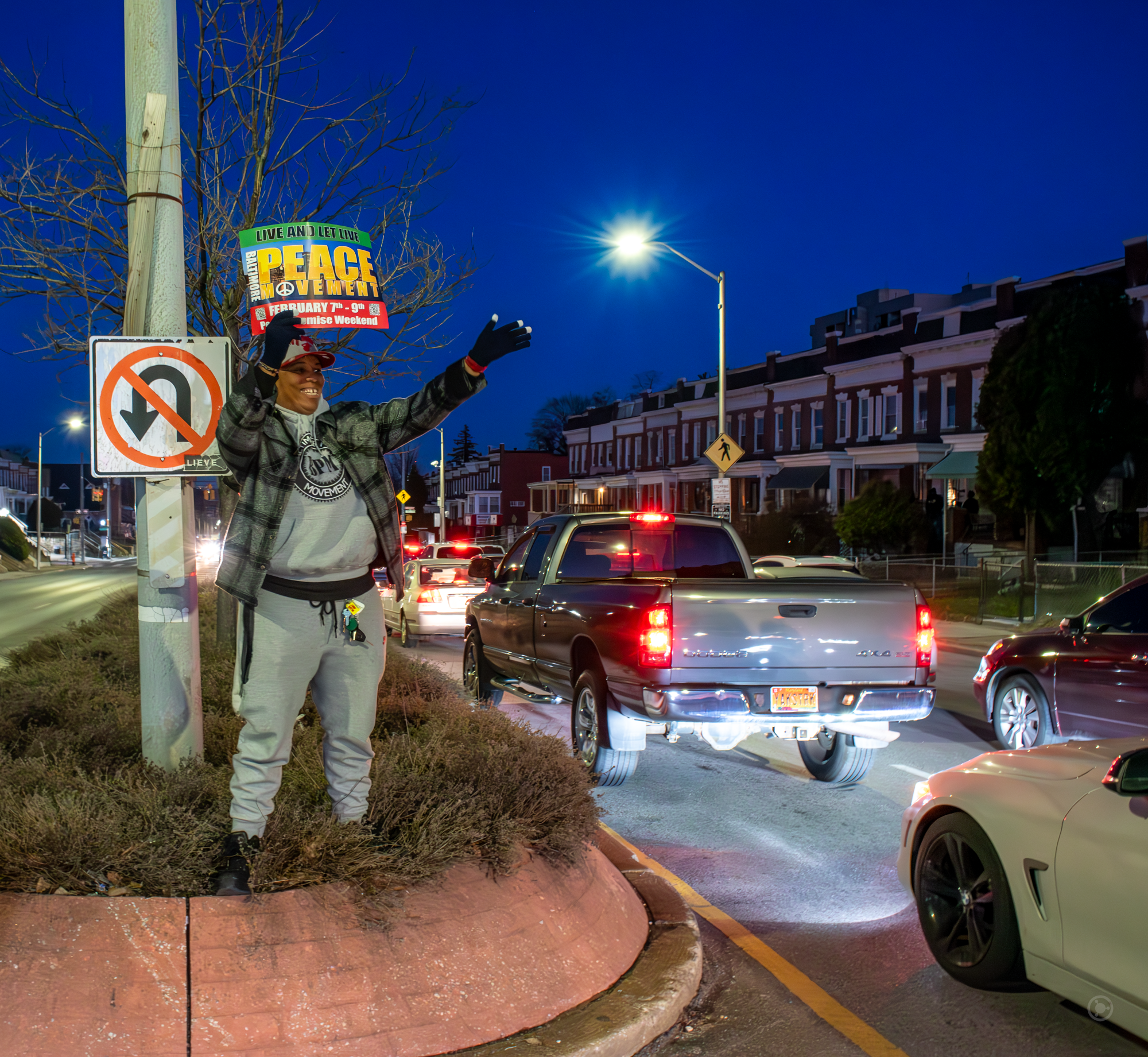
We stood on the corners, encouraging drivers to honk their horns, as we kicked off the Peace Movement Weekend.
The Baltimore Peace Movement began as the Baltimore Cease Fire, a movement to stop gun violence in Baltimore. Since then, as it has become a successful instrument in reducing the homicides and violence the city has traditionally experienced, it has expanded its mission to be more helpful to the people of Baltimore.
While we were gathered, one of our Ambassadors pointed out that just a block away, a young man, Lamel Edwards, had been killed.
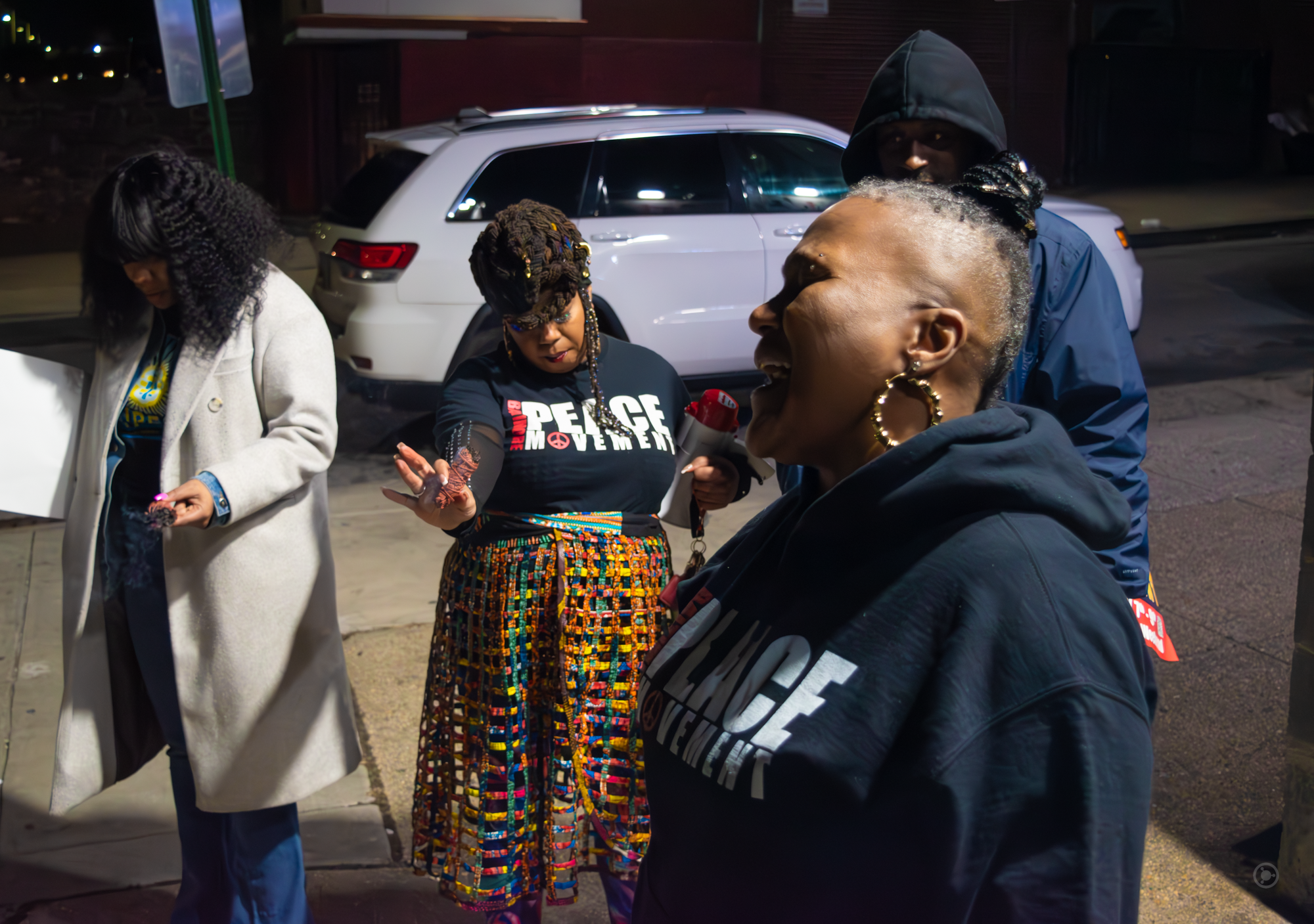
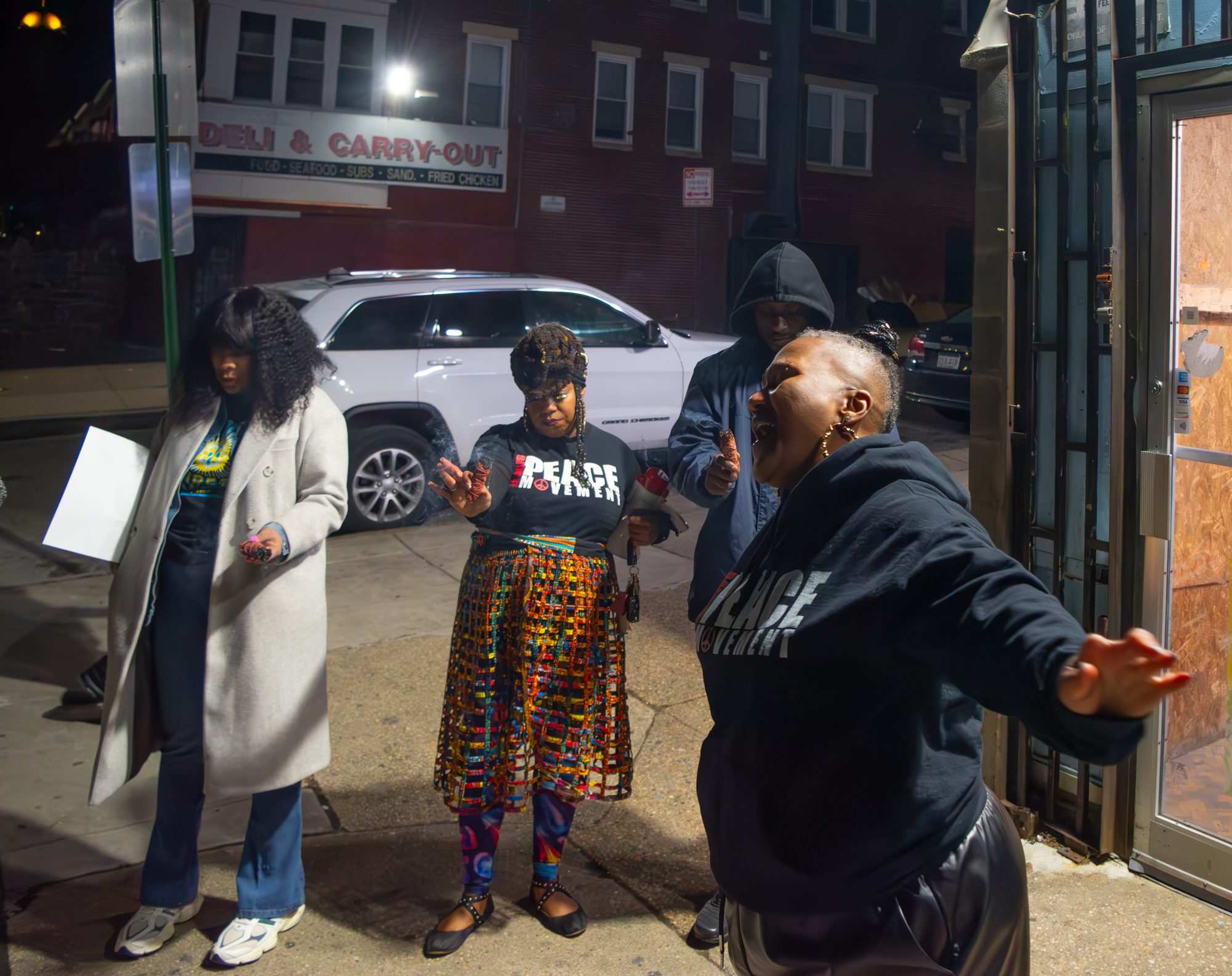
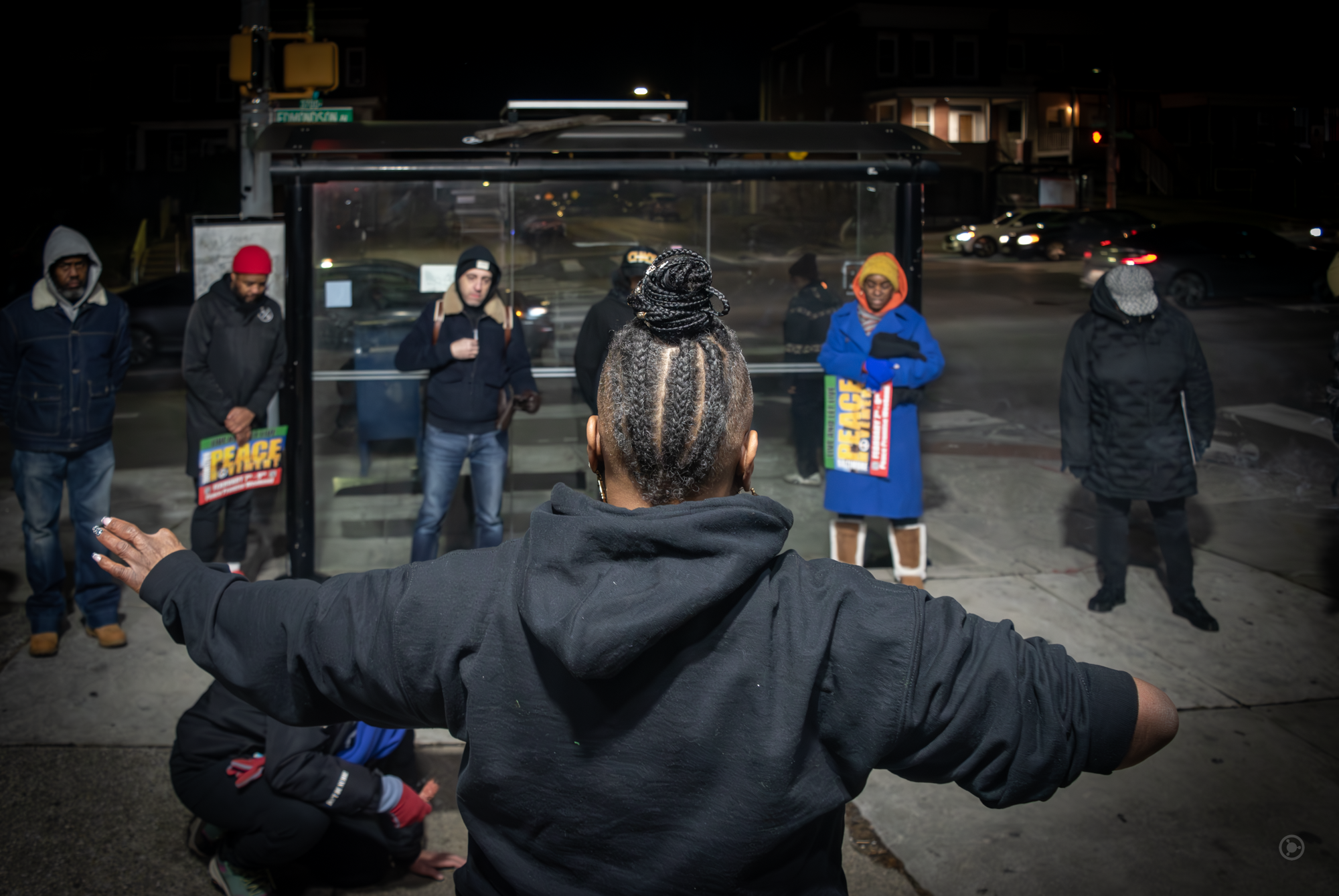
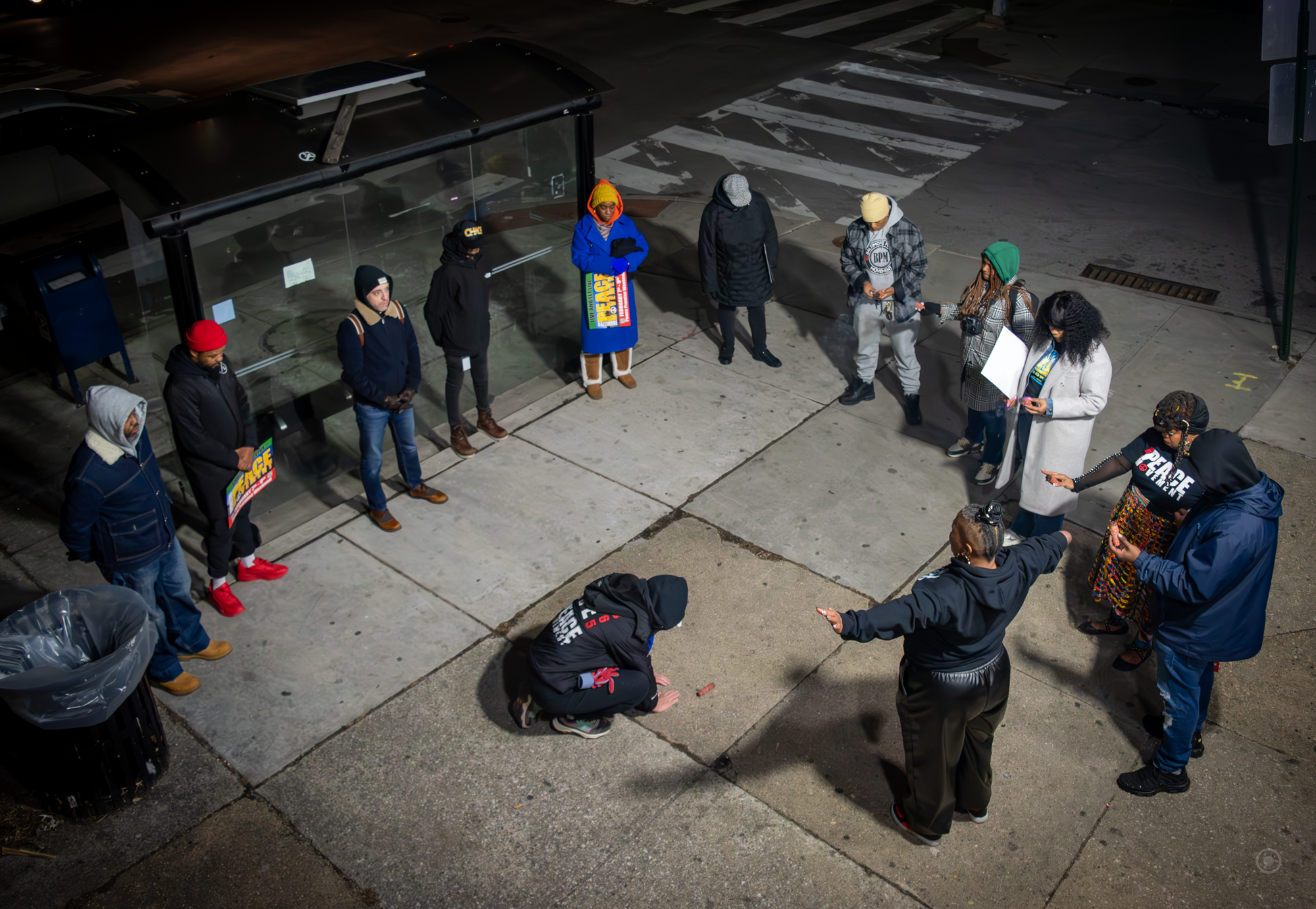
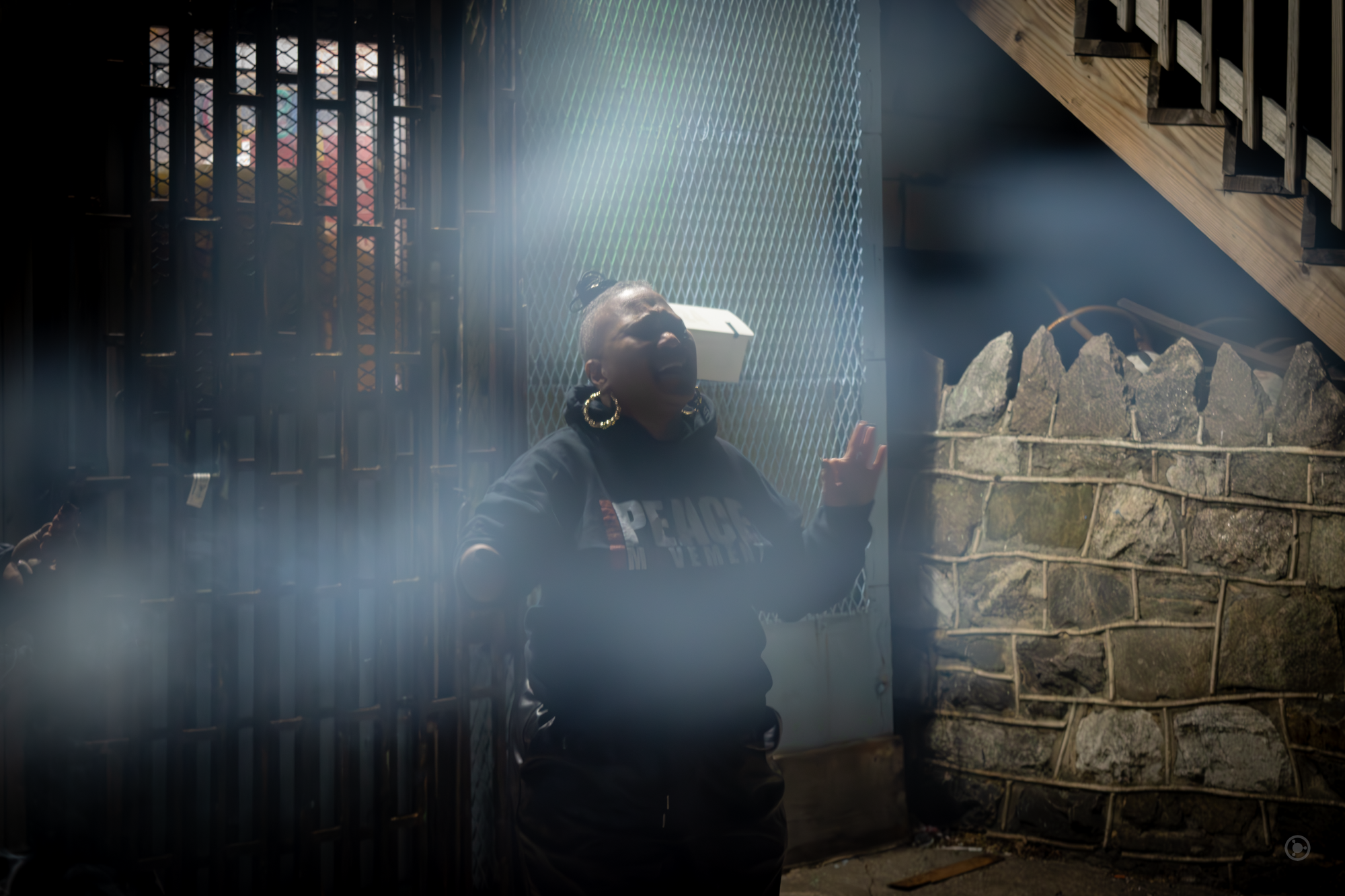
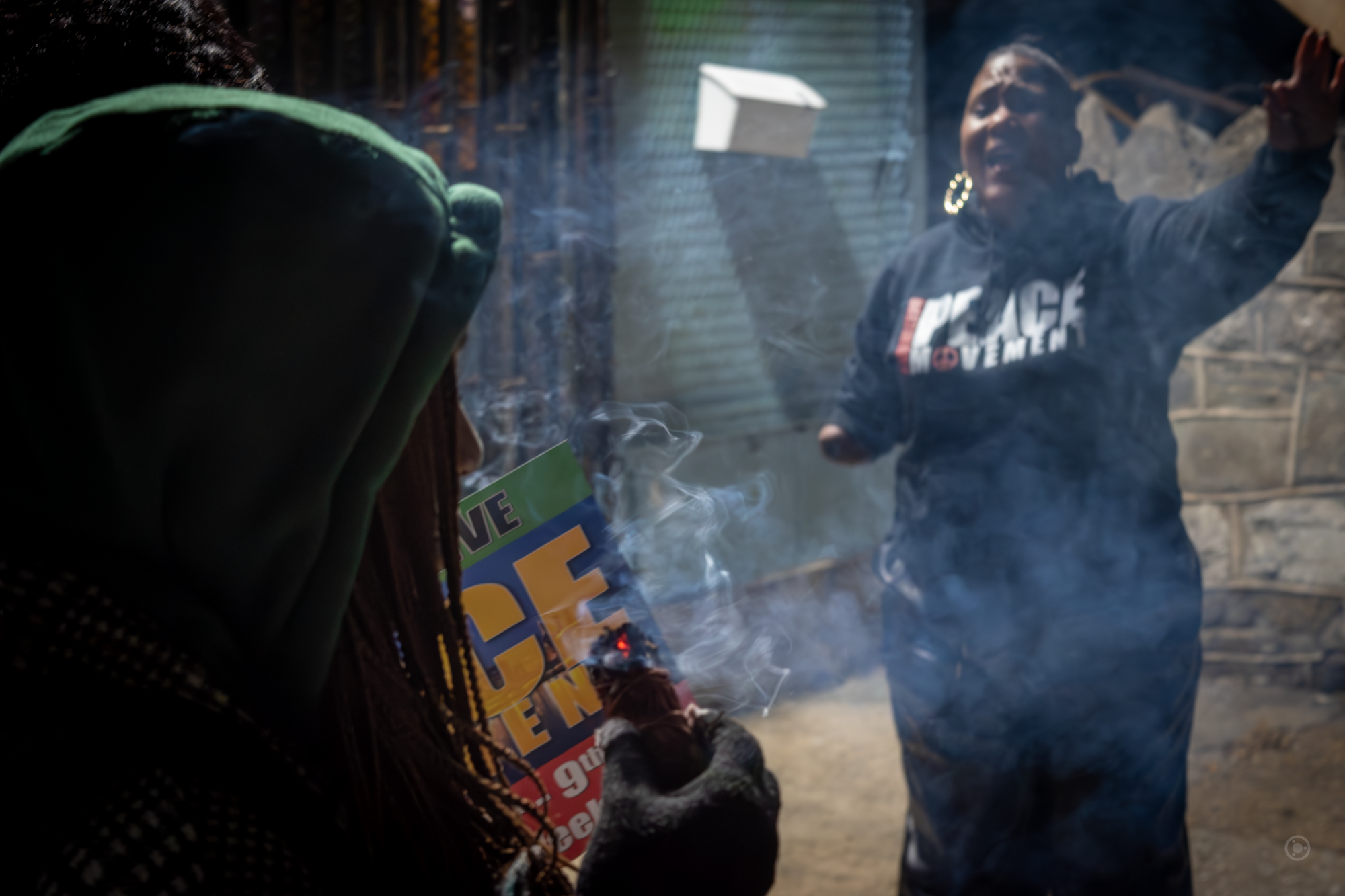
The Baltimore Peace Movement has been doing Sacred Spaces since early in its history. We gather in spaces where someone has been hurt by violence in the city and intentionally bring peace to that space.
And so we did that tonight as well.
I also made a video:
The Baltimore Peace Movement has been an important reason why violence has decreased lately. Their work helping with mediation, comfort, and support for the families who have lost loved ones, and many many more things have been a healing salve on the city.
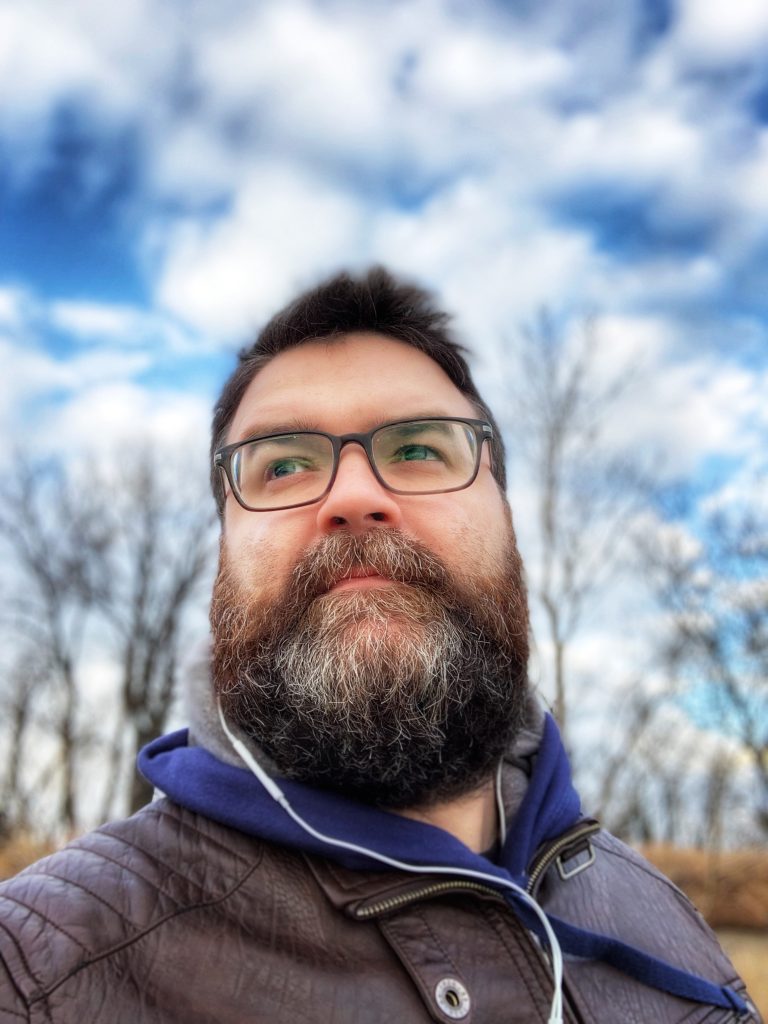
And; I know. If you’re thinking “Who the hell goes to the beach in Canada on the last week of December?”, then two things:
1. You clearly haven’t been following me long enough; I do this kind of stuff all the time.
2. It was the warmest day of the week, it wasn’t bad.
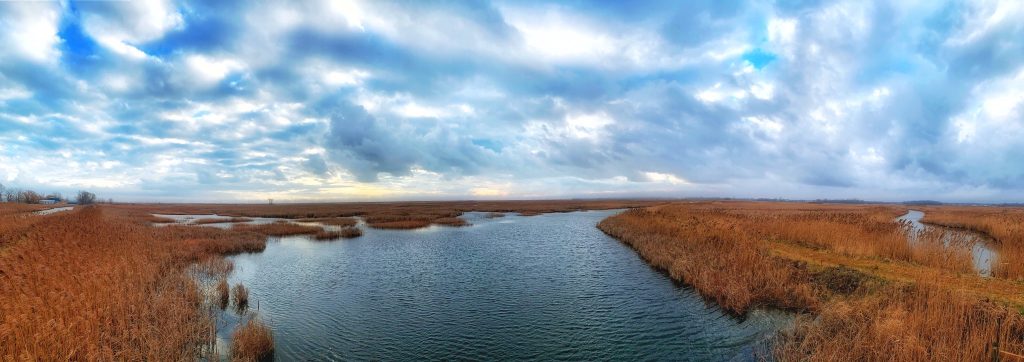
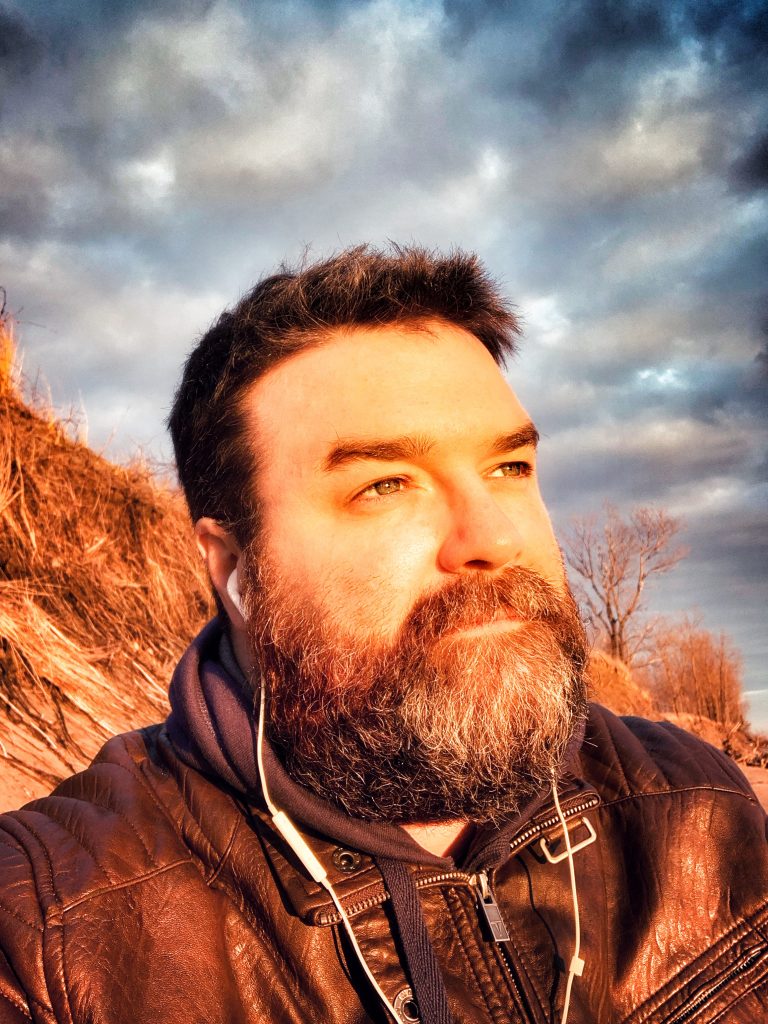
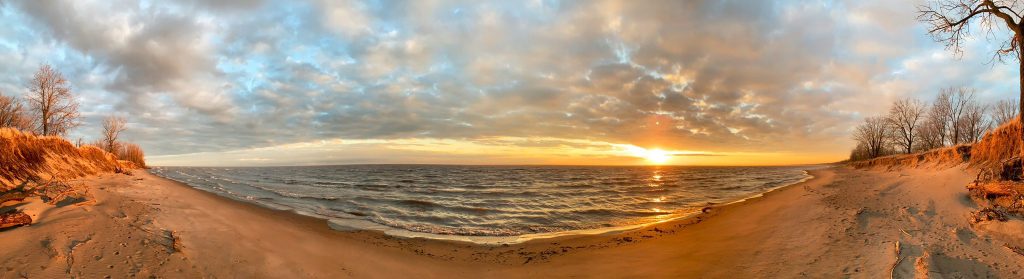
My first stop was in the marshlands. They had this tower you could go up and look out from the top of. The sky was mostly overcast, with bits of blue peeking through. And the clouds were moving FAST.It has rained the night before; which meant that every trace of anything having ever walked on the beach before was erased. It felt like walking on the moon. In the direction the wind was coming from, a thin slice of gold lit up the sky… Knowing I was truly alone; I let music fill me as I walked. @ jboogiejustin filtered in my earbuds, syncopated with the sounds of the surf and the buffering of the wind.
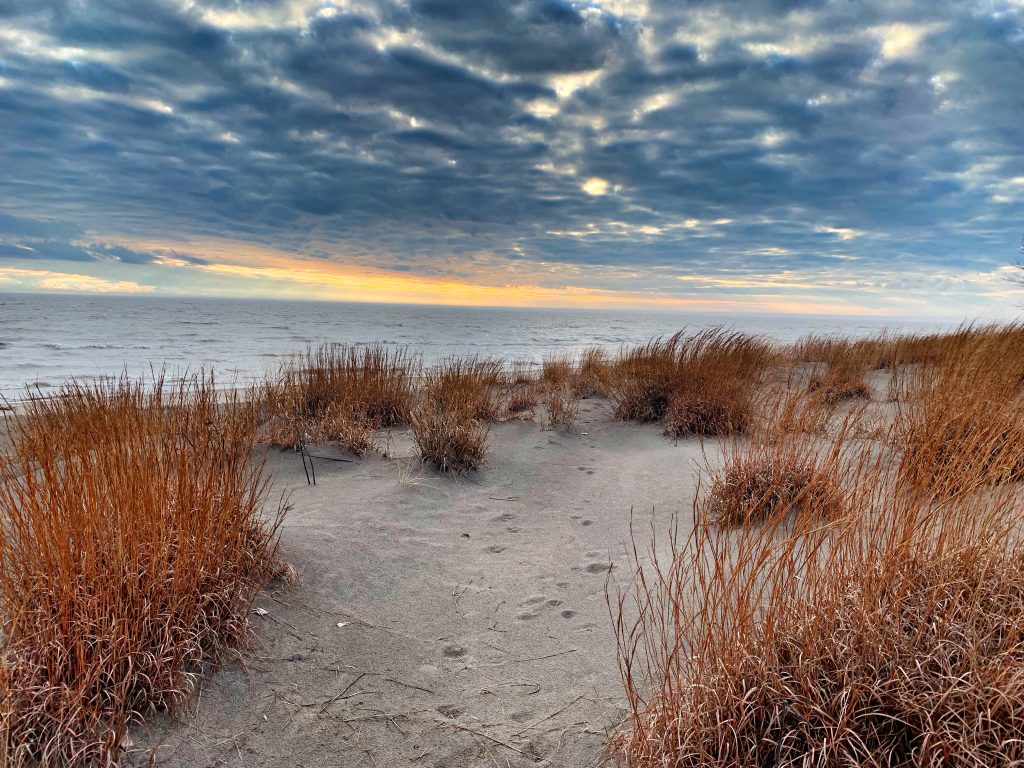
The coastline was golden and inviting, but dipping my hand in revealed it was anything but. Maybe if I had some heated towels and warms arms waiting for me in the car, I might have risked a swim. But not this time.
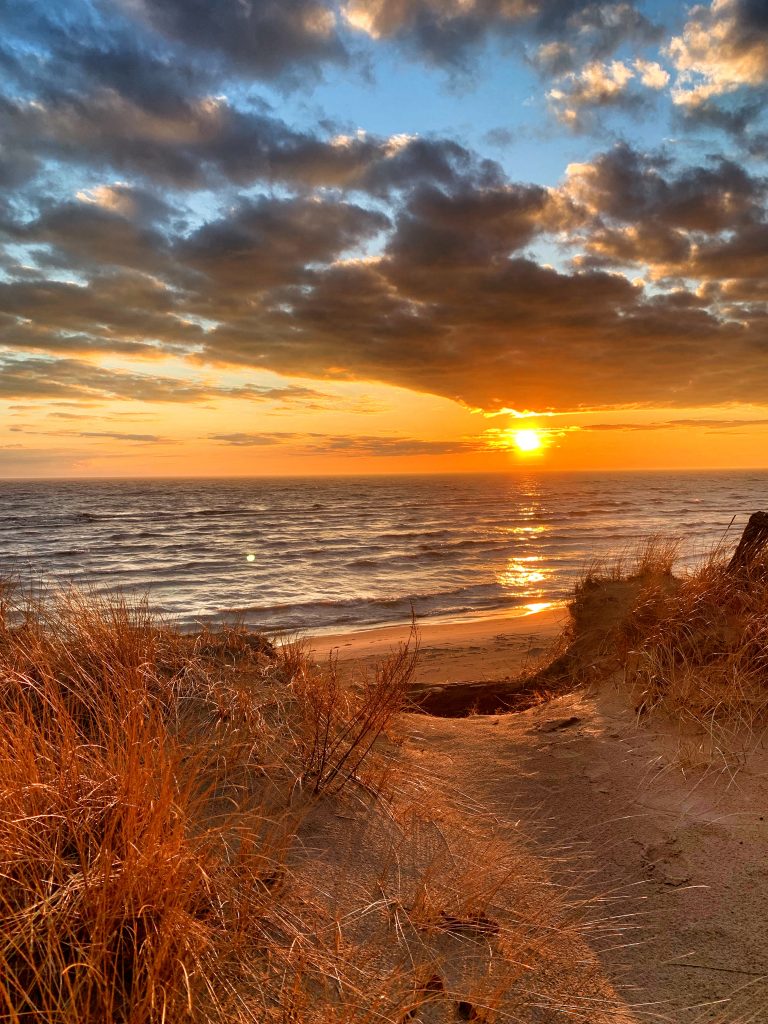
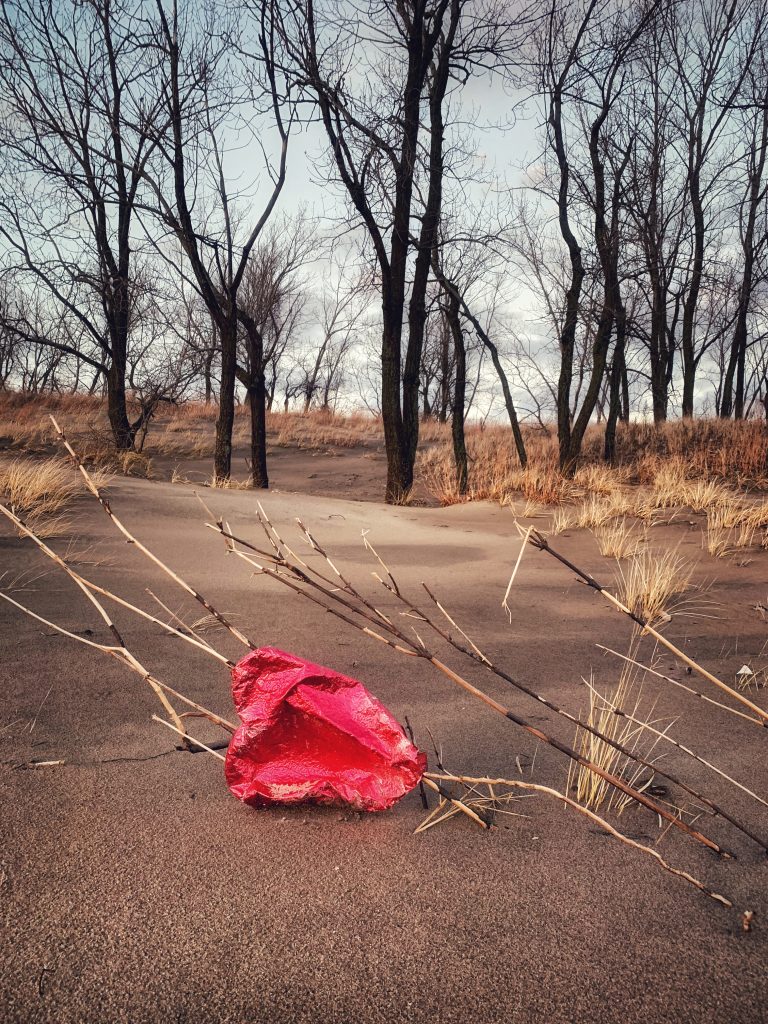
The clouds churned as I walked; the band of gold growing wider and wider. I headed south along the beach, knowing it could take me forever. I wasn’t going to get another workout today, so I walked until I got tired.I found a heavy log nestled among some dune cliffs, and sat to meditate as the light grew.As I sat, the light exploded around me as the sun shot through the opening in the clouds. Instantly everything felt warmer, and I closed my eyes, basking in its glow. This shot is completely unedited; the colours are exactly as they were. The sun wasn’t long for this hemisphere; and though this was its first appearance of the day, it was ready to rest. The wind picked up, sending waves chopping upward as the sun lit them. The log was cold all alone, so I left it.It seemed impossible to take a bad photo at this point, nearly everywhere I went seemed stunning. Walking back took much longer, I kept stopping to drink everything in.As the sun crested the horizon, the water grew dark and glassy, a mirror refracting the dark swirling clouds above.As I crossed the dunes, the magic faded behind me, and the sky drew dusky. A rustling caught my attention as I pulled my earbuds out. A red heart lay tangled in the branches of some driftwood. The air grew cold and crisp. I breathed deep and walked on.
Timothy Caughman, a Black man, was slain in New York City by a white supremacist from Baltimore. Two communities gather to honour Caughman in very different ways.
I went out to take pictures.
People gather to remember in Hampden (where the white supremacist murderer lived) to remember Timothy Caughman.
On the tail end of the original Baltimore Ceasefire weekend, a man is killed in West Baltimore
During the reading of the names at the end of the Baltimore Ceasefire weekend, Barry Lee’s name was the last to be read. His mother requested we attend his vigil in West Baltimore.
We later discovered he had been out to Cease Fire events.
We gather, slowly, a combination of family and Baltimore Ceasefire members to remember Barry Lee.
More family arrive for the vigil, spelling out Barry Lee’s name in candles.