The Maryland Flag, Again

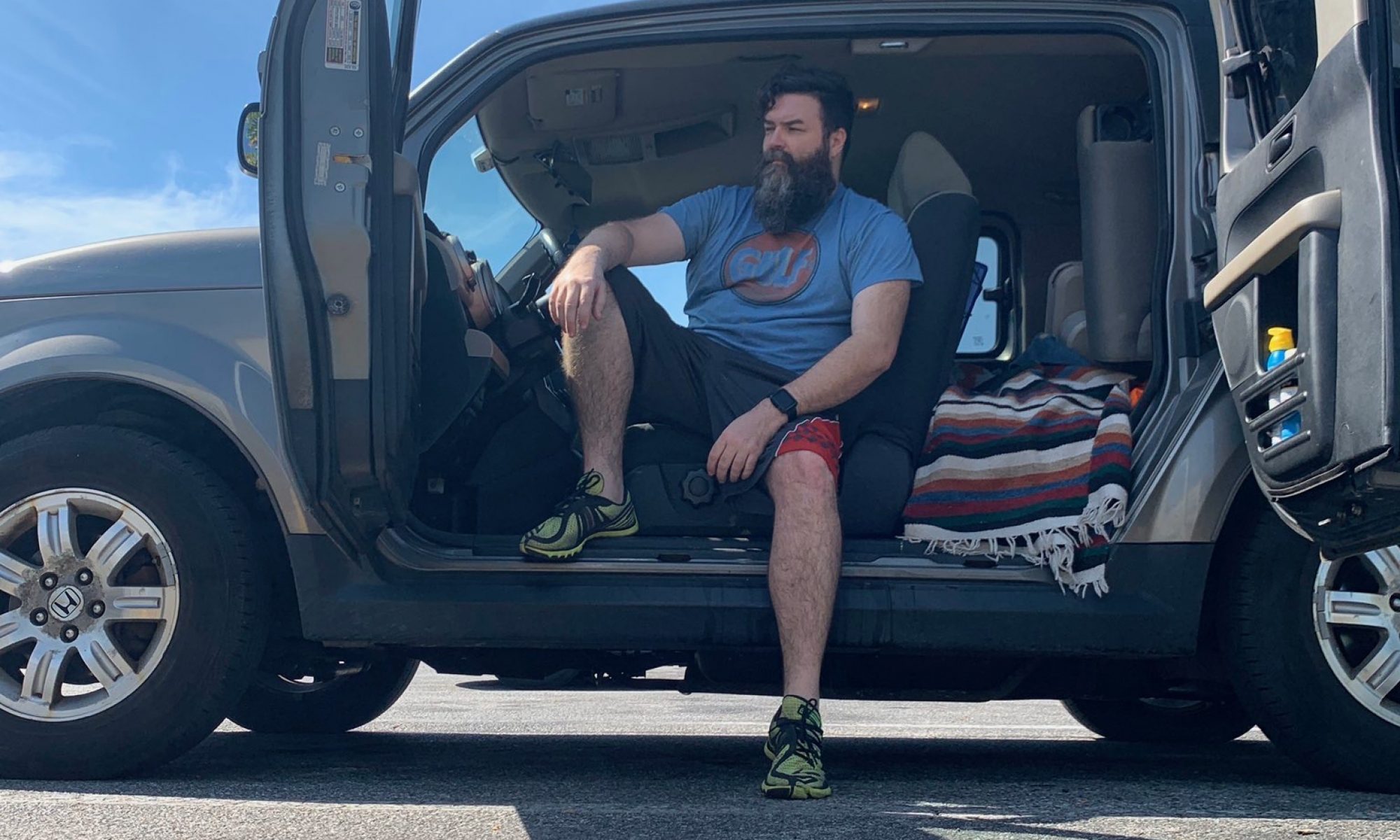
Illustration by Benjamin Jancewicz for the article The Confederate Roots of the Maryland Flag: the Maryland state flag with the red and white Crossland quarters replaced by two figures in Ku Klux Klan hoods, drawn to show what the Confederate half of the flag already represents.

On October 13th I started getting messages asking if I’d heard about a tennis club being suspended.

I had not.

The University of Maryland’s club tennis team sent a Google doc out to the other teams before a tournament. Schedules, a campus map, that sort of thing. Somewhere in it was an illustration of mine. I made it almost ten years ago.

Howard University’s team saw it, posted about it on Instagram, and took it to the Maryland administration. Maryland suspended its club tennis team indefinitely. Reporters started calling that afternoon and I did interviews all week.

Some of you have been reading me long enough to remember the first time this happened. A lot of people turning up this week weren’t here for it. So here is where that illustration came from.

The Maryland state flag with the red and white Crossland quarters replaced by two figures in white Ku Klux Klan hoods.

The article

In 2017 I was living in Baltimore and I could not get over the Maryland state flag.

I’d never seen that much pride in a state flag anywhere. It’s on houses, on cars, on crab shacks. People get it tattooed on them. Black Marylanders wear it as much as white Marylanders do.

What most of them don’t know is that half of it is Confederate.

That July, April Reign, the media critic who started #OscarsSoWhite, launched #NOconfederate against an HBO series that imagined the South winning the Civil War and keeping slavery. I couldn’t afford HBO. So the day after her campaign ran, I wrote a Twitter thread about the Maryland flag instead. In October I turned it into a full article.
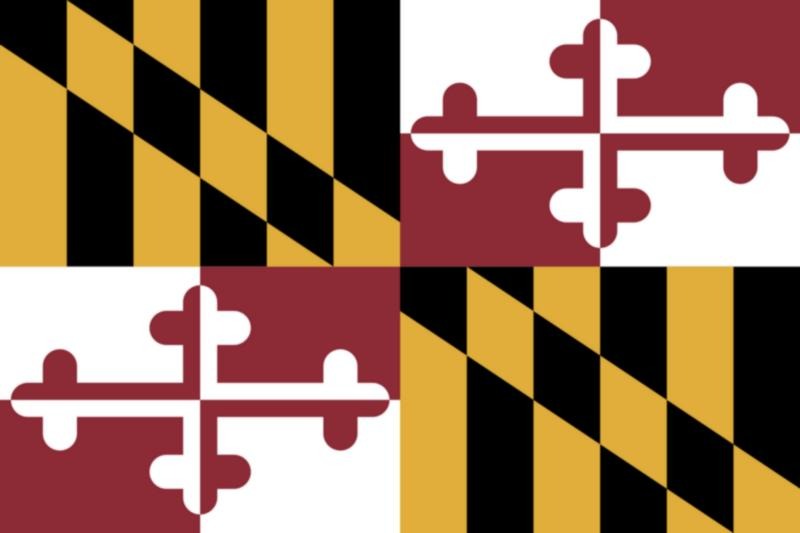
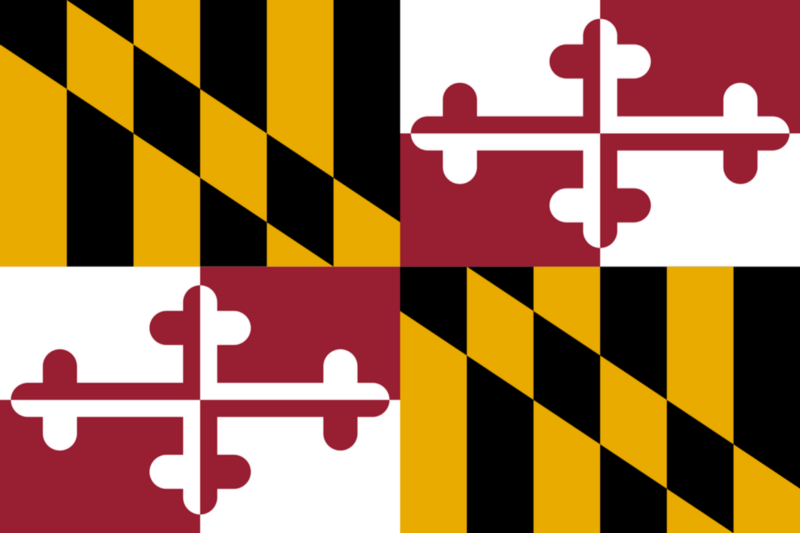
The Maryland state flag, black and gold Calvert quarters alongside red and white Crossland quarters.

That’s the flag. Before 1880, Maryland didn’t have one.

Maryland stayed in the Union, though there was heavy Confederate support in parts of it. The first casualties of the war were in Baltimore. The Union Army of Maryland flew the black and gold, which is the heraldic banner of George Calvert, the first Lord Baltimore. Baltimore City still uses that design as its own flag.

Secessionist Marylanders, a lot of whom fought under Robert E. Lee, the general who commanded the Confederate army, took the red and white Crossland banner as theirs. It got so widespread that a law was passed forbidding people from displaying those colours. If you got caught wearing them you were arrested for treason.

Fifteen years after the war, at a parade for Baltimore’s 150th, the state put the two halves together into one flag as a gesture of reconciliation between North and South. It became the official state flag in 1904.

Black Marylanders, who the war was fought over and who the Confederacy affected most, were never asked.

Why I drew it that way

For the top of the article I took the Crossland quarters out and put two figures in Ku Klux Klan hoods in their place.

That was the point. People look at the Maryland flag and don’t see a Confederate flag, because there’s no stars and bars on it. I wanted to make them look.

What happened in 2017

CBS Baltimore ran a story without talking to me or to April. Christina Tkacik at the Baltimore Sun talked to both of us. Debra Alfarone at WUSA9 did a video interview that went out on the DC evening news. Breitbart called it an attack by leftists.

Then Red Maryland, a right wing group, started a petition called “Save Maryland’s Flag,” saying the flag was under attack.

Governor Hogan had just taken the Roger B. Taney statue out of the State House in the middle of the night. Taney was the Chief Justice who wrote the Dred Scott decision in 1857, the ruling that said Black people could not be citizens and had no rights a white man was bound to respect. He was a Marylander, and his statue sat outside the State House until Hogan had it hauled off in the dark. That had the far right in the state furious with him. He posted his support for the petition and linked to it.
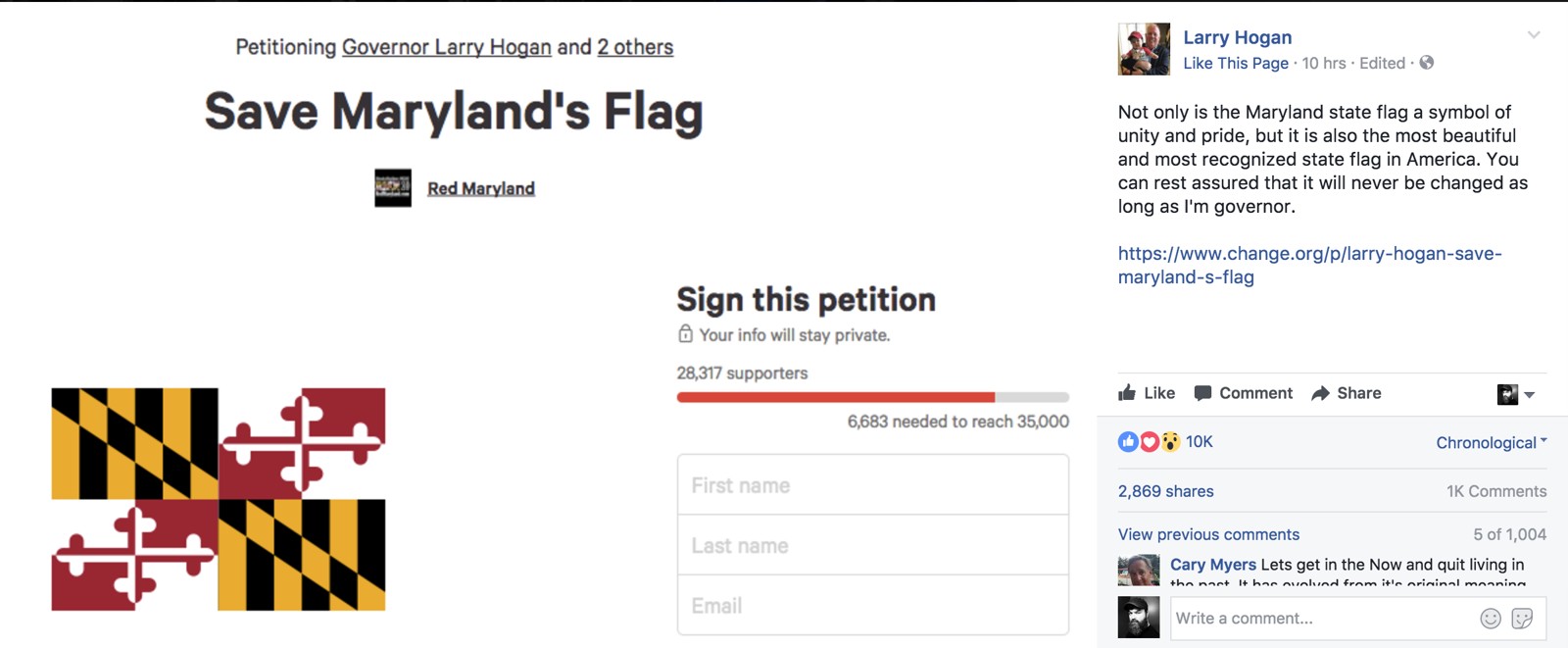
The Red Maryland Save Maryland’s Flag petition at 28,317 signatures, beside Governor Larry Hogan’s Facebook post saying the flag will never be changed as long as he is governor.

All of that to save the flag. From me, apparently.

I have never once called for the Maryland flag to be changed. Not then, not now.

This month

Somebody took the illustration out of the article and put it in a document about tennis matches. Somebody chose it. Out of the article it is just a Maryland flag with Klan hoods on it, and that is what the Howard players opened.

I messaged Howard’s tennis club on Instagram to tell them I was sick about how it had been used. They wrote back and said mine was the first apology they’d gotten from anybody.
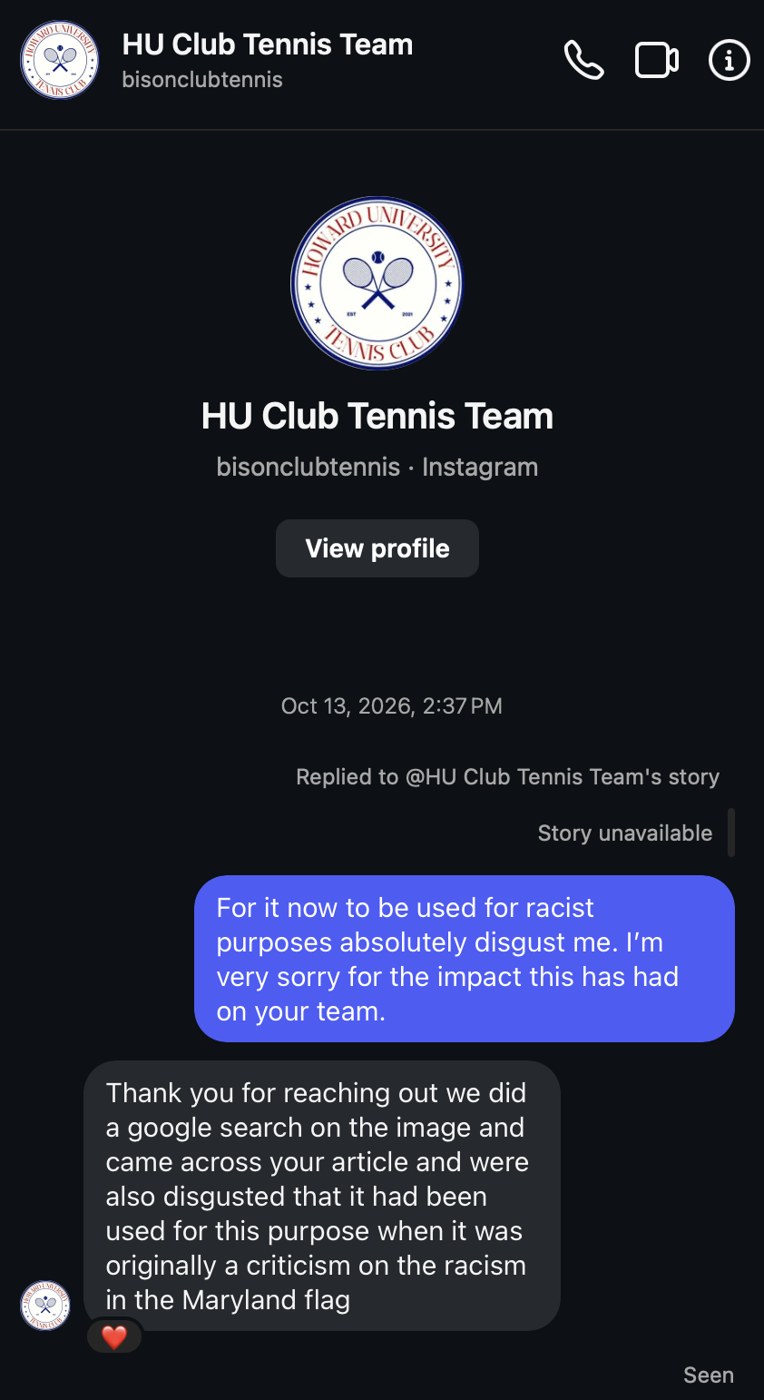
Instagram message exchange in which Benjamin Jancewicz apologises to Howard University’s tennis club for how his illustration was used, and they reply that his was the first apology they had received.

I don’t buy that it got there by accident. Before all this, the only way that image came up in a search was if you searched for “racist Maryland flag.”

Reporters kept asking me how I felt about it. What I kept telling them is that the students this was done to are the ones who should be centred in this, and that I am not the person to ask. Howard University News Service and The Diamondback both covered it properly.

Dr. Jeanette Snider and Dr. Rashawn Ray called me from the Bowie State and University of Maryland Social Justice Alliance. It’s a partnership between the two schools and the 2nd Lt. Richard W. Collins III Foundation.

Collins was murdered on the University of Maryland campus in an act of racial hatred in May of 2017, a few months before I made the illustration. It tore through the state. I was in Baltimore for it, the same way I’d been in the streets there for years before and have been since.

On Wednesday I sat down with students from Maryland and Howard and Maryland’s NAACP chapter, to talk about how the illustration got made and what white people who want to help with this are actually good for.

What I told them is that they get to paint, in whatever colours they want, how history remembers this moment.

What it’s like

This is work I believe in and it is not fun to do.

In 2017 I got hate mail for weeks. I got it again this month. Most of it came through comments online. These two came in minutes apart under different fake names.
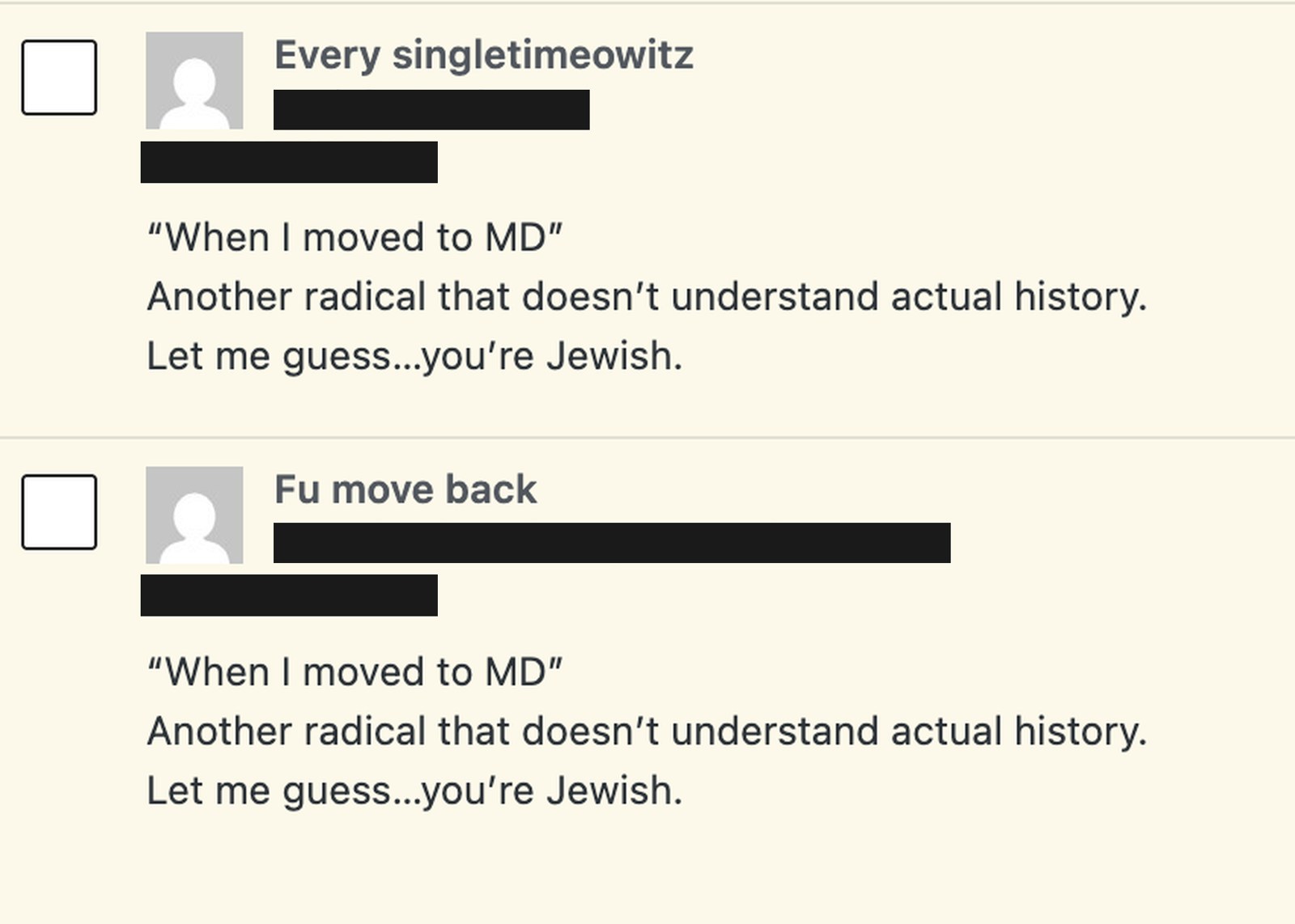
Two abusive comments received in October 2026, sent minutes apart under different fake names. Email addresses and IP addresses have been redacted.

That’s the mild end of it. I’ve been targeted before for calling the Maryland flag what it is, and I knew that would start up again the moment the illustration resurfaced.

What I actually want

People look at my illustration and recoil. Good. That’s what it’s for.

What I want is for people to have that same reaction to the regular Maryland flag. Not my version. The real one, the one on the tattoos and the crab shacks and the State House. What I drew is what the thing already represents. People are bothered by the hoods and not by the flag. Those are the same thing.

Whether that flag changes is not my call, and it never was. Black Marylanders are the ones who should decide whether they want Confederate symbols on the flag that represents them. They weren’t asked in 1880 and they haven’t been asked since.

Benjamin


A note, since it’s been a while.

Since August I’ve been working full time for the Naskapi Nation of Kawawachikamach. Design, photography archiving, language documentation, community communications.

I write about it every month on Patreon. Long posts with a lot of pictures. The drive north, the train, a men’s gathering out on the land, the artifacts that came home from the museum.
A Vigil for Bilal Abdullah

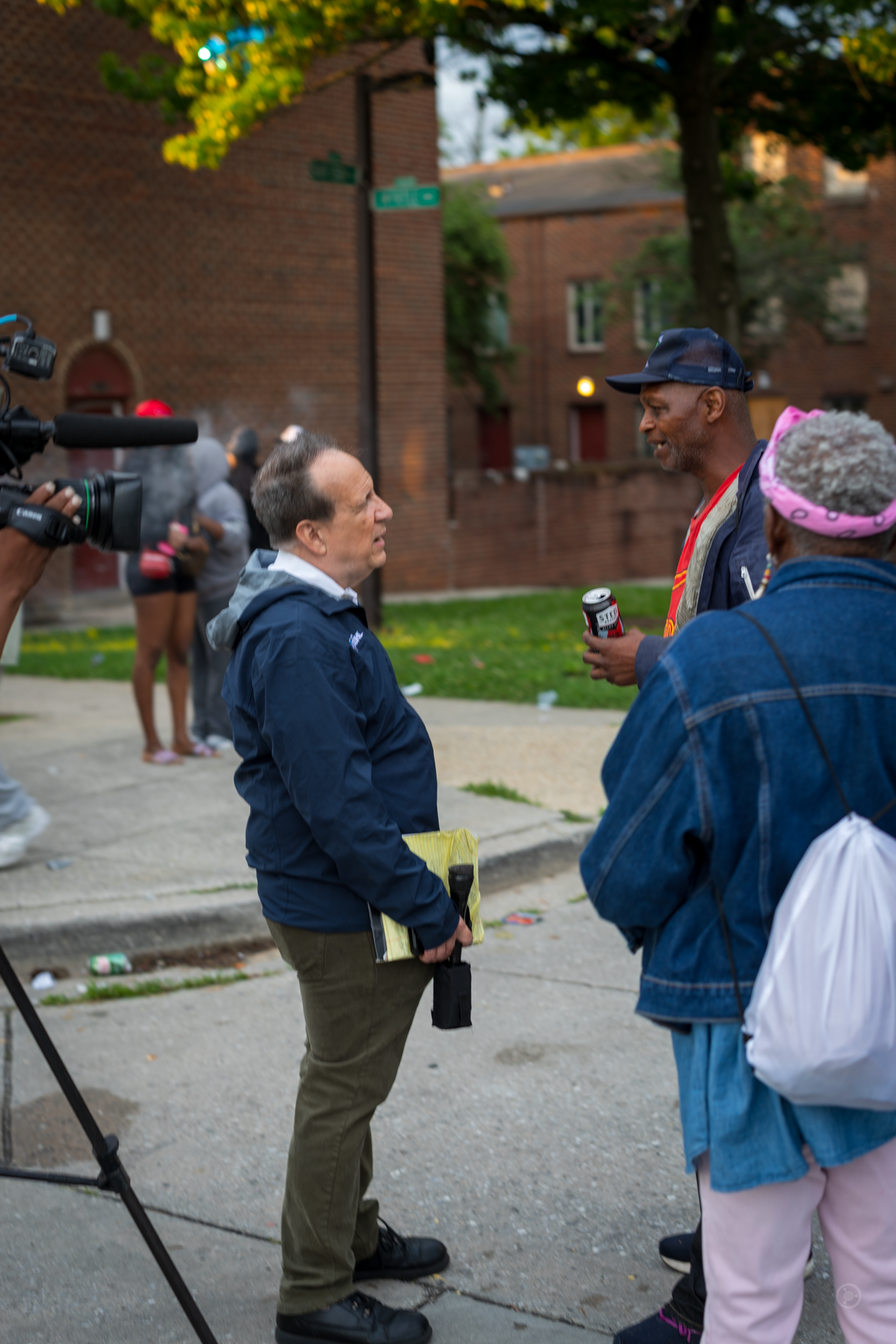
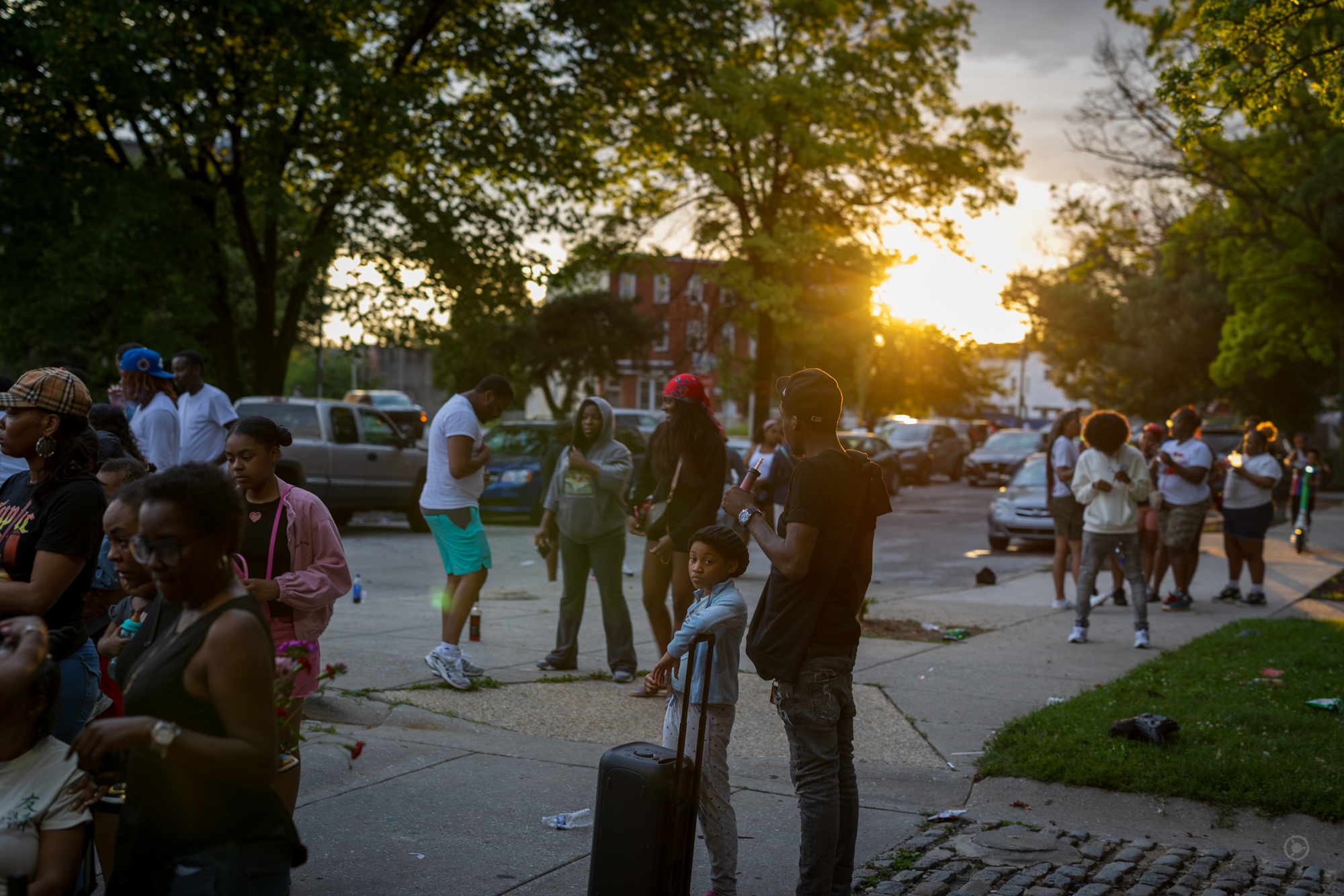
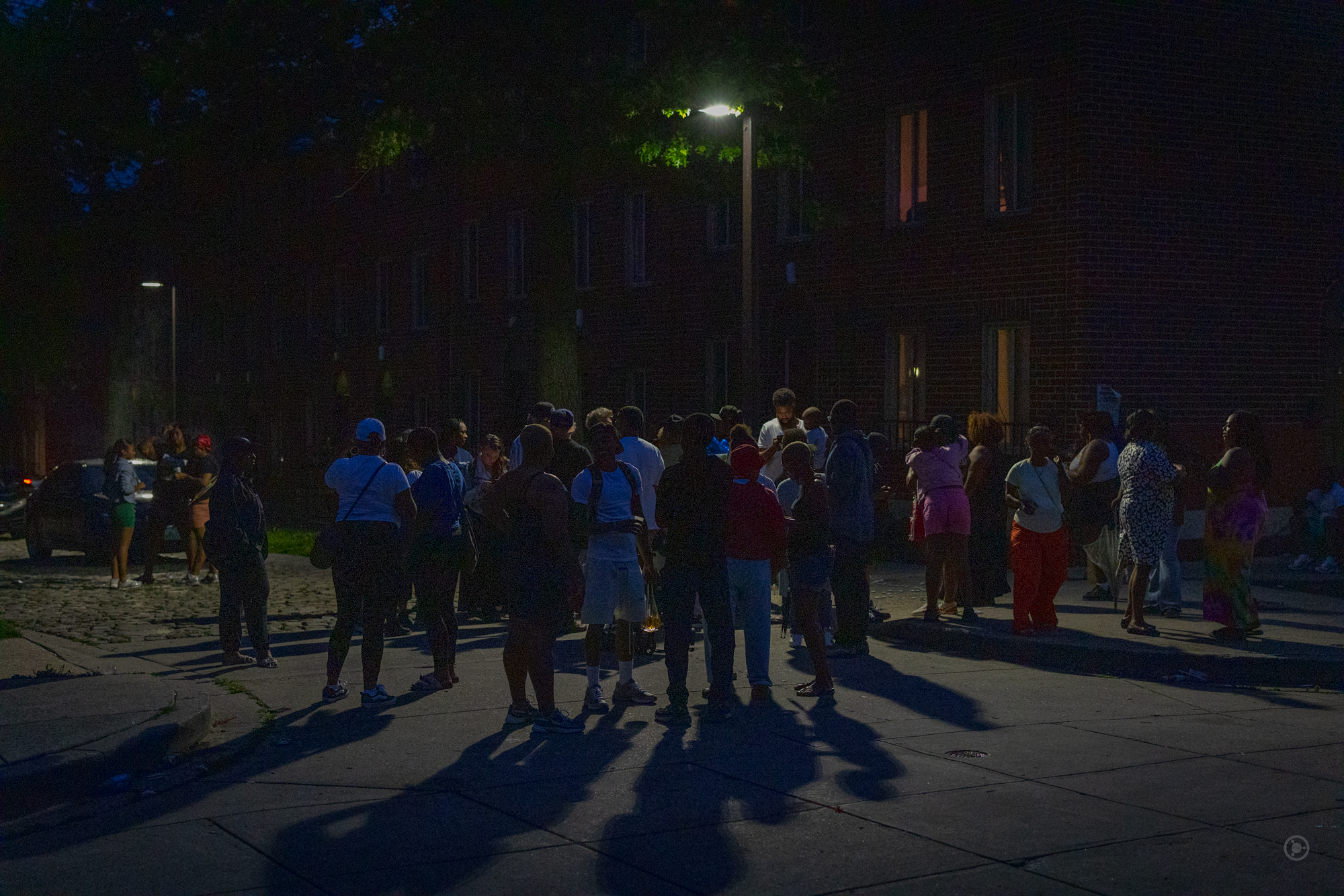
On Thursday, Juneteenth, the family of arraber Bilal Abdullah held a vigil in West Baltimore.

Bilal, also known as BJ for “Bilal Junior”, was killed by the Baltimore Police on Tuesday. The Baltimore Beat has been extensively covering the story.

I went out and took pictures.

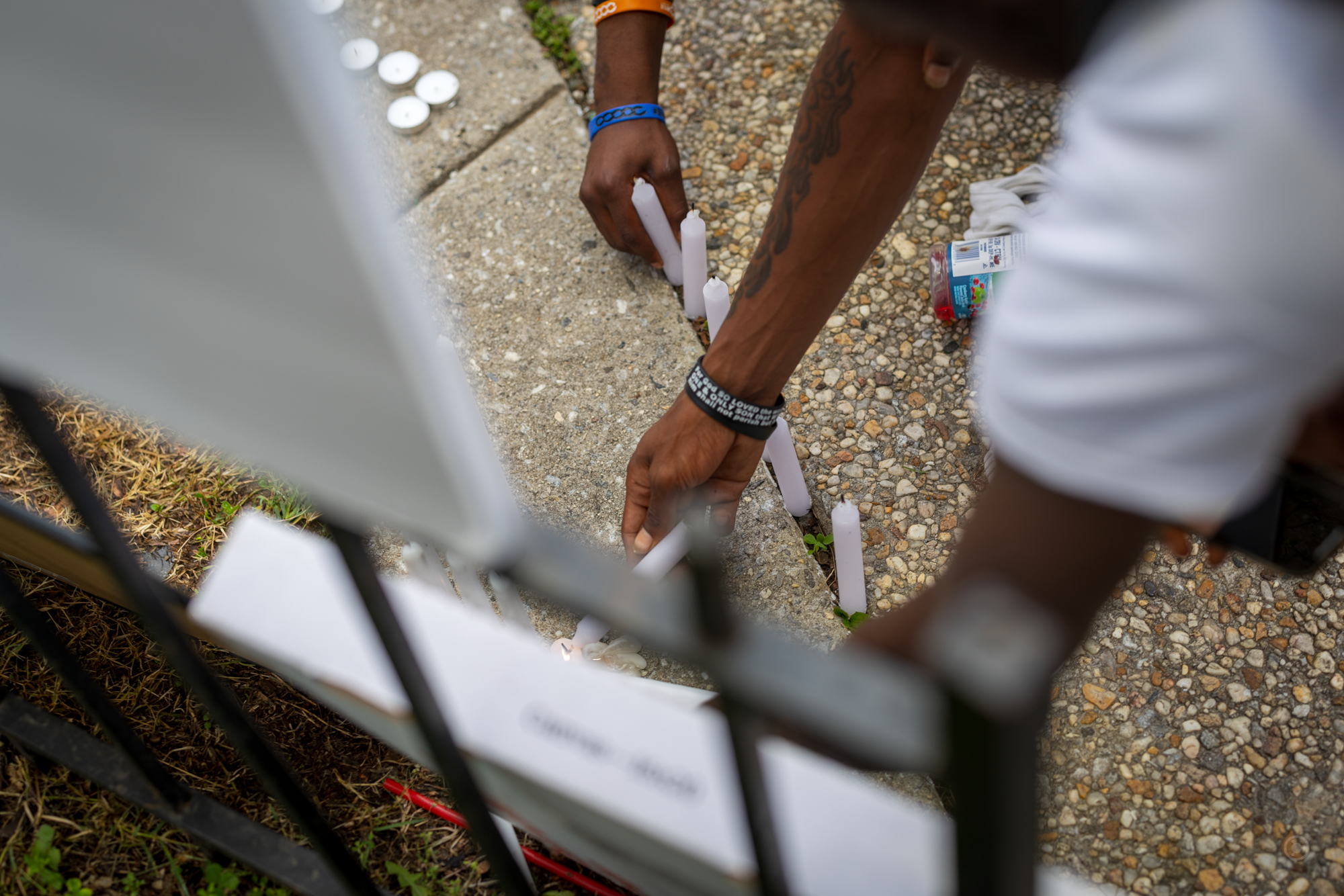
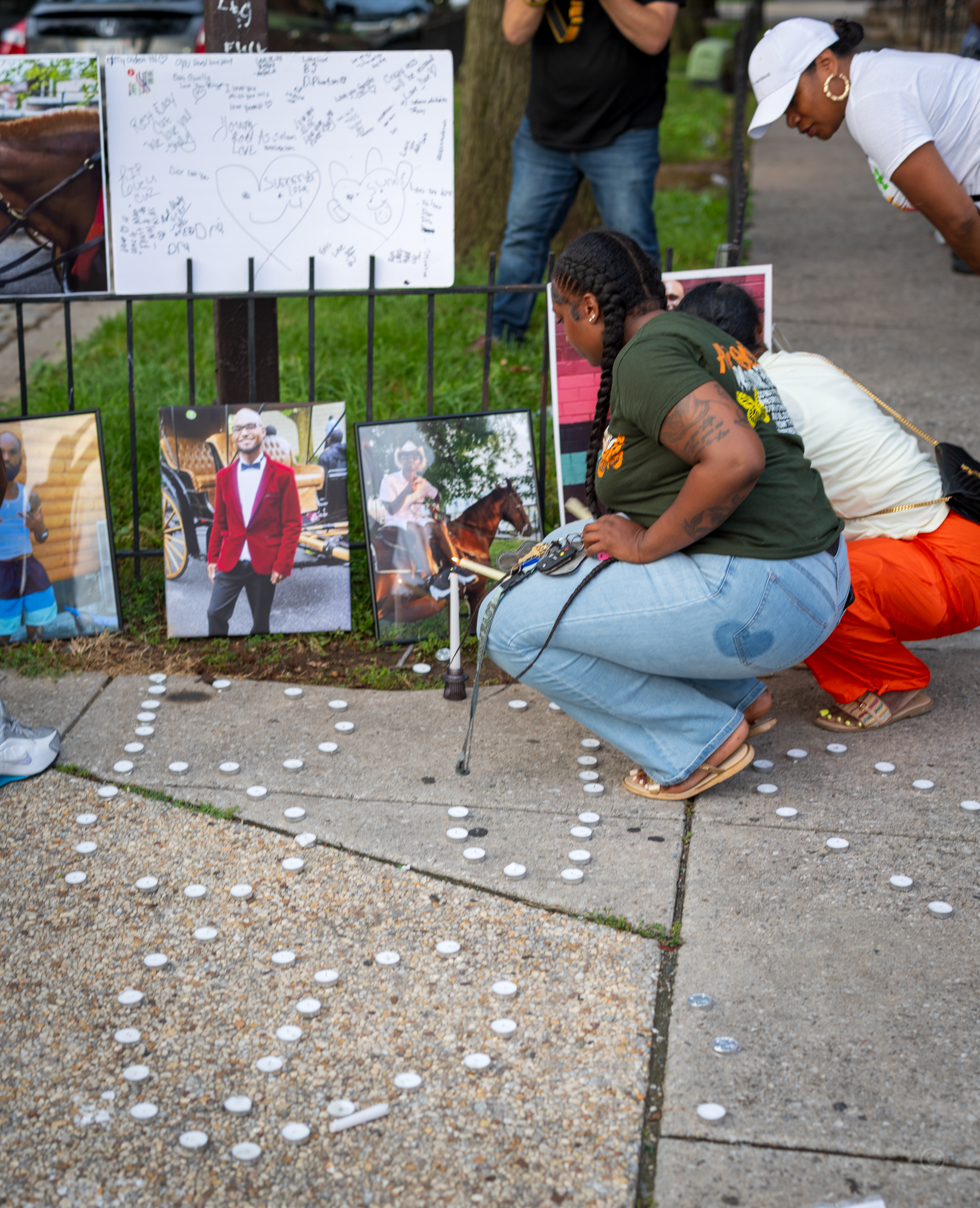
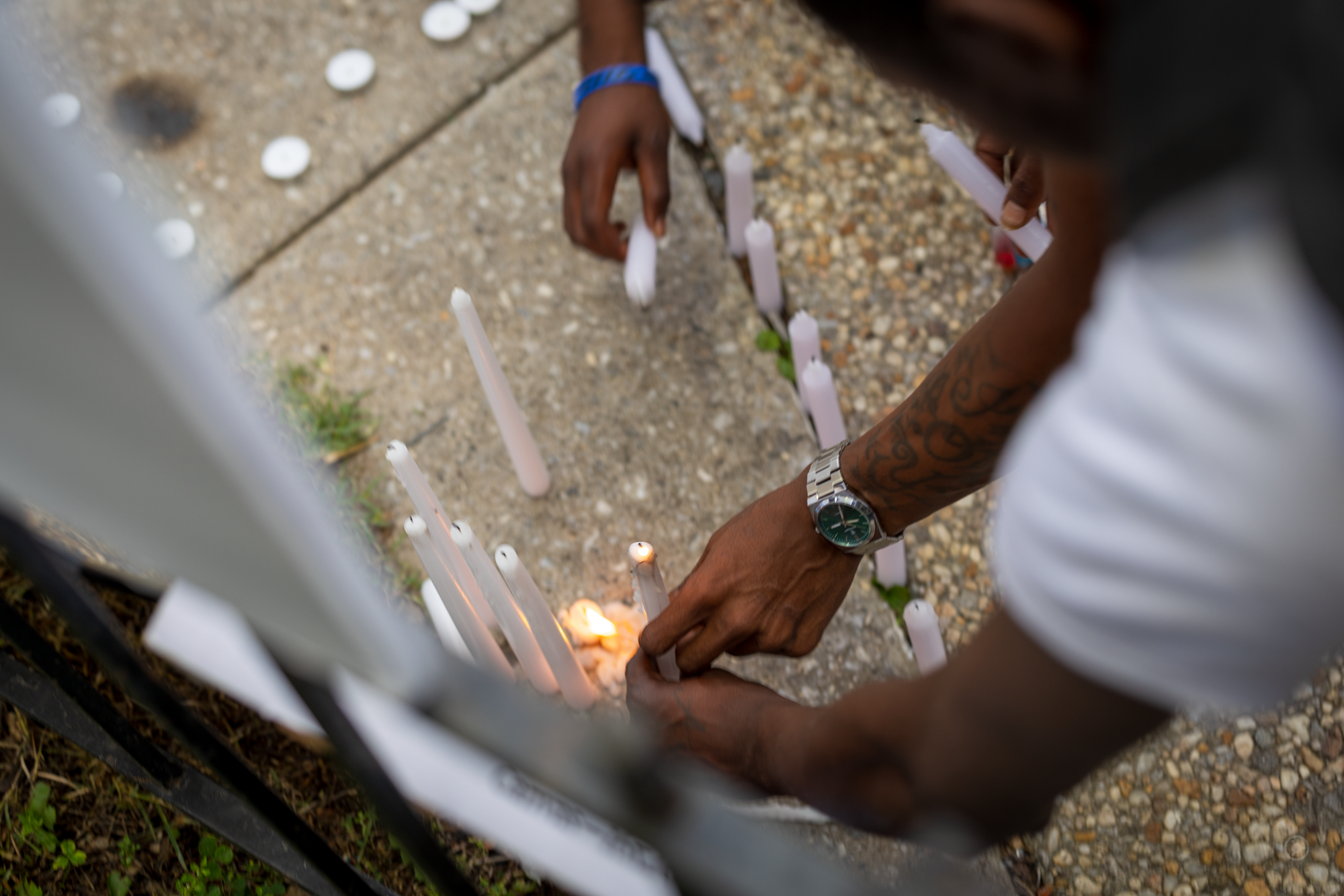
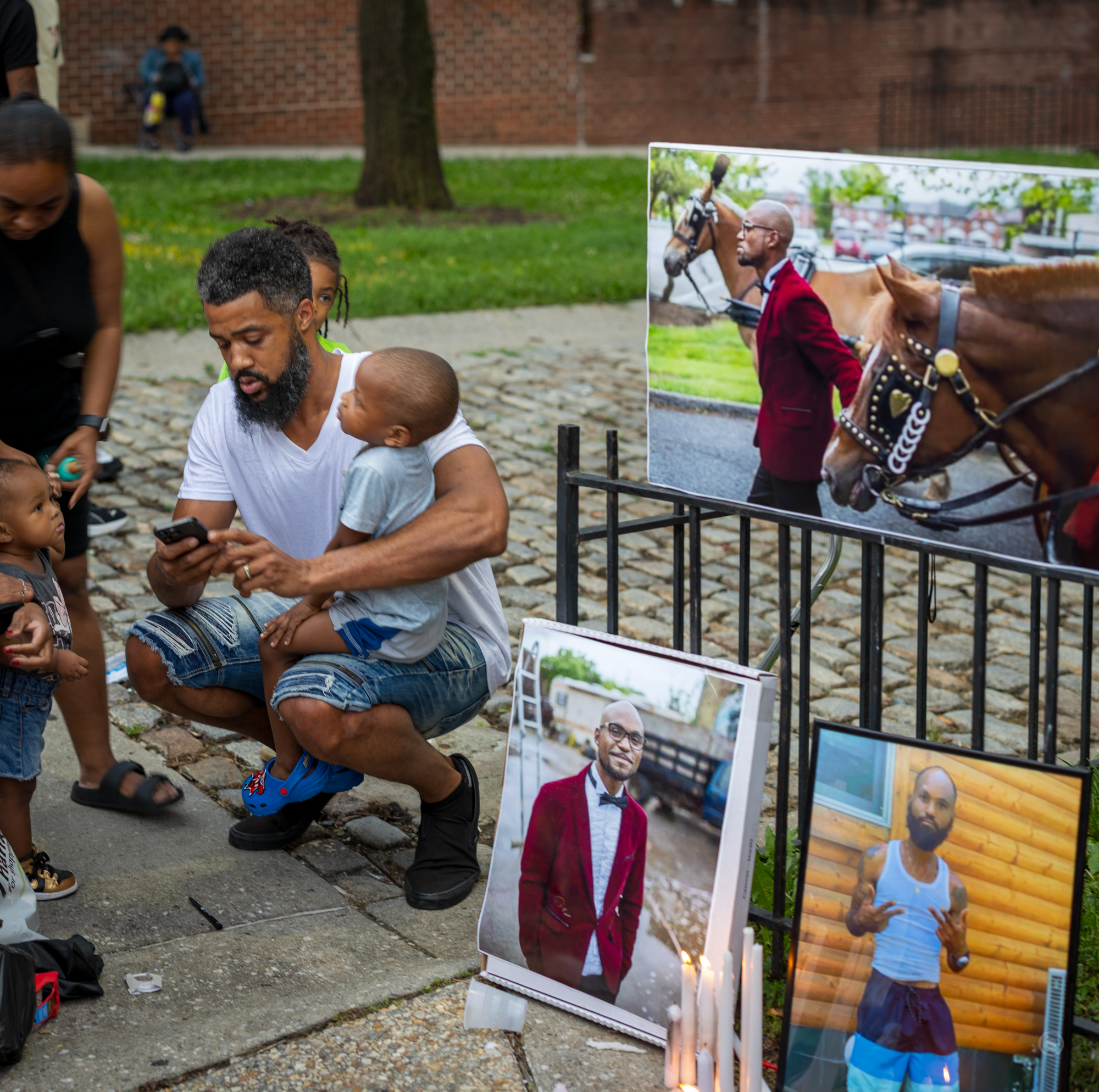
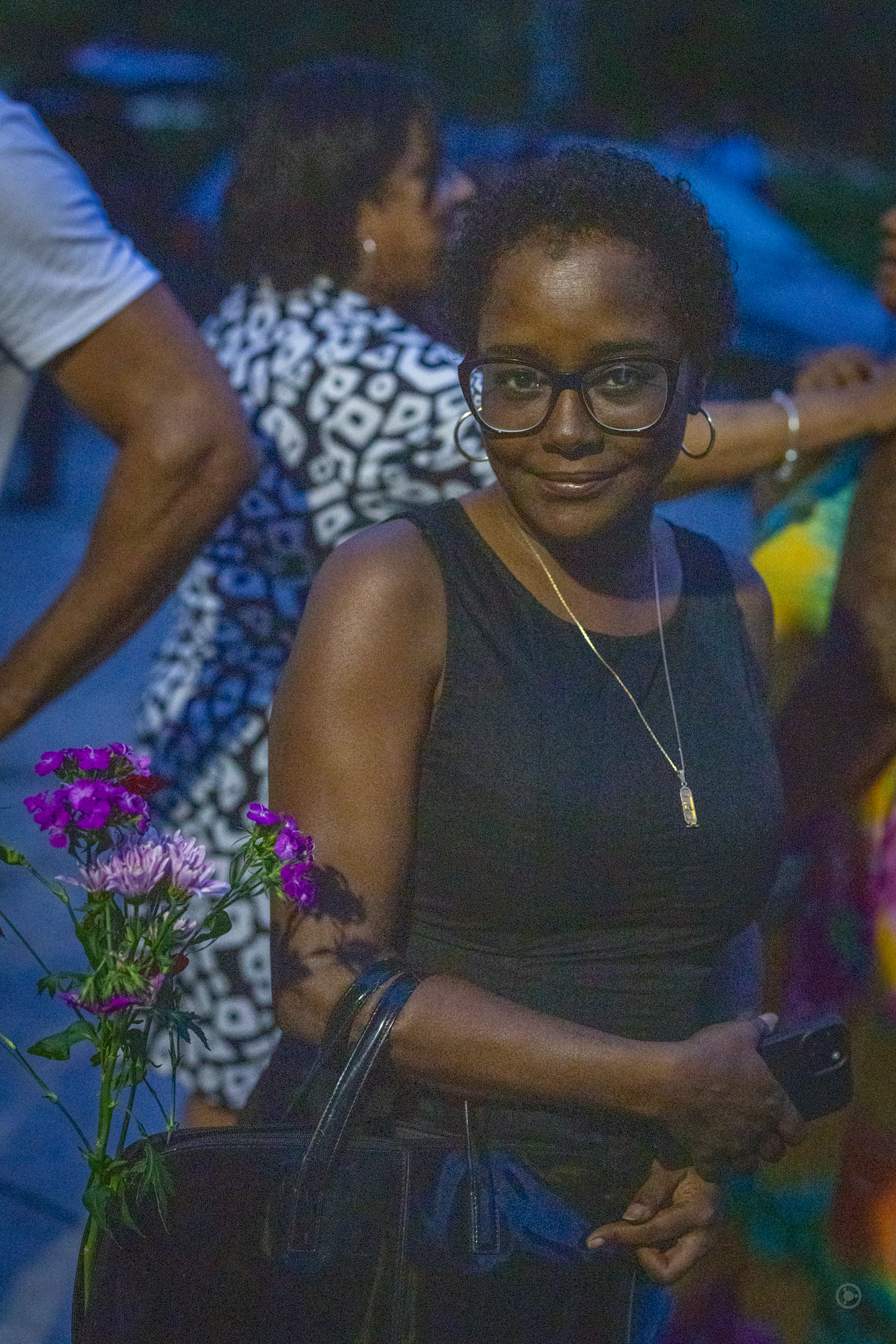
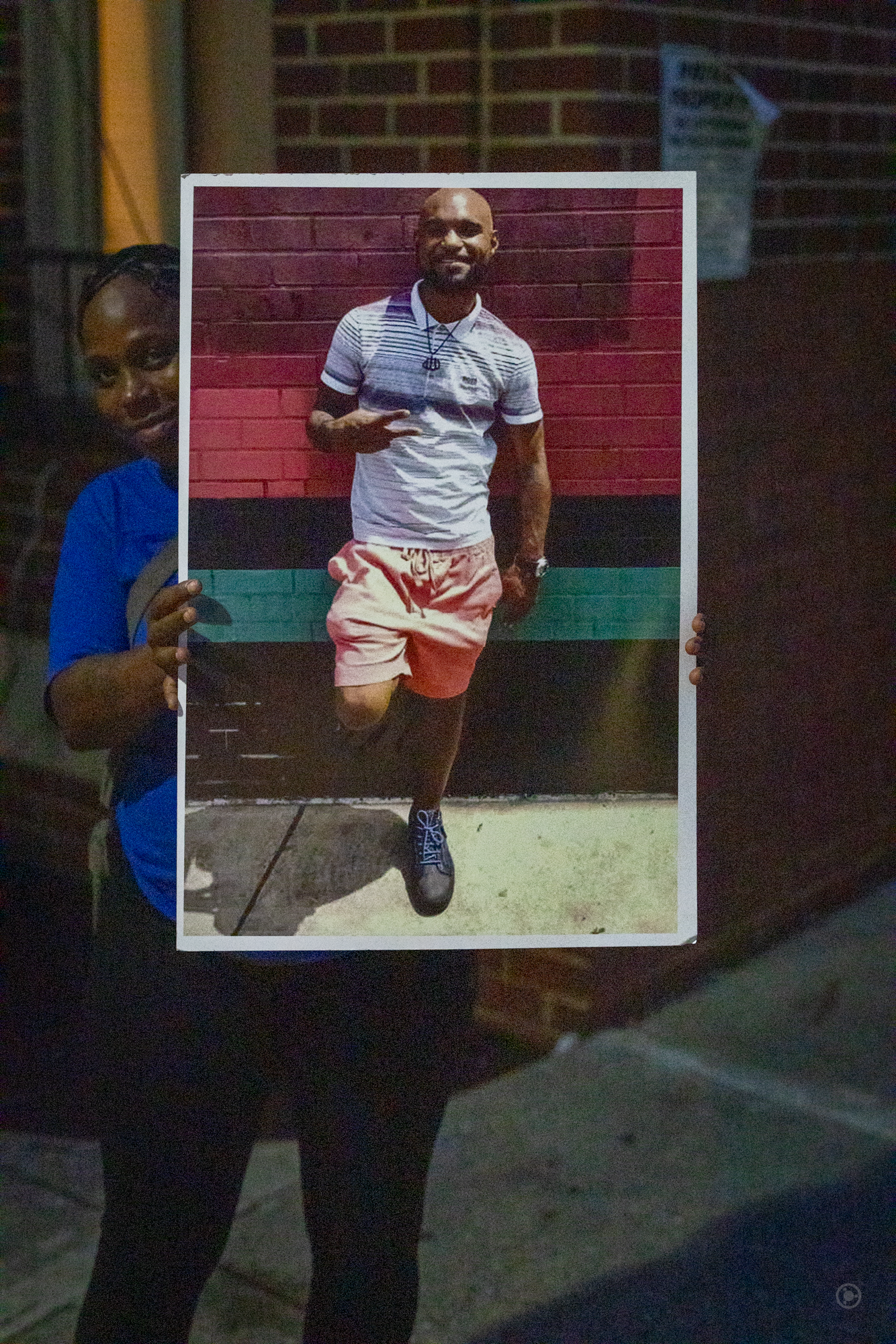
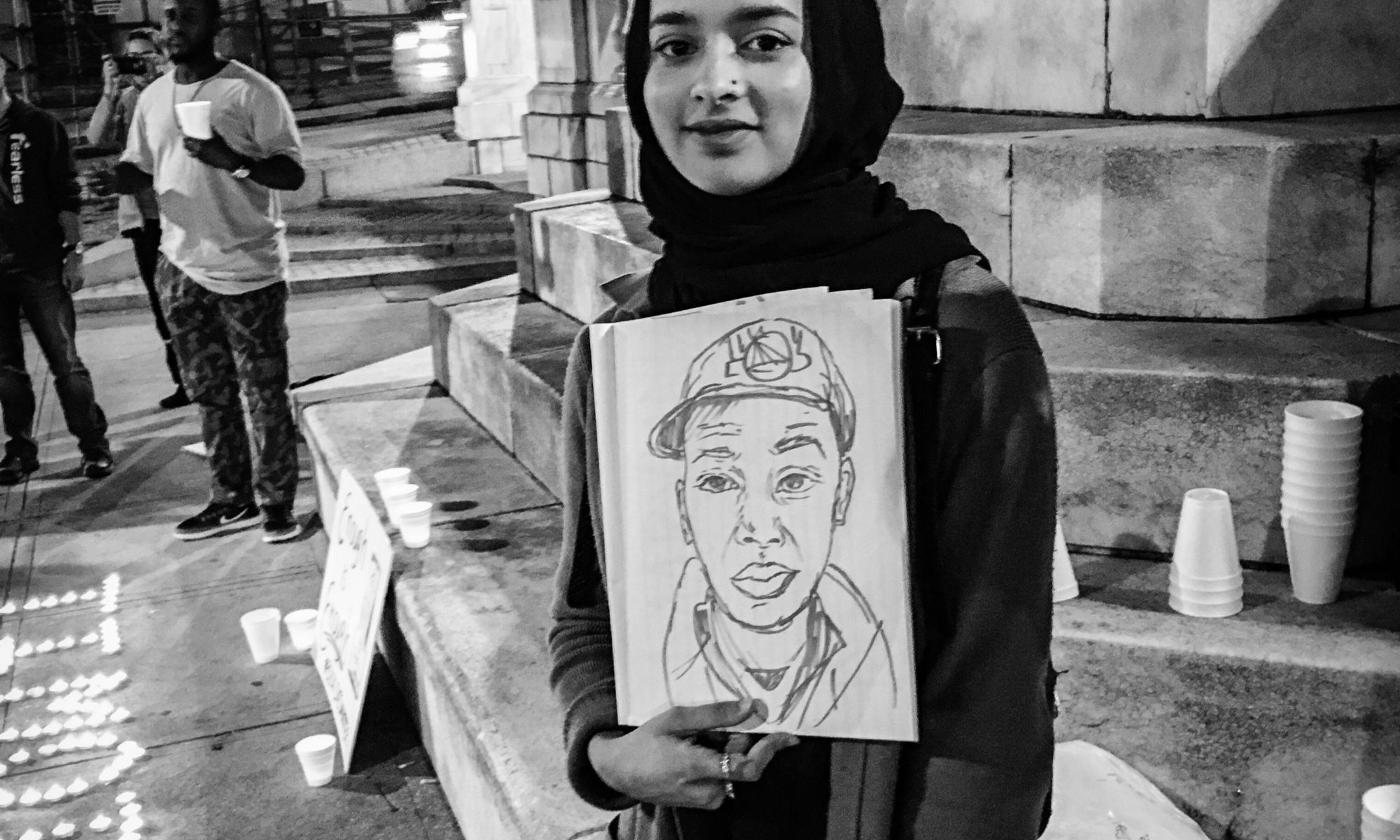
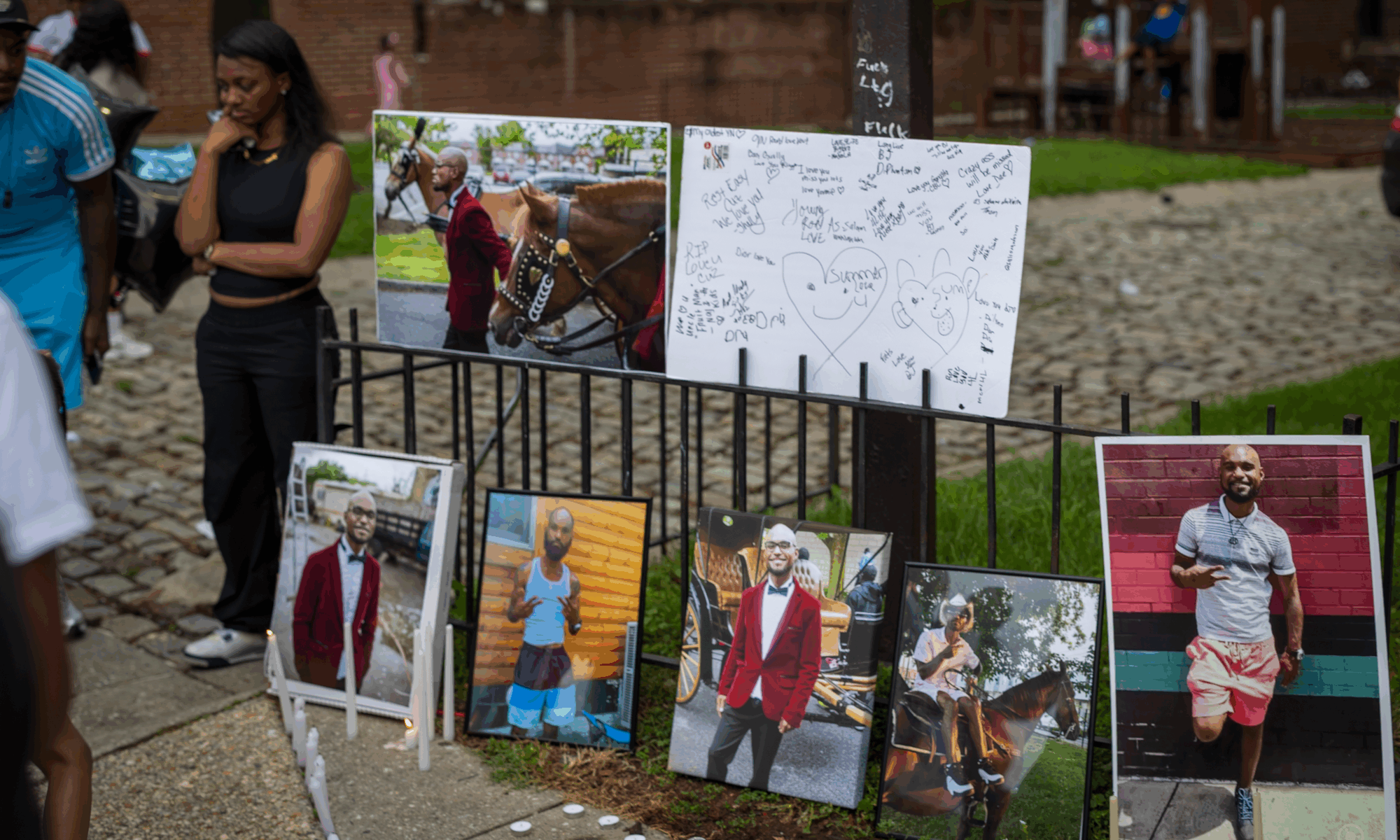
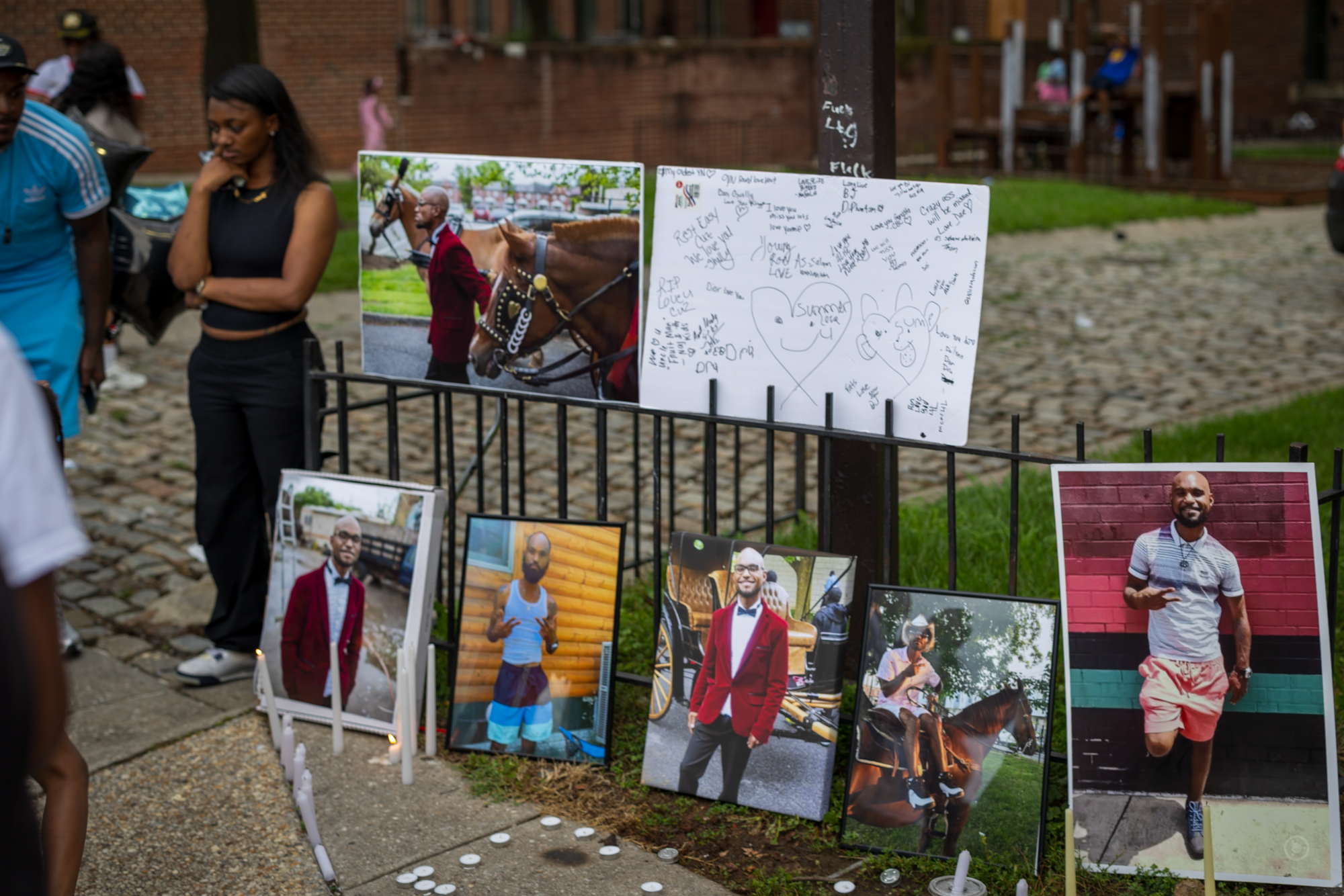
A memorial was set up with photos of Bilal and lots of candles. Hundreds came and signed posterboards in memorial.

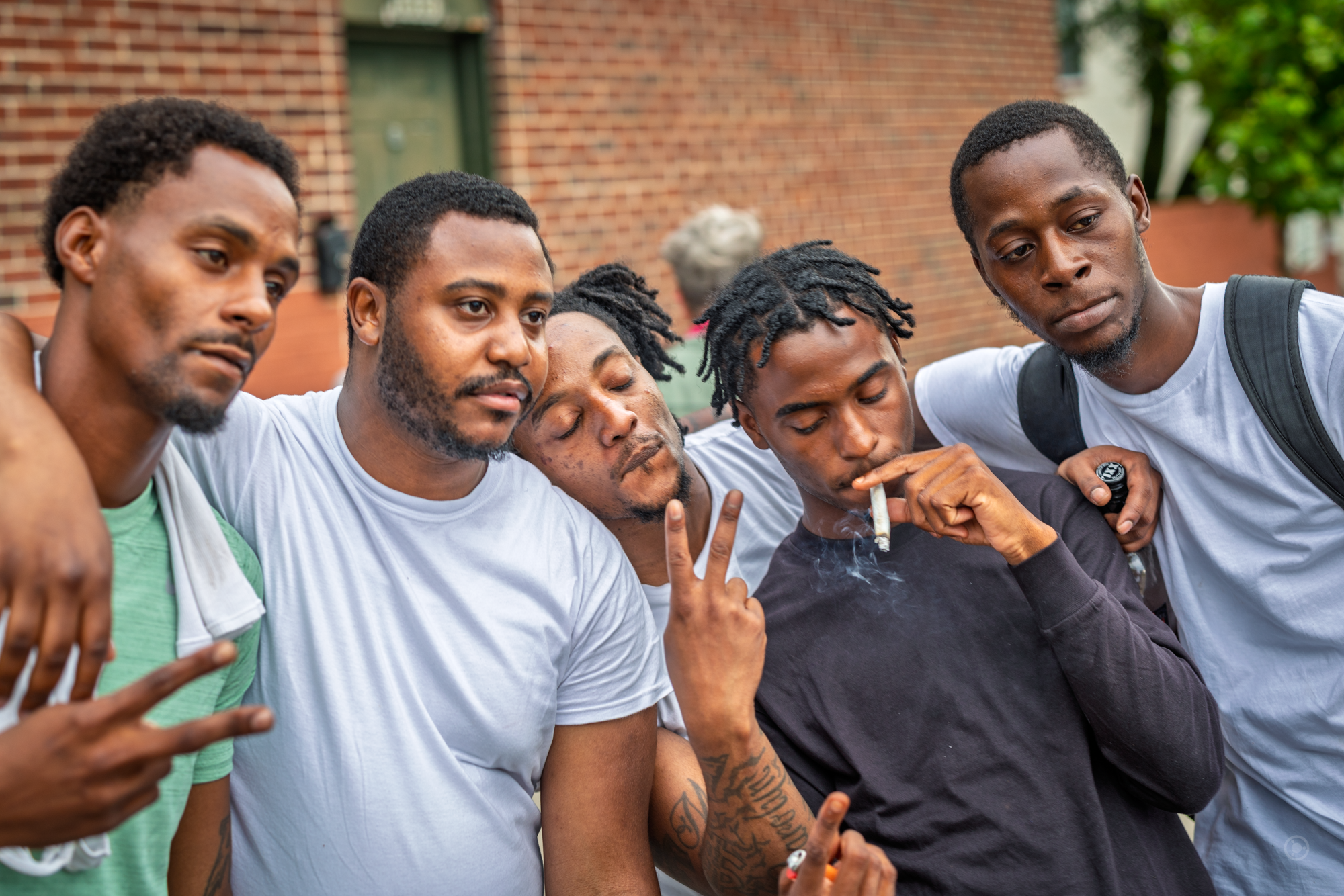
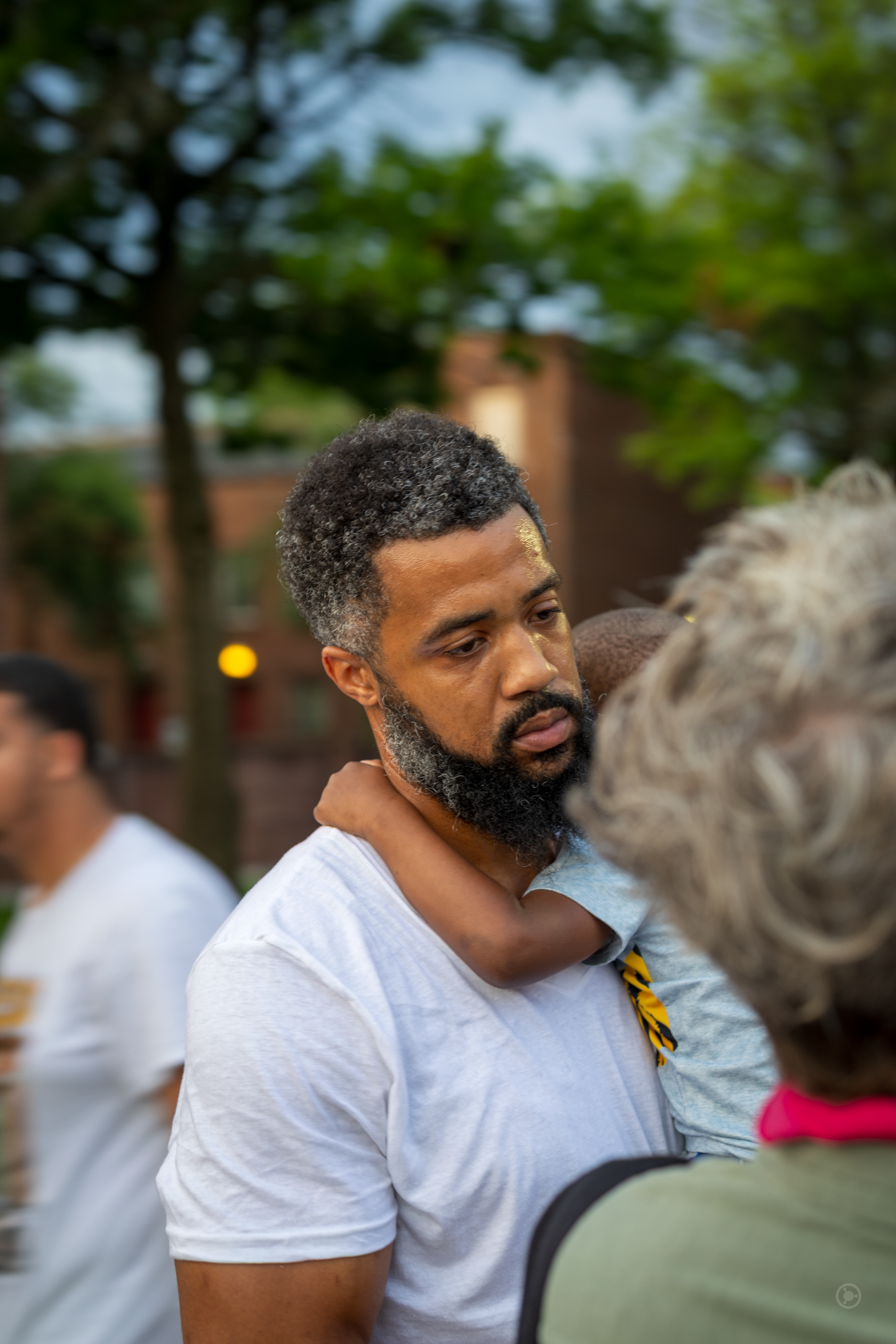
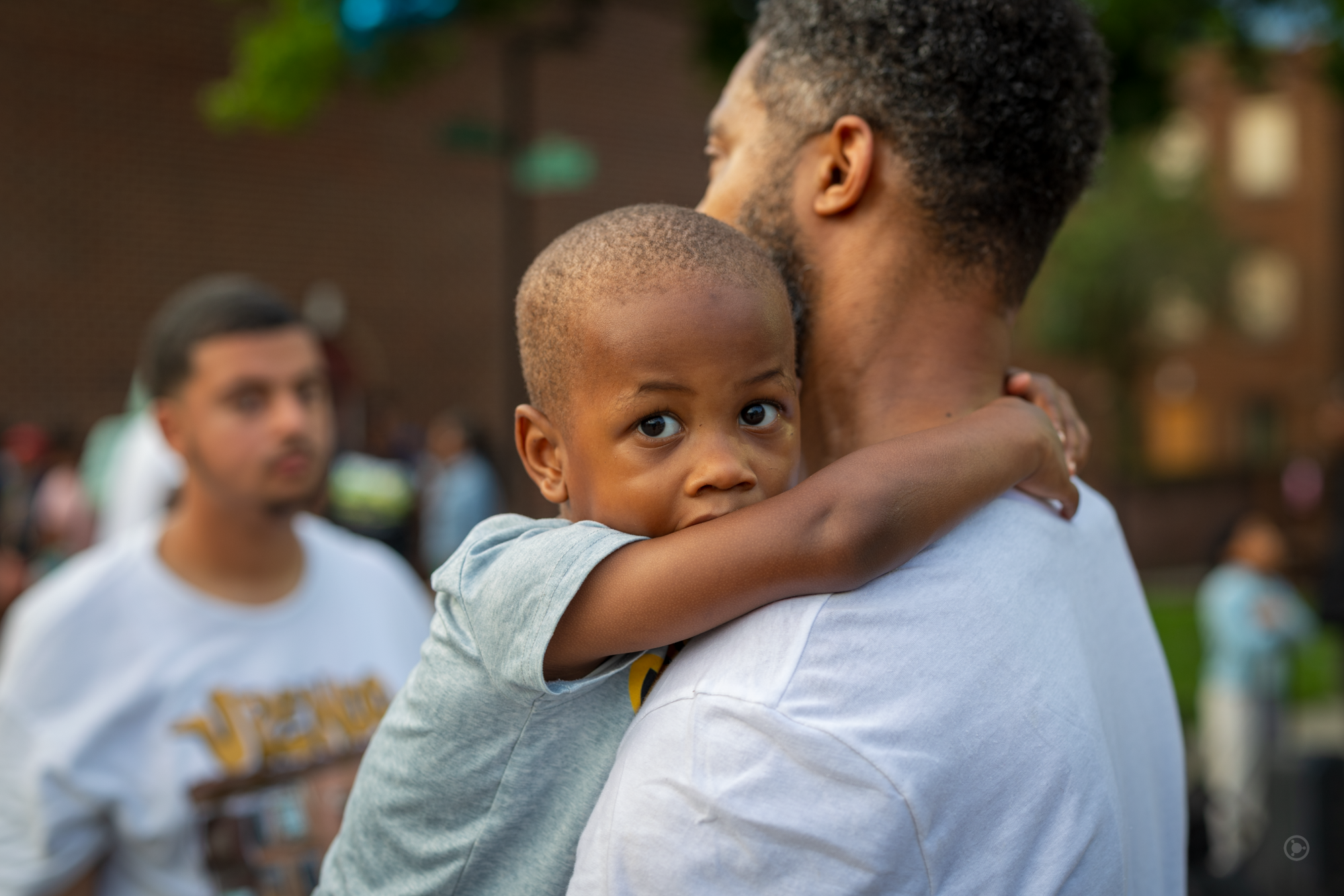
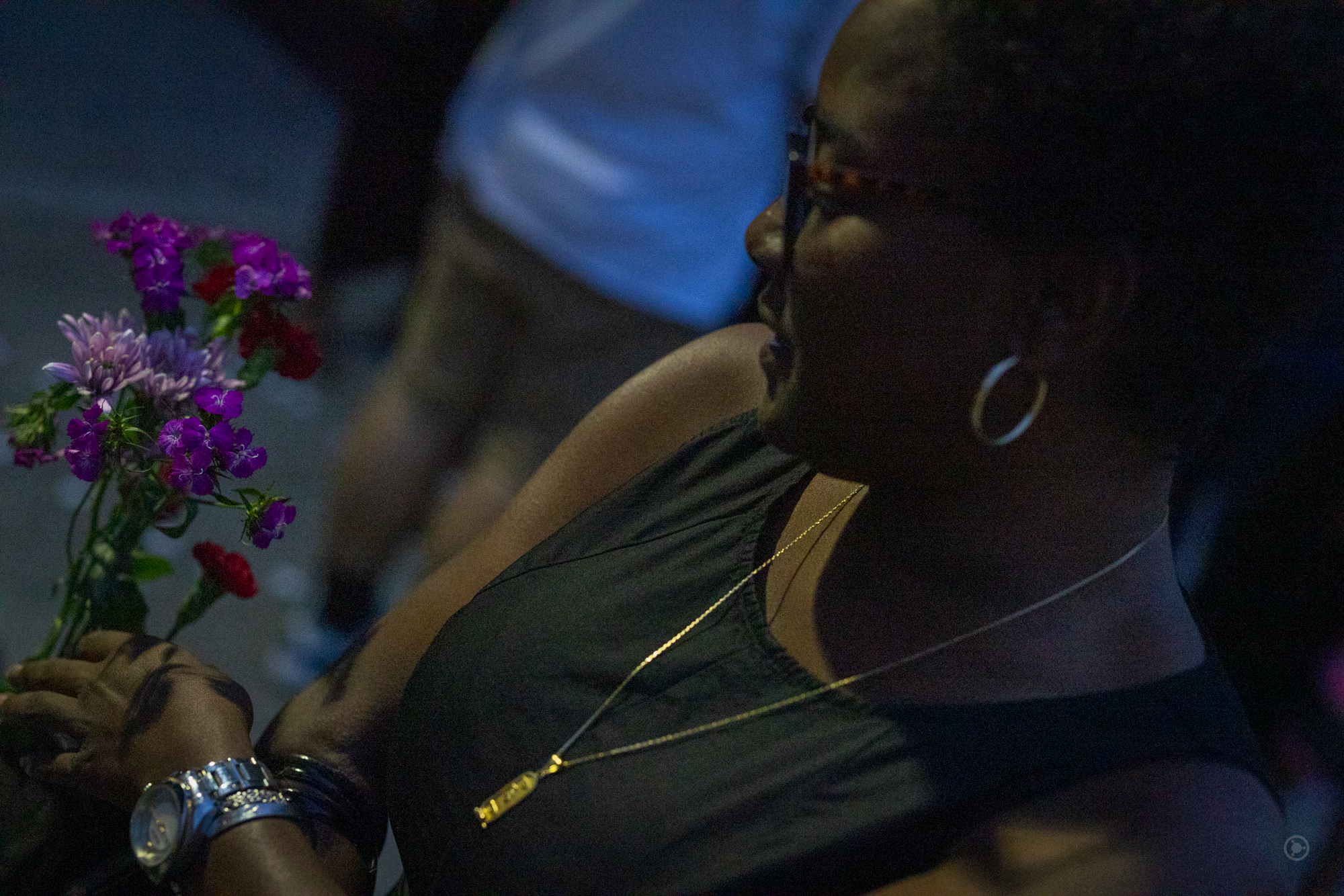
Many who were his friends and family came to celebrate him. The mixture of attempts to bring joy in remembering his life and the deep pain of losing him was thick in the air.
Bilal had been well known as an arabber in Baltimore, and had been credited as one of the people who were bringing a resurgence of the practice back to Baltimore. Many of the current arabbers are much older.

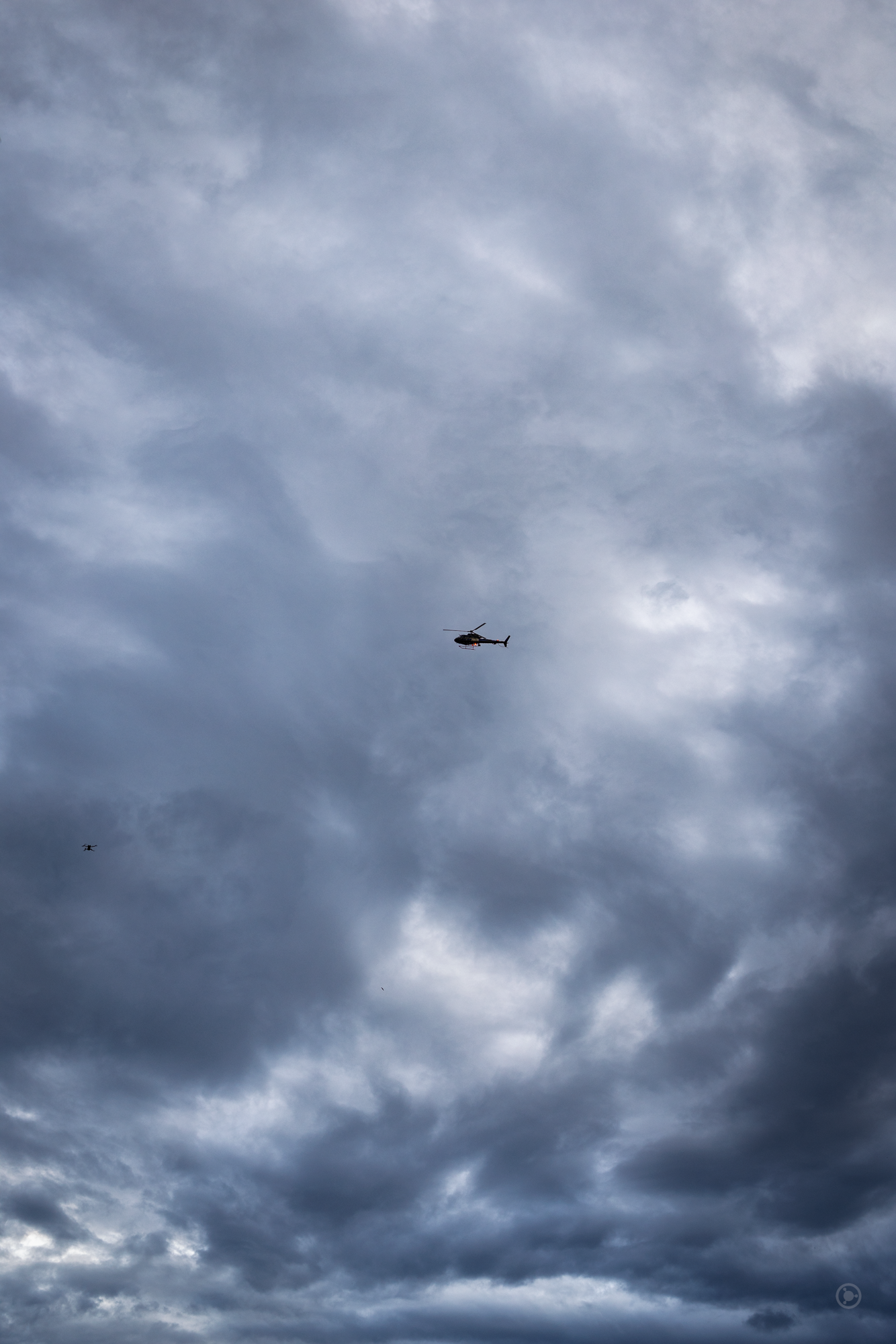
A heavy storm had delayed the vigil by several hours, which meant that a lot of the heavy police presence from earlier in the day dissipated. The police helicopter continued to circle the people lighting candles for hours though.

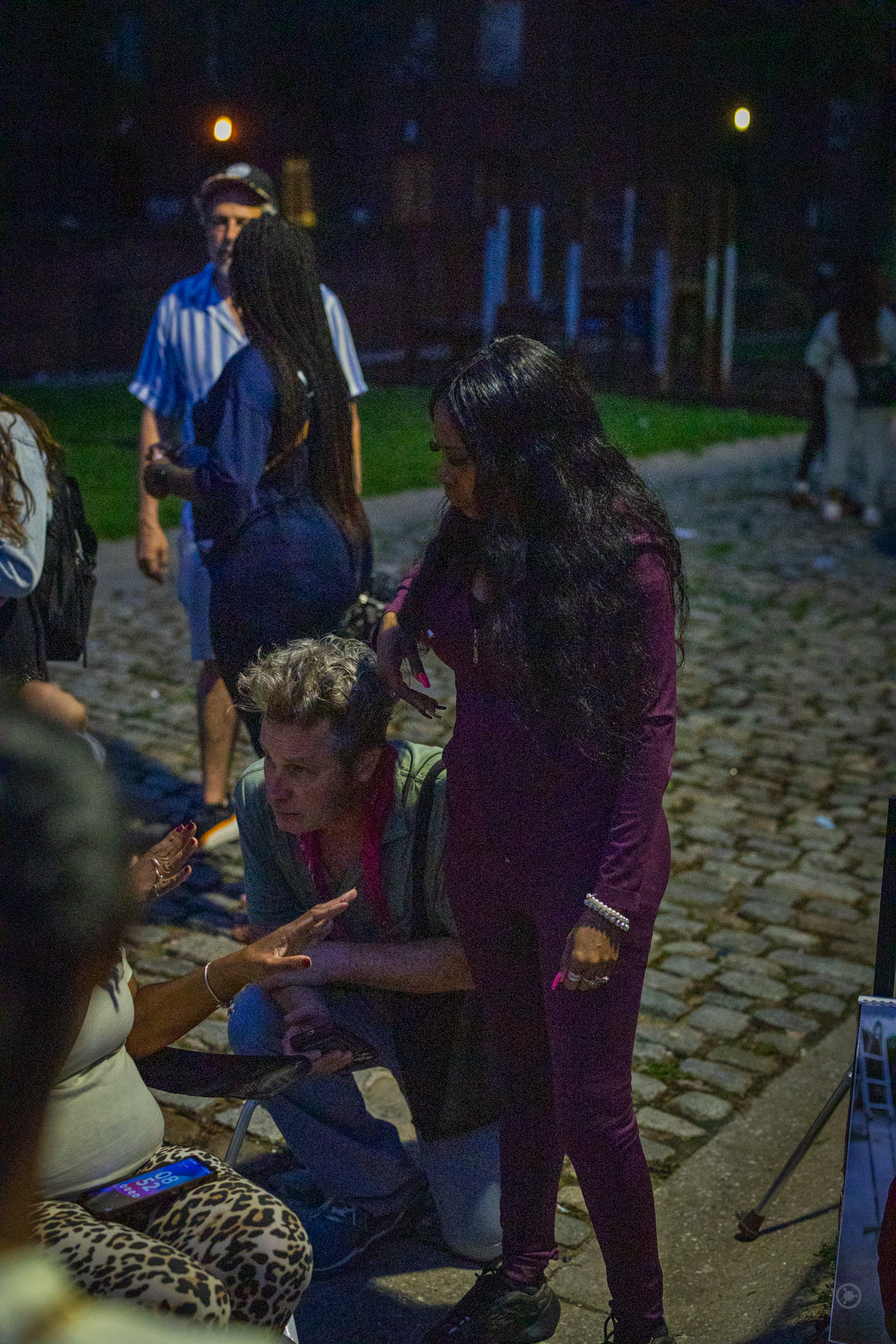
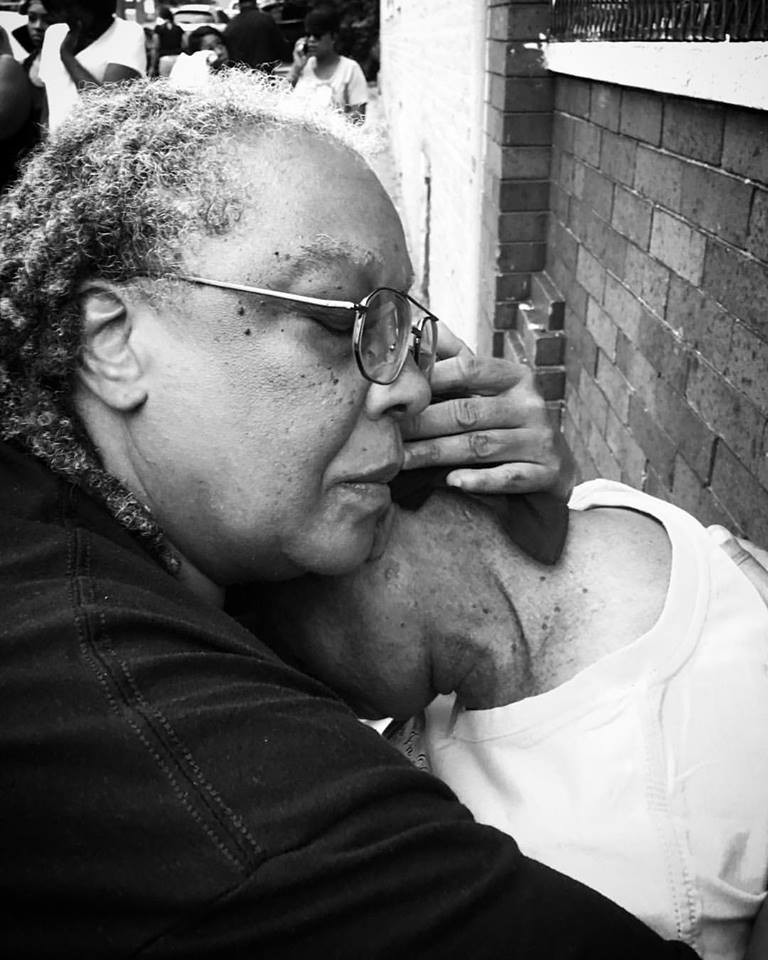
Jeff Abell from Fox News kept trying to get close to Bilal’s mother, who made it very clear she did not want to be photographed, videoed, or interviewed. She had been injured by the police trying to get to her son when he had been shot, and sat in a chair near the memorial. People kept telling Jeff that he was not welcome, and blocked his camera. He finally gave up and left.

Though the breeze was heavy and kept blowing the candles out, a steady rotation of people came back and kept relighting them each and every time.

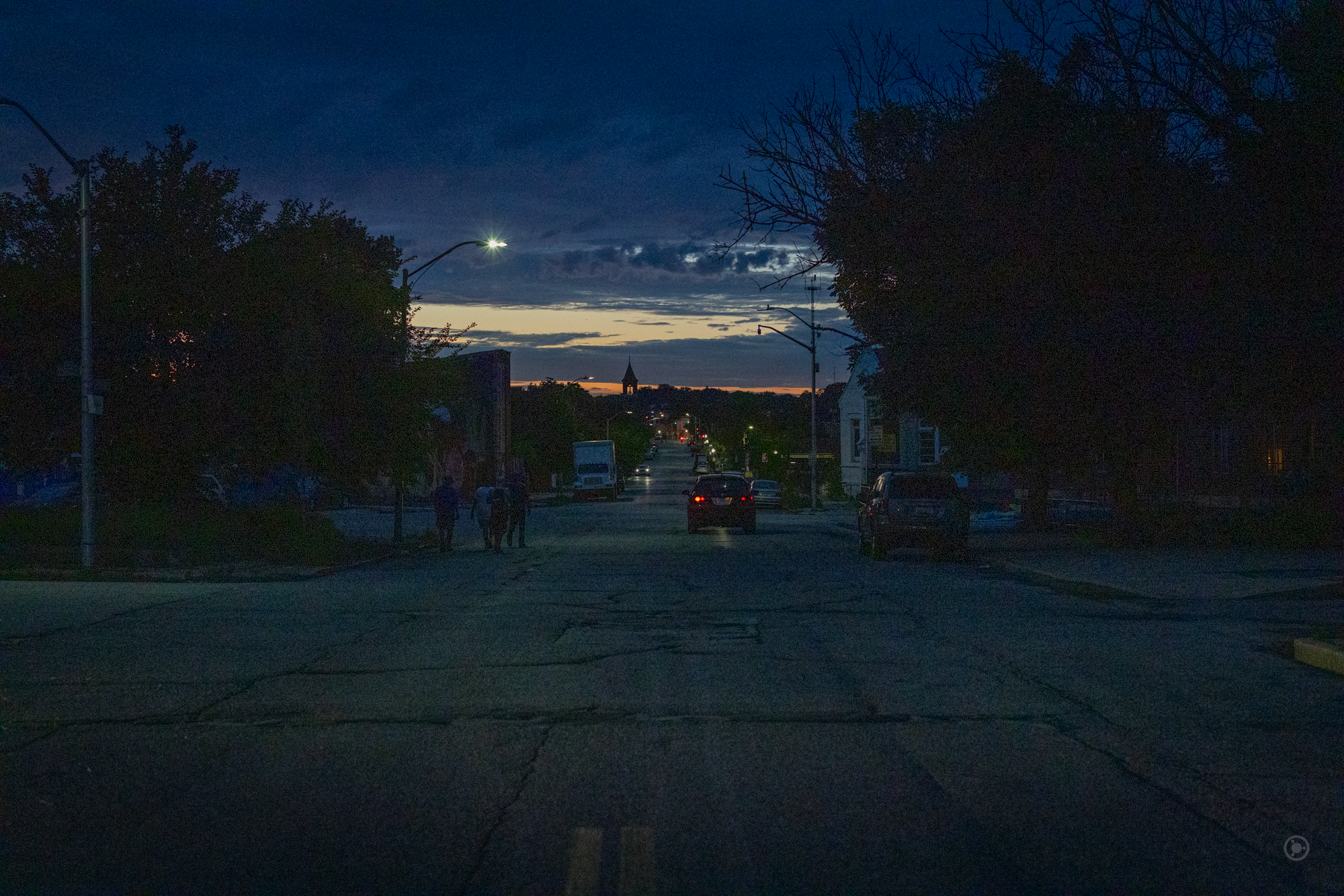
As it was setting, the sun broke through the storm clouds, casting a golden glow over the entire scene. “That’s Bilal,” his mother said, “He’s come to thank us for being here.”

Aaron Maybin, a community activist and board member of the Civilian Review Board, came with his kids to console Bilal’s mother and provide updates to Baynard Woods, the Baltimore Beat’s journalist. “They keep pushing back the release of the body camera footage,” he said.

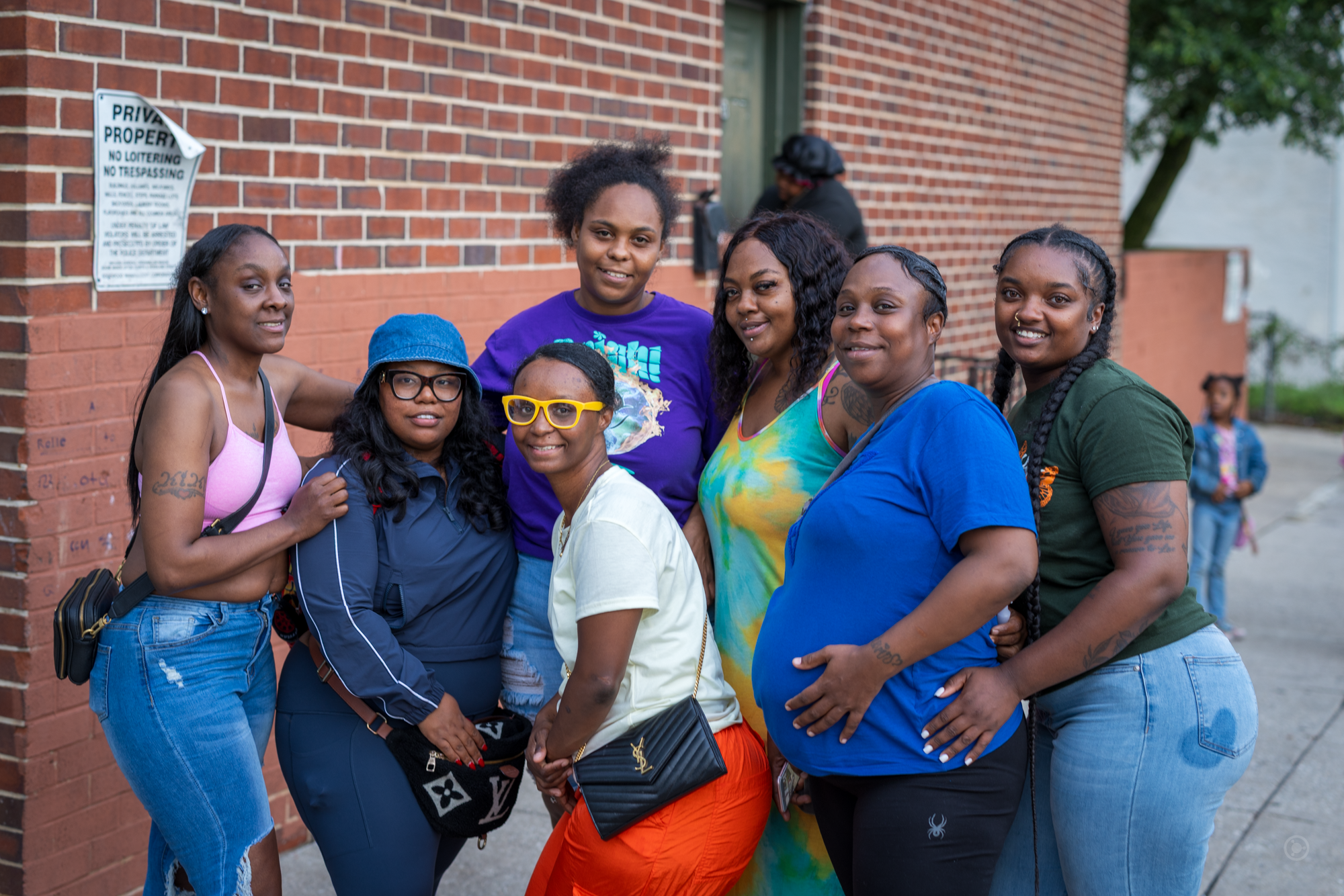
Realizing I was there for them, Bilals family began asking me to take photos of them gathered. “It’s sad that this is what brought us all together” one of them said.

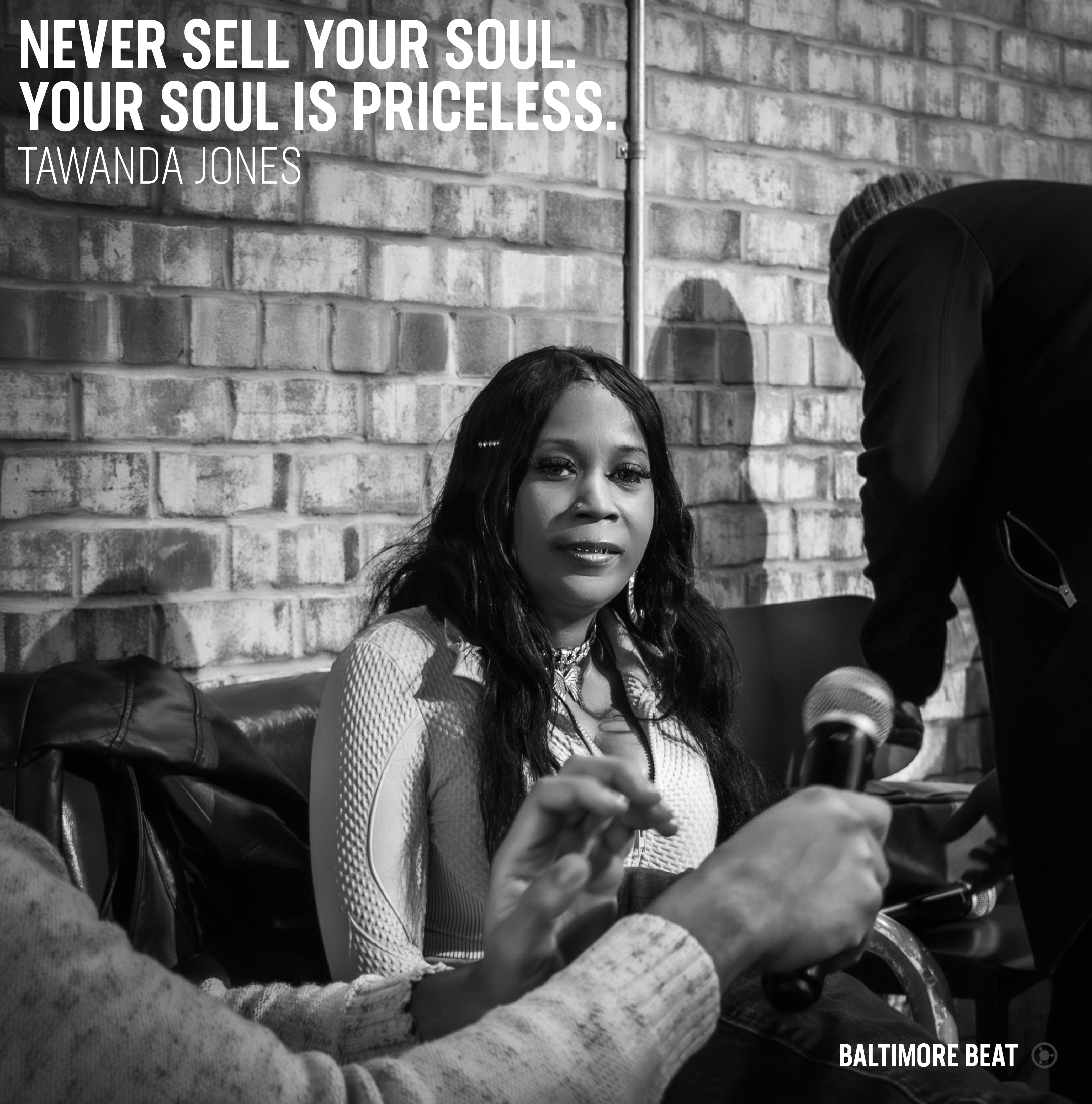
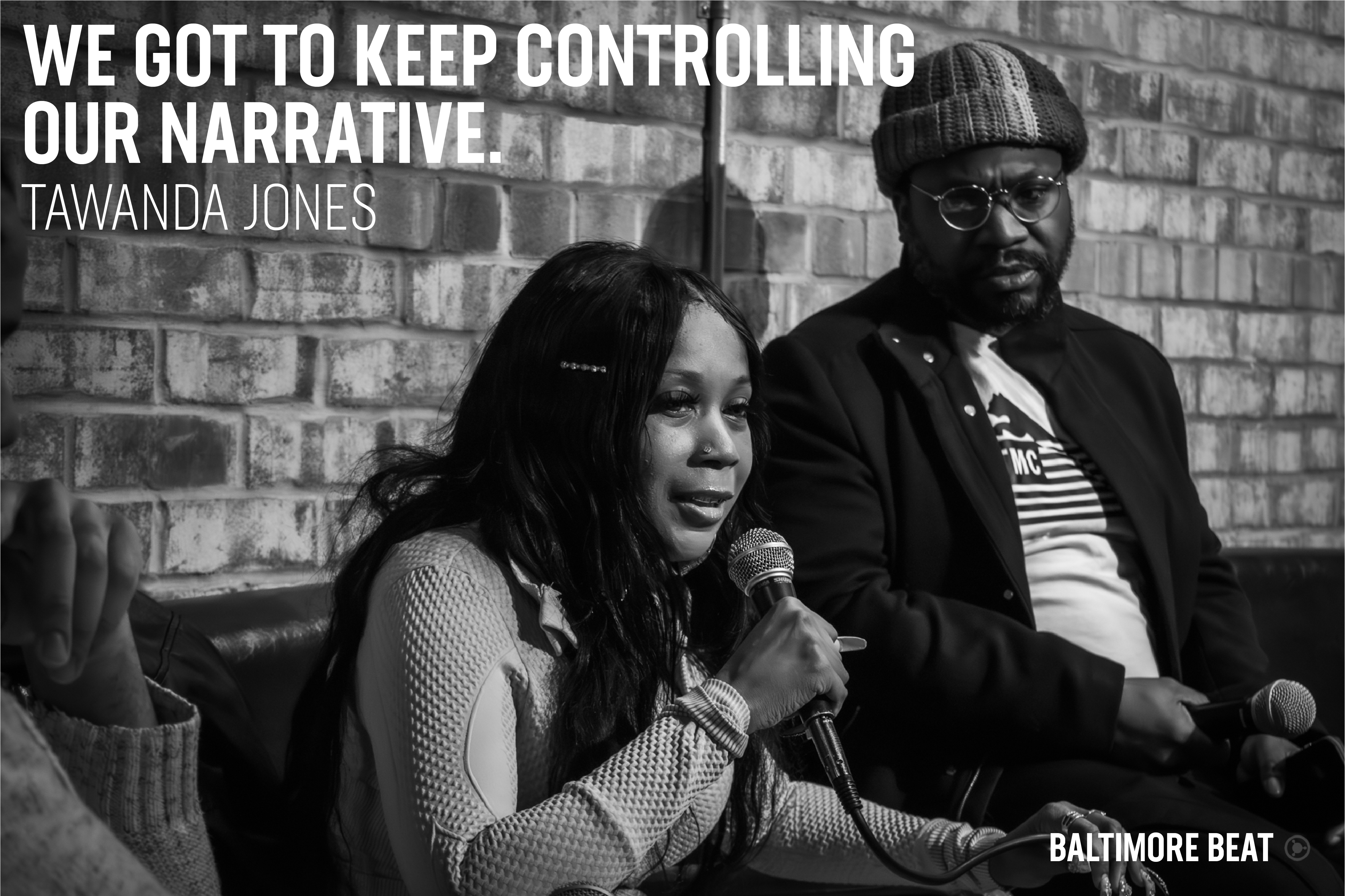
Catalina Byrd, Tawanda Jones, and Baynard Woods stayed near Bilal’s mother, letting her talk through her pain. “I hate this,” said Tawanda, “I hate that she’s now part of this club,” referring to the group of people in Baltimore who have had loved ones killed by the Baltimore Police. Tawanda’s brother, Tyrone West, was beaten to death by the police in 2013. Every Wednesday since then, Tawanda has led a protest in his honour.

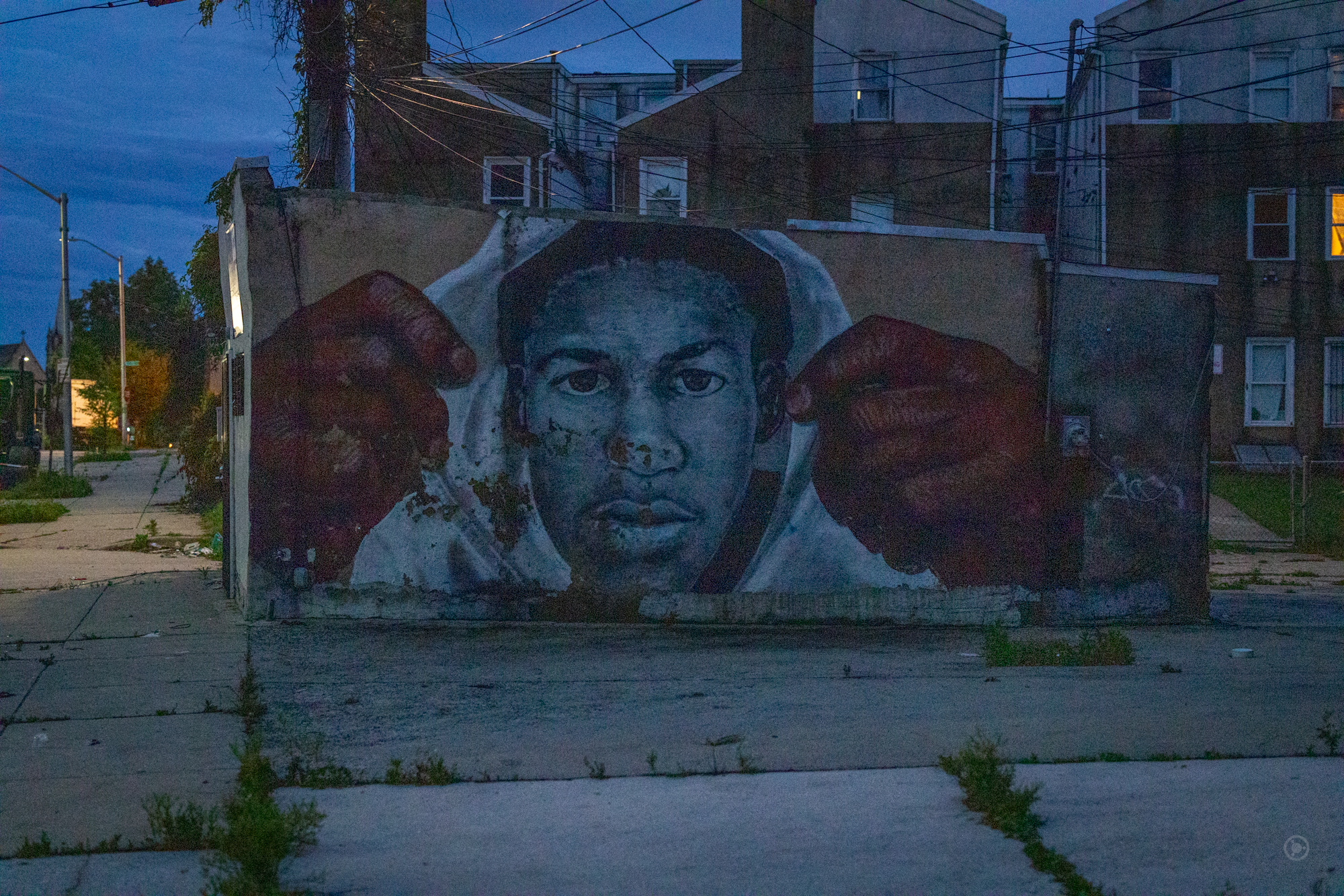
For many people attending the vigil, there were echoes everywhere. “This feels like Freddie Gray,” one young man said, lighting a candle. Freddie Gray was killed by the Baltimore Police in 2015. Directly across from the vigil, a mural of Trayvon Martin had been painted on the side of a garage. “There’s just so much pain here.”

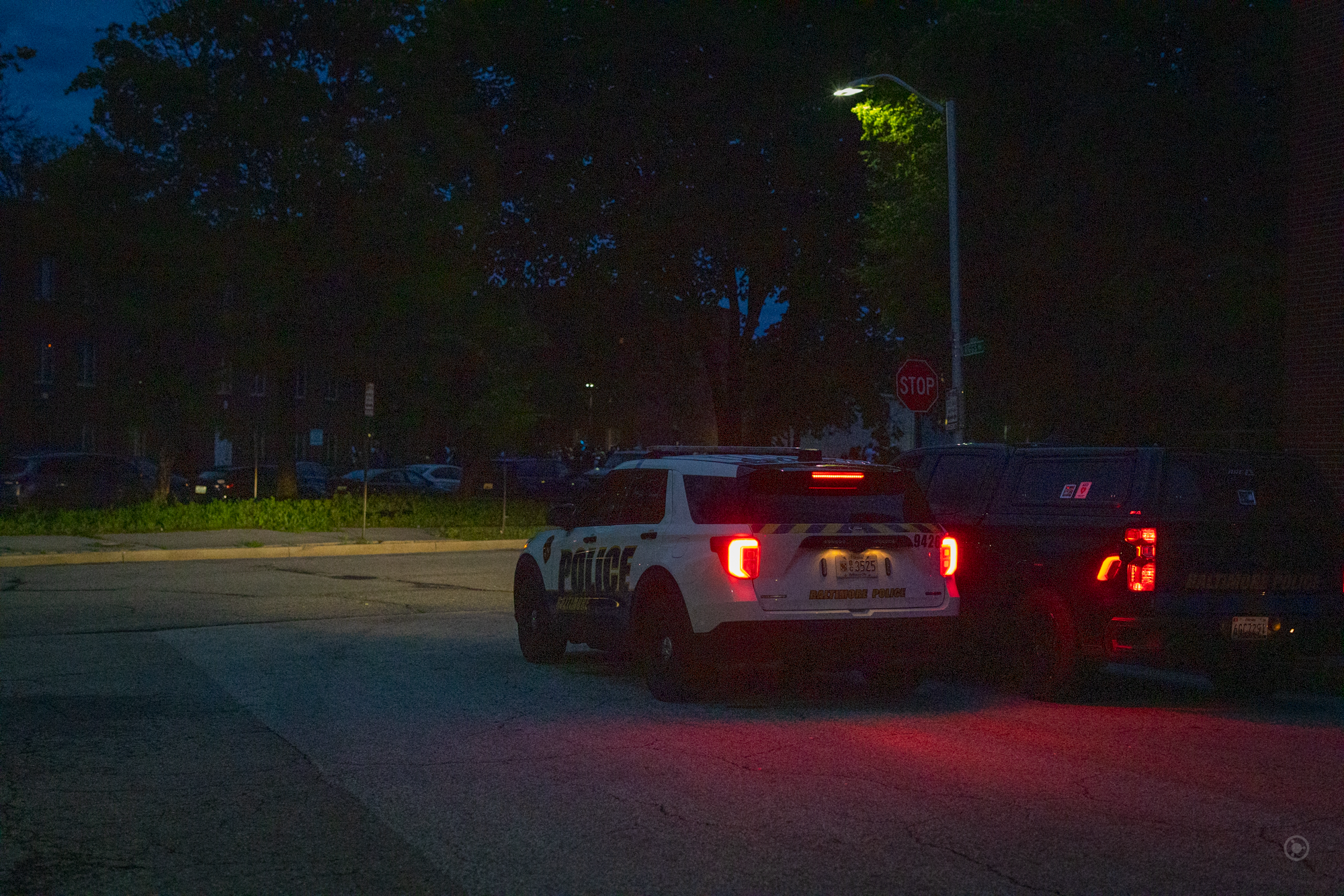
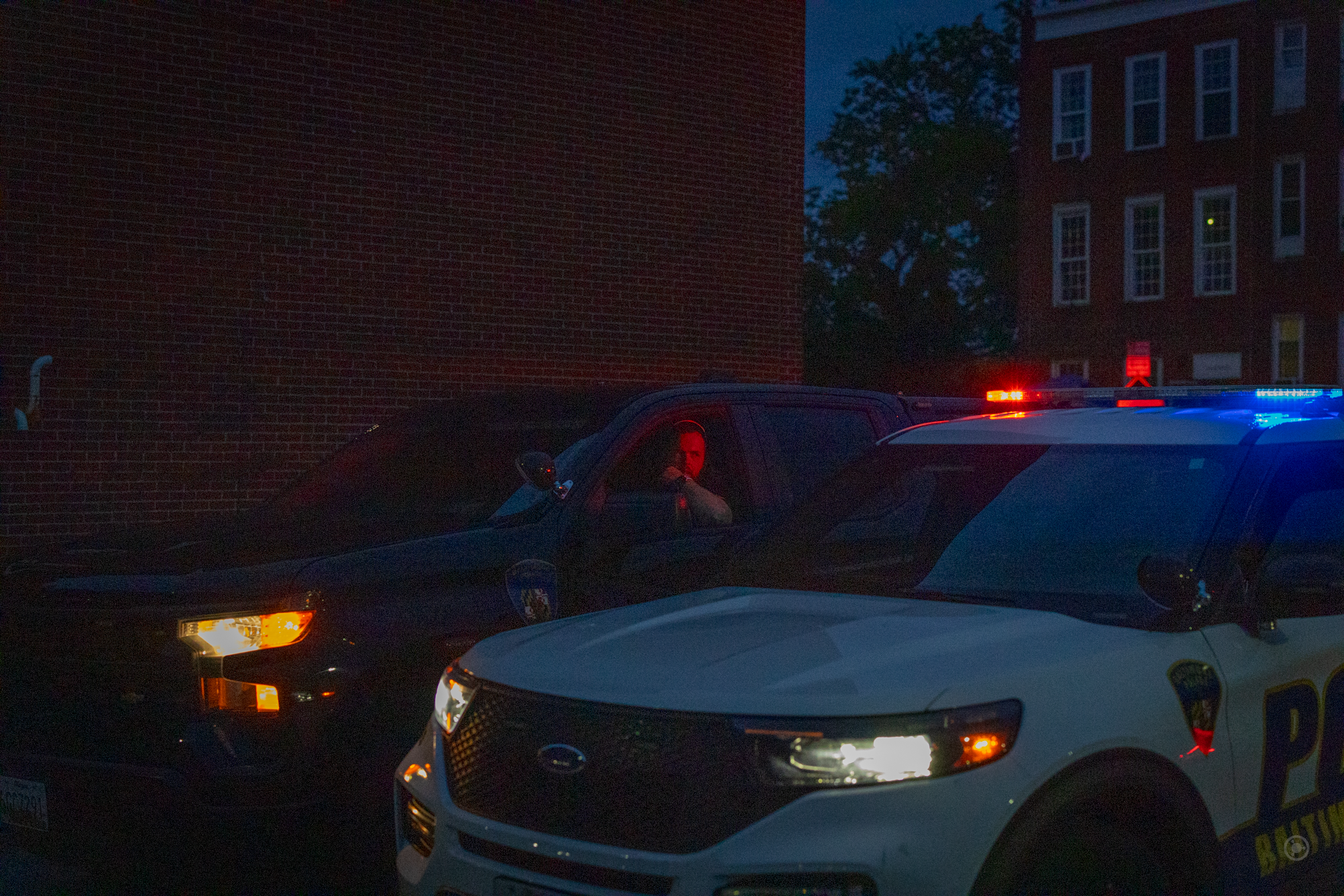
On the outskirts, police vehicles sat, lights blinking into the crowd. There was nowhere anyone could go to mourn without being able to see the police on the fringes.

As it got darker, people began to filter home, and a soft rain began to fall. Family members picked up the photos of Bilal to take with them. “Bilal was my rock. My foundation,” one woman said, holding up a photo of Bilal standing in front of a red, black, and green wall.

The sky rumbled with thunder softly as people walked home. Tonight was about peace.

Looking Back. Moving Forward — A Special West Wednesday at Red Emma’s

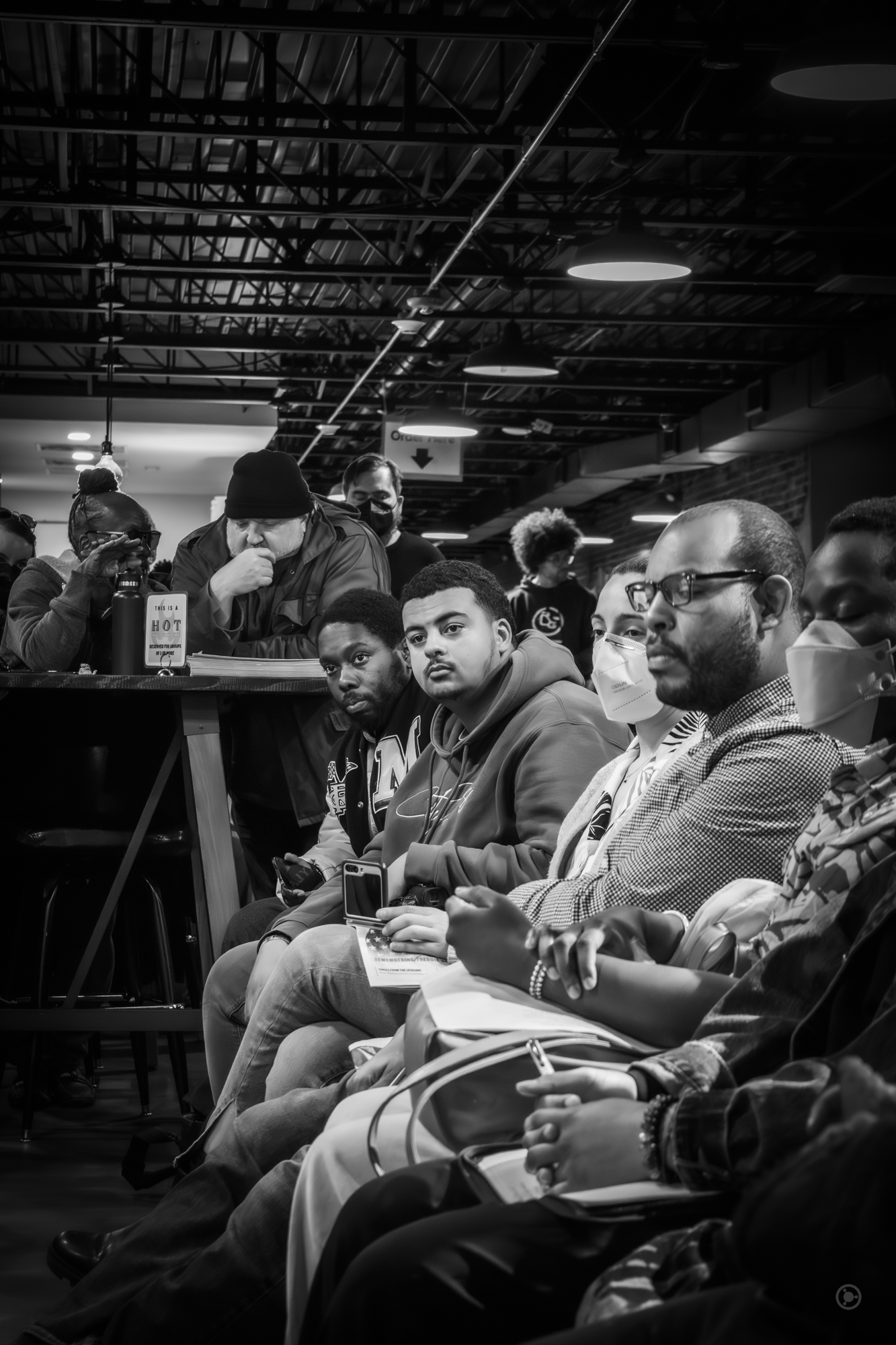
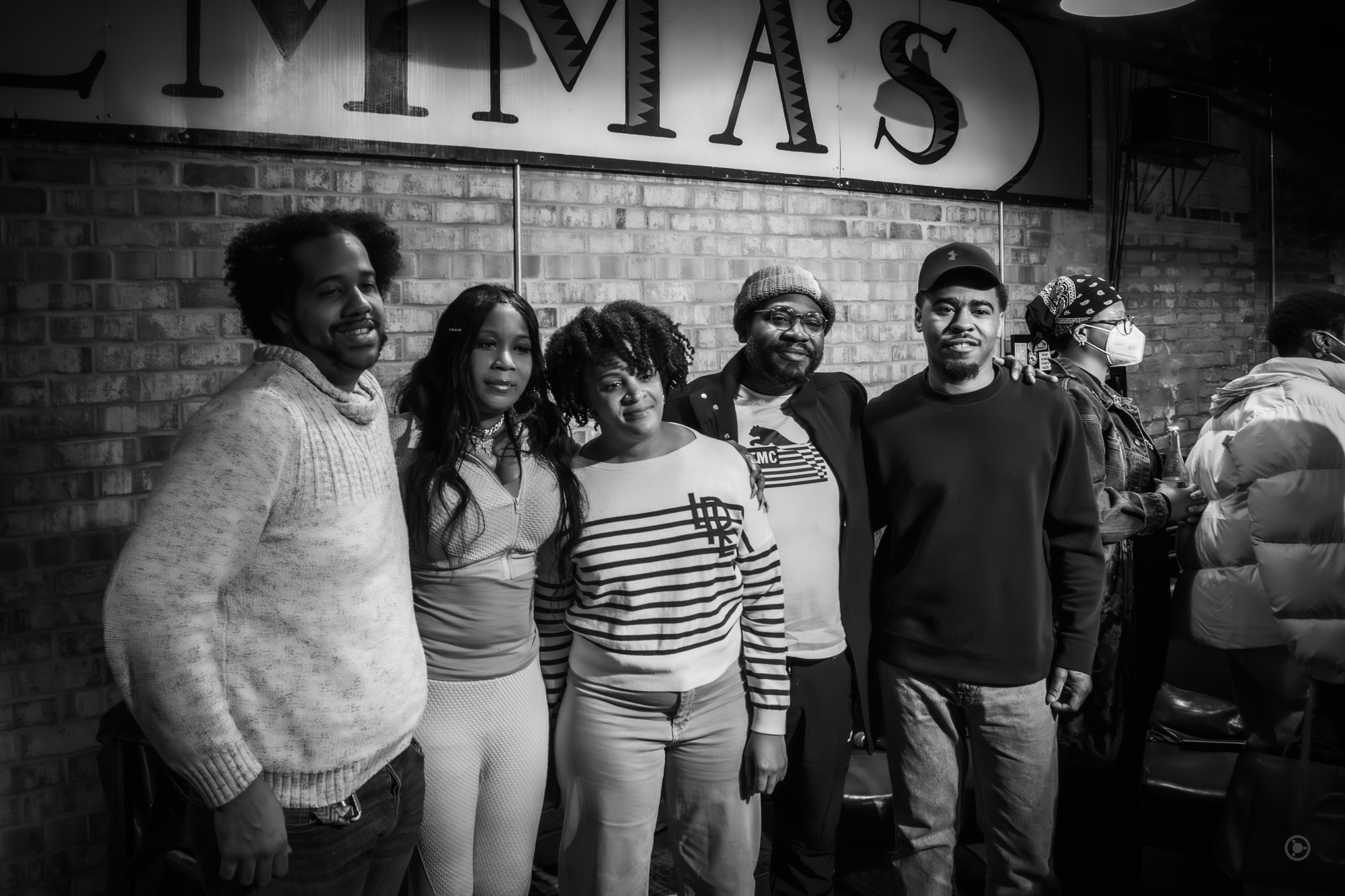
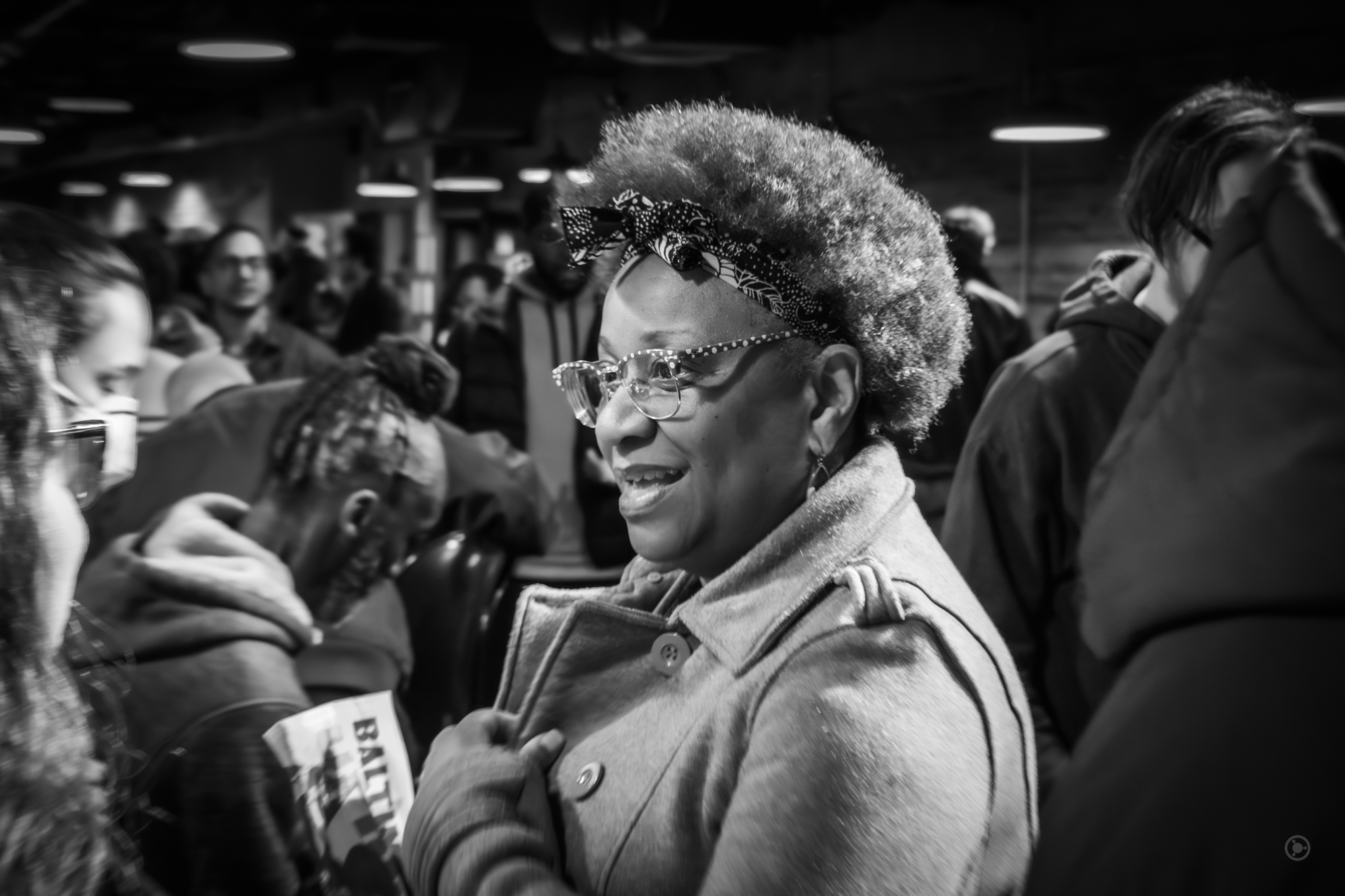
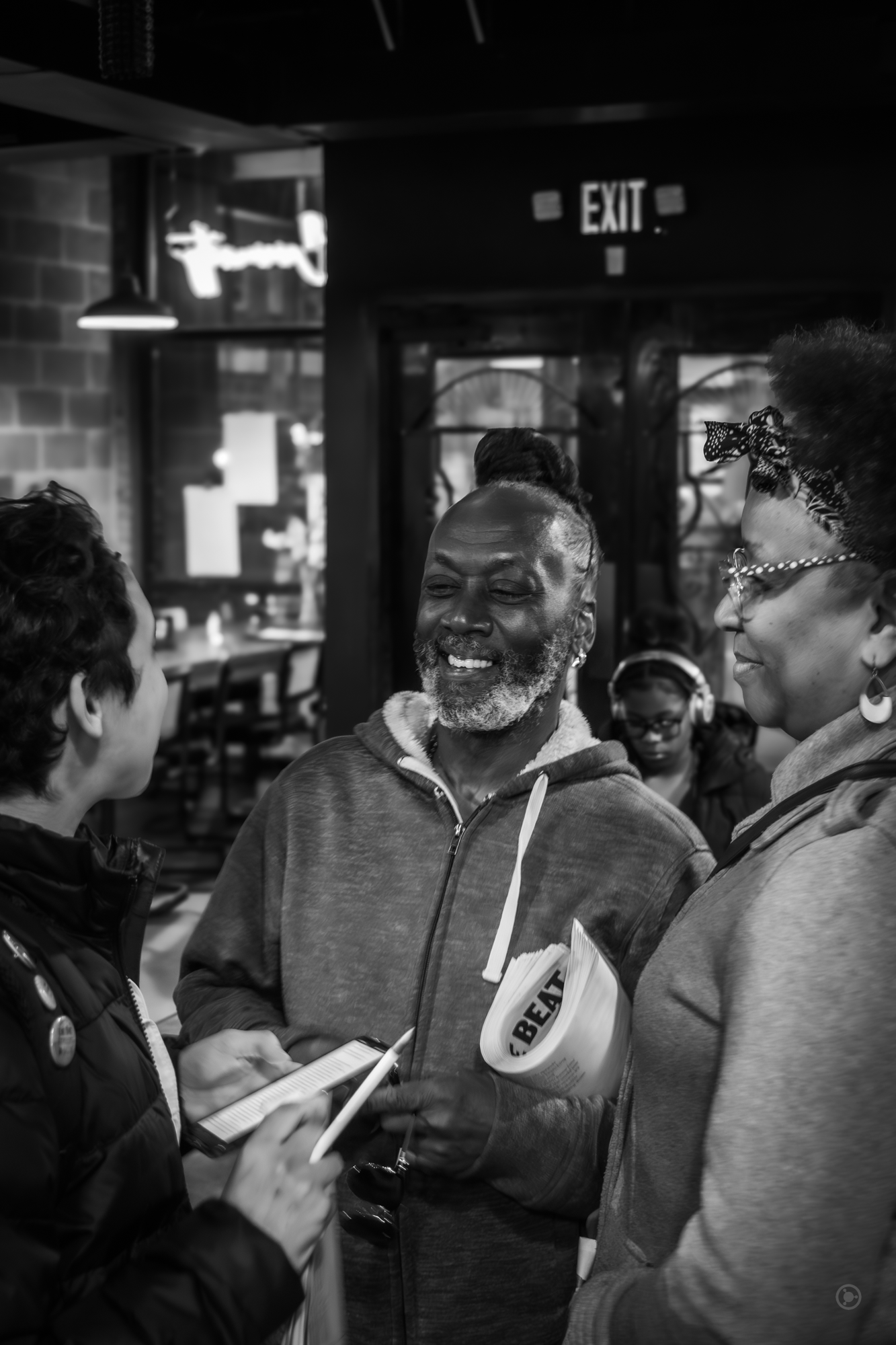
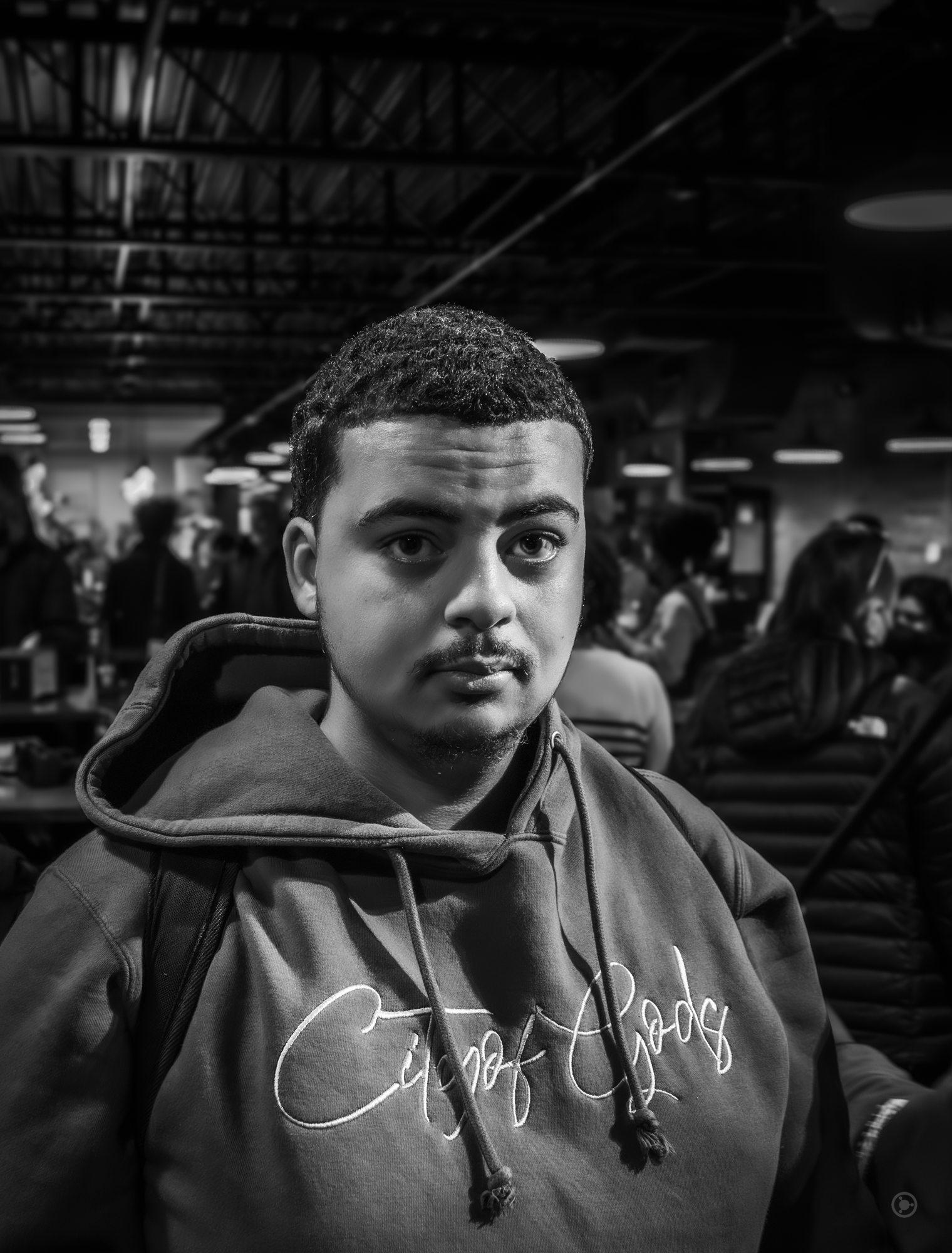
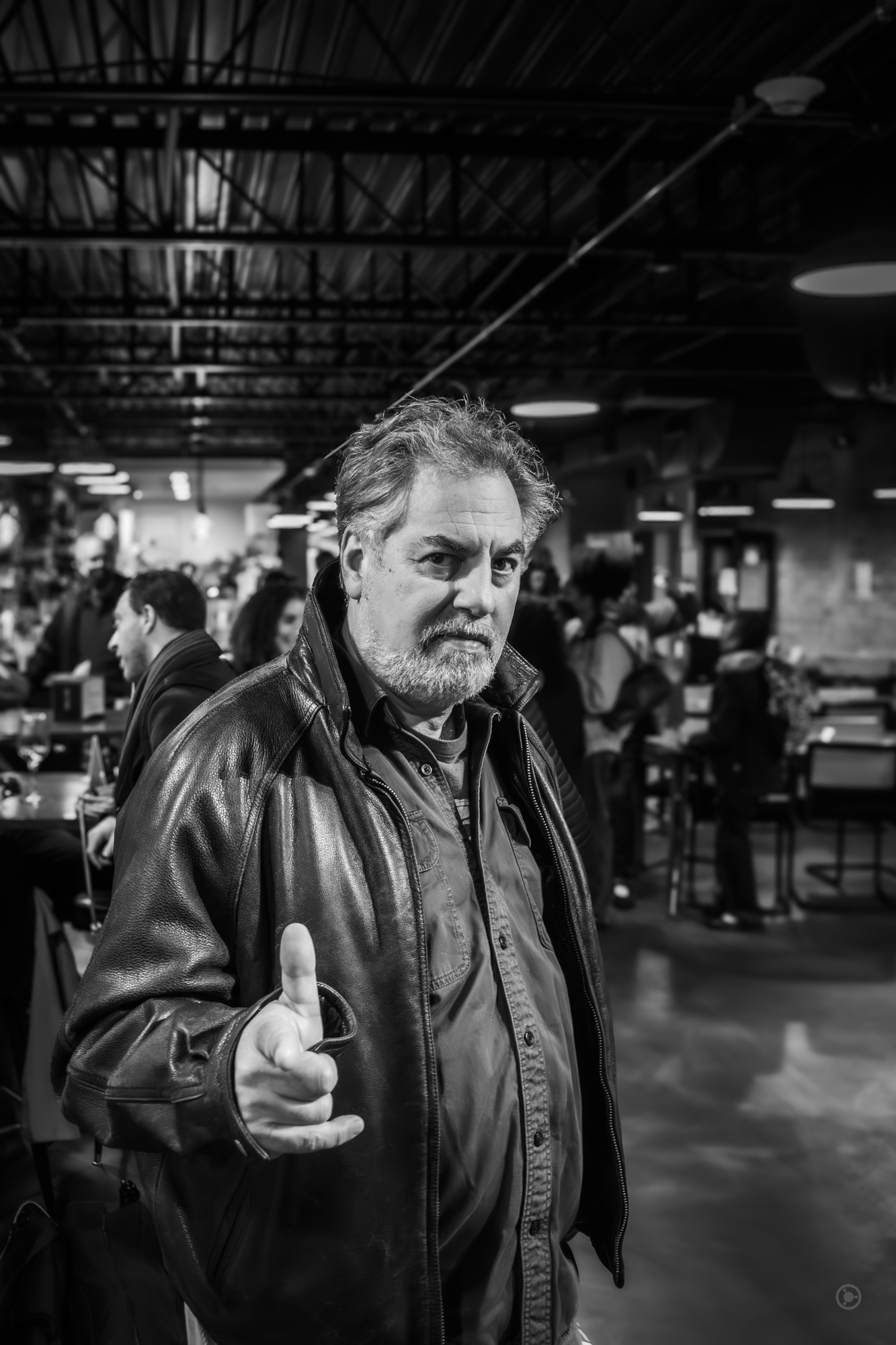
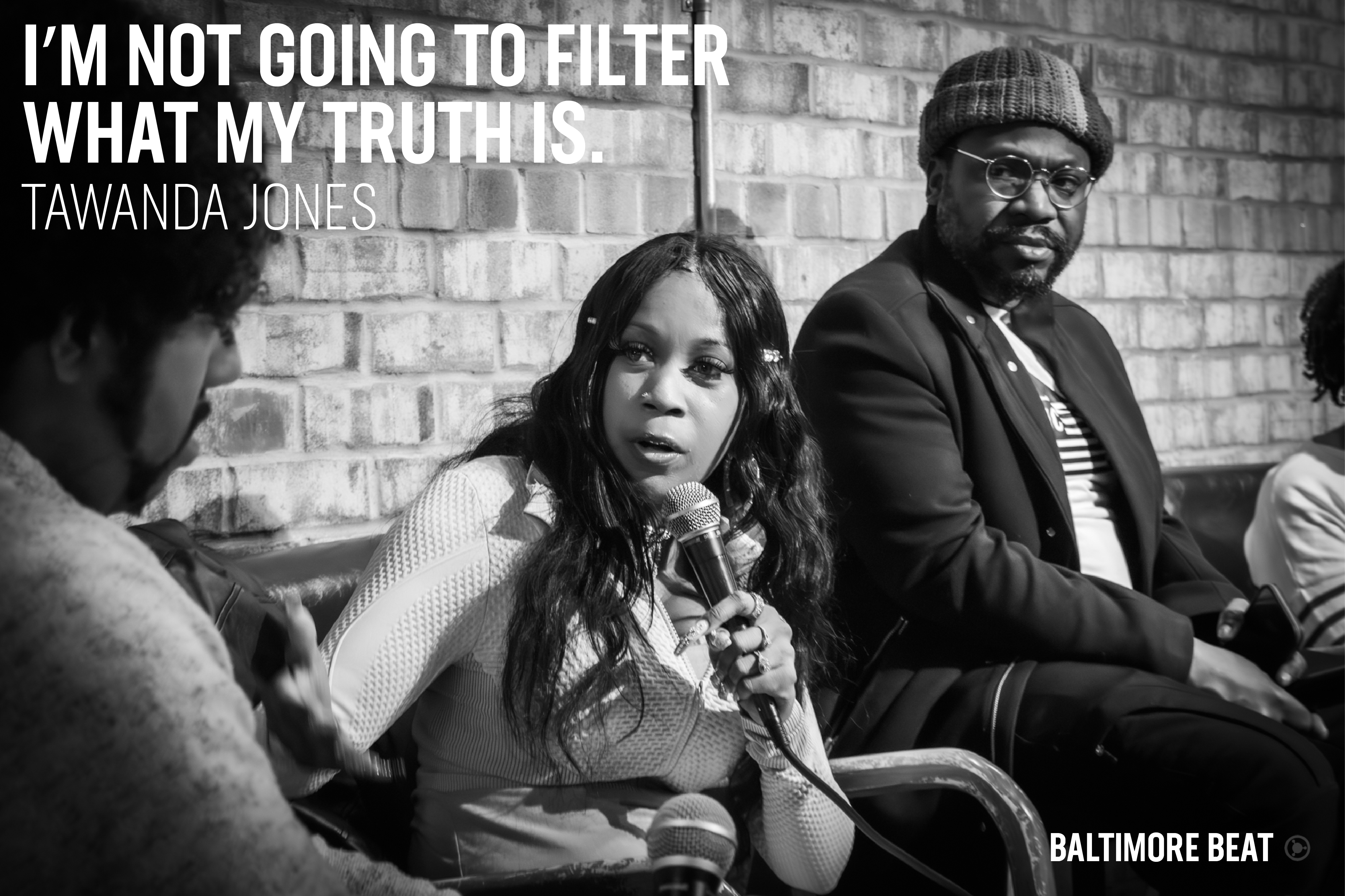
On Wednesday night, I had the honor of photographing a very special edition of West Wednesday—its 611th gathering—hosted by Baltimore Beat at Red Emma’s.

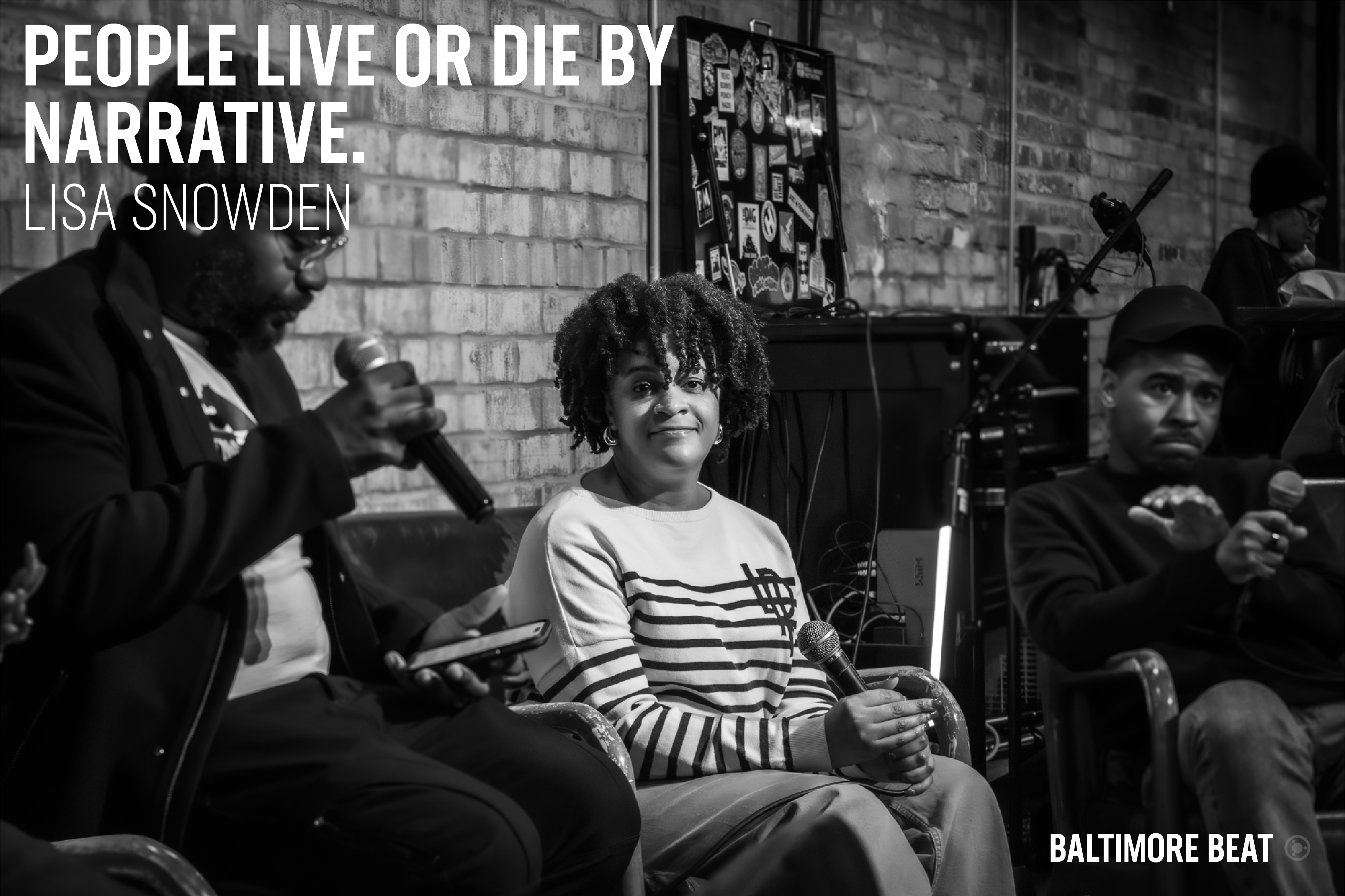
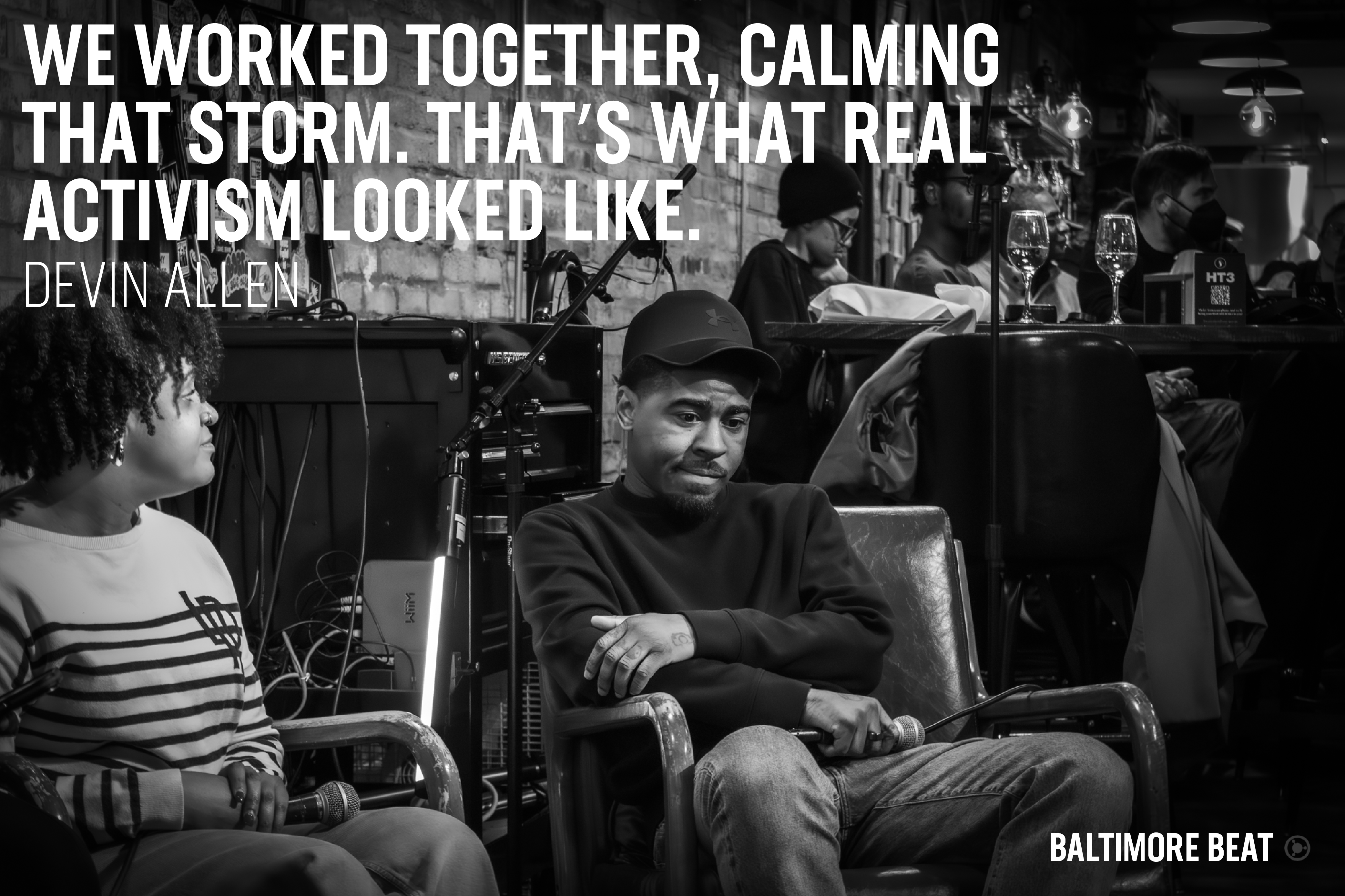
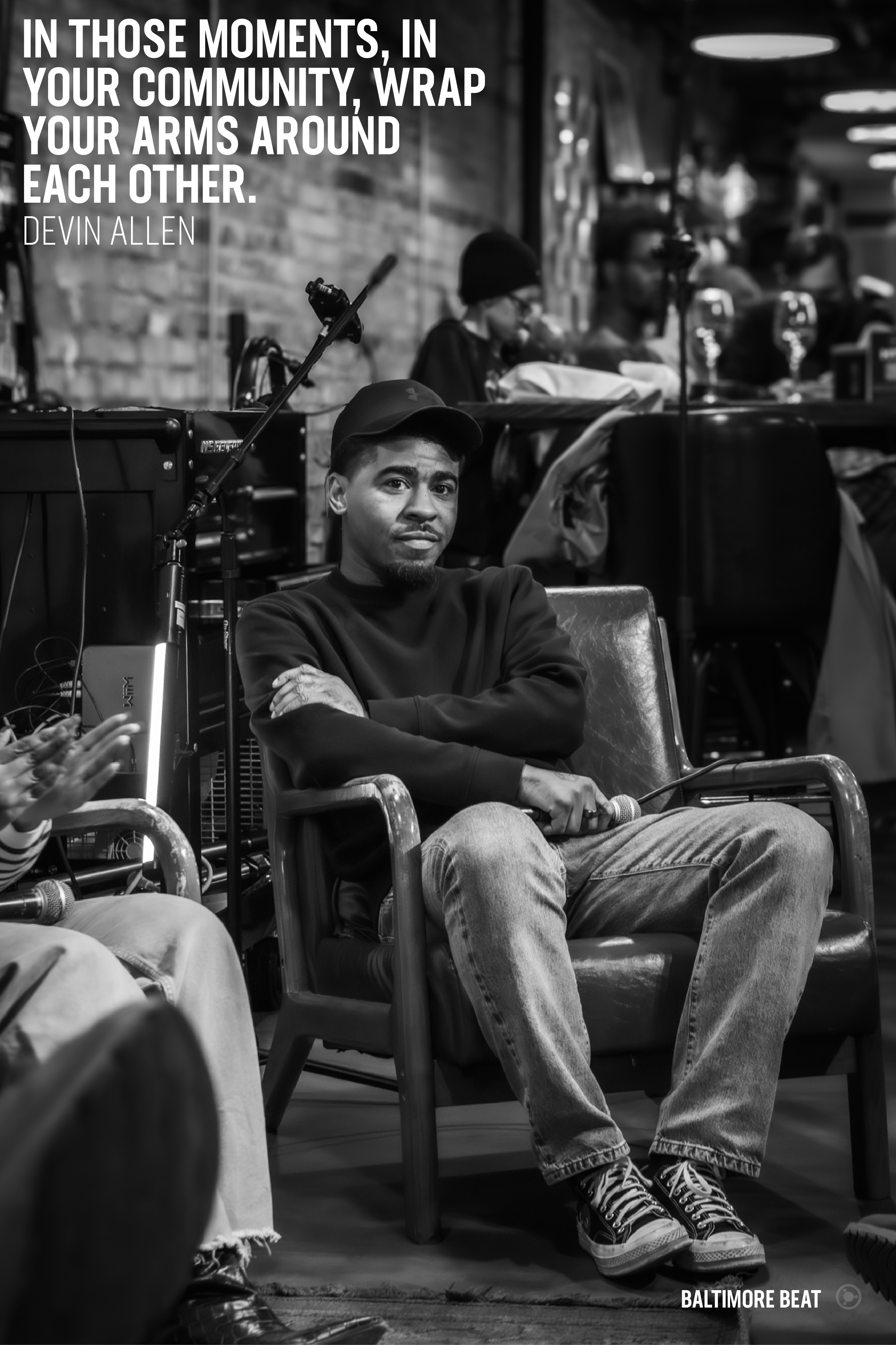
The panel was titled “Looking Back. Moving Forward”, and it marked 10 years since the death of Freddie Gray and the 2015 Uprising that followed. The evening served as both reflection and rallying cry—a chance to grieve, to remember, and to imagine what justice can still look like in our city.

The Panelists

The conversation was led by some of Baltimore’s most powerful voices:

  • Tawanda Jones – Activist, sister of Tyrone West (killed by Baltimore Police in 2013), and the driving force behind West Wednesdays
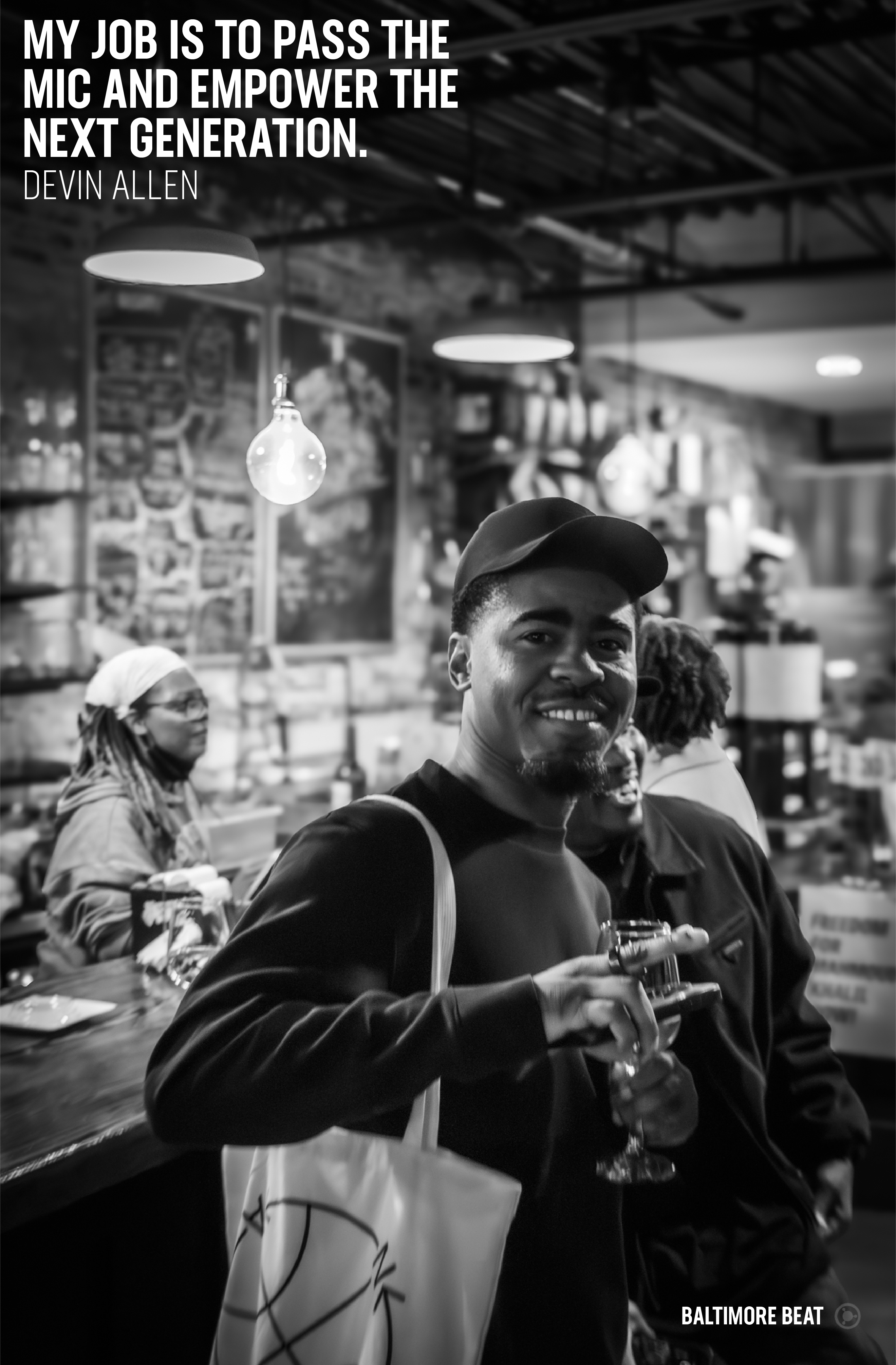
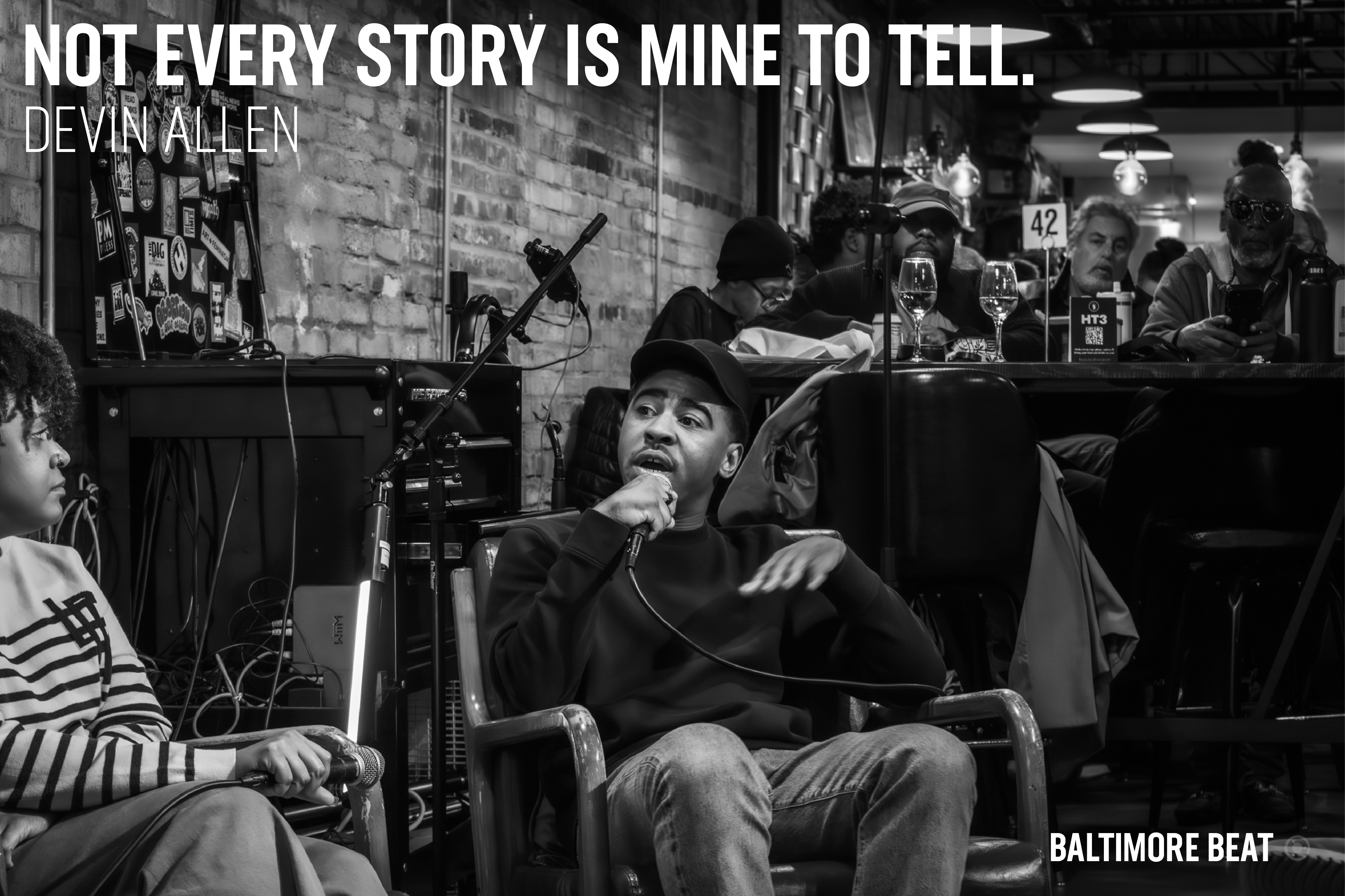
  • Devin Allen – Award-winning photographer whose images from 2015 made national headlines
  • Lisa Snowden – Editor-in-chief of Baltimore Beat
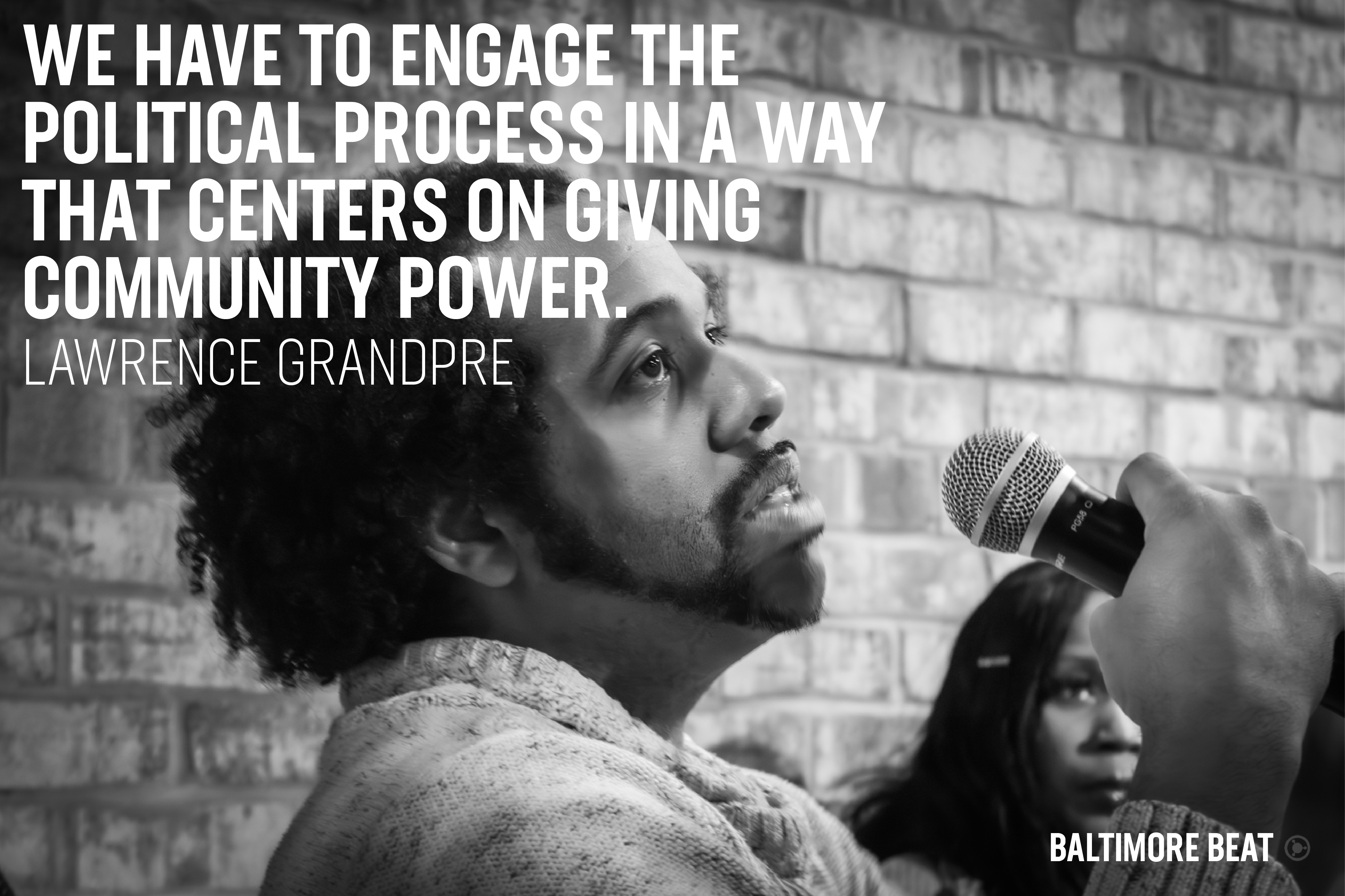
  • Lawrence Grandpre – Author and Director of Research at Leaders of a Beautiful Struggle
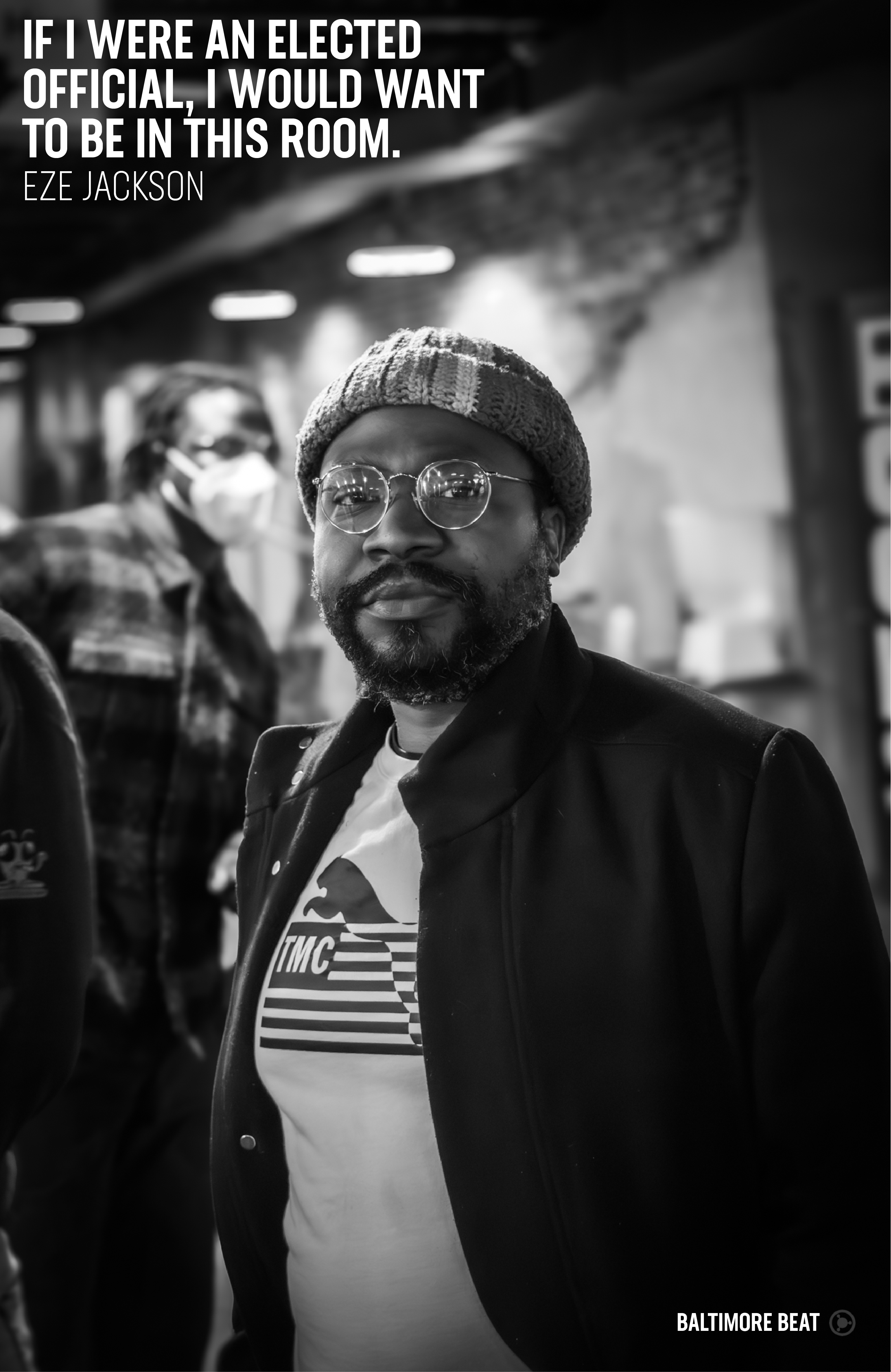
  • Eze Jackson – Musician, moderator, and one of the city’s strongest community voices

Each of them brought truth, vulnerability, and a fierce clarity to the conversation.

A Vigil for Barry Lee

On the tail end of the original Baltimore Ceasefire weekend, a man is killed in West Baltimore

During the reading of the names at the end of the Baltimore Ceasefire weekend, Barry Lee’s name was the last to be read. His mother requested we attend his vigil in West Baltimore.

We later discovered he had been out to Cease Fire events.

We gather, slowly, a combination of family and Baltimore Ceasefire members to remember Barry Lee.

More family arrive for the vigil, spelling out Barry Lee’s name in candles.

Continue reading “A Vigil for Barry Lee”

Alexandria, Moodboards, and ATMs.

Took the day to drive down to Alexandria, to work on the Bloomery branding project. Erik asked me to help out with building them a new look for a product line from a distillery out in West Virginia.

Of course, this was the day that it had to pour icy rain, so the roads were just clogged. I managed to skirt a lot of it with Waze, but I was still about a half an hour late. Everyone was happy to see me, though I felt out of touch. Work was buzzing, but I am completely out of it save for this solitary project. I’m glad Zerflin has been doing well, because otherwise we’d really be struggling. The work that we’ve had come in from A2L, Bainbridge, and The History Factory have kept us busy while Brightline works on landing more projects.

I settled in at Kristen’s old desk, she was a developer that moved on to another job.
The work was fairly simple; just reviewing Moodboards with Kuntz (Moodboards are essentially collages of images that we use for inspiration for the branding and logo), and then editing them. My laptop was mind-numbingly slow, though. The files were small, the operations quick, but

Image representing Dropbox as depicted in Crun...
Dropbox is still pretty awesome, though. If you’re not using it, you ought to be… Image via CrunchBase

Dropbox chose that moment to sync with everything in the world, and so my work ground to a halt. What was only supposed to be a couple hours ended up being the entire day; I didn’t finish up the last round of edits until around 5pm.

Erik was positive, and even asked me about how the family was doing and inquired if I was receiving checks ok, which was really nice. Not all of our clients pay us in a very timely fashion, which is really difficult, but Erik has really been helping.

While I’d been waiting for the computer to kick in, I had been doing art venue research in Alexandria. I’ve already identified at least 25 different coffeehouses and galleries in Baltimore that I might be able to show art at. I hadn’t eaten all day, so I decided to swing by Firehook Bakery to get a chai and a croissant, and see if I could talk to the owner. I met with a Tunisian barista who was very friendly, and told me to call in the morning, because he and the manager would be working together then. He was really nice. I jabbered away with him in French; happy to be able to exercise my rusty language skills.

The ride home was even worse than the ride down, compounding my frustration. I had hoped to be in and our quickly so that I could get more Zerflin work done. Several of the Bainbridge sites were so close to being done… But it only got worse. I had a cheque to deposit into our Zerflin account, but even after trying 6 ATMs and consulting with a friendly Spanish furniture worker who was able to deposit his cheque, I wasn’t able to. Finally, with the help of the furniture worker I found a Capital One branch that was still open, and I stormed in two minutes before they locked their doors.

My Nemesis, the ATM.

USAA
Yup. Definitely not Capitol One. (Photo credit: Wikipedia)

The man behind the counter patiently explained to me that no, I was not able to deposit money into my Capital One account with my USAA card… I had switched them in my wallet and had been using the wrong card in vain the entire time… Mortified as I was, the teller was very kind and helped me get my check deposit.

Having burned through no less than 8 podcasts on the trip, I picked up Chinese food at the Double Dragon and made it home.

Tamika was exhausted. She’d been working on a new coding project that she had taken on, and was worn out. We chilled for a bit and watched Key & Peele before diving back into work.  I managed to get everything done I needed to, but I’m exhausted. And guess what time it is… 2AM…

How I furnished my basement

Click on the image, then give it a minute to load. It’s worth it.

Building-the-Office

I set my camera (a Canon 20D) to the Delay setting (you know, the one you use when you want to do a family photo with you in it), and placed it on a tripod.

Then, every time I walked by it, I hit the shutter.

I saved all the images, opened them as frames Adobe ImageReady, and exported it as a gif.

Pretty cool, huh?