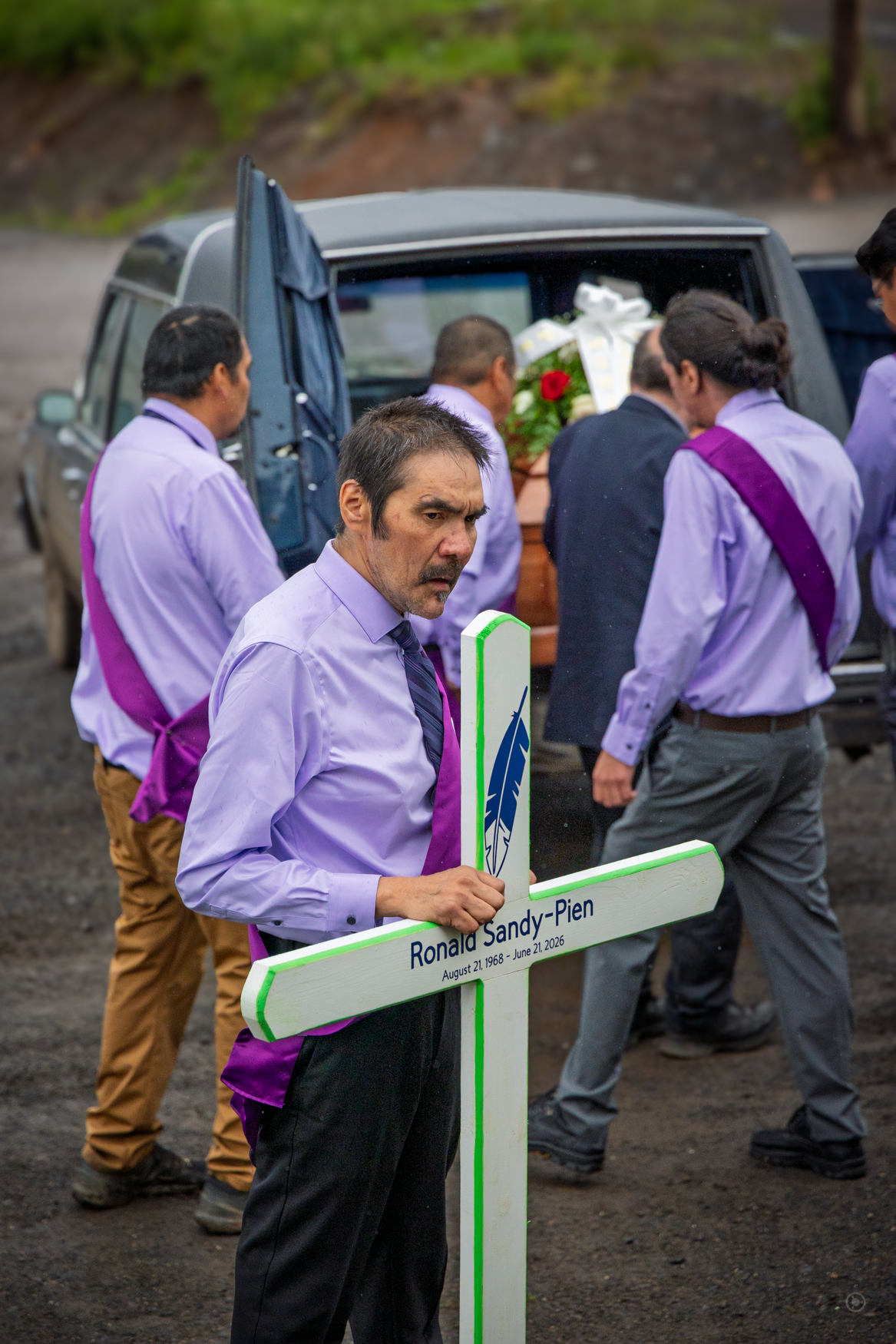
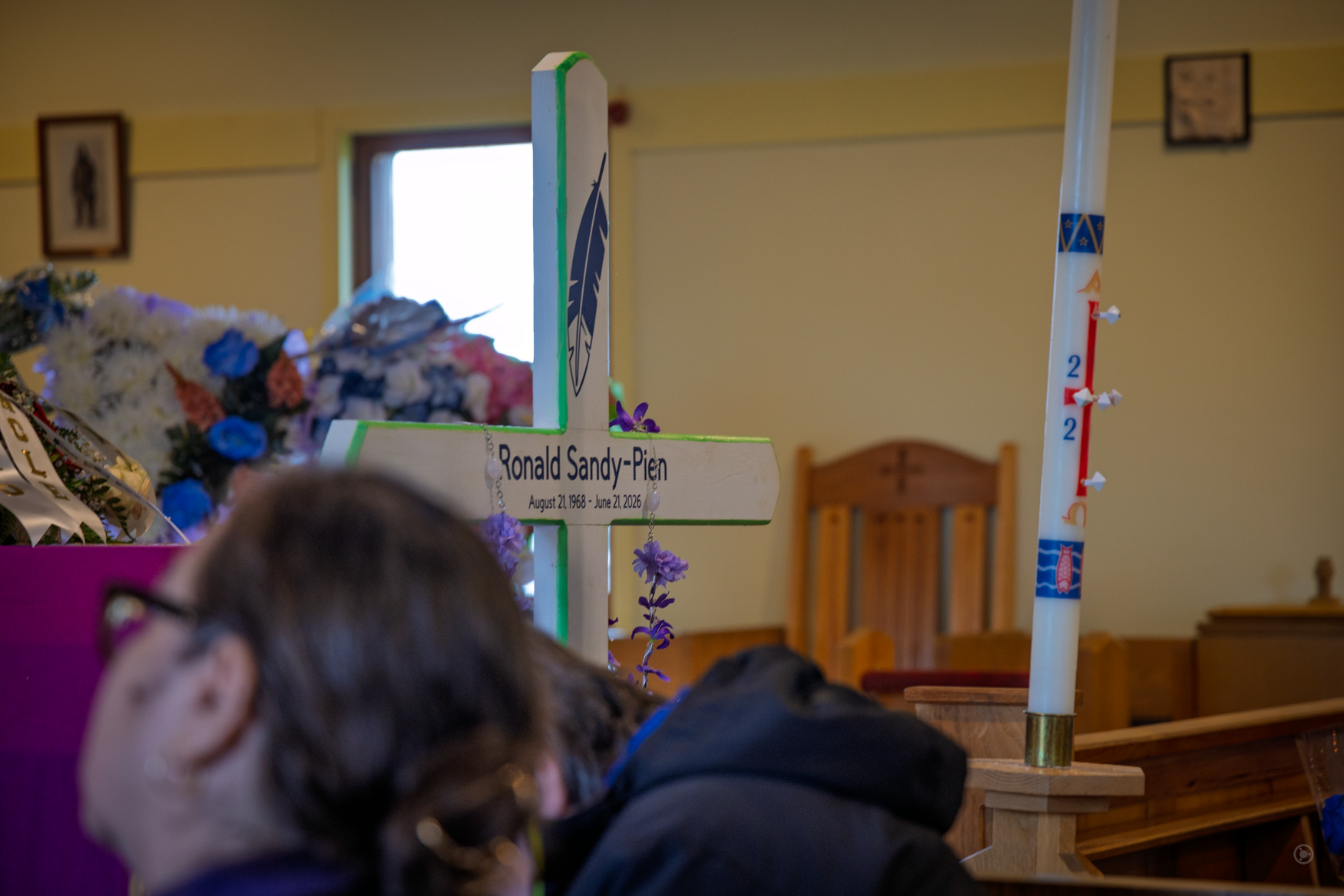
Yesterday, the community gathered in Kawawachikamach to lay Ronald Sandy Pien to rest. He was 57. He had been living in Sept-Îles, and in June, his life was taken by violence. He was brought home to be buried.
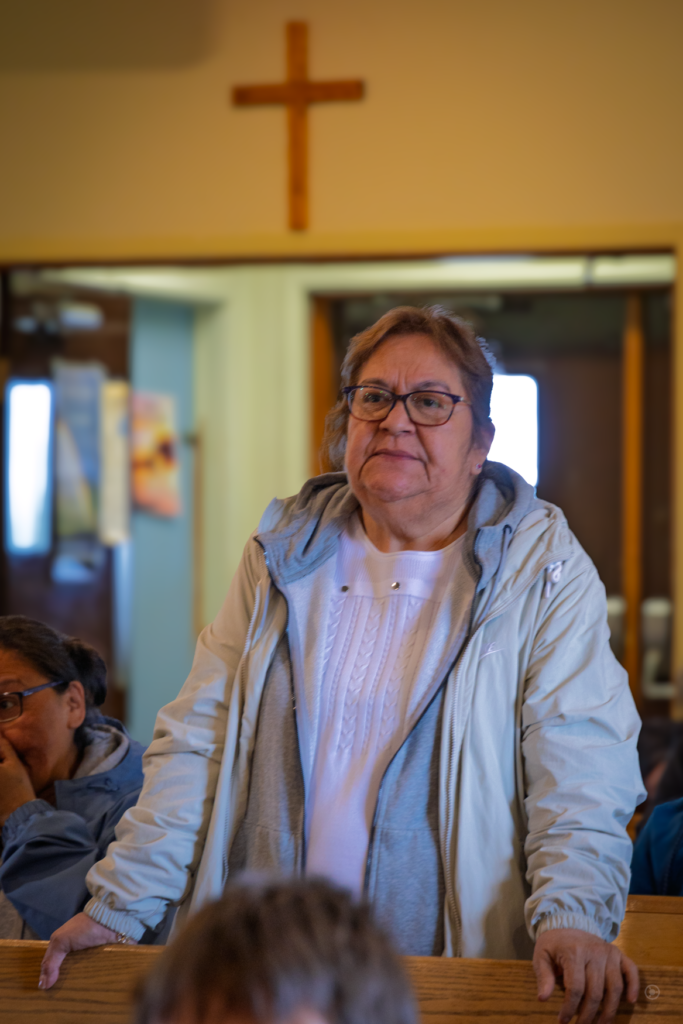
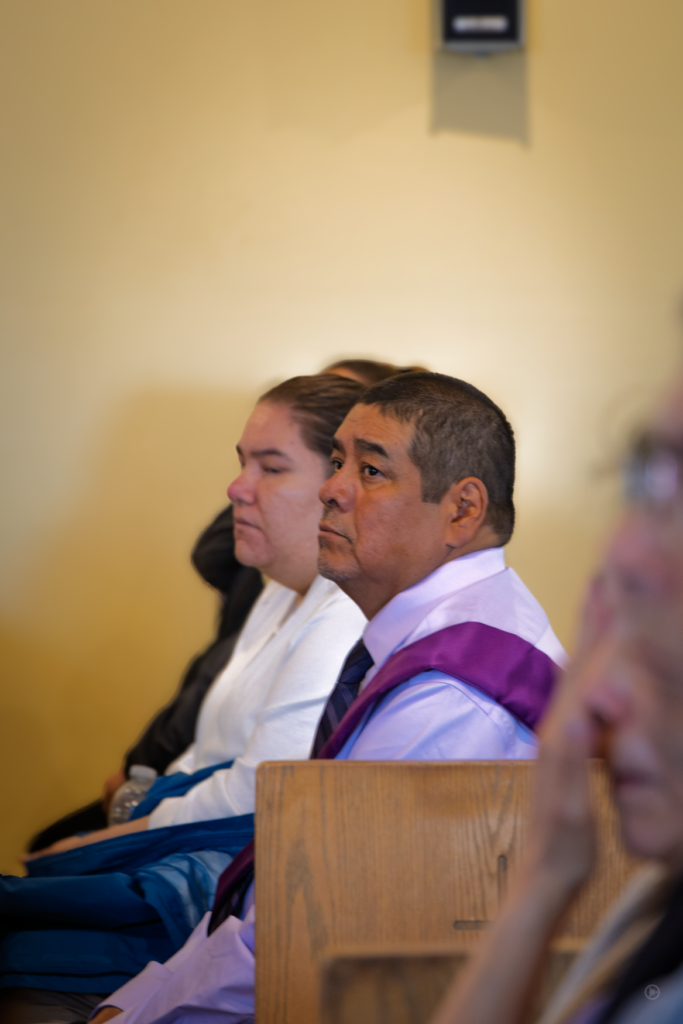
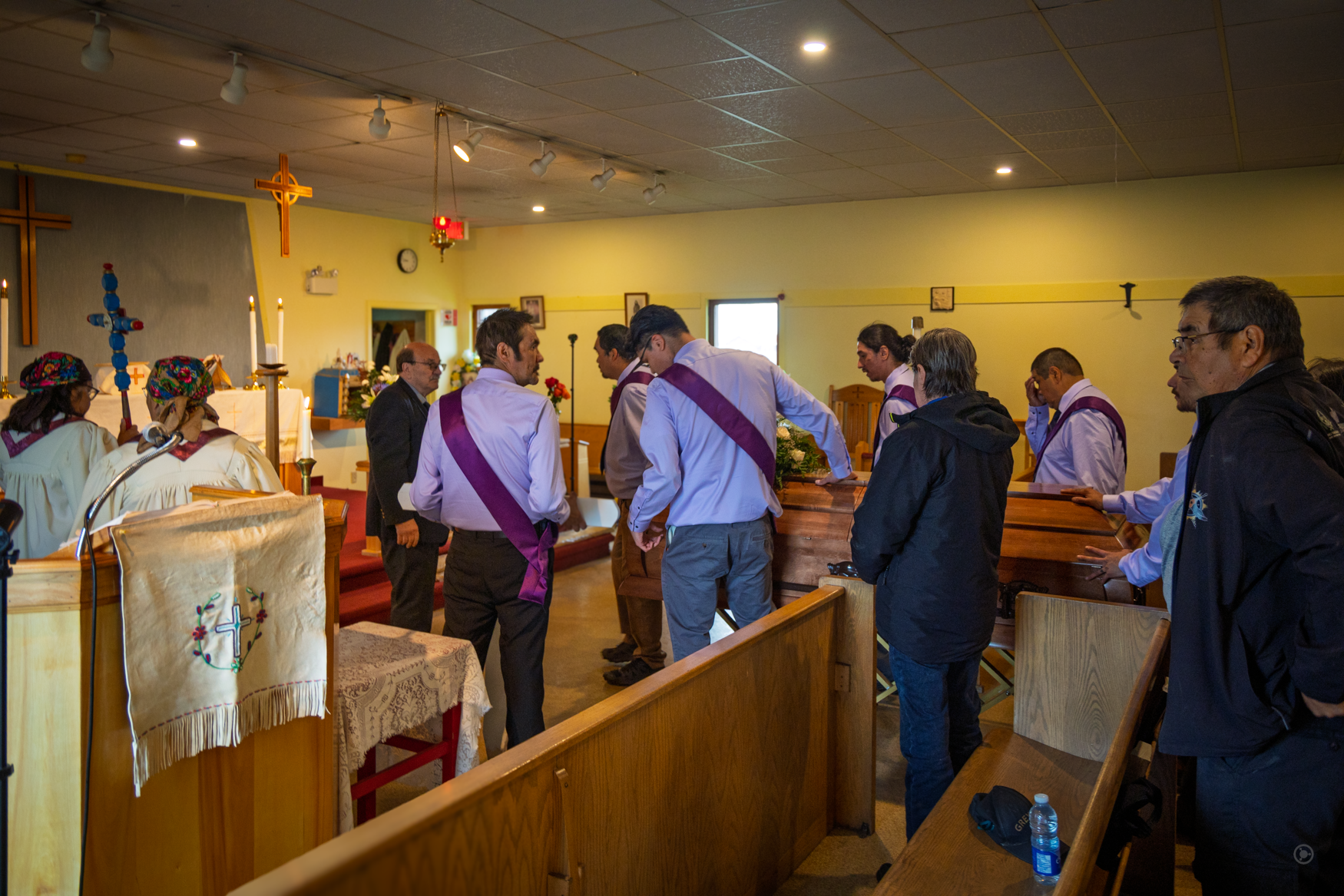
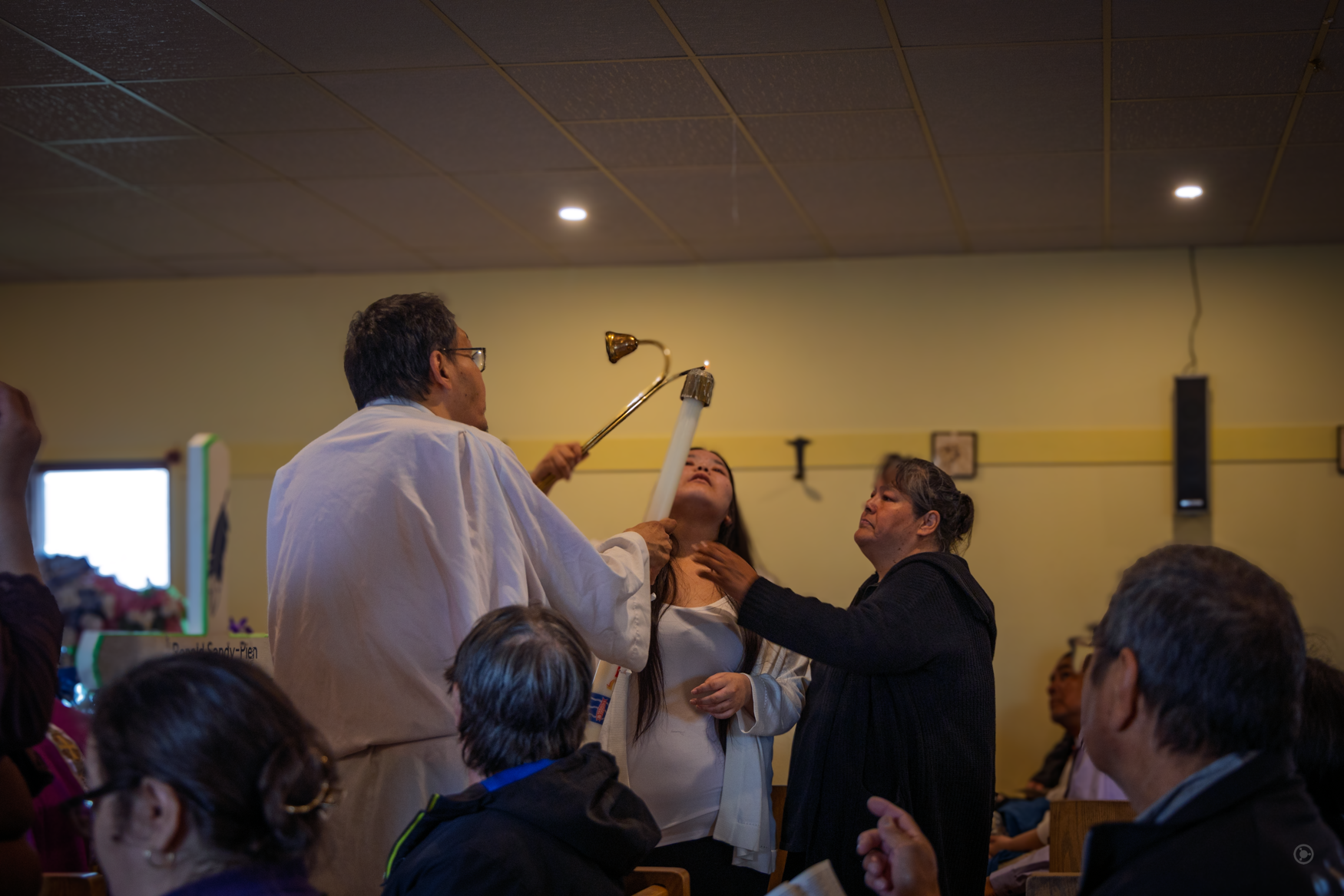
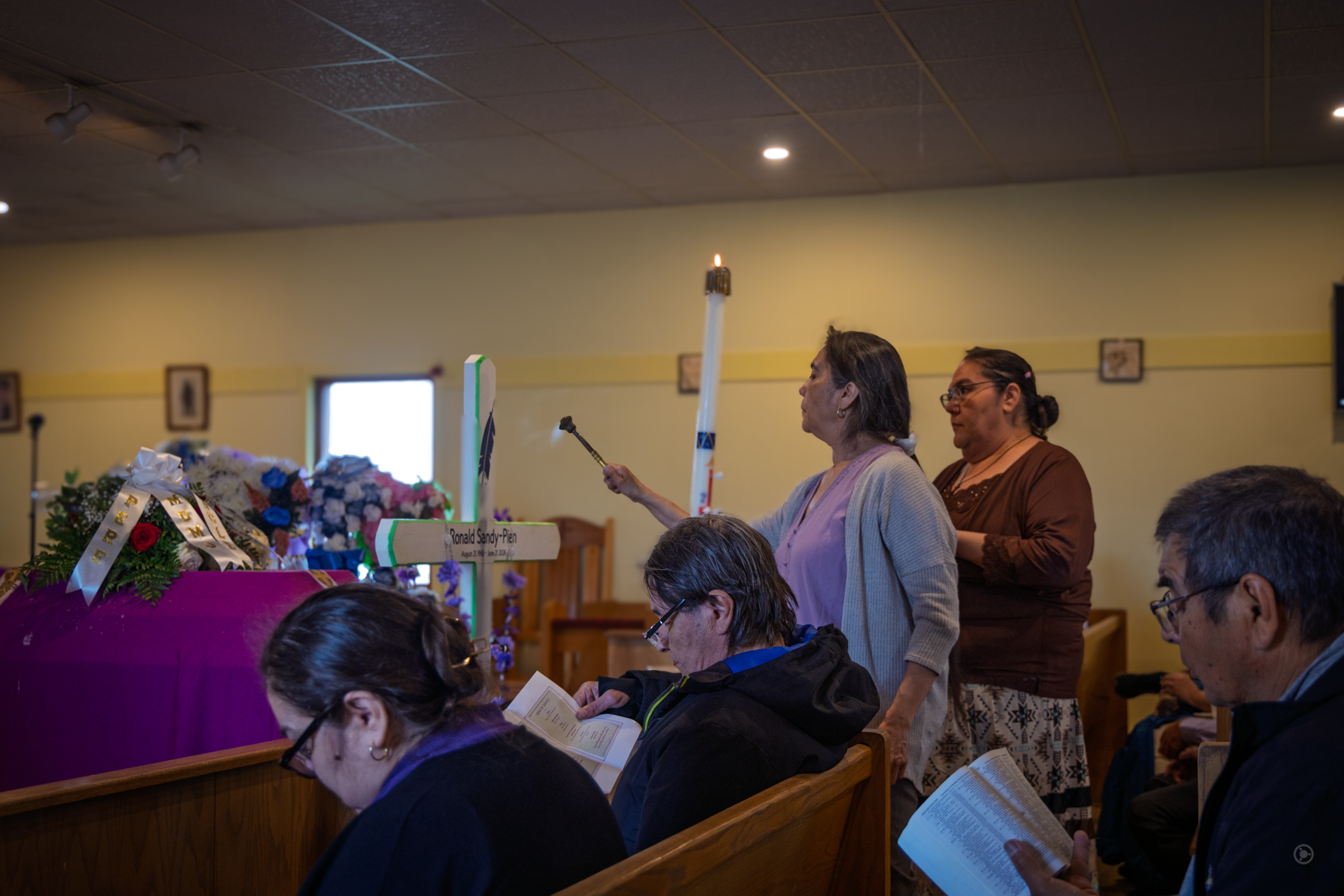
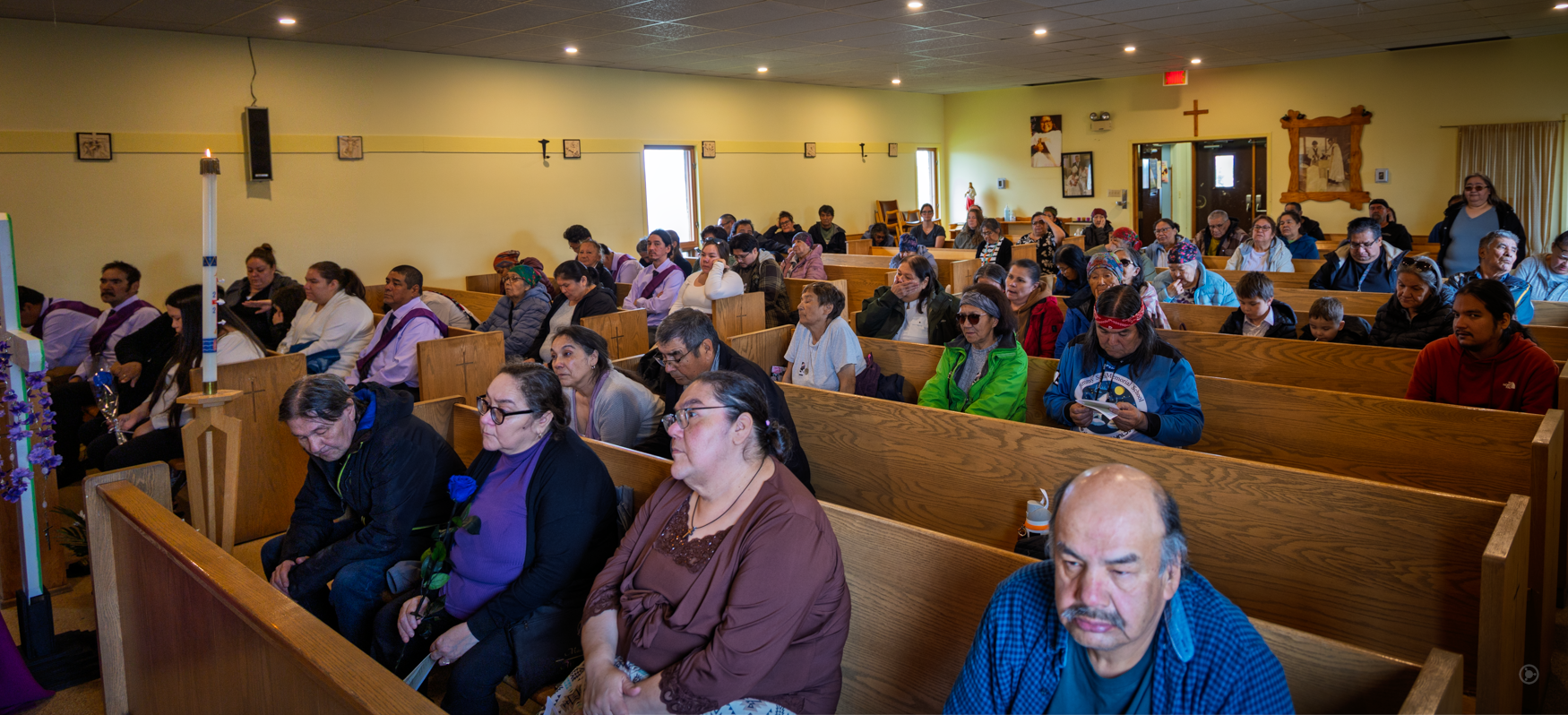
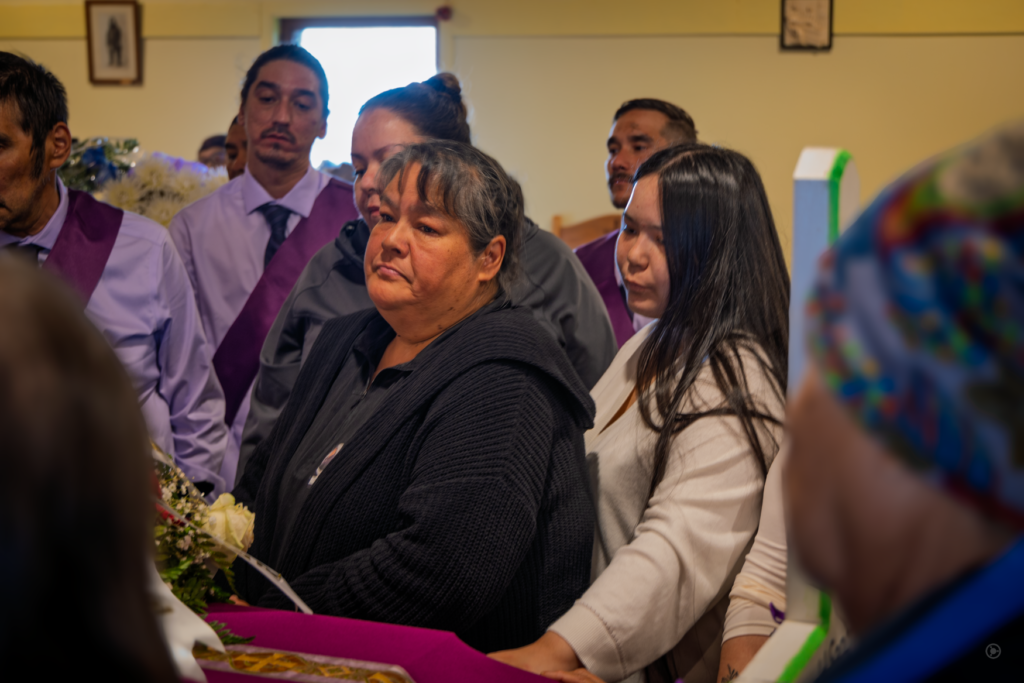
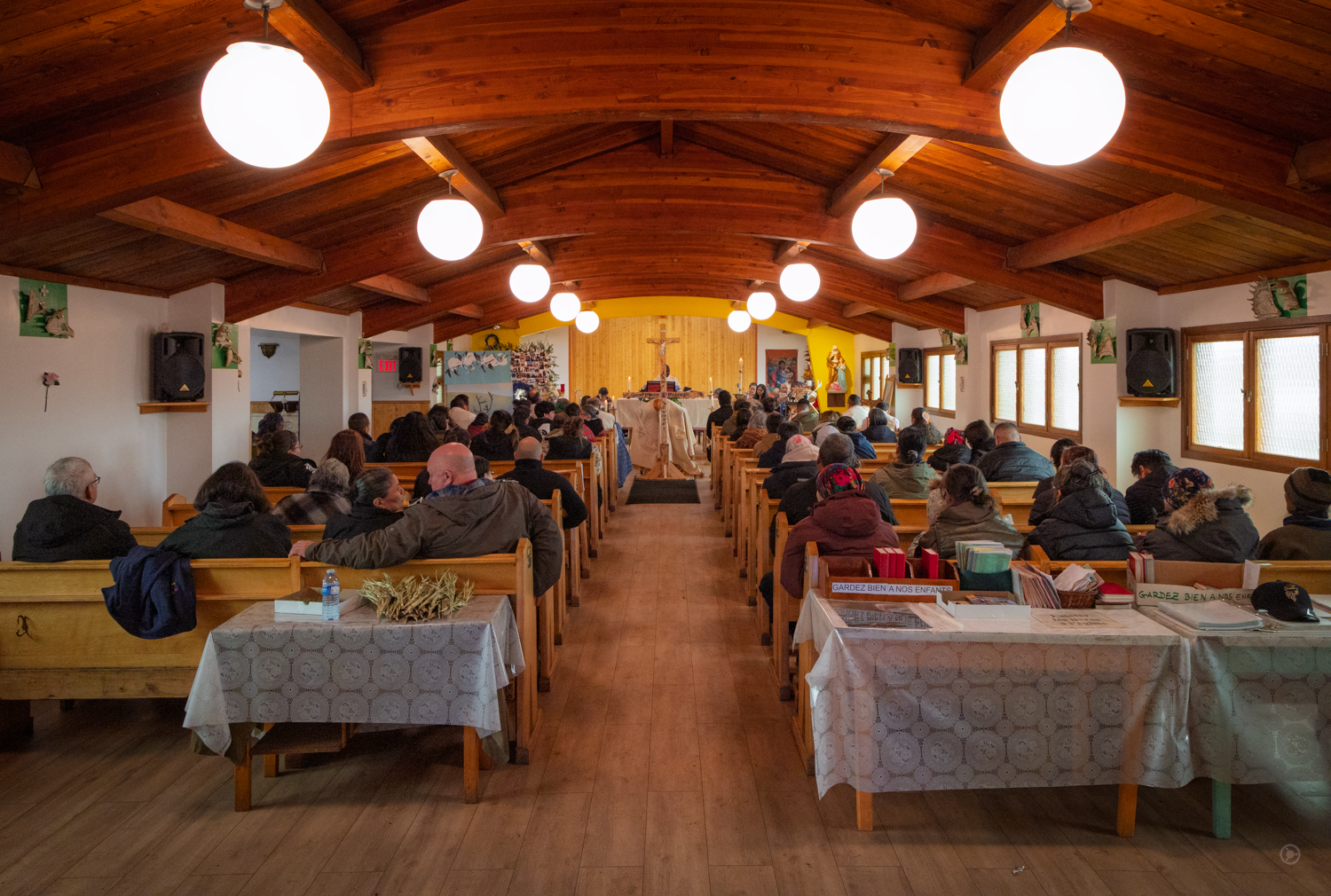
The funeral was set for 2, but word went around on Facebook that it had been pushed to 4. So many people down south wanted to be there that they needed the time to fly up. By the time it started, the church was already full, and it kept filling up throughout the service.
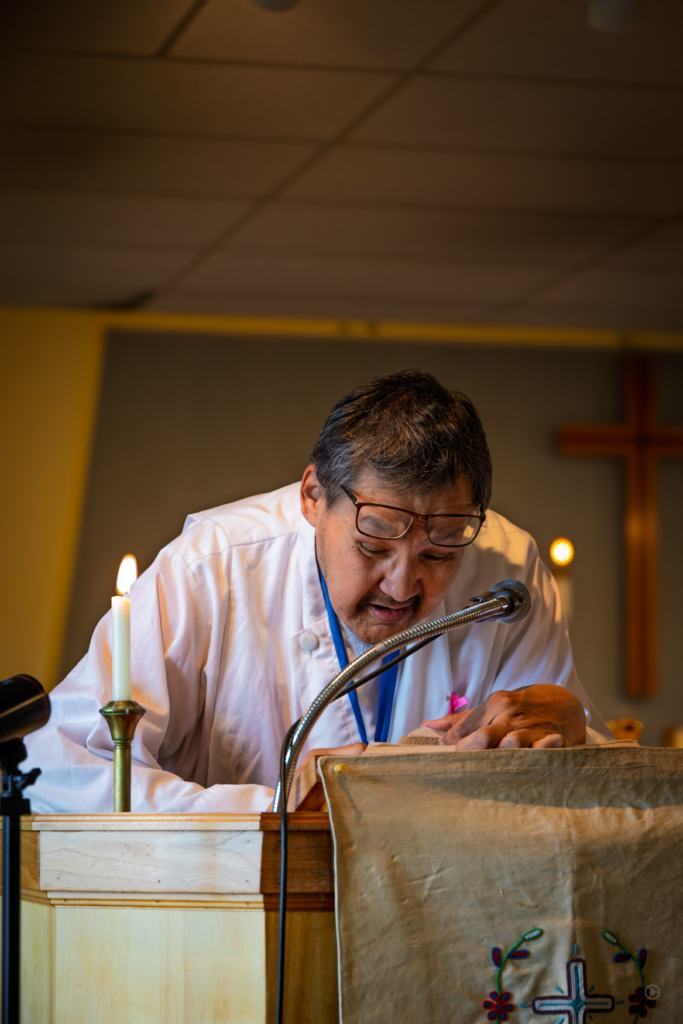
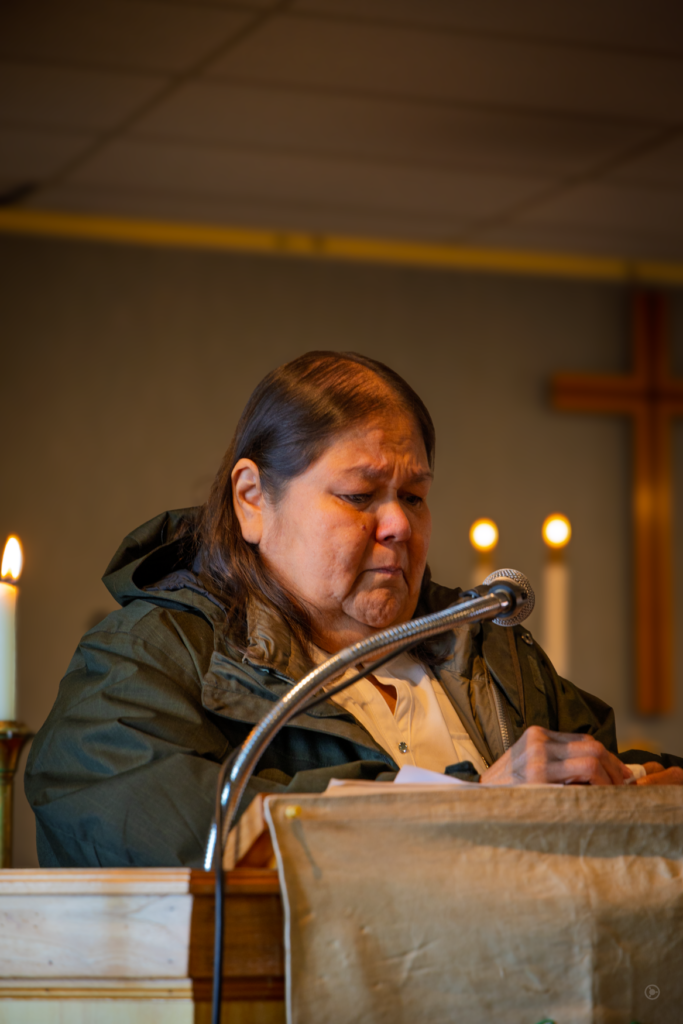
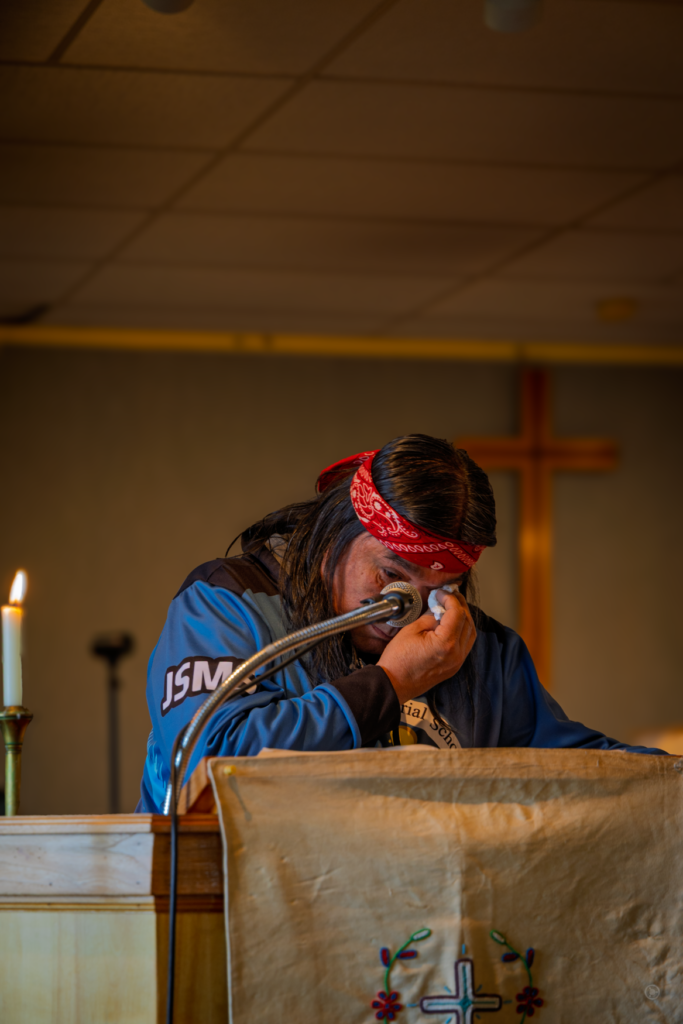
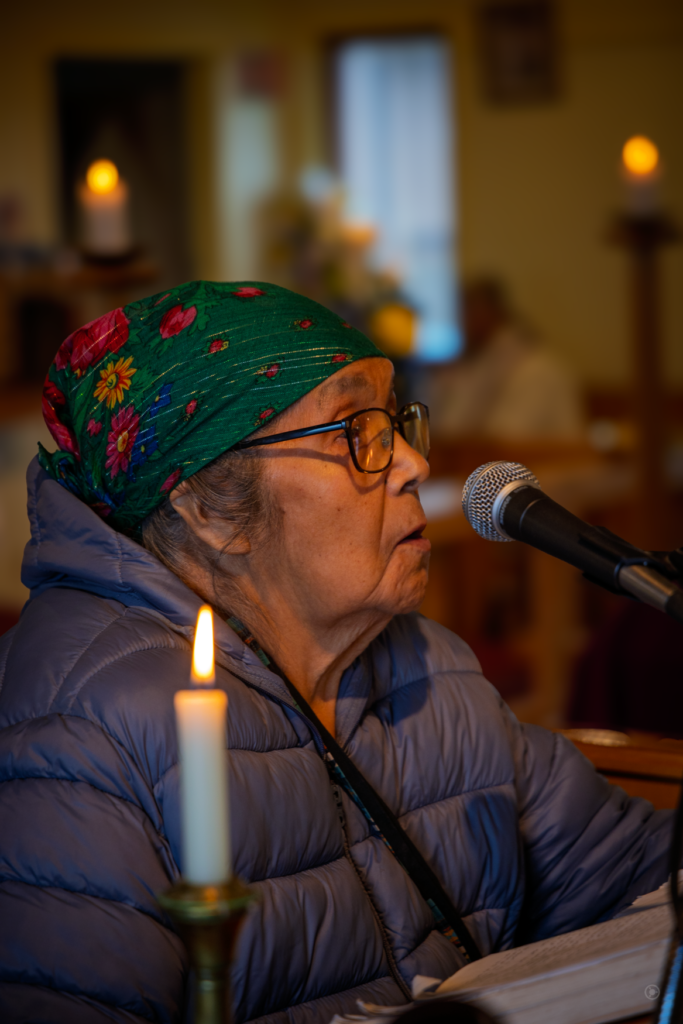
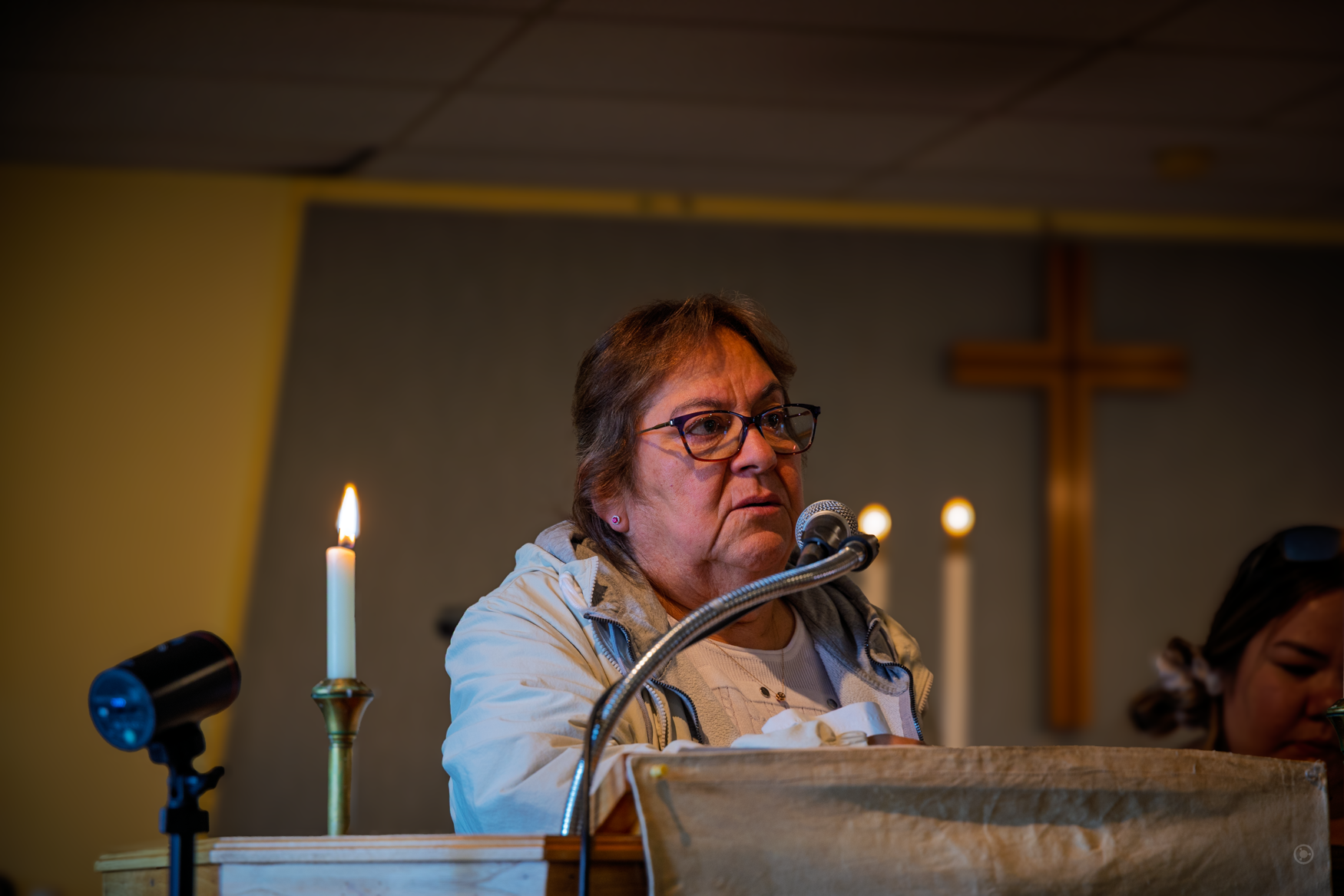
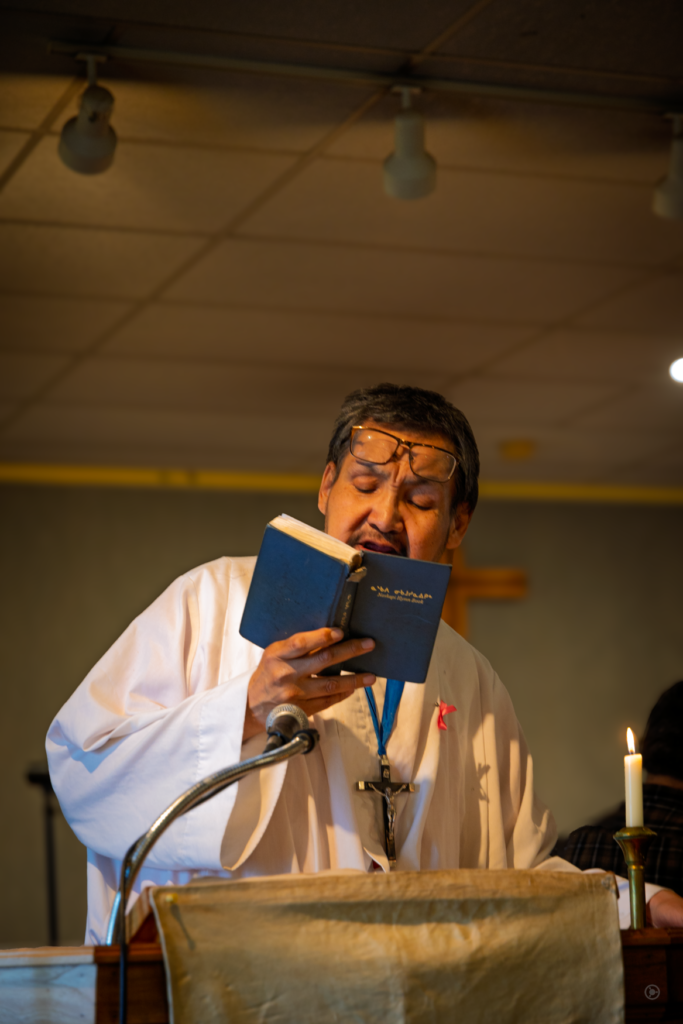
It was one of the longest funerals I have been to. So many people had something to say in his memory, and about what has been happening. I got up to speak for myself. The chief could not be there, so I read what she had written.
To my community,
My heart is heavy as I write this. Like so many of you, I have been thinking of the death of Ronald Sandy Pien, a Naskapi whose life was taken by violence. That loss has stayed with me, and I know it has stayed with many of you, too.
His passing has me thinking hard about something we do not talk about enough.
Bullying is not small. It is not something children simply grow out of. We have watched it grow into adult cruelty, into name-calling, into shaming, into belittling, and into violence. We have watched it take people we love. Some were beaten. Some carried wounds we could not see until it was too late. Some of them were so very young.
I carry my own memories of this. I know what it is to be a child and to feel like you cannot go on. Too many of us know that feeling, and we have carried it in silence for too long.
Bullying should have no place in Kawawachikamach. Cruelty should have no place here. Name-calling, shaming, belittling, threatening one another, none of it should belong in our community.
We can choose something better, and we can begin today. We can teach kindness at home, in our schools, and everywhere we gather. We can stand beside the ones being hurt instead of looking away. We can speak up when we see someone treated badly, in person or online. And we can check on each other, especially the ones who seem to be struggling.
If you are hurting right now, please reach out. Come to an Elder, to a teacher, to anyone you trust. You are not alone, and you are not a burden to anyone. Your life matters to this community far more than you know.
If you need someone to talk to and you are not ready to talk to someone you know, the Hope for Wellness Helpline is there for Indigenous people across Canada, day or night, at 1-855-242-3310.
We are Naskapi. We have carried each other through so much already. We can protect one another.
With love, and with strength, Chief Louise Nattawappio
Some spoke about Ronald. Some spoke about what has been happening, and what has to change.
It went on long past when a funeral usually ends. Nobody rushed it.
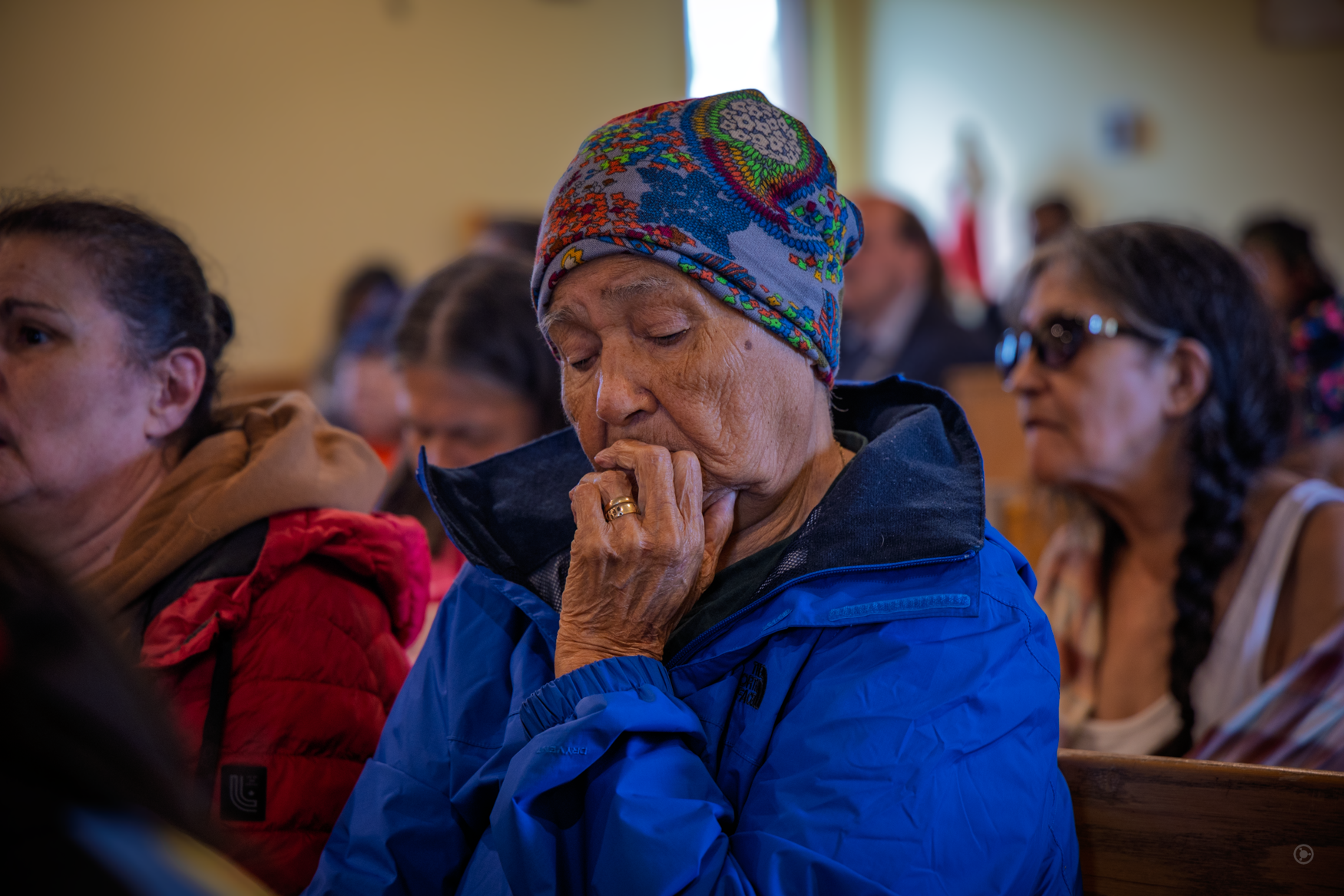
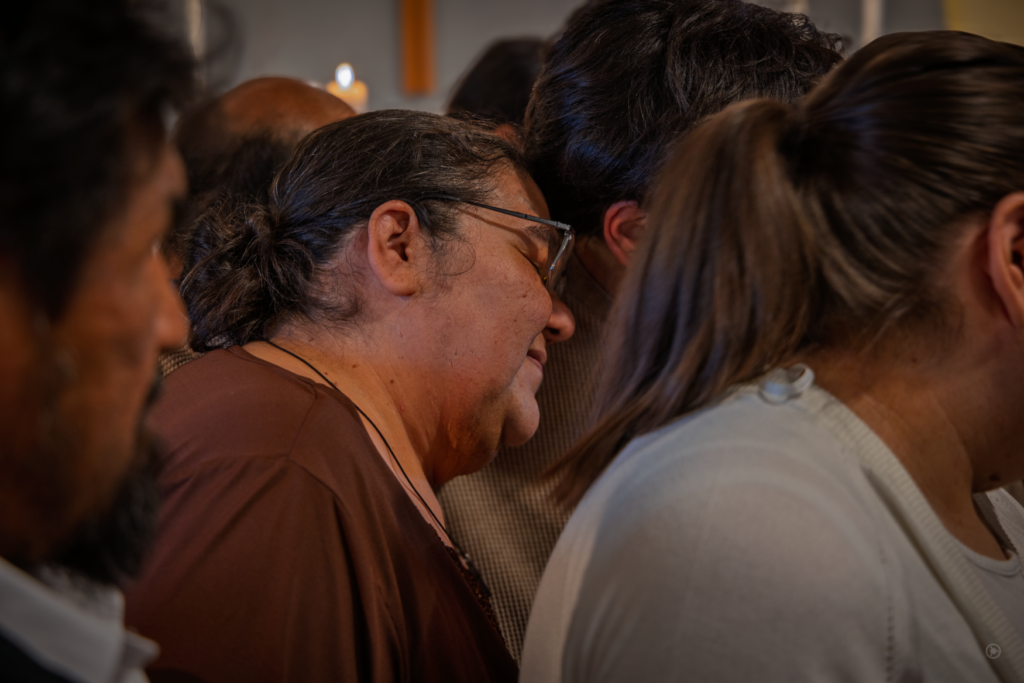
The room listened and journed together.
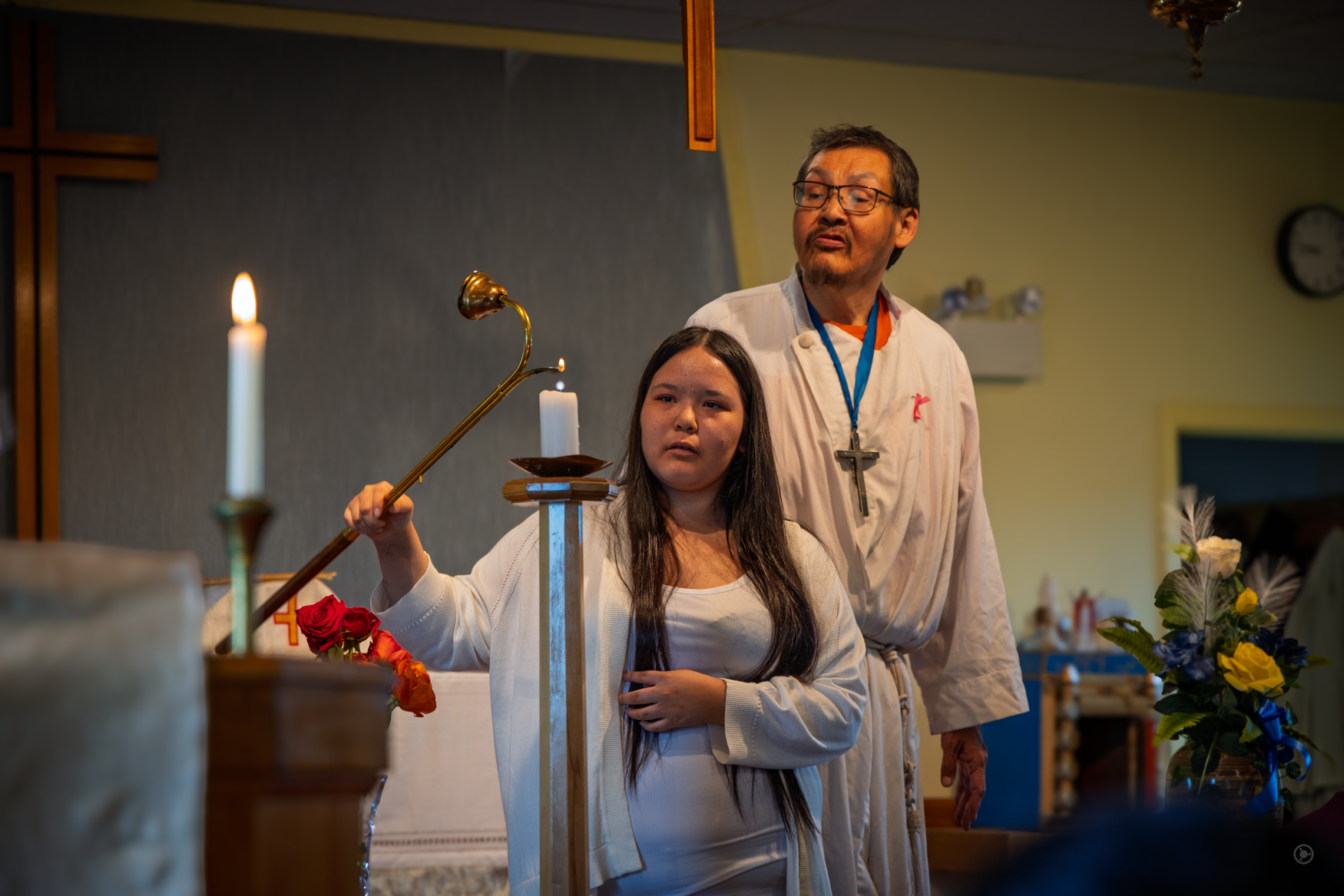
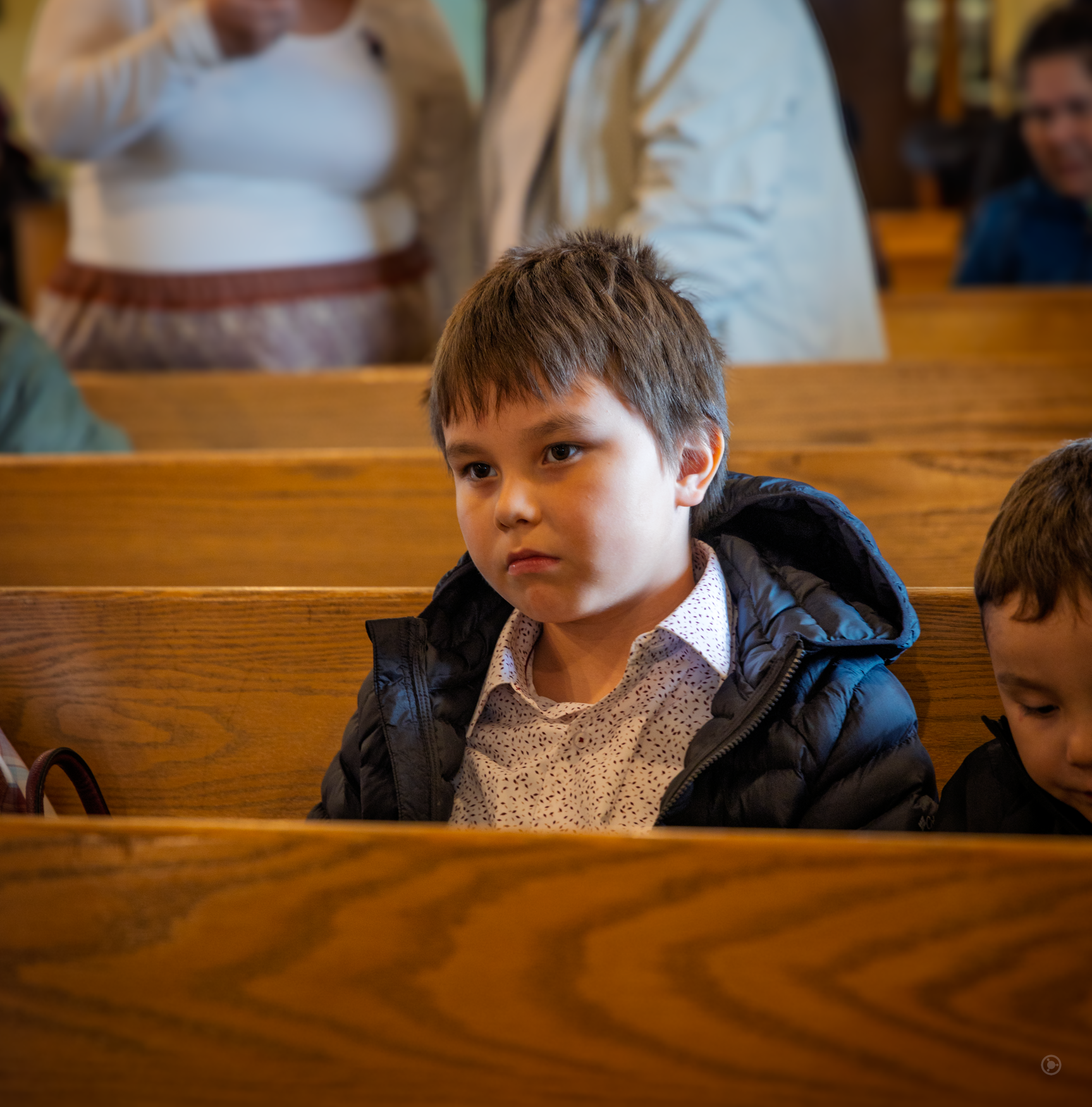
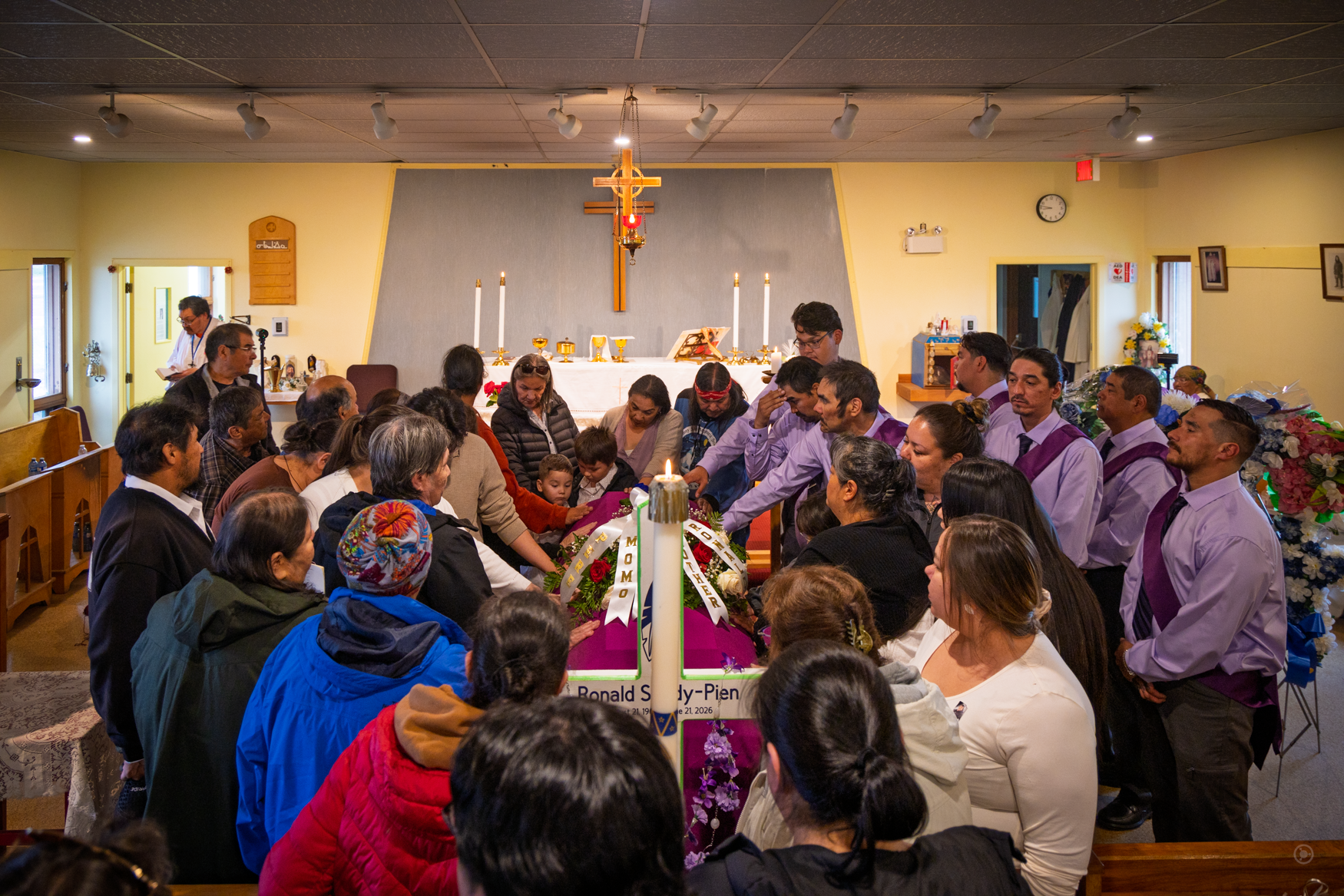
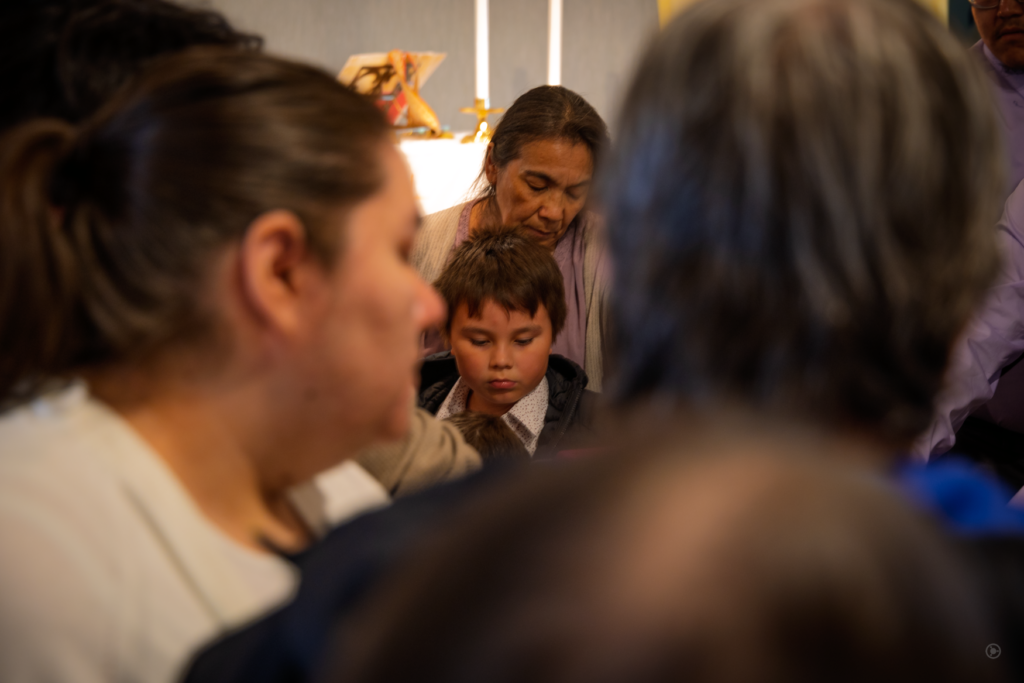
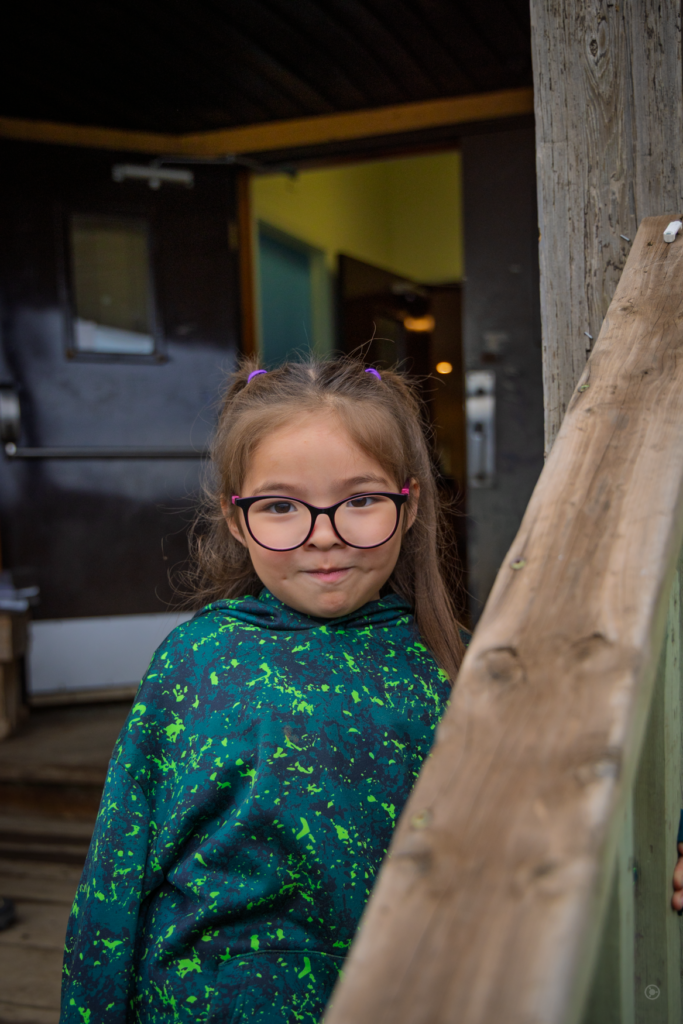
The children were there for all of it.
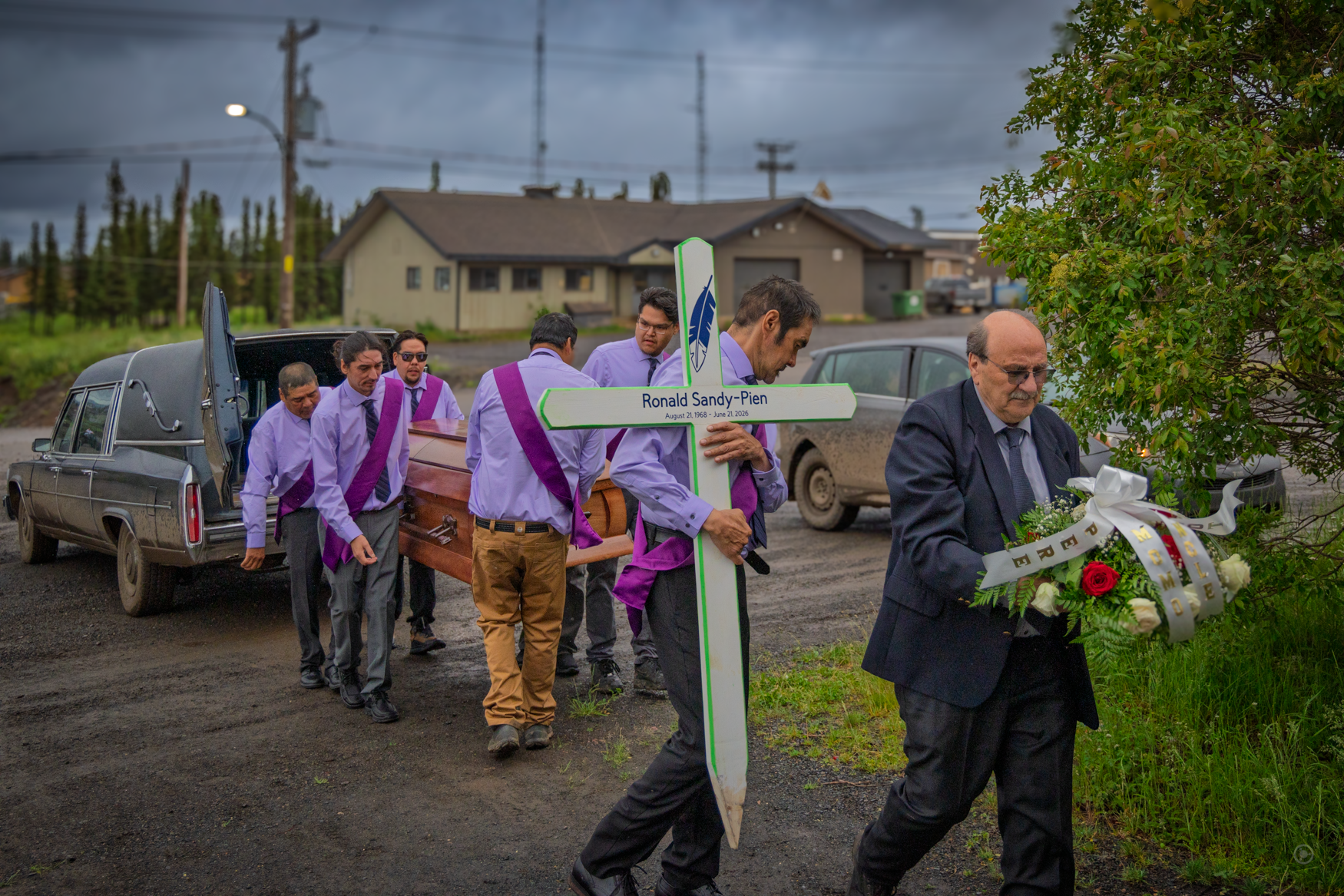
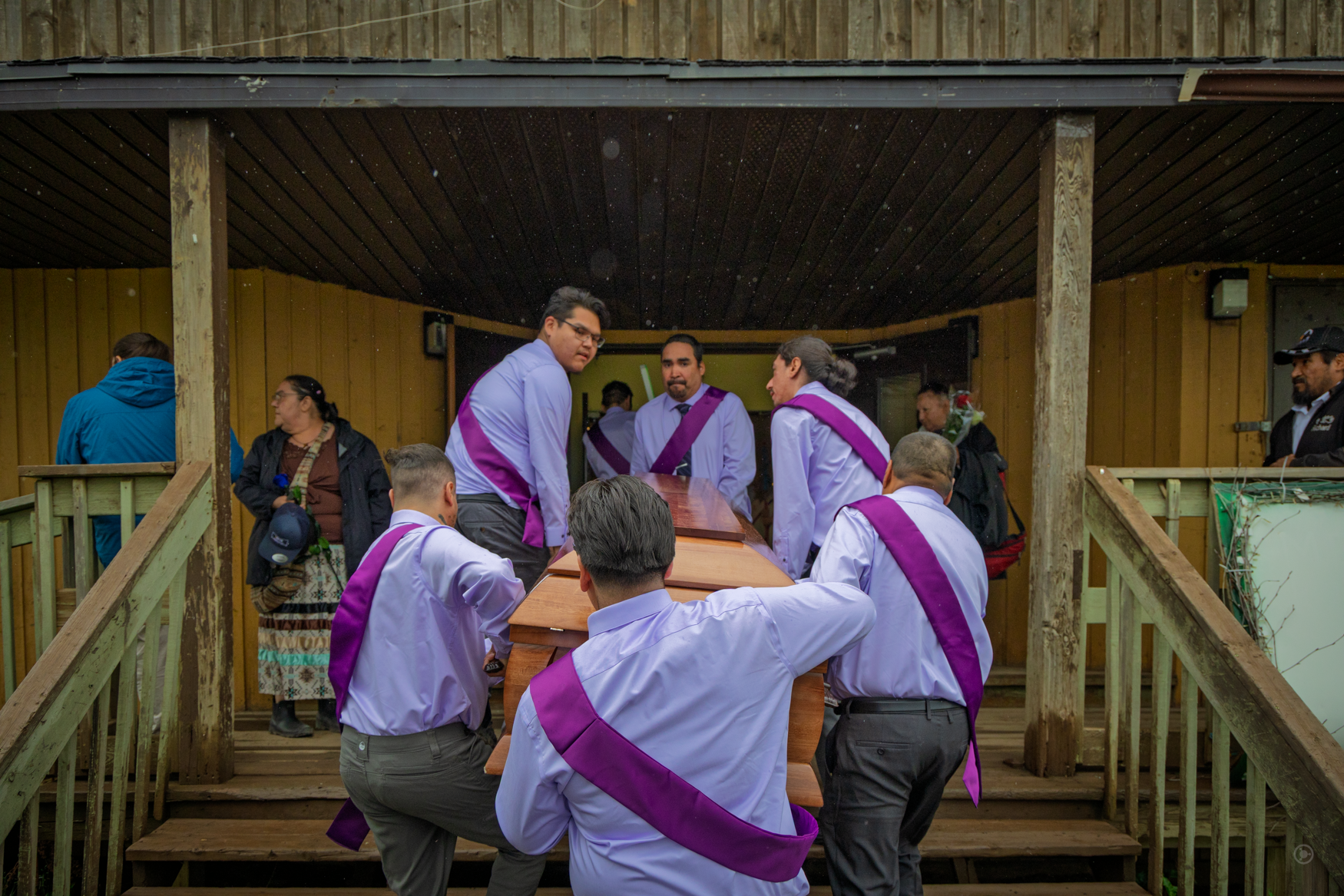
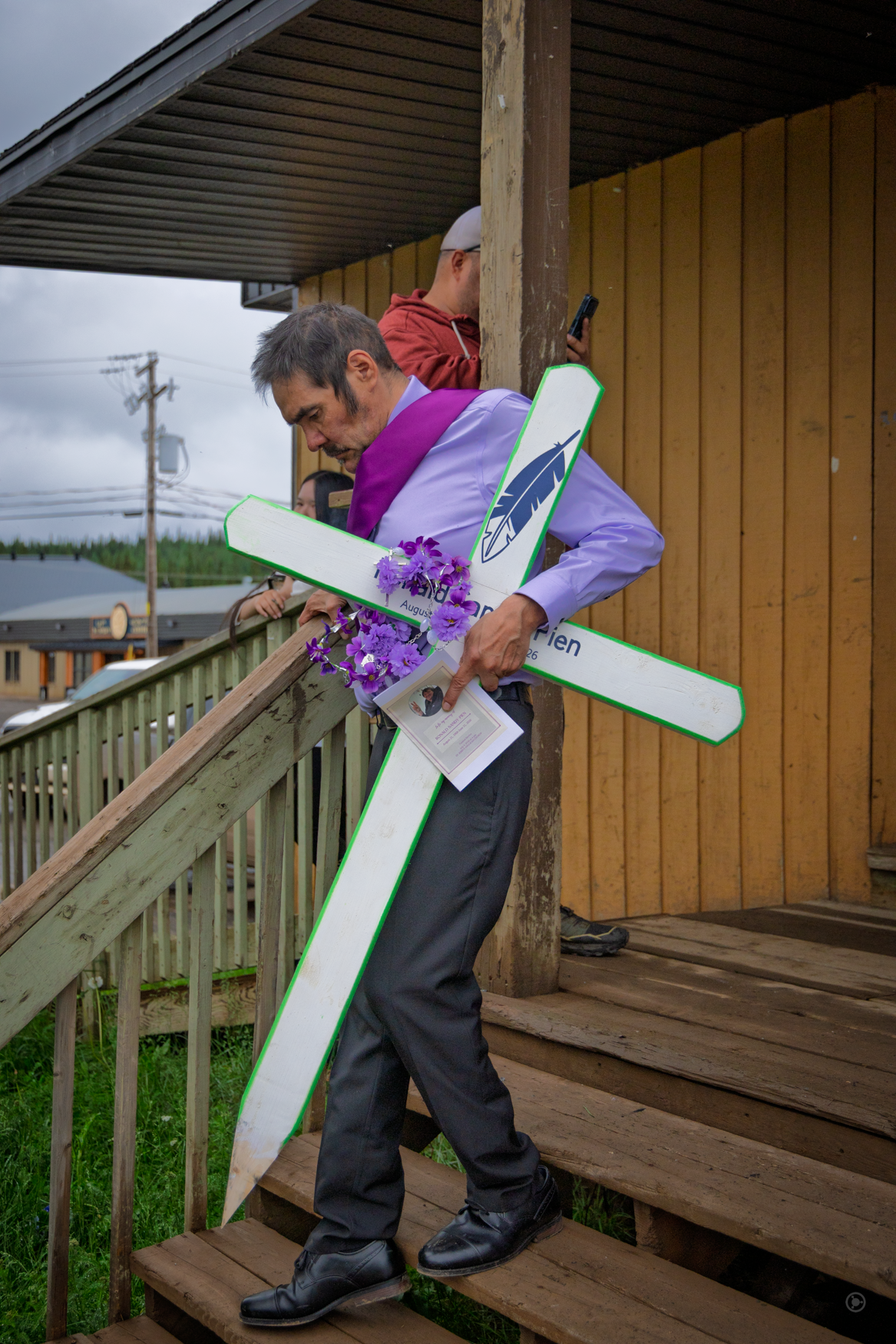
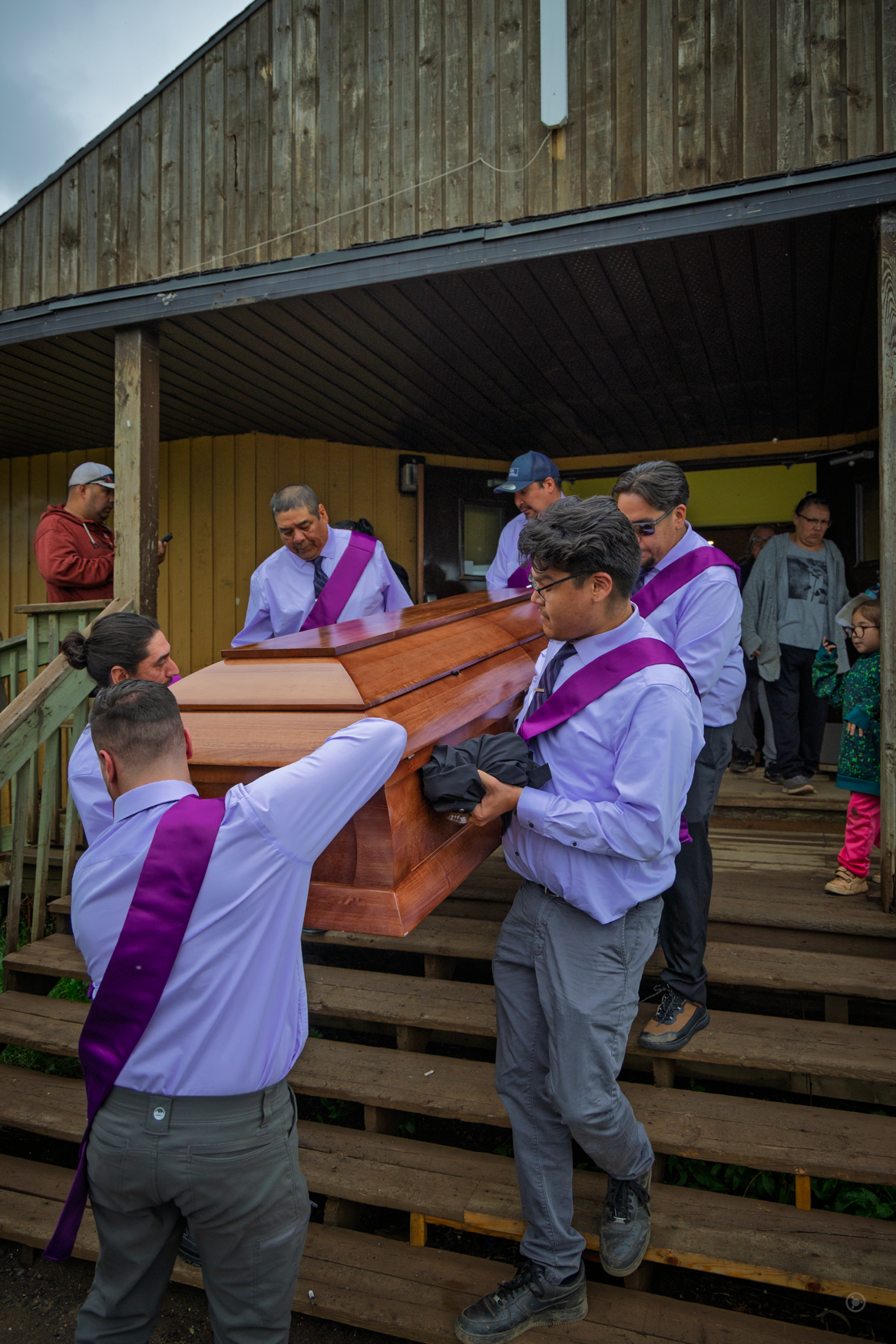
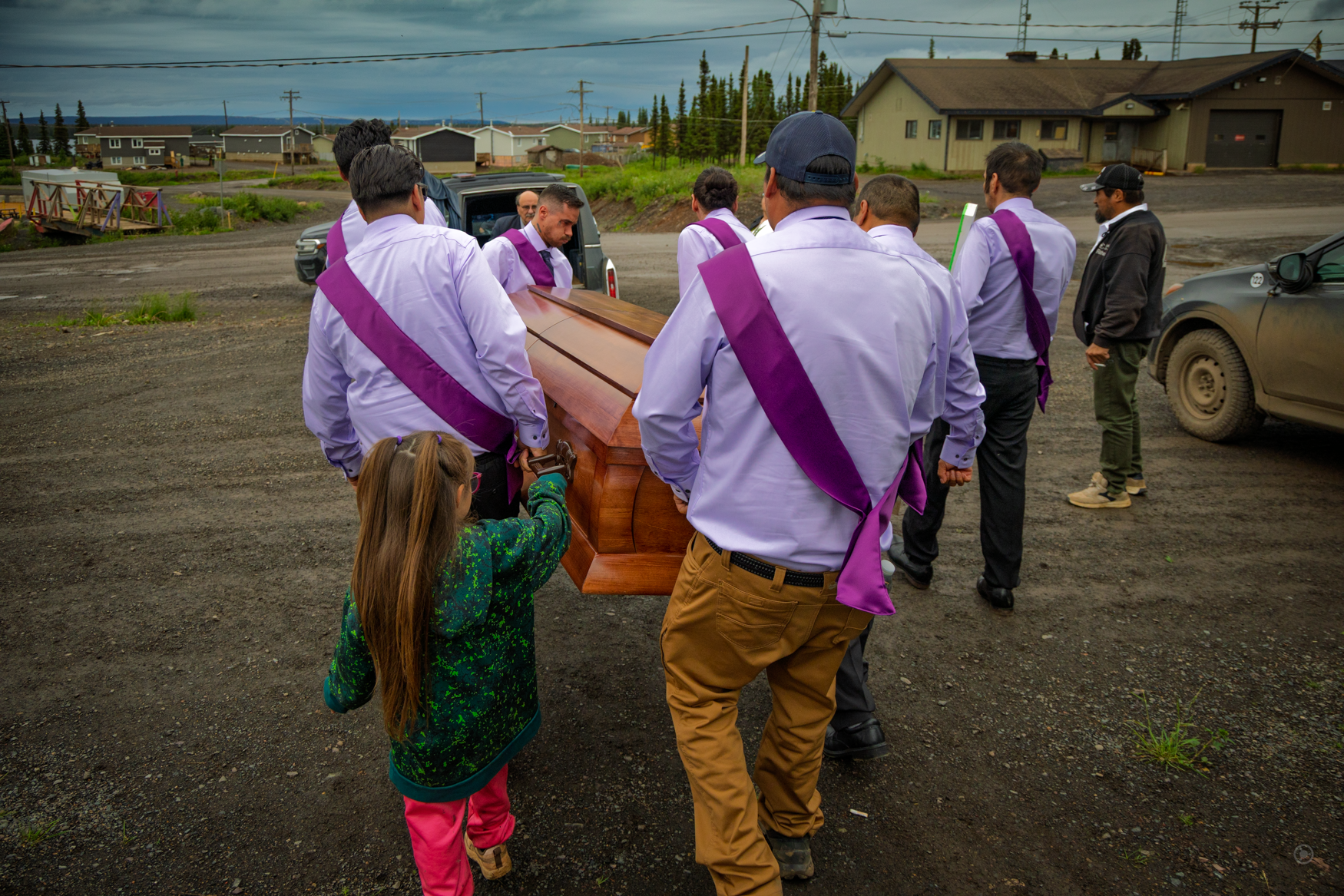
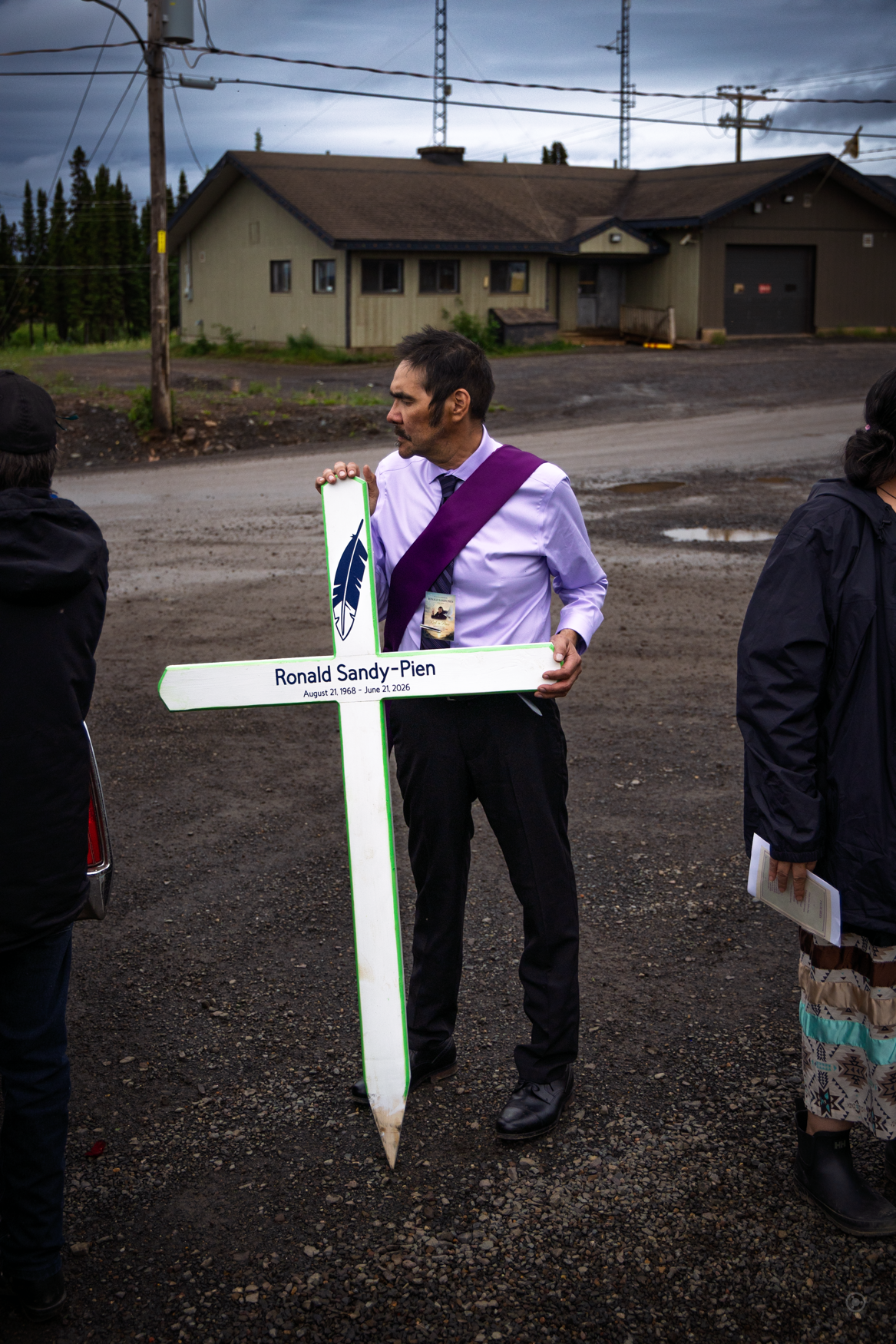
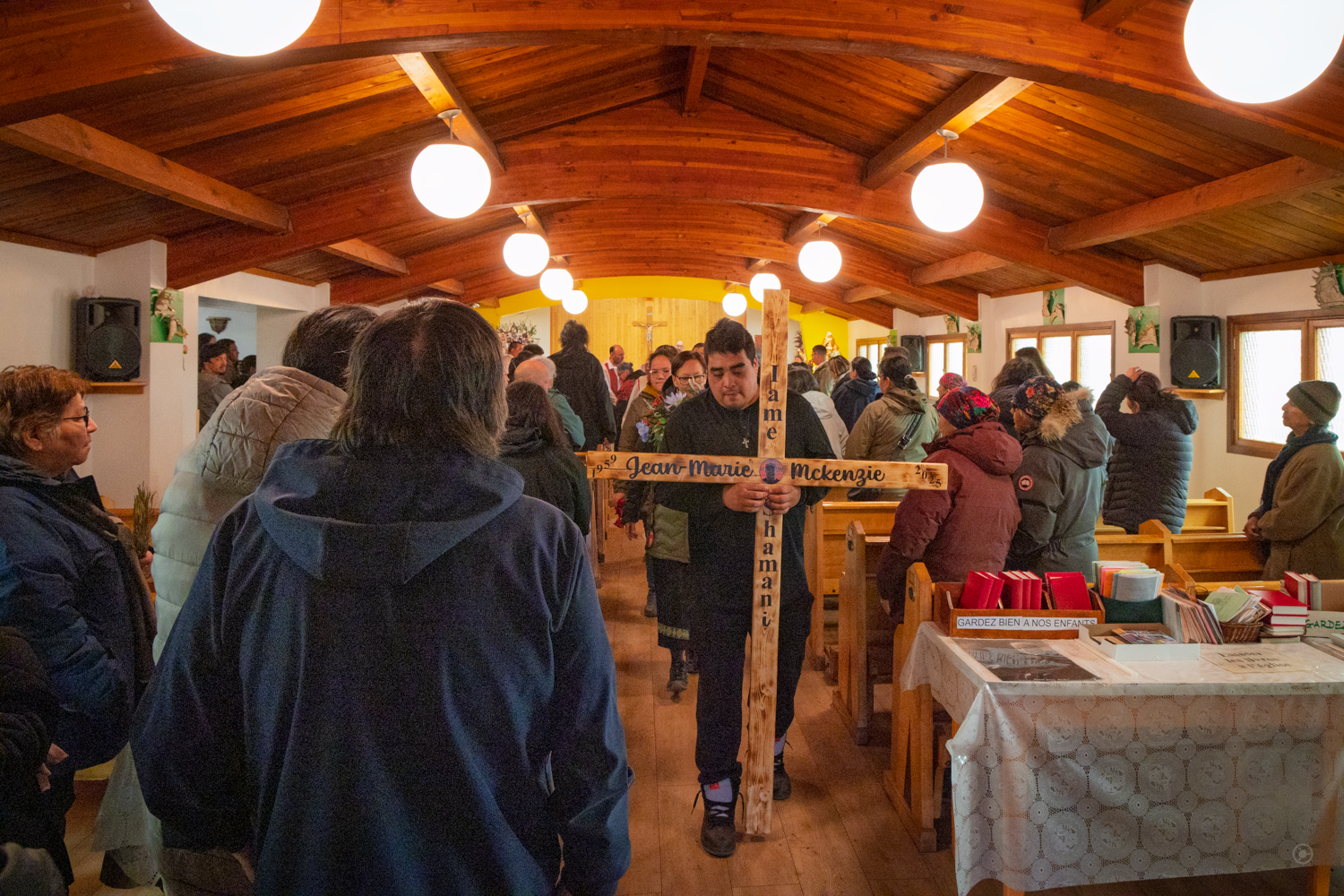
When it was finally over, the cross led the way back out.
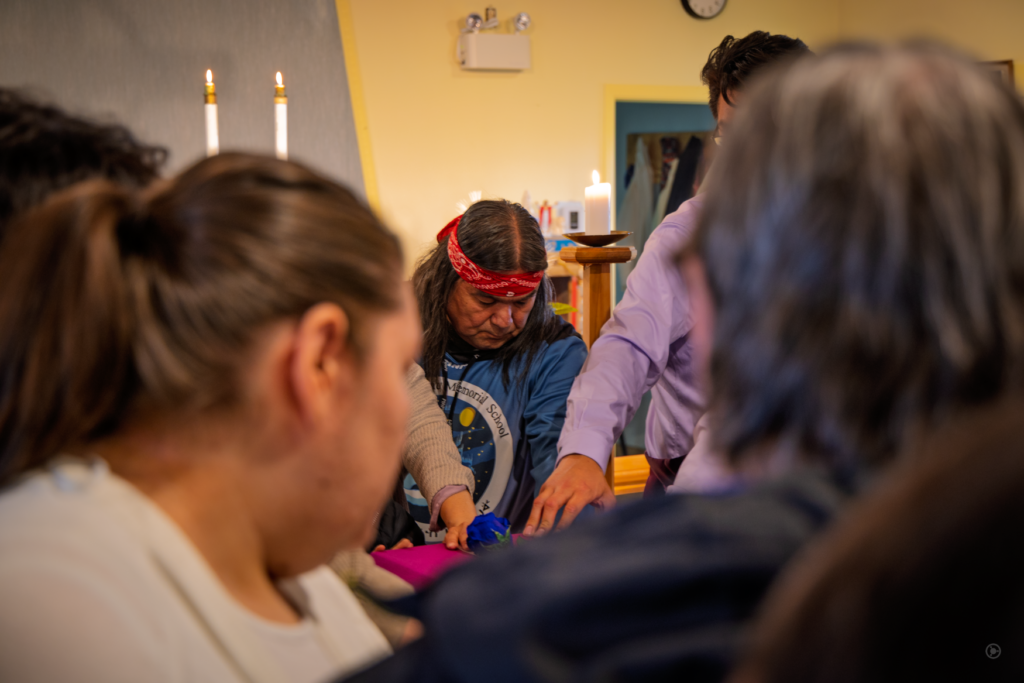
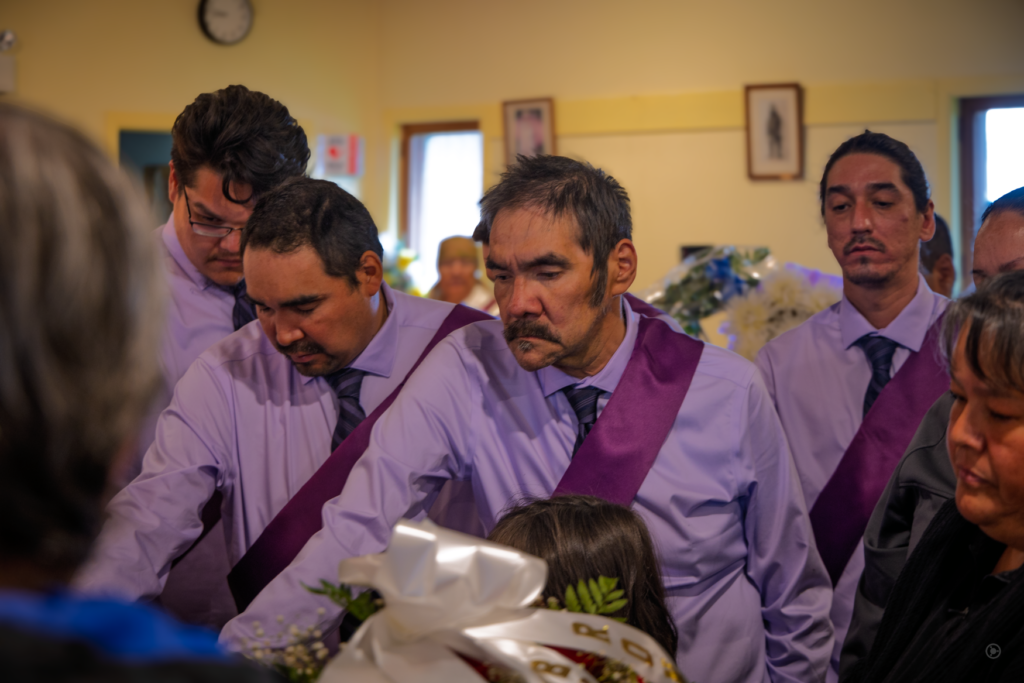
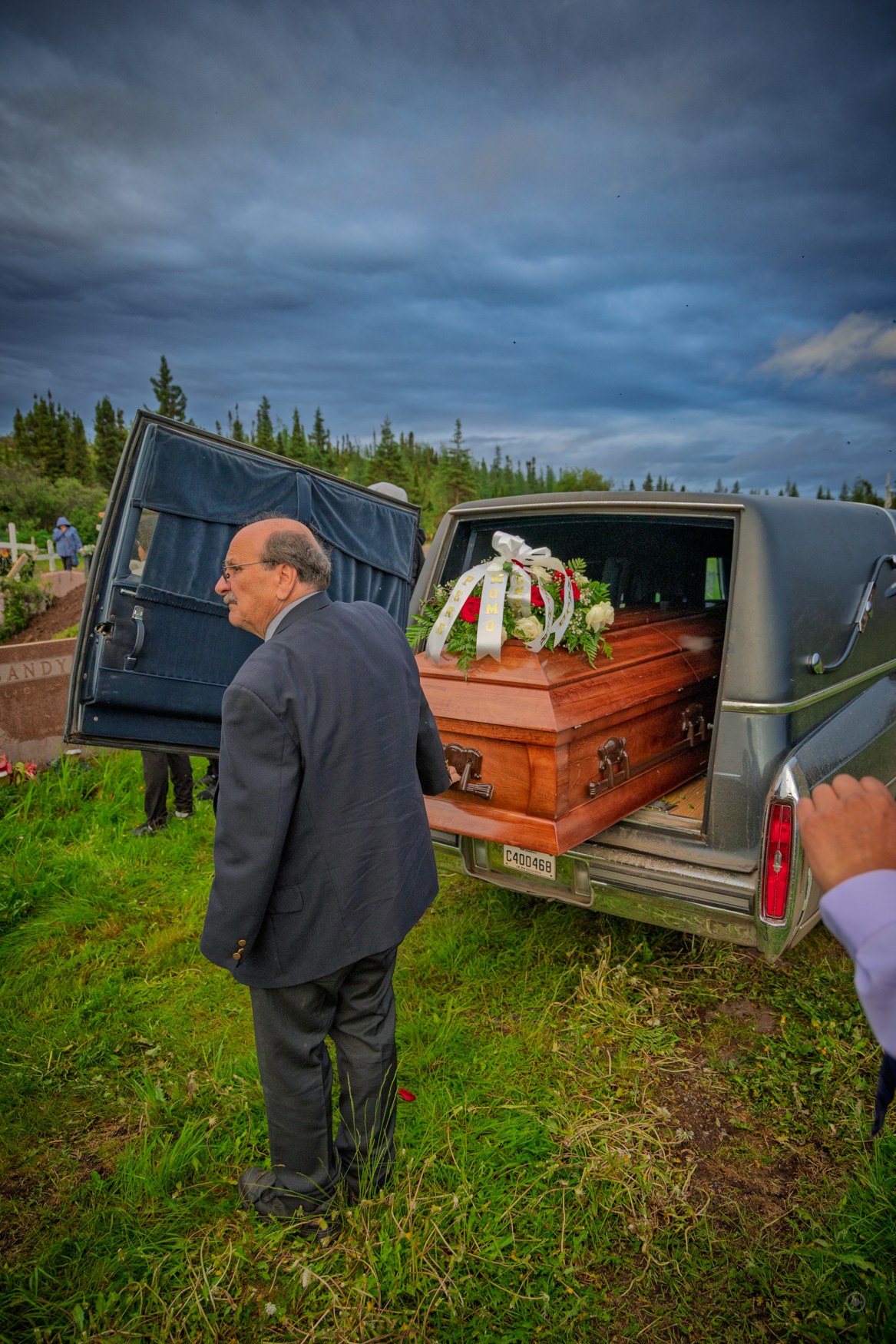
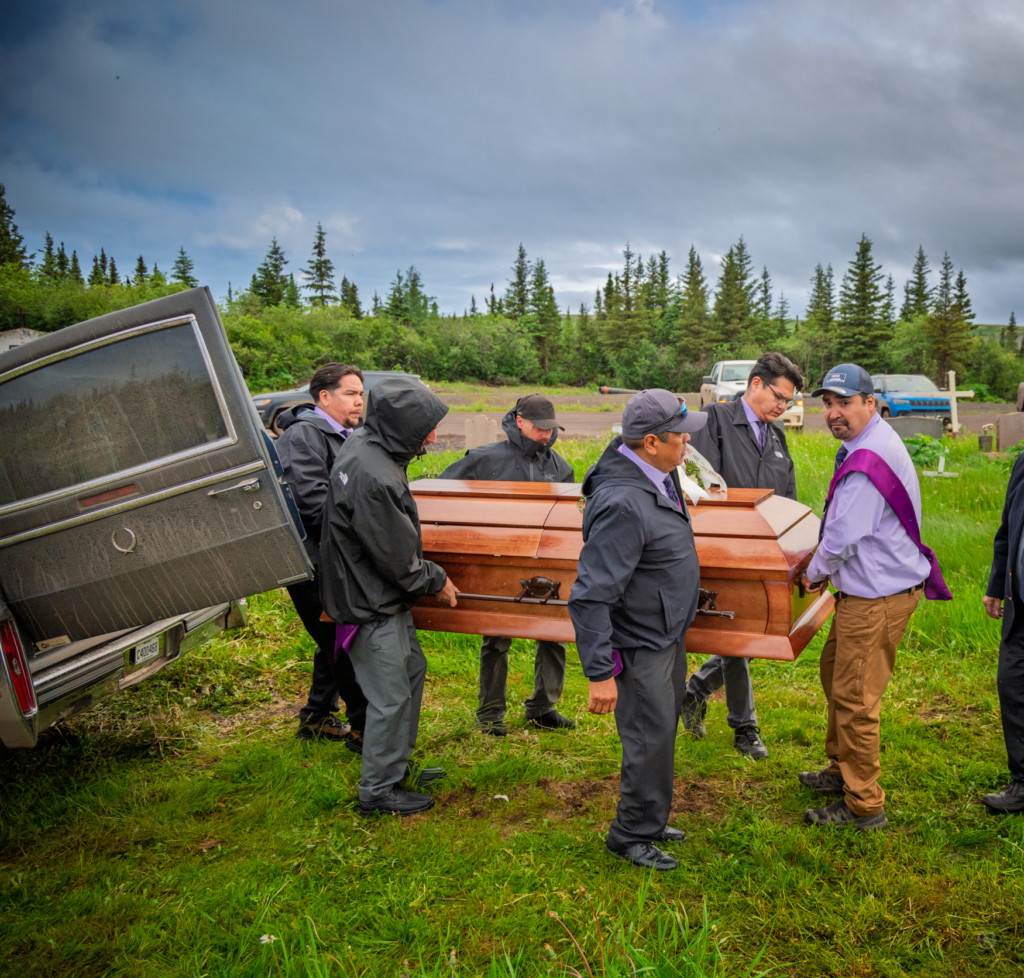
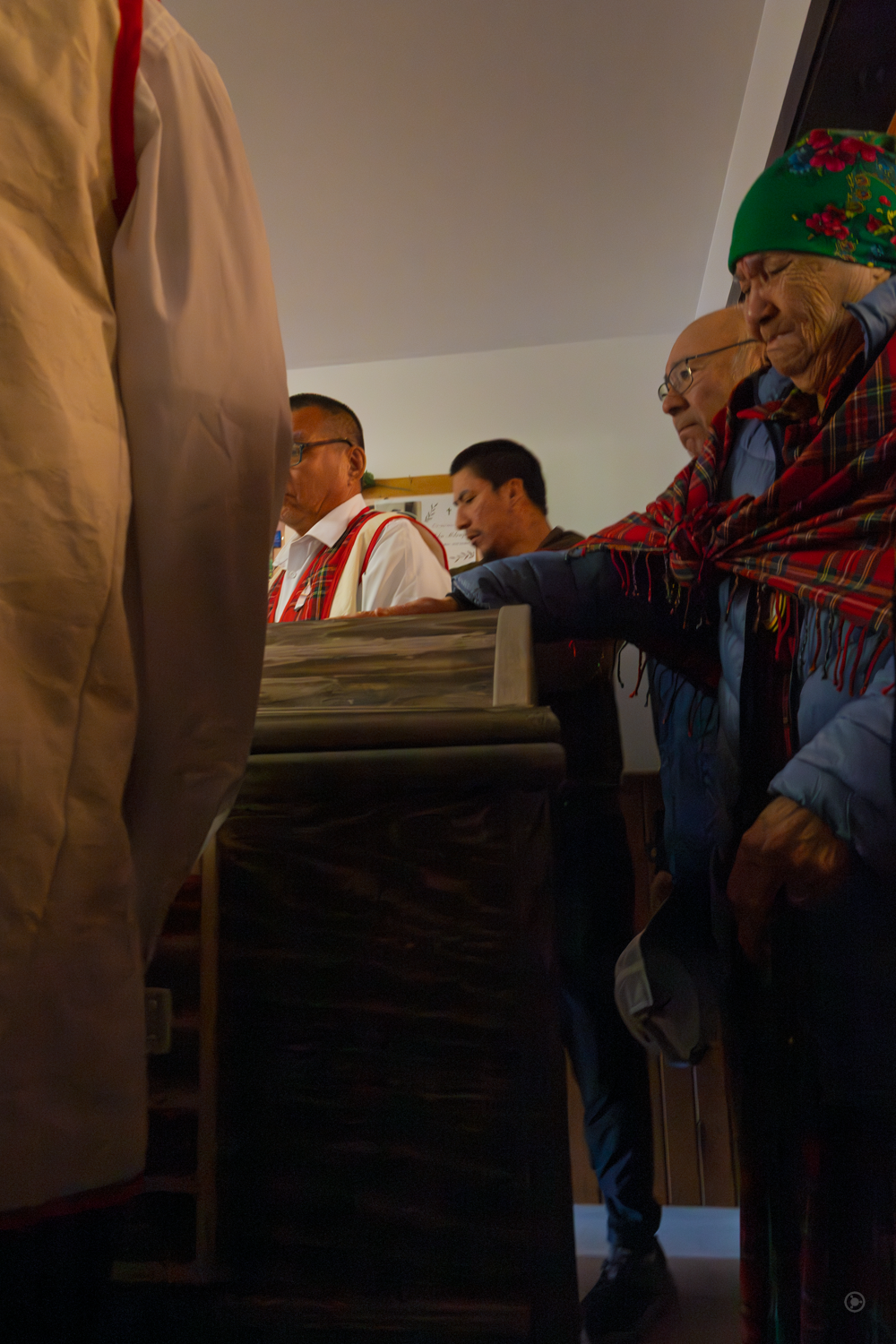
Maddison reached up and kept her hand on the casket the whole way to the hearse.
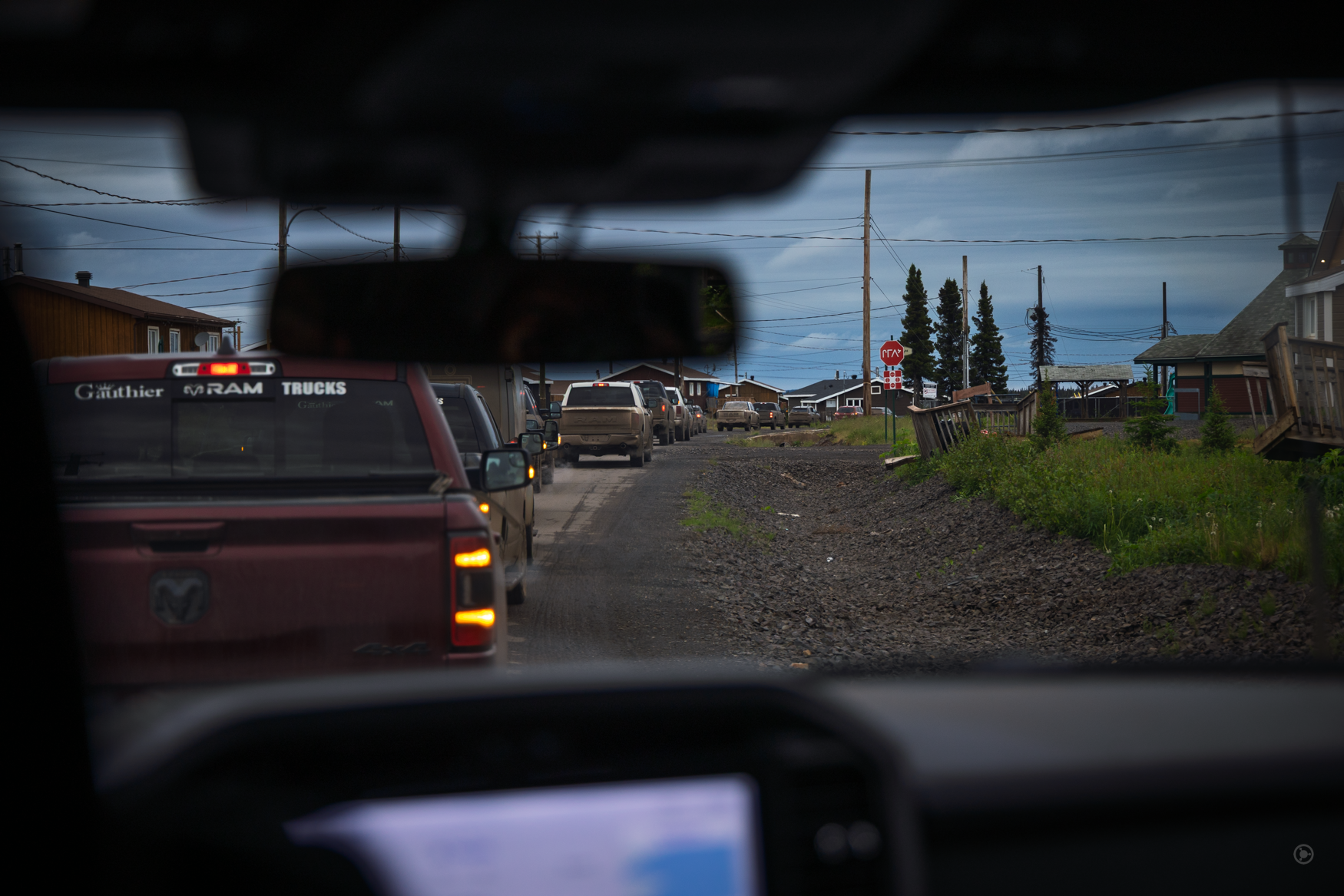
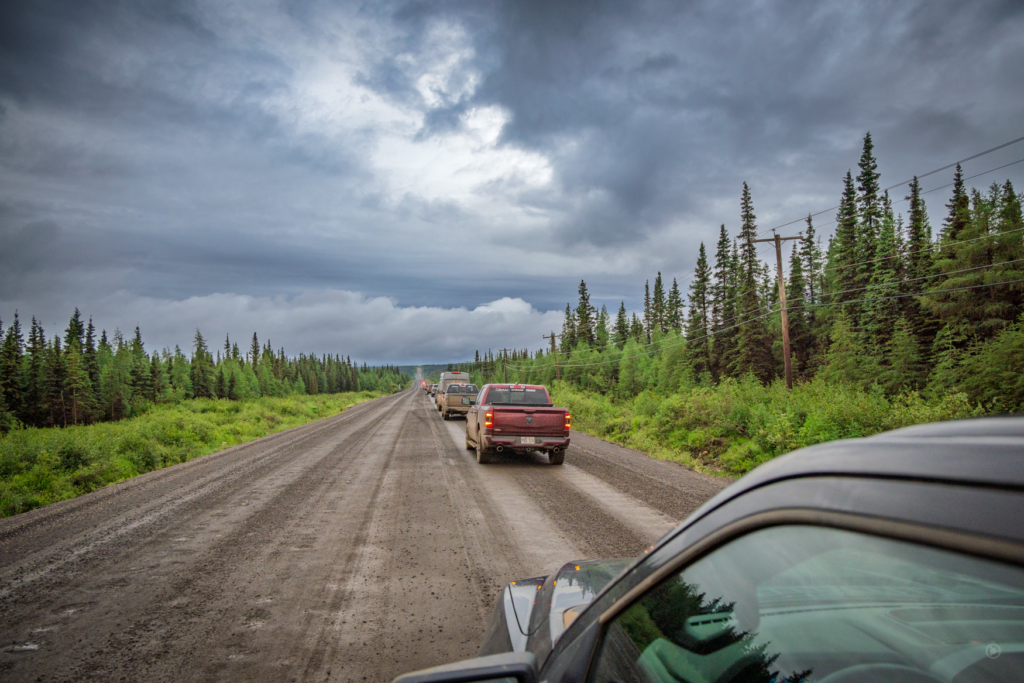
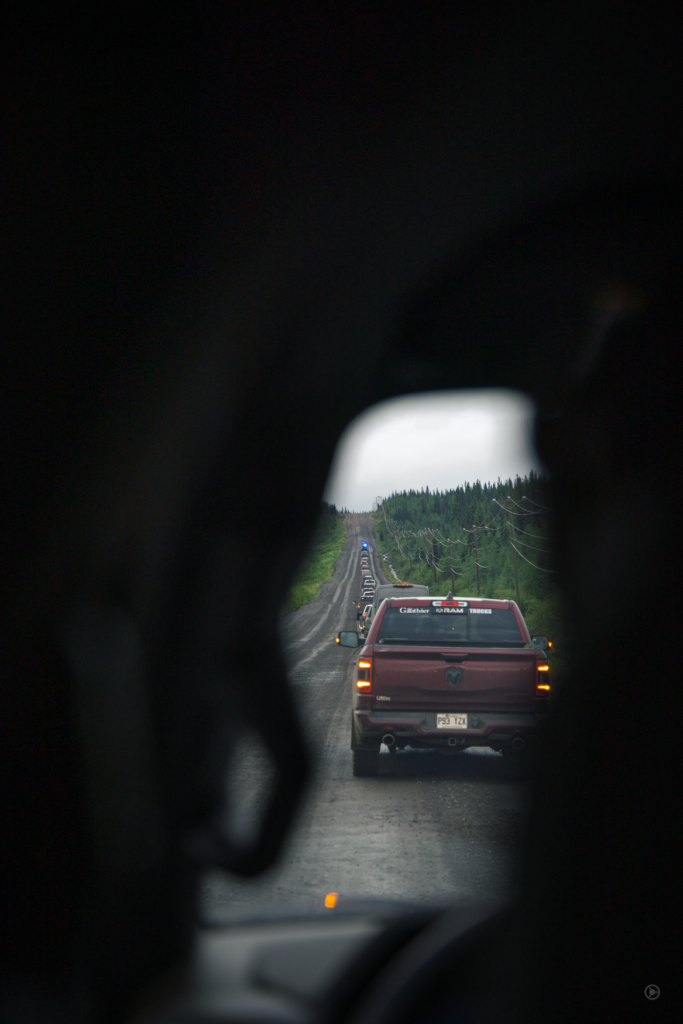
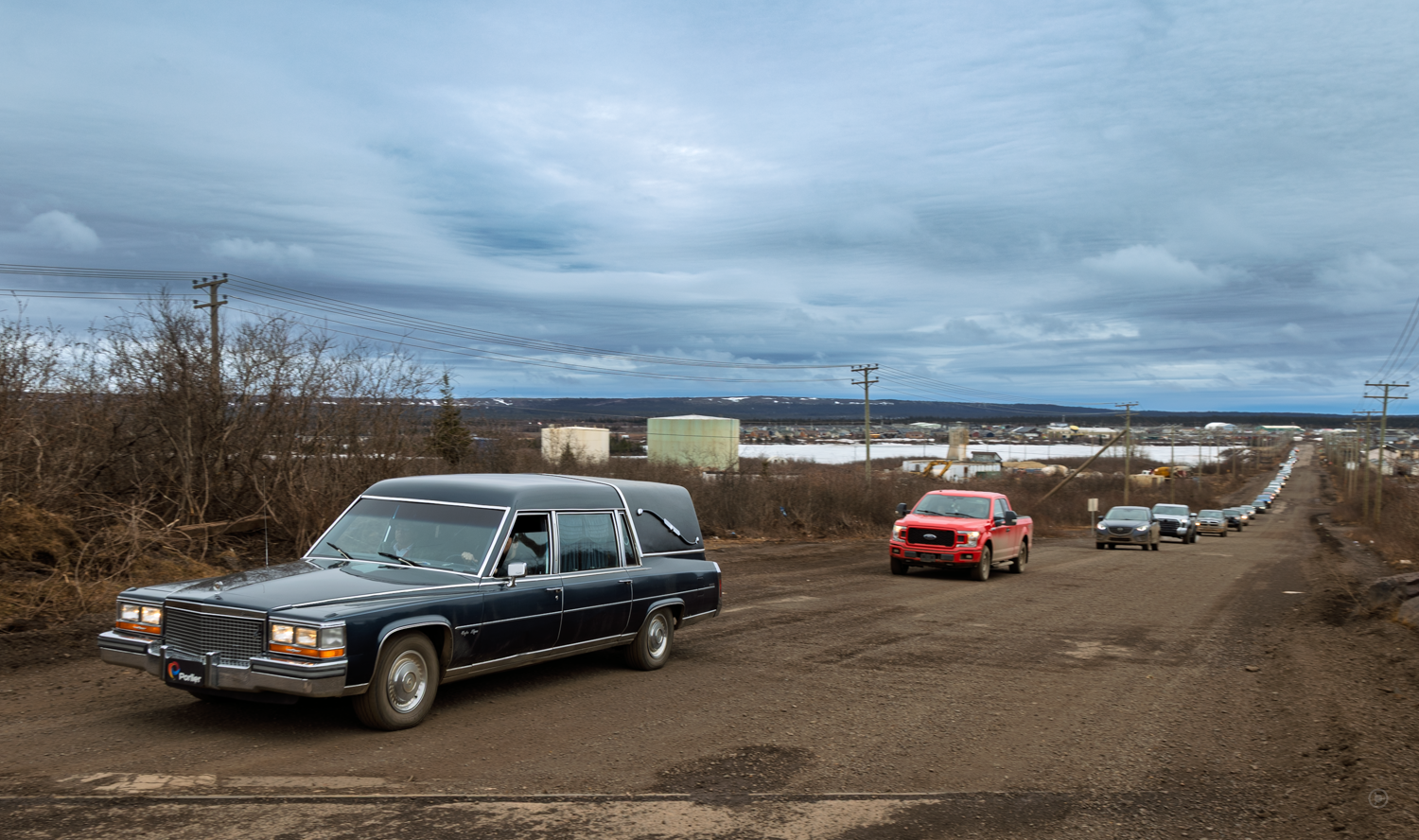
Before driving out, we did the traditional parade around the community, the cross carried at the front.
Then everyone piled into trucks. I still do not have one, so I rode with family.
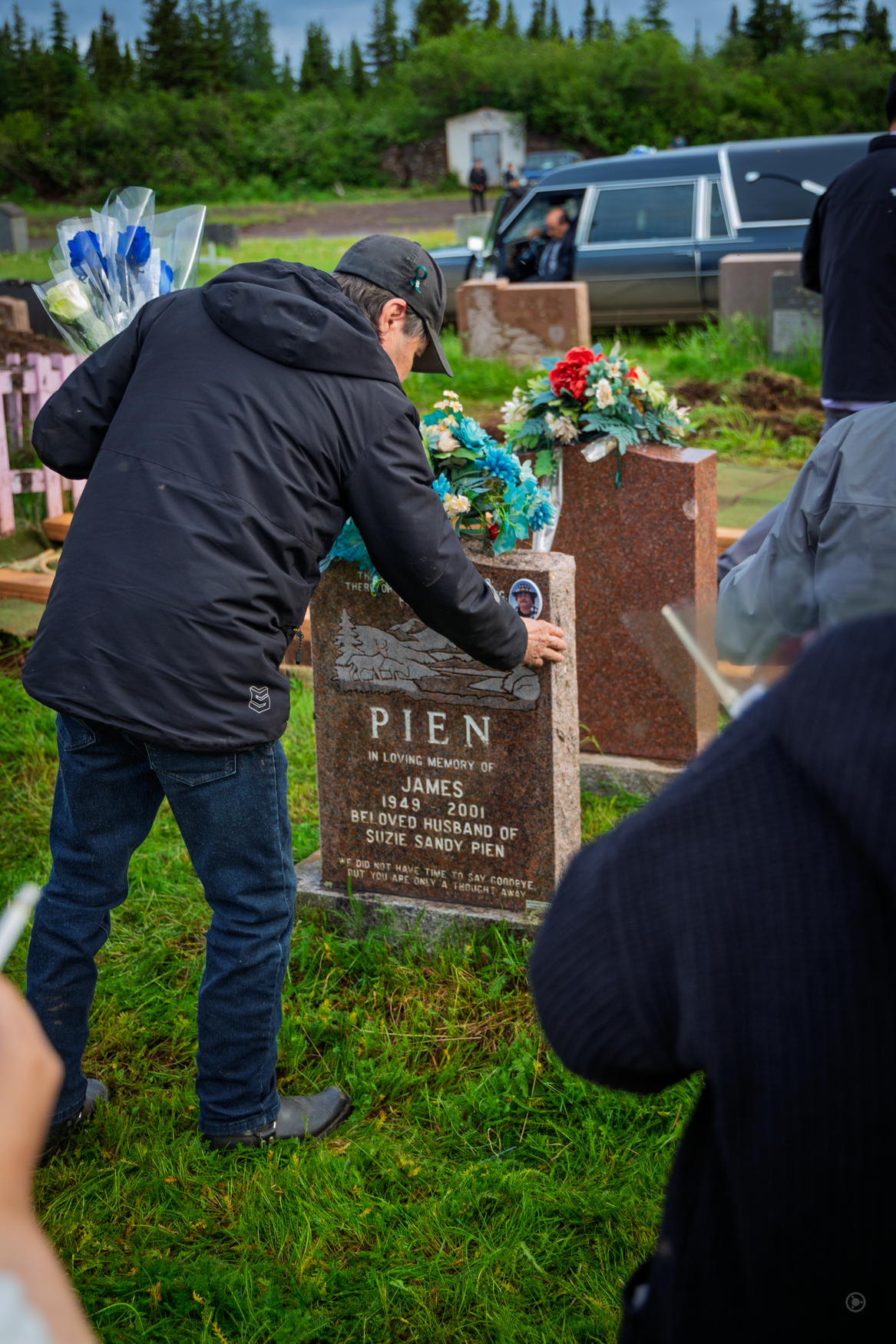
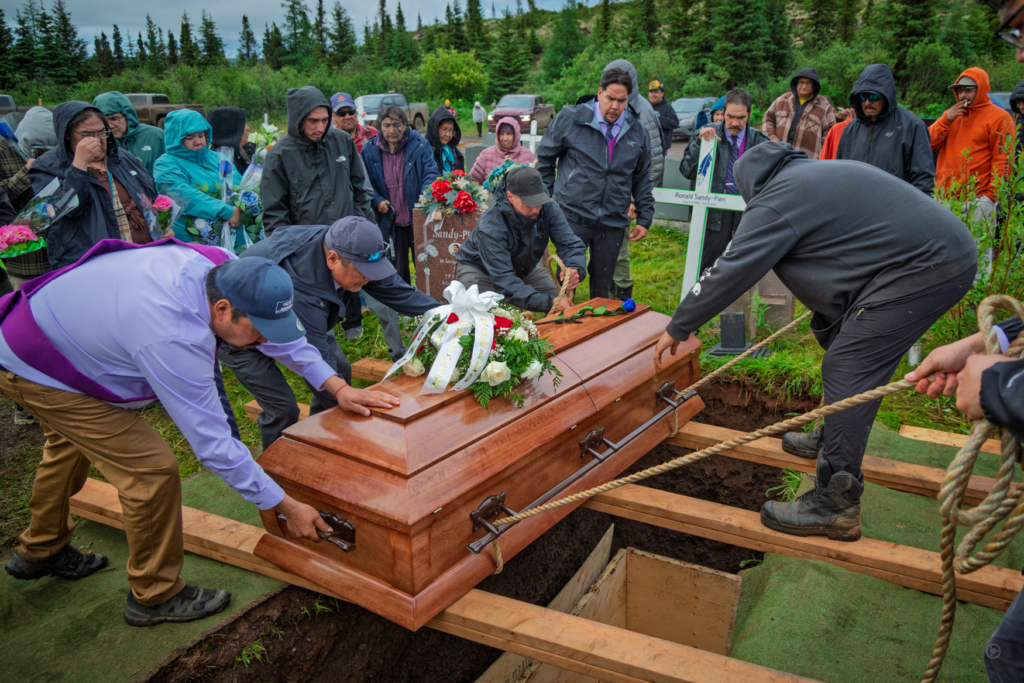
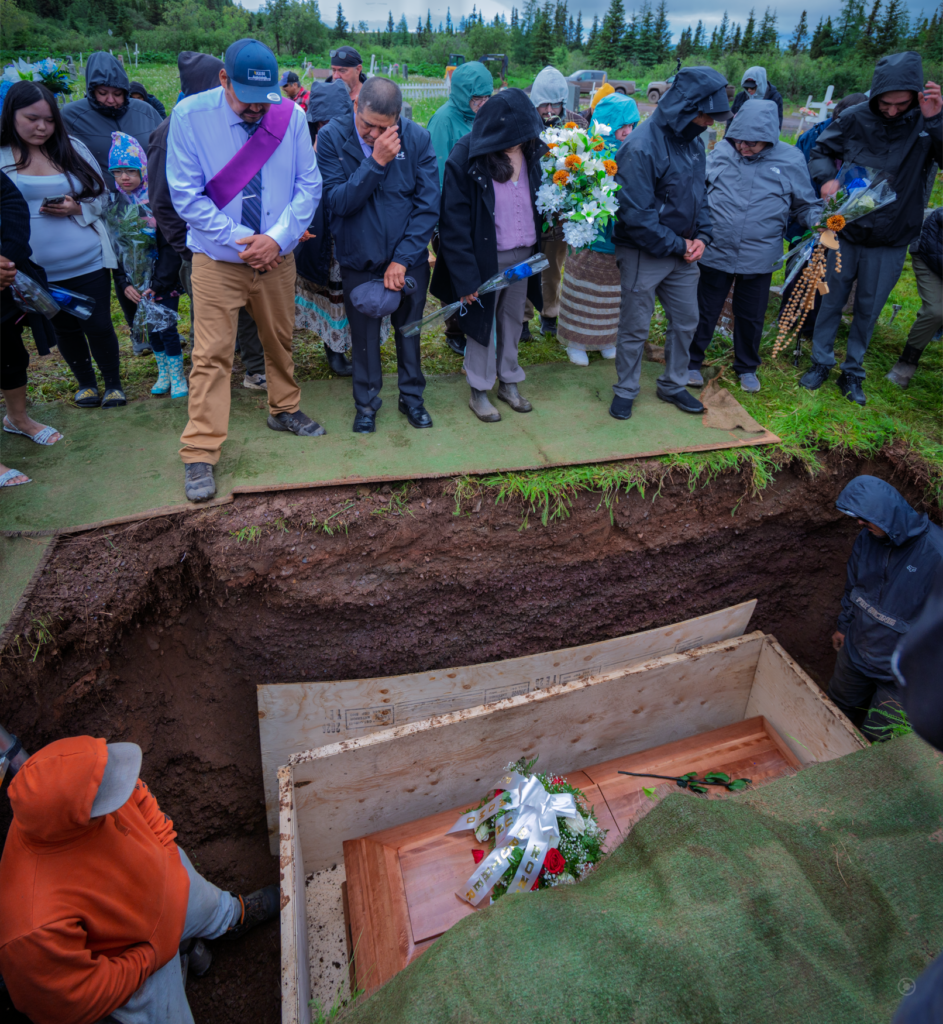
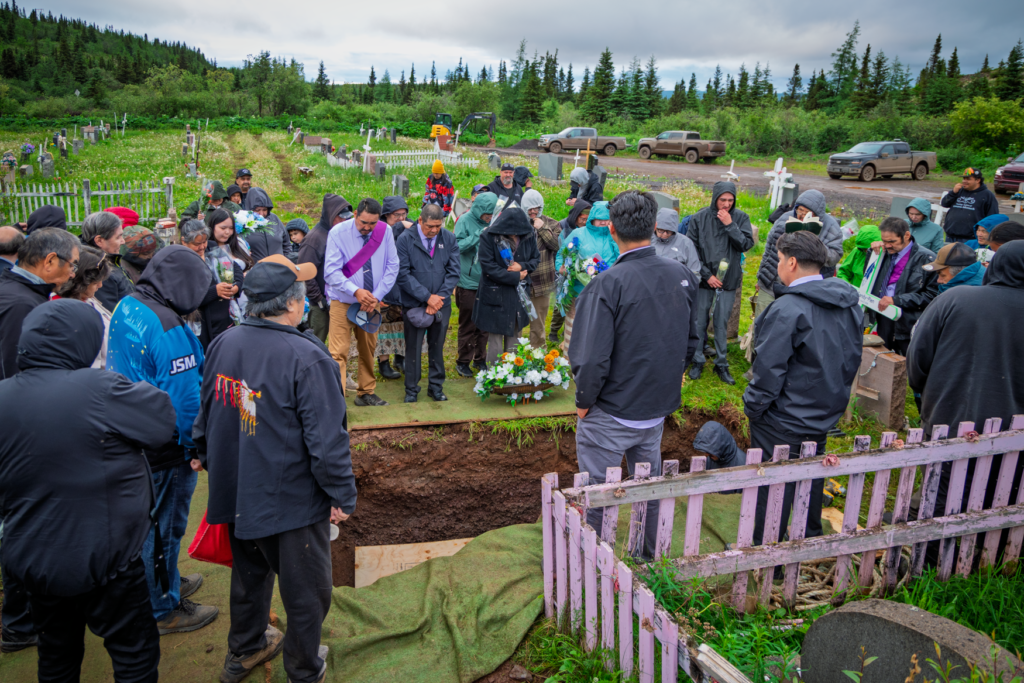
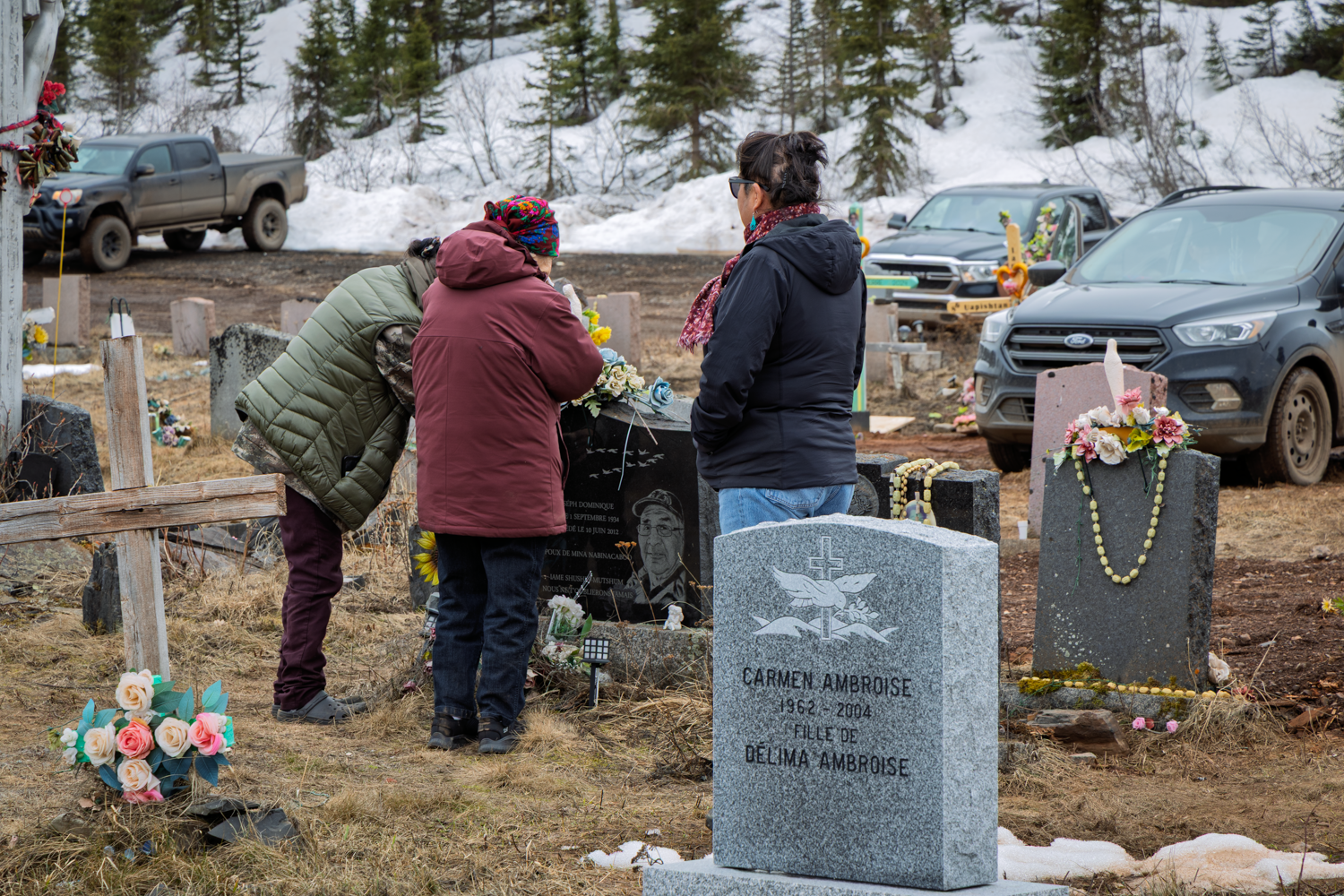
At the cemetery, people went to visit the graves already there.
The cemetery sits in a dip in the ridge where the wind does not reach. After a morning of rain the blackflies came up out of the bushes in clouds and did not let up.
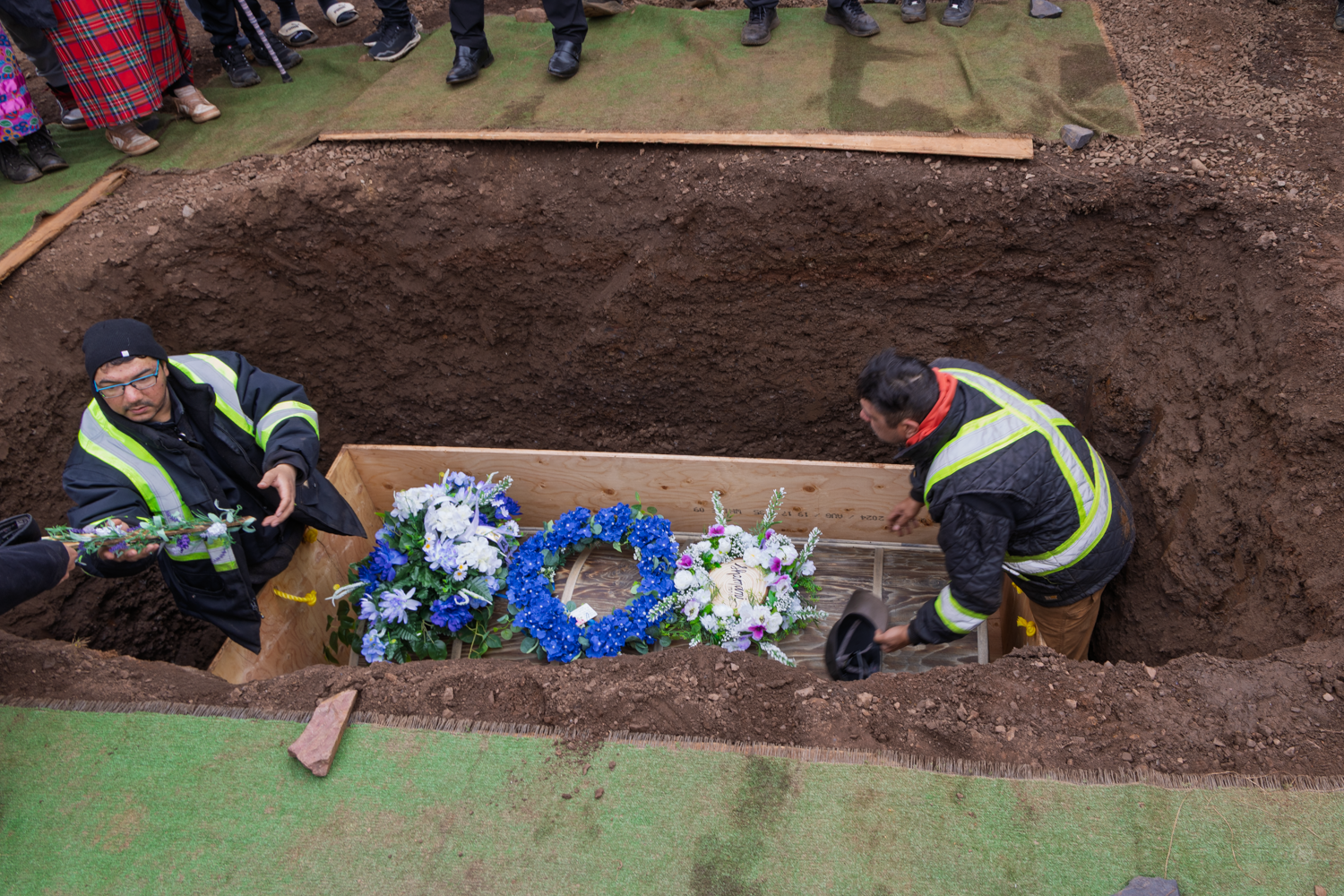
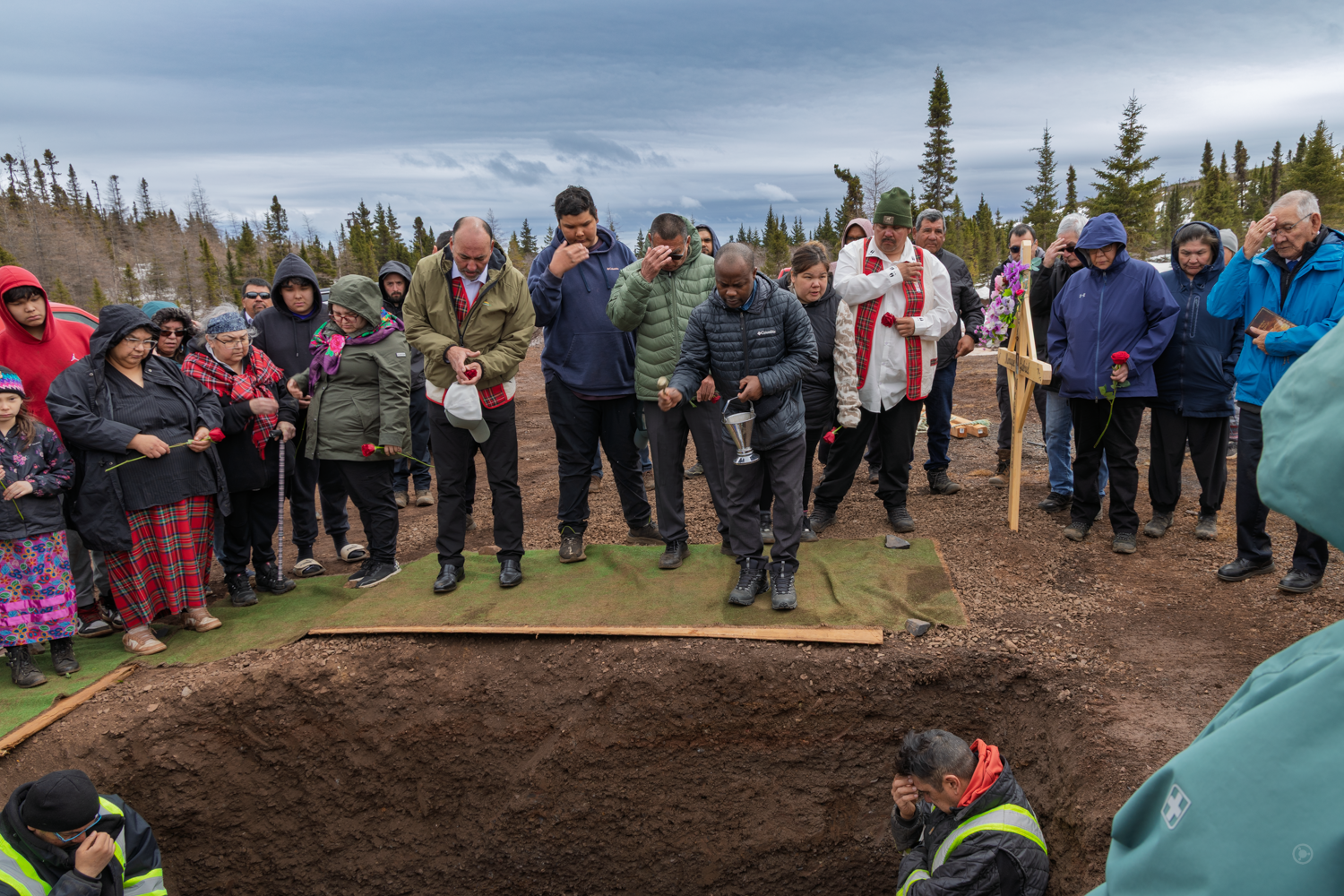
We sang one song. Then people covered the casket with flowers, handful after handful, until you could not see the wood anymore.
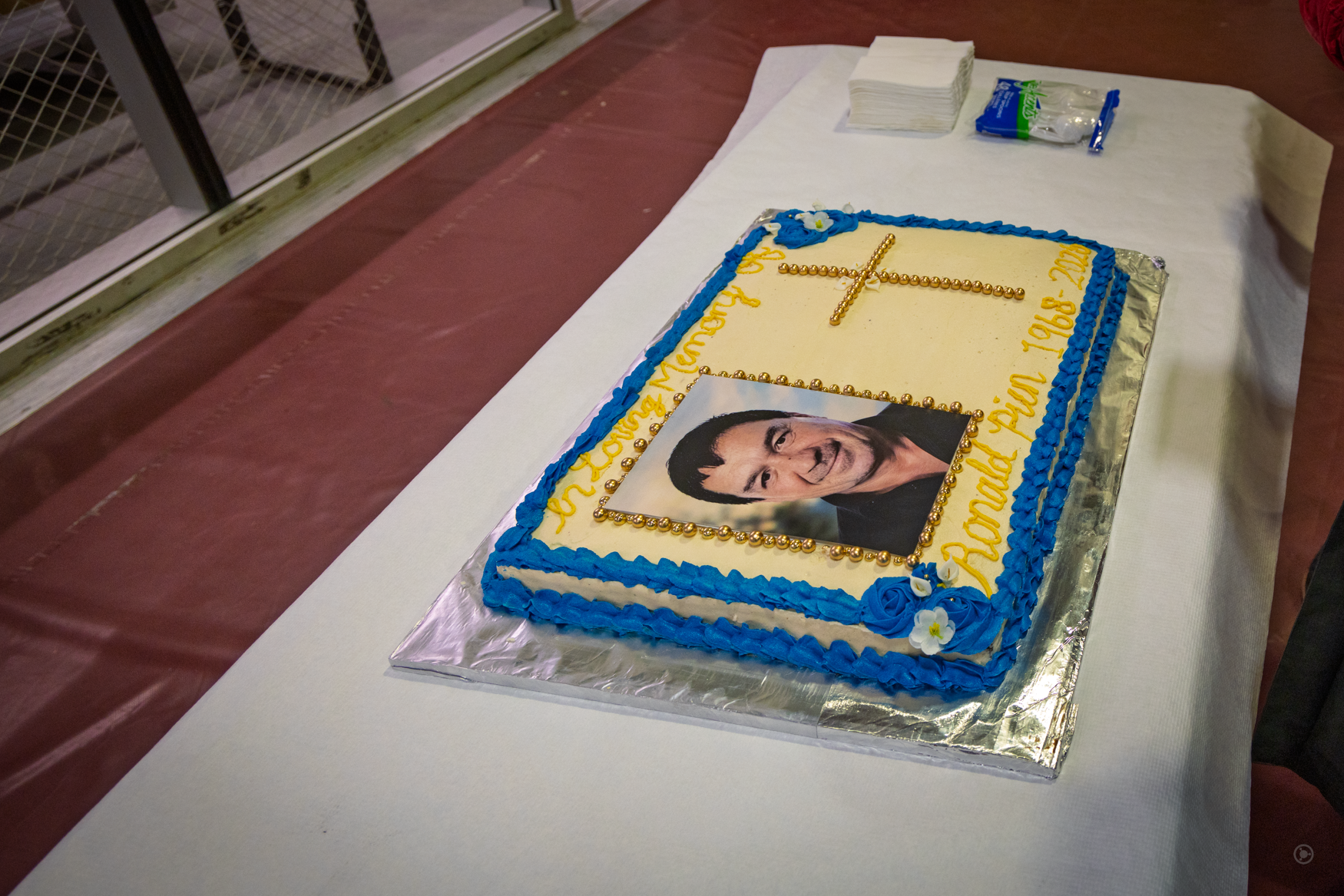
There was a feast at the Jimmy Sandy Memorial School. Platter after platter of traditional food, so much of it that they made everyone take a plate home. His face was on the cake.
Yesterday, the communities of Matimekush and Kawawachikamach came together to lay to rest Jean-Marie (Shamani) McKenzie. The Matimekosh church, with its beautiful architecture and warm light, served as the sacred space for his farewell.
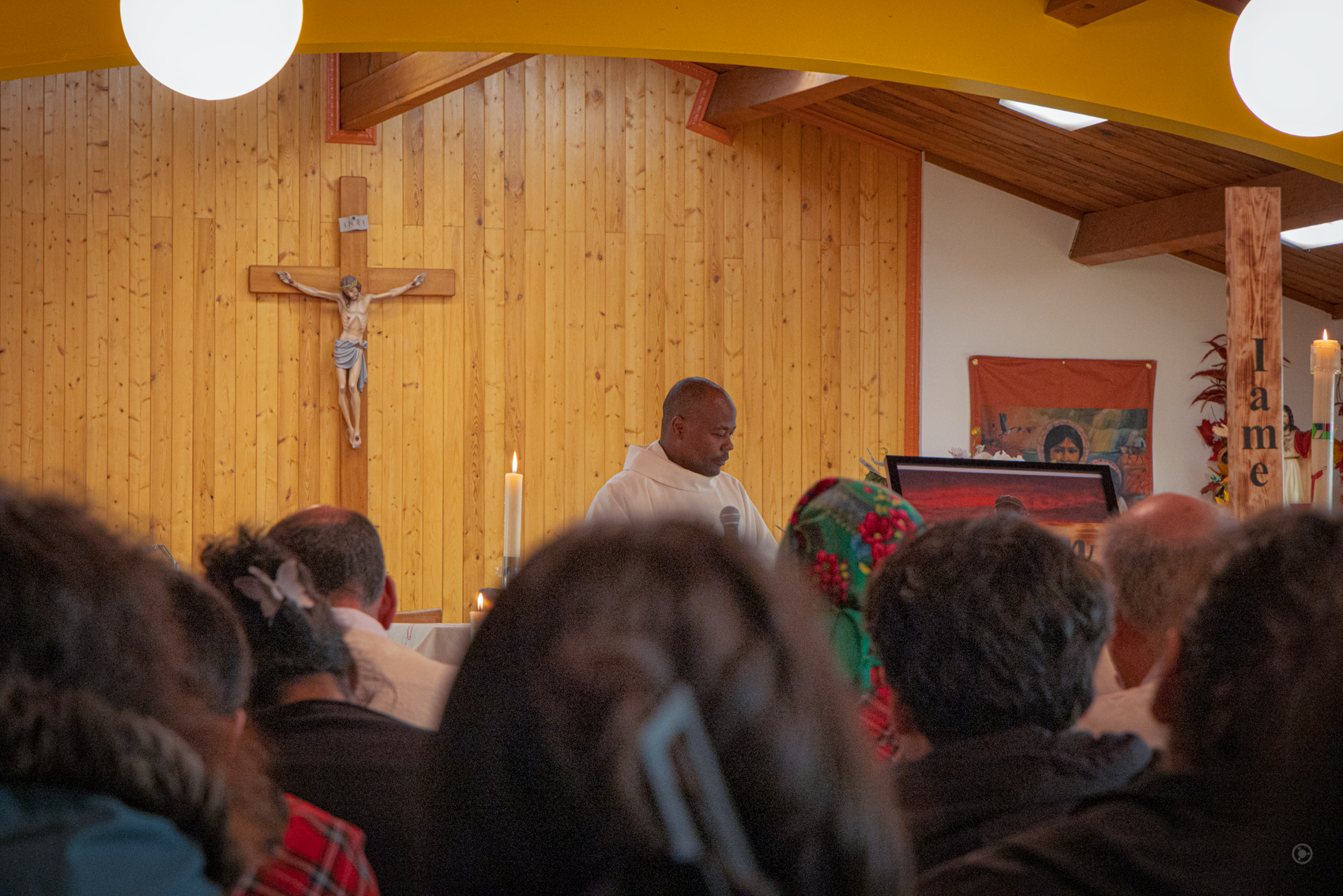
Father Gerard Tsetsalam, originally from Cameroon, delivered the entire funeral service in Innu. Later, at the feast, we exchanged words in Innu ourselves—an exchange so unexpected that someone nearby chuckled, “This has to be the weirdest conversation in Innu I’ve ever heard”.
The church was full. Family, friends, elders, and youth packed the pews. Shamani was deeply loved, and his memory brought together generations.
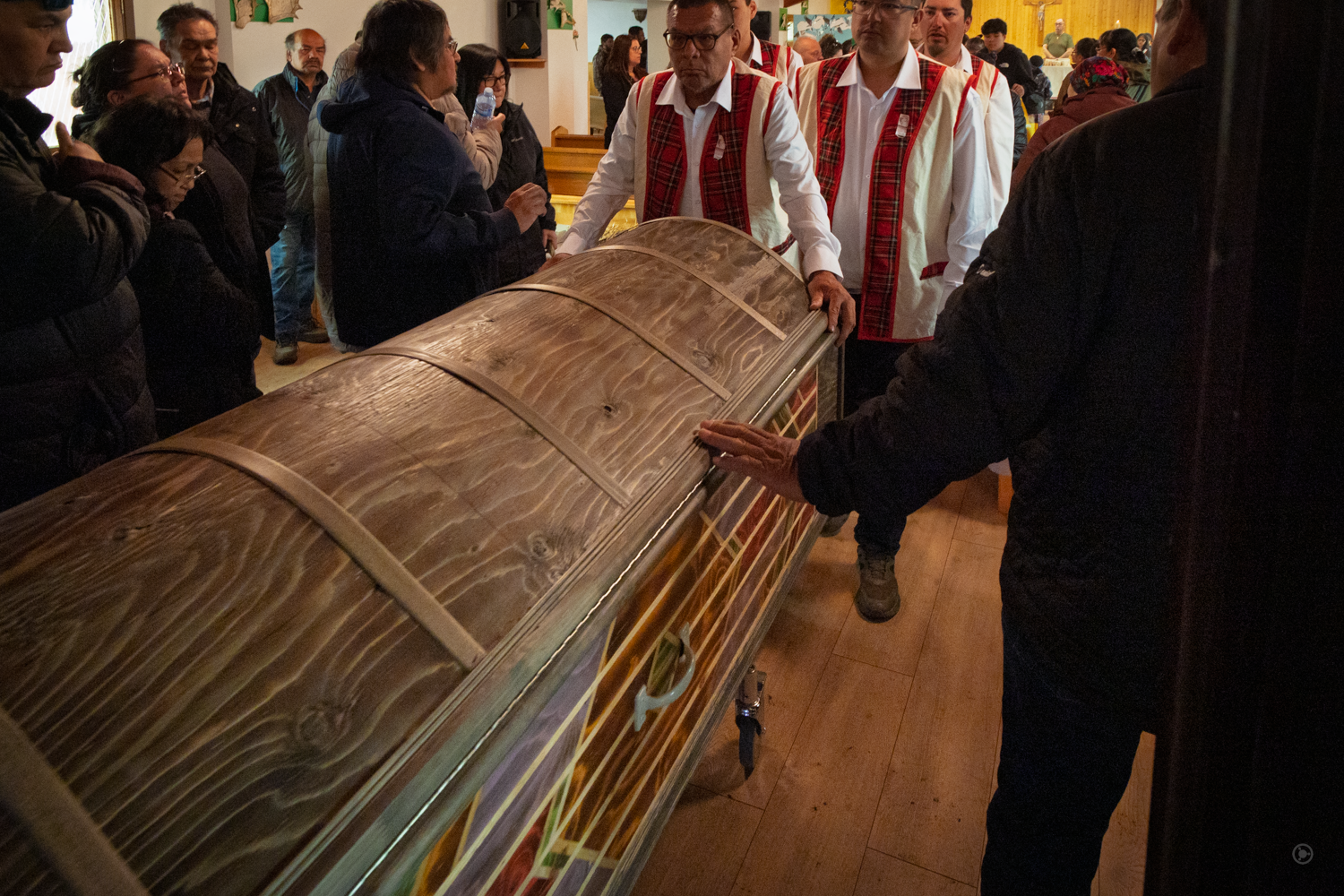
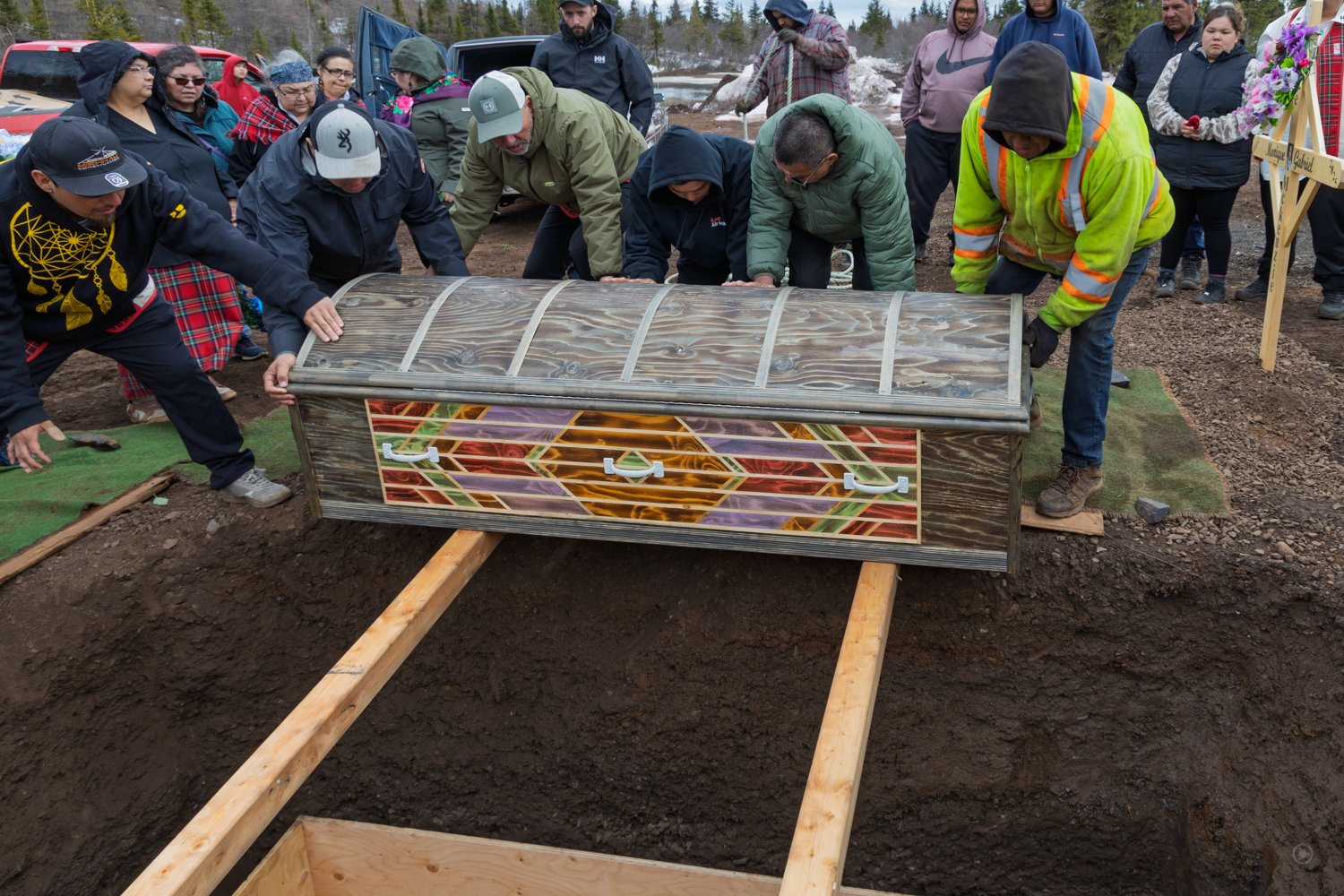
The casket, handcrafted by Craig Jaques, was a true work of art. With a curved lid and inlaid wood, it stood as a testament not only to craftsmanship but also to the love poured into Shamani’s farewell.
Susie Uniam McKenzie, Shamani’s mother, held onto the casket as long as she could before it was loaded into the hearse.
Following tradition in both communities, a long procession followed the hearse out of Schefferville, making its way up the hill to the cemetery.
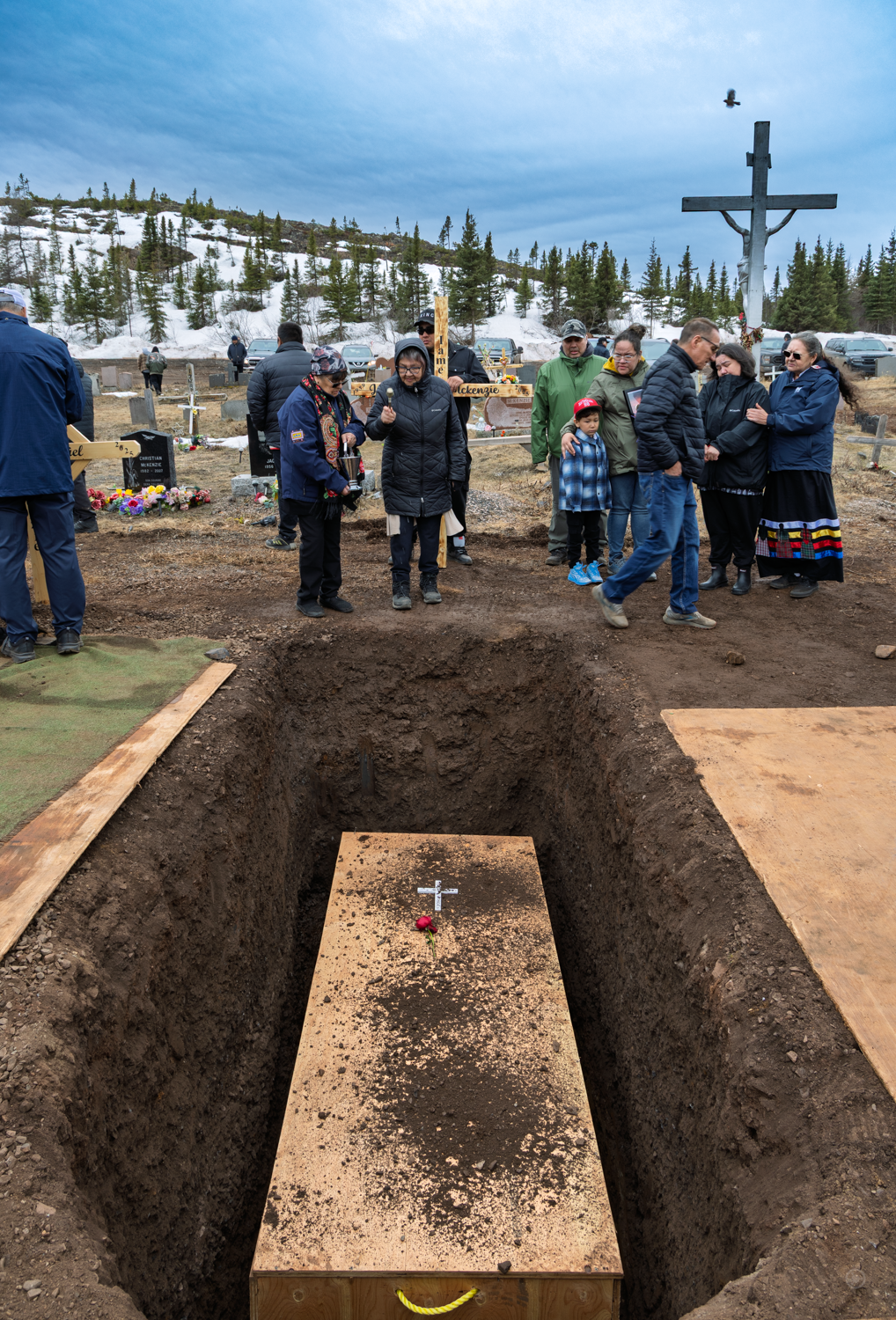
While the casket was prepared for burial, many took the opportunity to visit their own loved ones buried nearby—an unspoken ritual of connection and remembrance.
The casket was gently lowered onto boards and then into the grave with ropes. His family laid flowers across it before it was sealed inside the outer box.
As the outer box was sealed, Father Tsetsalam offered one last blessing over Shamani’s resting place.
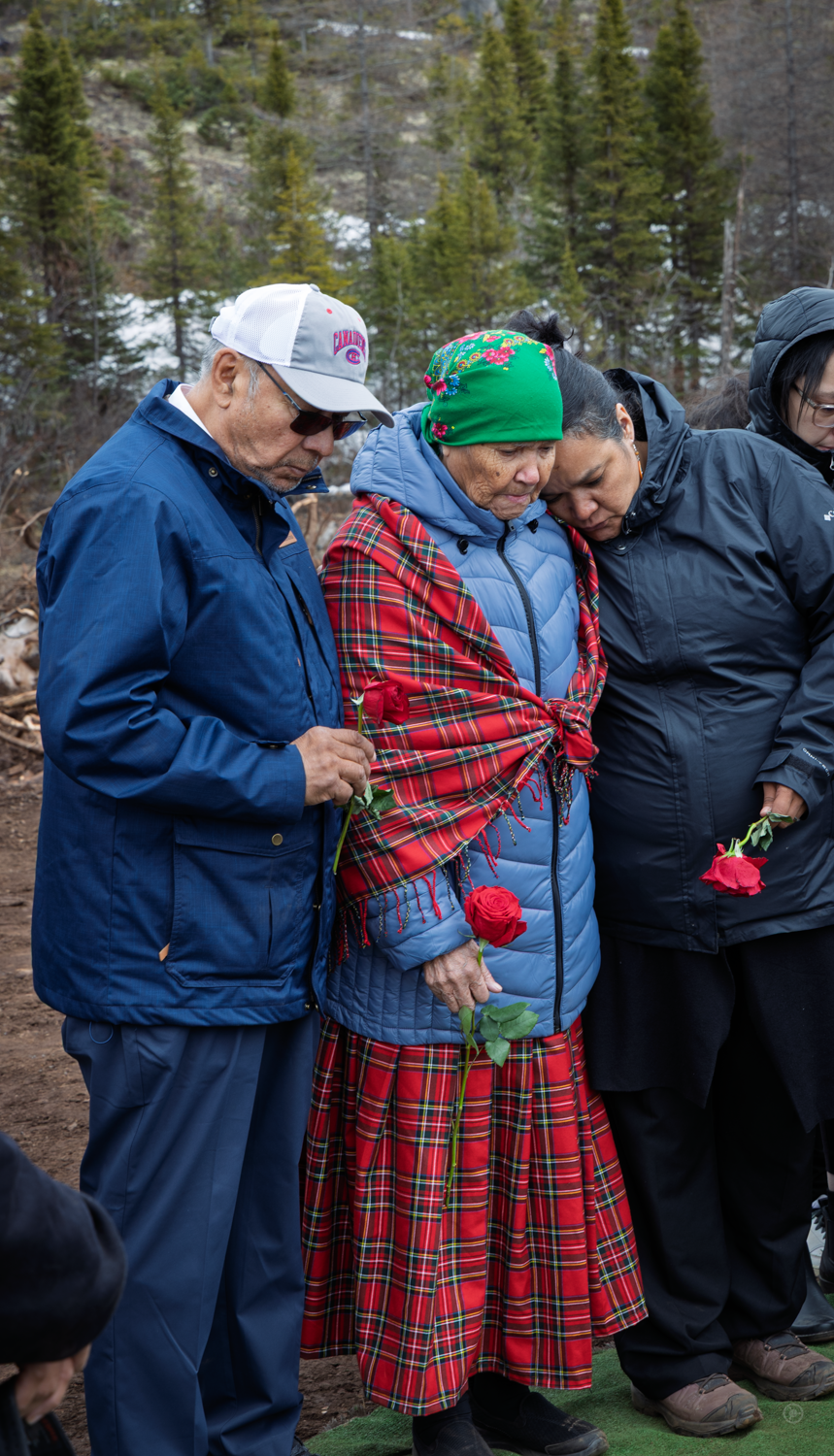
Pierre-Jacques McKenzie, Shamani’s stepfather, and Jacynthe, his niece, embraced Susie Uniam McKenzie before casting their flowers.
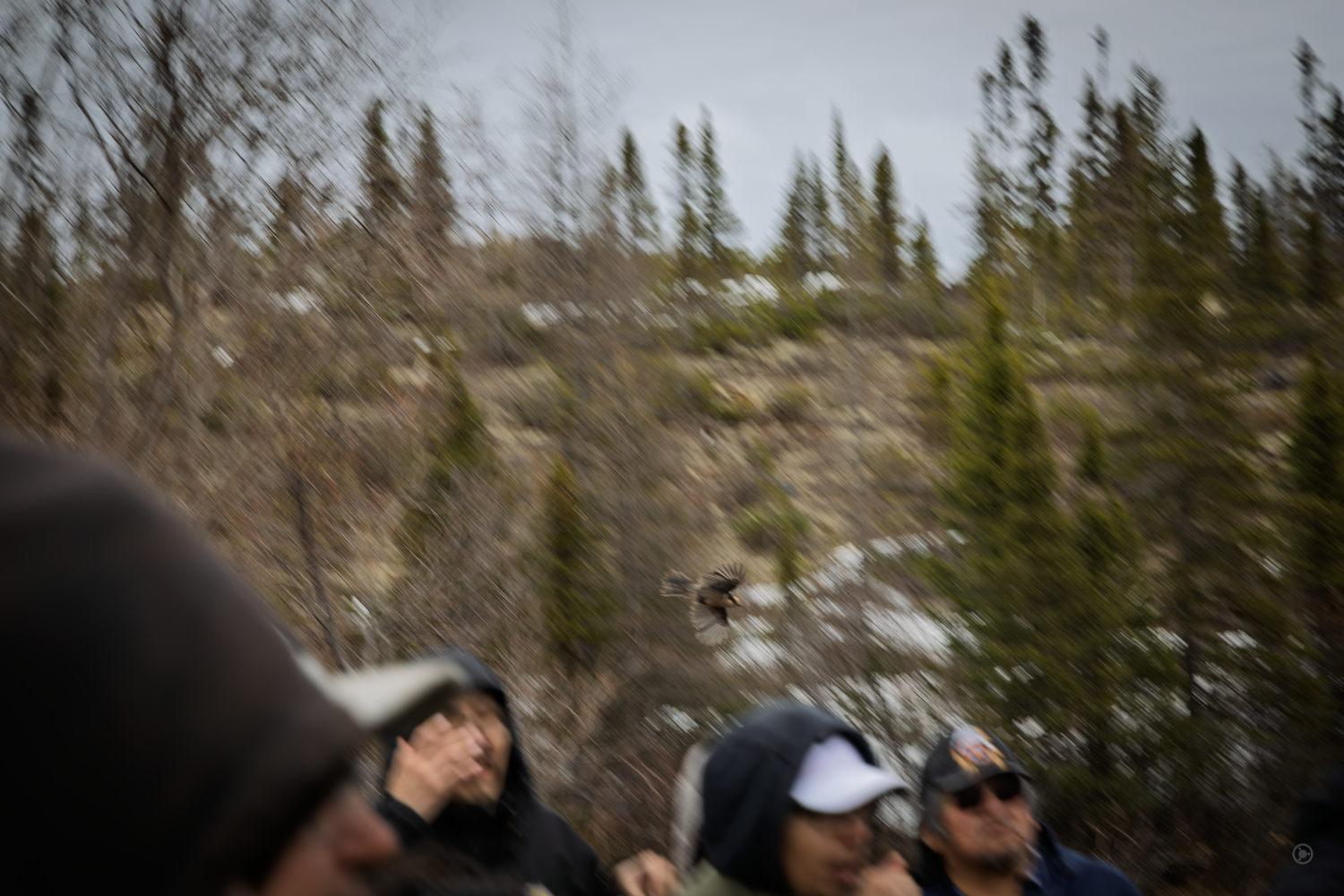
As the blessing was spoken, a Whiskichak (Canada Jay) flew low over the mourners, weaving between us before alighting on a wachinakin tree overlooking the grave.
The bird circled a few more times before resting on the large cross at the center of the cemetery. It remained there until every handful of earth had been placed and the crowd began to drift away.